
 admin
admin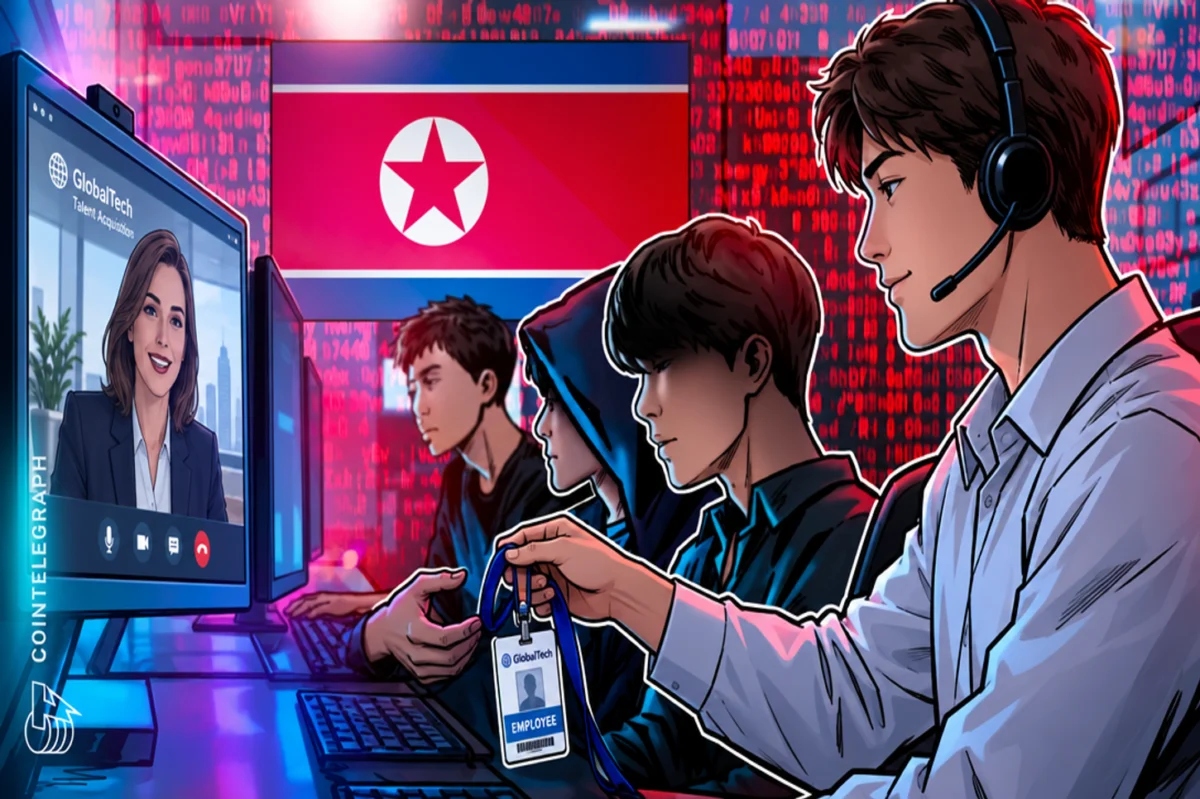
The Democratic People’s Republic of Korea (DPRK) has significantly refined its methods for infiltrating the global technology sector, now leveraging remote workers from third-party nations such as Iran and Lebanon to bypass stringent corporate screening processes. This evolution in cyber-espionage and illicit revenue generation, reported by NBC and echoed by international intelligence agencies, marks a sophisticated shift in how the North Korean regime secures high-paying roles within Western companies. By utilizing foreign nationals to act as "interview associates," North Korean operatives are able to overcome linguistic and cultural barriers that previously served as red flags for hiring managers, ultimately allowing state-sponsored actors to assume control of technical positions. Once embedded within these organizations, these operatives remit their salaries to the North Korean government, contributing to the funding of the nation’s prohibited ballistic missile and nuclear weapons programs.
The Mechanism of Deception: The Proxy Interview Strategy
The core of this newly identified tactic involves a multi-stage process of deception. Traditionally, North Korean IT workers attempted to secure remote employment by using stolen identities and forged documentation, often posing as South Korean, Chinese, or Japanese nationals. However, as human resources departments in the United States and Europe increased their scrutiny—implementing mandatory video interviews and more rigorous background checks—the DPRK began encountering difficulties. To circumvent these hurdles, the regime has turned to a "proxy" model.
According to recent investigative reports, North Korean recruiters scout for foreign IT professionals on platforms like LinkedIn. These individuals, often located in regions with complex geopolitical ties or economic instability, such as Iran and Lebanon, are offered relatively modest sums of money—sometimes as little as $500 per month in cryptocurrency—to perform a specific task: pass the technical and behavioral interviews for a remote position. Once the third-country worker successfully secures the job offer and clears the initial onboarding, the actual work is handed over to a North Korean operative.
The "interview associate" provides a legitimate face and a convincing voice for the company’s hiring team. Because these proxies are often skilled developers in their own right, they can navigate technical assessments with ease. After the contract is signed, the North Korean operative takes over the daily tasks, utilizing virtual private networks (VPNs) and remote desktop protocols to appear as though they are working from the proxy’s location or even from within the United States. This "bait-and-switch" maneuver ensures that the regime can maintain a steady flow of hard currency while remaining virtually invisible to the employer.
A Chronology of Escalation and Government Warnings
The identification of this proxy strategy is the latest development in a years-long effort by the DPRK to exploit the global shift toward remote work. The timeline of this threat illustrates a clear trajectory of increasing boldness and technical capability:
- May 2022: The US Department of State, the Department of the Treasury, and the FBI issued their first comprehensive advisory regarding North Korean IT workers. The advisory warned that thousands of DPRK workers were embedded in the global tech industry, often earning hundreds of millions of dollars annually.
- 2023-2024: Reports emerged of North Korean workers attempting to gain employment at major cryptocurrency exchanges and decentralized finance (DeFi) platforms. The focus at this stage was primarily on direct salary theft and the creation of "backdoors" for future exploits.
- July 2026: A joint alert issued by the US government and several foreign intelligence agencies highlighted the specific use of third-country proxies. The alert emphasized that these workers "seek out contracts with the intent of remitting their salaries to their parent North Korean agencies" and categorized them as a significant "insider threat."
- September 2026: New reports confirmed that the recruitment of these proxies had expanded to LinkedIn, with recruiters specifically targeting professionals in the Middle East and Southeast Asia.
This timeline suggests that as soon as one avenue for infiltration is closed by regulatory or corporate action, the DPRK’s cyber apparatus—controlled by entities such as the Munitions Industry Department and the Ministry of State Security—pivots to a more complex methodology.
Economic Impact: Funding a Regime Under Sanction
The financial motivations behind these operations are profound. Despite being one of the most heavily sanctioned nations on earth, North Korea’s economy has shown surprising resilience. The Bank of Korea recently estimated that North Korea’s Gross Domestic Product (GDP) increased by 3.5% in 2025. Analysts suggest that this growth is not driven by traditional manufacturing or trade, but rather by the regime’s mastery of the digital shadow economy.
The scale of the revenue generated by these IT workers is staggering. While an individual worker might earn a salary of $60,000 to $100,000—common for mid-level developer roles in the US—the aggregate effect of thousands of such workers is immense. Reports indicate that as much as 90% of a worker’s salary is remitted back to the state, with only a small fraction kept for the worker’s living expenses.
Furthermore, the IT worker program acts as a force multiplier for the DPRK’s more aggressive cyber activities. Cybersecurity firm CrowdStrike reported that North Korean state-affiliated hackers were responsible for more than $2 billion in cryptocurrency losses in 2025 alone. This represents a 51% increase from the previous year. The presence of North Korean operatives within corporate networks provides them with the "insider" access necessary to facilitate these thefts. By having an operative already on the payroll, the regime can more easily exfiltrate sensitive data, plant ransomware, or identify vulnerabilities in financial software.
The Insider Threat: Beyond Financial Remittance
The danger posed by these operatives extends far beyond the illicit funneling of salaries. When a North Korean operative assumes a role within a US or European company, they become a high-risk insider threat. The US government’s July 2026 alert specifically noted that these workers are involved in:
- Data Exfiltration: Stealing proprietary source code, customer databases, and corporate intellectual property. This information can be sold on the dark web or used to give North Korean state industries a competitive advantage.
- Cryptocurrency Theft: Using their access to corporate wallets or financial systems to drain assets. The case of Consensys, which unknowingly outsourced developer work to a North Korean operative, serves as a stark reminder of how even leading blockchain firms are vulnerable.
- Supply Chain Attacks: Injecting malicious code into software updates that are then distributed to thousands of other companies. This "upstream" infiltration can have a catastrophic ripple effect across the global economy.
- Espionage: Gathering intelligence on sensitive government contracts or critical infrastructure projects that the employer may be involved in.
The use of third-country proxies makes these threats even harder to detect. If a company suspects foul play, their initial investigation will lead them to a legitimate professional in Iran or Lebanon, who may claim they are simply "subcontracting" or "collaborating" on the work, providing a layer of plausible deniability for the North Korean actors.
Official Responses and Corporate Defenses
The revelation of the proxy interview scheme has prompted a flurry of activity from both the public and private sectors. The US government has expanded its "Rewards for Justice" program, offering up to $10 million for information that leads to the disruption of North Korean financial mechanisms.
In response to the NBC report, several technology companies have announced updates to their hiring protocols. LinkedIn, which has been identified as a primary hunting ground for DPRK recruiters, stated it is investing heavily in AI-driven detection to identify fraudulent recruitment patterns. However, experts warn that the burden of defense ultimately falls on the hiring companies.
"The sophistication of the DPRK’s IT worker program is now at a level where traditional background checks are insufficient," said a senior cybersecurity analyst. "Companies must implement ‘Know Your Employee’ (KYE) protocols that are as rigorous as the ‘Know Your Customer’ (KYC) standards used in banking. This includes conducting unannounced video calls, monitoring for inconsistent IP address logins, and requiring hardware-based multi-factor authentication that is physically tied to the employee’s reported location."
Geopolitical Implications and Future Outlook
The continued success of the DPRK’s IT worker program has significant geopolitical ramifications. It demonstrates the limits of traditional economic sanctions in the digital age. As long as North Korea can maintain a presence in the global remote work market, it will have a reliable source of funding that is largely immune to trade embargoes or asset freezes.
Moreover, the recruitment of workers in countries like Iran suggests a burgeoning "axis of digital evasion," where nations under Western pressure collaborate—either formally or informally—to bypass international financial systems. This cooperation complicates diplomatic efforts to denuclearize the Korean Peninsula, as the regime feels less pressure to negotiate when its "cyber-wallets" remain full.
Looking ahead, the battle between North Korean operatives and global security agencies is expected to intensify. As artificial intelligence becomes more integrated into the workplace, there are concerns that the DPRK will use deepfake technology to create entirely synthetic "interview associates," eliminating the need for third-country proxies altogether.
The 2026 findings serve as a critical wake-up call for the global tech industry. The remote work revolution, while offering immense flexibility and talent access, has also opened a digital front door for one of the world’s most isolated and dangerous regimes. For US companies, the "new hire" on the other end of a Zoom call may no longer be who they claim to be, but rather a cog in a vast, state-sponsored machine designed to fund the next generation of global instability.








