
 Lina Irawan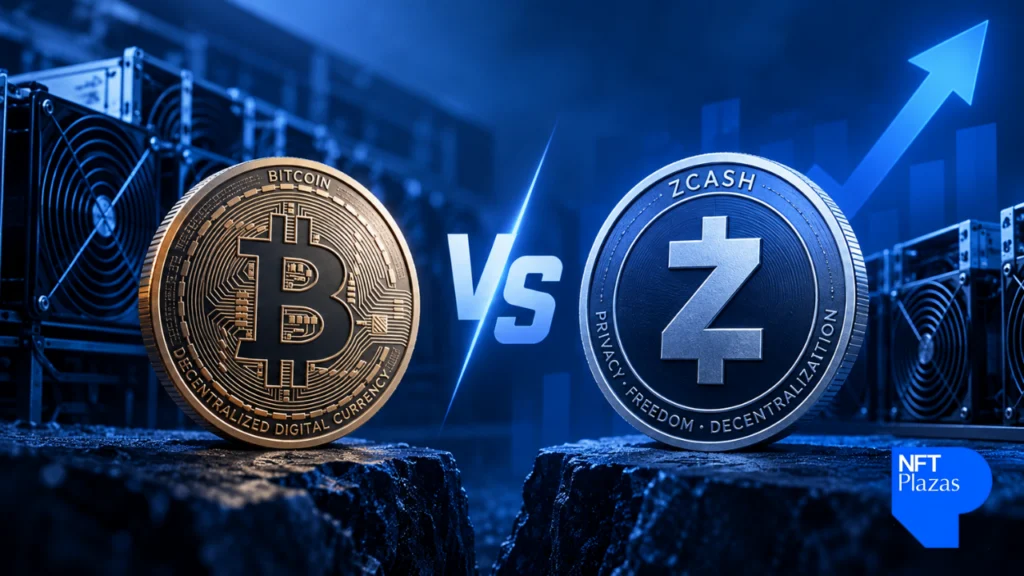
A recent comprehensive analysis by Grayscale Research has illuminated a significant shift in the cryptocurrency mining landscape, revealing that Zcash (ZEC) mining has become substantially more profitable for individual operators compared to Bitcoin (BTC) mining, despite Bitcoin’s continued dominance in overall industry scale. The report, spearheaded by Grayscale Research Director Zach Pandl, meticulously dissects the economic dynamics of both proof-of-work networks, highlighting a stark contrast in returns per machine and per unit of electricity consumed. This trend emerges as Zcash experiences one of its most robust price rallies in recent years, propelling its value past the $1,000 mark and attracting an influx of computing power to its network.
While Bitcoin undeniably commands a larger share of the total mining reward pool, Grayscale’s findings suggest that for the individual miner, the efficiency and return on investment offered by Zcash currently present a more compelling proposition. This divergence in profitability underscores the complex interplay of cryptocurrency prices, network difficulty, hardware specialization, and energy costs that shape the mining ecosystem.
Bitcoin’s Reign: Scale vs. Individual Returns
When measured by the total value distributed to miners, Bitcoin remains in a league of its own. Grayscale estimates that Bitcoin miners collectively rake in approximately $35 million in daily rewards. In stark contrast, Zcash miners are currently generating around $2 million daily. This substantial disparity is a direct reflection of Bitcoin’s vastly larger market capitalization, its extensive network activity, and its deeply entrenched mining infrastructure, which has been developed and scaled over more than a decade. The sheer volume of Bitcoin’s ecosystem means a greater aggregate reward pool, making it the undisputed leader in terms of total economic output for miners globally.
However, the narrative shifts dramatically when the focus narrows to the performance of individual mining machines. According to Grayscale’s comparative analysis, a typical Zcash mining rig is currently generating approximately double the daily revenue of a comparable Bitcoin mining machine. This advantage becomes even more pronounced when the critical factor of electricity consumption is taken into account. Grayscale’s assumptions indicate that Zcash mining can yield roughly four times as much revenue per megawatt-hour (MWh) of electricity consumed compared to Bitcoin mining. This efficiency metric places Zcash mining in a favorable position, even outperforming some artificial intelligence and high-performance computing cloud services in terms of revenue generated per unit of energy expended.

It is crucial to note that these figures represent generalized estimates and do not imply that Zcash mining is universally four times more profitable in every market. The actual profitability for individual operators is subject to a myriad of localized variables. These include the fluctuating cost of electricity, the initial capital outlay for specialized hardware, ongoing expenses related to cooling and maintenance, fees associated with mining pools, and the ever-changing network difficulty, which directly impacts the rate at which blocks are solved and rewards are distributed. These operational costs can significantly alter the net economic outcome for any given mining venture.
The Zcash Price Surge: A Catalyst for Change
The significant improvement in Zcash mining economics is intrinsically linked to the cryptocurrency’s recent dramatic price appreciation. ZEC has recently surged to around $1,155, marking its highest level in approximately nine years. This impressive climb is part of a powerful rally that has positioned Zcash as one of the best-performing large-cap cryptocurrencies in the market. During a recent week, ZEC’s price increased by over 14%, while Bitcoin experienced a decline of nearly 3% over the same period. This performance pushed Zcash’s market capitalization to an estimated $19.5 billion, underscoring its growing prominence in the digital asset space.
The upward trajectory of ZEC’s price has had a direct and tangible impact on its mining ecosystem. Grayscale reported that the gains in ZEC’s price have incentivized miners to deploy additional computing power to the network. Consequently, the total mining activity on the Zcash network has increased by more than 2.5 times since the beginning of the year. This surge in participation creates a beneficial feedback loop for the network. Higher ZEC prices make mining more financially attractive, which in turn encourages more miners to join, increasing the network’s overall hashrate. While an increased hashrate inherently leads to greater competition among miners, it also significantly bolsters the security and resilience of the blockchain. Zach Pandl of Grayscale described this relationship as potentially reinforcing, where improved mining economics contribute to enhanced network security, which can, in turn, help sustain investor confidence and interest in the Zcash ecosystem.
Hardware Specialization: A Barrier to Simple Migration
A critical factor limiting a straightforward comparison and immediate arbitrage between Bitcoin and Zcash mining is the inherent technical divergence between the two networks. The underlying proof-of-work algorithms are fundamentally different. Bitcoin mining relies on the SHA-256 algorithm, which is optimized for Application-Specific Integrated Circuits (ASICs) specifically designed for this purpose. Zcash, on the other hand, utilizes the Equihash algorithm. This means that specialized hardware designed for Bitcoin mining, such as SHA-256 ASICs, cannot be repurposed to mine Zcash. Similarly, Zcash mining ASICs are not compatible with Bitcoin. Consequently, a miner operating Bitcoin hardware cannot simply switch to Zcash mining when ZEC becomes more profitable. They would need to acquire entirely new, specialized hardware.
Grayscale’s analysis, for instance, compares the performance of a Bitmain S23 Hydro, a leading Bitcoin miner, with a Bitmain Z15 Pro, a high-performance Zcash miner. Their calculations are based on specific assumptions, including an electricity cost of $0.05 per kilowatt-hour (kWh), assuming full uptime of the mining equipment, and excluding any revenue derived from transaction fees, which also form a component of miner rewards in both networks. These assumptions serve to isolate the impact of block rewards and electricity costs on profitability.

Furthermore, the Grayscale estimates focus primarily on mining revenue rather than the ultimate net profit for an operator. Real-world mining operations incur a range of additional costs that can materially impact returns. These include the depreciation or financing costs of the mining hardware, the expenses associated with establishing and maintaining the mining facility, the ongoing cost of cooling the equipment, regular maintenance, and fees charged by mining pools for facilitating the aggregation of mining power and distribution of rewards. Electricity costs, in particular, play a pivotal role. A miner operating in a region with prohibitively expensive power may find that the apparent profitability advantage of Zcash mining quickly evaporates once these operational expenditures are factored into the equation.
The Zcash Reward Pool Conundrum: Dilution of Profits
A significant question for prospective and existing Zcash miners revolves around the sustainability of the current profitability advantage. The daily mining rewards allocated to the Zcash network, while substantial, represent only a fraction of Bitcoin’s total reward pool. With approximately $2 million distributed across the Zcash mining network each day, the available pool of rewards is relatively constrained.
As more miners enter the Zcash network, attracted by the improved economics, this same reward pool must be divided among a larger number of participants. This increase in hashrate and, consequently, network difficulty, can lead to a reduction in the amount of ZEC earned by each individual mining machine, even if the price of ZEC remains stable. This dynamic is already evident in the rapid expansion of Zcash’s hashrate. The more than 2.5-fold increase in mining activity observed this year clearly demonstrates the speed at which miners can respond to improved economic conditions. Bitcoin, while operating on a vastly different scale, faces the same fundamental economic mechanism. However, its significantly larger mining ecosystem and reward pool mean that such shifts in difficulty and individual returns occur at a much slower pace and on a different magnitude.
Institutional Interest: A New Layer of Demand
The current mining boom for Zcash is unfolding against a backdrop of burgeoning institutional interest in the cryptocurrency. Grayscale, a prominent digital asset investment firm, launched its Zcash Investment Trust (ZCSH), which began trading on the NYSE Arca on August 25. The firm reported that this new exchange-traded product attracted approximately $179 million in net assets within its first 11 trading days, pushing its total assets under management above $700 million. Grayscale stated that ZCSH ranked among the top 1% of nearly 4,000 exchange-traded products based on net asset growth and characterized it as the fastest-growing altcoin exchange-traded product by net assets, citing its own data for these figures.
This confluence of rising institutional demand, a strong upward trend in ZEC’s price, and the enhanced profitability of mining operations has collectively created a significantly more favorable environment for Zcash compared to its standing earlier in the year. This multifaceted growth suggests a renewed confidence in the Zcash ecosystem from both retail and institutional investors, as well as active participants in its network infrastructure.

Efficiency as the Key Takeaway
It is imperative to reiterate that Grayscale’s research does not suggest that Zcash has surpassed Bitcoin as the dominant mining business in its entirety. Bitcoin’s sheer scale ensures that it remains overwhelmingly larger in terms of total mining revenue and the breadth of its infrastructure. Instead, the core takeaway from Grayscale’s analysis lies in a different, yet equally important, metric: the revenue generated by an individual mining machine relative to the electricity it consumes.
On this specific measure of efficiency, Zcash currently holds a clear and significant advantage. The longevity and sustainability of this advantage will, however, be contingent on a dynamic interplay of factors. These include the future price performance of ZEC, the prevailing electricity costs in various mining locations, the ongoing trend of mining difficulty, and the rate at which new mining hardware is introduced to the network. The rapid growth in Zcash’s hashrate already indicates that miners are actively responding to the current economic opportunities.
For the present moment, however, Grayscale’s conclusion is unambiguous: while Bitcoin continues to be the larger and more established mining network, Zcash is presently offering considerably superior mining economics for individual machines and a more efficient return on electricity consumption, marking a notable shift in the competitive dynamics of cryptocurrency mining.









