
 Lina Irawan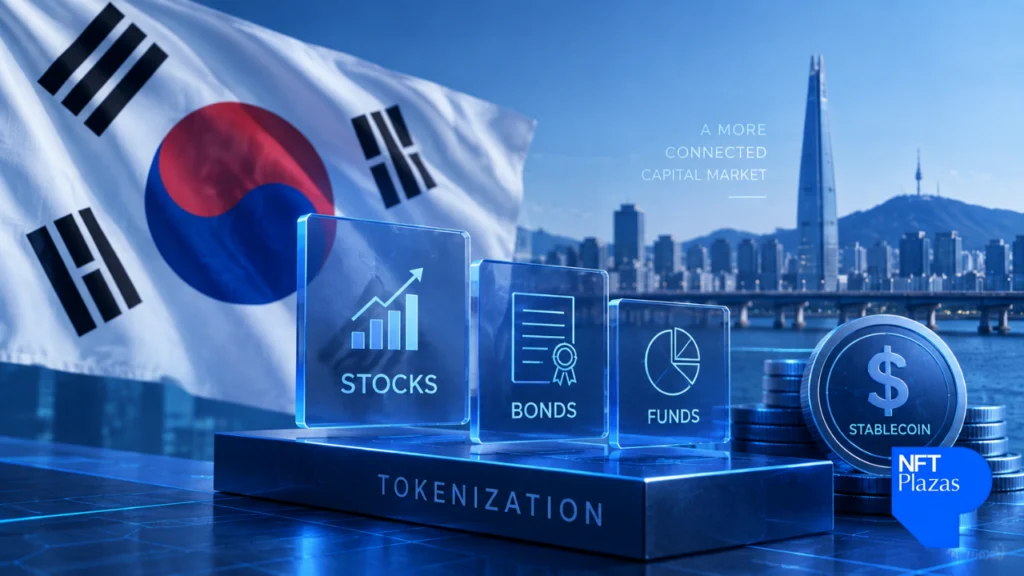
South Korea is embarking on a transformative journey to modernize its financial markets by integrating traditional securities onto blockchain infrastructure, a move poised to revolutionize how stocks, bonds, and funds are issued, traded, and settled. The Financial Services Commission (FSC), South Korea’s primary financial regulator, announced a meticulously planned three-phase roadmap on September 4, following extensive public-private consultations on the burgeoning field of securities tokenization. This strategic initiative, slated to commence with legislative amendments taking effect on February 4, 2027, aims to formally recognize tokenized securities as legitimate digital forms of traditional financial instruments, paving the way for direct integration with stablecoin-based payment systems.
The FSC’s vision extends far beyond the current landscape of Security Token Offerings (STOs), which have predominantly focused on fractional investment products. The ambition is to build a robust infrastructure capable of supporting the tokenized issuance and circulation of a comprehensive range of conventional securities, including publicly traded stocks, government and corporate bonds, and diverse investment funds. This strategic pivot signifies South Korea’s commitment to leveraging distributed ledger technology (DLT) to enhance efficiency, transparency, and accessibility within its capital markets.
Seoul Sets a Deliberate Three-Phase Roadmap for Digital Securities
The phased approach underscores a cautious yet determined strategy, beginning with a controlled rollout designed to establish a solid legal and technical foundation.
Phase One: Foundational Rollout (Commencing February 4, 2027)
The initial phase, set to commence on February 4, 2027, will concentrate on a select group of assets. This carefully curated selection is intended to test the waters and refine the operational framework before a broader market-wide adoption. Assets included in this first stage will encompass:
- Privately Pooled Money Market Funds: These instruments, typically reserved for sophisticated investors, will serve as an initial testing ground for tokenized fund structures.
- Bonds Reserved for Institutional Investors: Tokenizing these debt instruments will allow for streamlined issuance and trading among institutional players, potentially reducing settlement times and administrative burdens.
- Unlisted Stocks Held Through Trust Structures: This category addresses the tokenization of privately held equities, offering a more efficient method for managing and potentially trading ownership stakes in non-publicly listed companies.
- Publicly Offered Fractional Investment Securities: Building upon existing STO successes, this segment will continue to develop the market for fractional ownership of assets, making them more accessible to a wider investor base.
The primary objective of this initial rollout is to solidify the legal and technical underpinnings of tokenized securities. Amendments to the Act on Electronic Registration of Stocks and Bonds are expected to formalize the legal status of tokenized assets, ensuring they are treated with the same regulatory standing as their traditional counterparts. This legislative groundwork is crucial for fostering investor confidence and providing a clear framework for market participants.
Phase Two: Broadening Market Access
Following the successful implementation and evaluation of Phase One, the roadmap progresses to Phase Two, which will see the expansion of tokenization to all publicly offered securities. This represents a significant leap forward, moving blockchain-based infrastructure from specialized applications into the mainstream of securities markets. The implications of this phase are profound, potentially democratizing access to a wider array of investment opportunities and increasing liquidity for a broader spectrum of assets.
Phase Three: Integrating On-Chain Payments
The ultimate goal of this ambitious initiative is encapsulated in Phase Three, which targets the payment layer of financial transactions. Regulators envision establishing a seamless on-chain payment infrastructure directly linked to stablecoins. This integration would enable tokenized securities and their associated payments to operate through interconnected digital systems, fundamentally altering the post-trade landscape. The potential benefits include near-instantaneous settlement, reduced counterparty risk, and the automation of complex transaction processes.
However, the precise timelines for Phase Two and Phase Three remain flexible. Their progression is contingent upon the outcomes of the initial tokenization program, the rate of technological adoption by financial institutions, and the development of pending stablecoin legislation. This adaptive approach allows regulators to respond to market dynamics and technological advancements, ensuring a sustainable and robust transition.
New Regulatory Frameworks for Investors and Issuers
In conjunction with the roadmap, the FSC has also unveiled model standards for fractional investment, aimed at balancing increased accessibility with investor protection.

Investor Protection Measures:
- Individual Subscription Caps: To mitigate undue risk for retail investors, individual subscriptions will be capped at the lower of 30 million South Korean won (approximately $22,000 USD) or 5% of an offering’s total issuance. This measure aims to prevent excessive concentration of capital in single offerings by individual retail investors.
- Over-the-Counter Trading Limits: Retail investors will face annual net purchase limits of 100 million South Korean won (approximately $74,000 USD) per exchange for tokenized securities traded over-the-counter. This limit is designed to manage the overall exposure of retail investors to potentially more volatile or less liquid tokenized markets.
These regulatory guardrails are crucial for fostering a stable and trustworthy environment for the nascent tokenized securities market. They reflect a commitment to expanding investment opportunities without exposing retail investors to unmanaged risks as the market evolves.
Financial Firm Requirements:
Financial institutions participating in the tokenized securities ecosystem will be subject to stringent capital and technology requirements to ensure operational integrity and security.
- Equity Capital Threshold: Entities managing tokenized securities accounts will be required to maintain a minimum equity capital of 4 billion South Korean won (approximately $2.9 million USD). This capital requirement is intended to ensure the financial resilience of firms involved in handling digital assets.
- Dedicated Personnel and Infrastructure: Firms must designate dedicated personnel responsible for account management, robust internal controls, and comprehensive IT security. This emphasis on specialized expertise and infrastructure highlights the unique operational demands of managing tokenized assets.
The Korea Securities Depository (KSD) is actively developing the technical specifications that securities firms will need to meet to connect to the shared blockchain infrastructure. Furthermore, the FSC plans to propose revisions to subordinate rules under the Financial Services and Electronic Registration Acts by the end of September, aligning existing regulations with the new digital asset framework.
Strategic Imperatives: Why South Korea is Moving Now
The timing of South Korea’s comprehensive blockchain roadmap is not coincidental. It aligns with a global trend of increasing integration of blockchain technology into conventional financial markets. South Korea’s proactive stance is driven by several key factors:
- Robust Retail Investment Culture: South Korea boasts one of Asia’s most active retail investment cultures, coupled with a substantial cryptocurrency user base. Regulators recognize the potential of DLT to enhance this vibrant market, provided it is governed by clear and protective rules.
- Regulatory Embrace of Digital Assets: The country’s regulatory bodies have increasingly focused on bringing digital assets and blockchain-based financial products into the regulated financial system. This approach aims to foster innovation while mitigating the risks associated with unregulated decentralized finance (DeFi) ecosystems.
- Regional Push for Blockchain Infrastructure: South Korea’s initiative is part of a broader Asian movement towards embracing blockchain for financial infrastructure. Japan, for instance, is actively exploring a blockchain settlement system for stocks and government bonds, while financial hubs like Singapore are developing comprehensive regulatory frameworks for stablecoins.
What distinguishes South Korea’s plan is its integrated approach. Instead of treating tokenized securities and stablecoins as separate domains, regulators are envisioning an infrastructure where securities issuance, trading, and settlement are digitally interconnected. This synergy holds the potential to significantly reduce settlement friction, automate transaction processing, and create more direct and efficient links between asset ownership and payment mechanisms. This vision could unlock new levels of efficiency and liquidity within the financial system.
The Biggest Test: Building Resilient Infrastructure
While the potential benefits of blockchain integration are substantial, the path forward is not without its challenges. The successful adoption of tokenized securities hinges on the development of robust, secure, and scalable infrastructure.
Technological and Operational Hurdles:
- Cybersecurity Risks: As with any digital system, cybersecurity remains a paramount concern. Protecting tokenized assets from malicious actors and ensuring the integrity of the blockchain network will require continuous vigilance and advanced security measures.
- Smart Contract Vulnerabilities: The reliance on smart contracts for automating transactions introduces the risk of bugs or exploits. Rigorous auditing and testing of smart contracts will be essential to prevent financial losses and maintain market stability.
- Liquidity Management: Ensuring sufficient liquidity in tokenized markets, especially during periods of volatility, will be a key challenge. The regulatory framework and market participant strategies will need to address this to prevent price dislocations.
- Cross-Border Supervision: As tokenized assets can facilitate cross-border transactions, establishing clear regulatory oversight and supervisory mechanisms for international transfers will be crucial.
The phased structure of South Korea’s roadmap is a strategic advantage in navigating these complexities. By commencing with a limited range of securities, regulators can meticulously test the integration of distributed ledger technology into existing market operations. This approach allows for the identification and remediation of potential issues without jeopardizing the stability of the entire financial system. The success of this initial phase will be a critical indicator of the market’s readiness for broader adoption.
If the system performs as intended, the subsequent phases will represent a more profound transformation. Tokenization would evolve from a niche application for fractional investments into a foundational architecture for conventional securities. South Korea’s ultimate objective is to foster a digital capital market where tokenized stocks, bonds, and funds can be seamlessly settled through blockchain-based payment infrastructure, intrinsically linked to stablecoins.
As February 2027 approaches, it marks a pivotal milestone. The FSC’s comprehensive roadmap signals a decisive shift, indicating that South Korea no longer views security tokens as a peripheral experiment. Instead, the nation is positioning blockchain technology as a fundamental building block for the next generation of its regulated capital markets, aiming to enhance efficiency, transparency, and global competitiveness. The successful execution of this ambitious plan could set a precedent for other nations looking to modernize their financial ecosystems through the adoption of distributed ledger technology.









