
 Layla Zulfa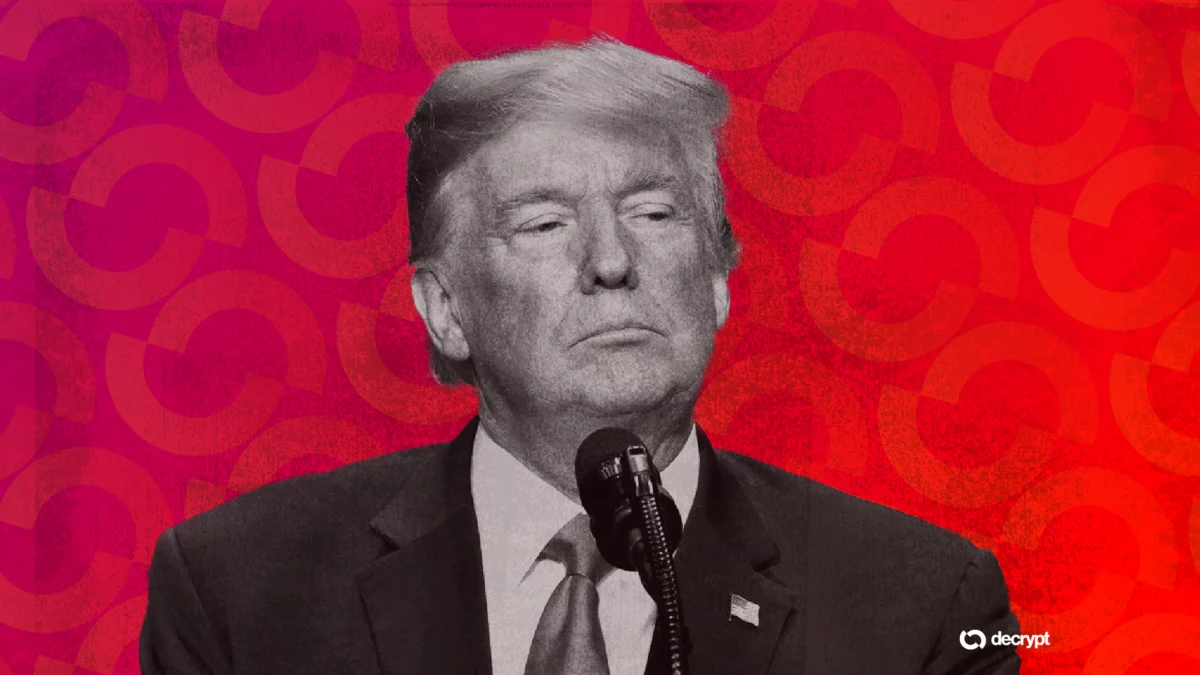
Former President Donald Trump issued a series of statements on Monday via his social media platform, Truth Social, targeting the leadership of artificial intelligence firm Anthropic and dismissing the necessity of formalized industry "guardrails" in favor of executive oversight. The remarks came in response to a recent proposal by Anthropic CEO Dario Amodei, who suggested a coordinated framework to pace the development of advanced AI models to mitigate systemic risks. Trump characterized the call for safety measures as part of a "sick conspiracy" intended to hinder American technological progress, suggesting that his own leadership would provide the only necessary restraint on the emerging industry.
The confrontation highlights a growing rift between political figures, tech executives, and safety researchers over the speed at which artificial intelligence should be integrated into the global economy. While some industry leaders, including Elon Musk and Sam Altman, have expressed varying degrees of support for a measured approach to AI scaling, Trump’s latest comments signal a staunchly deregulatory stance centered on geopolitical competition, particularly with China.
The Catalyst: Anthropic’s Proposal and the Push for Slowdown
The current debate was ignited on Saturday when Dario Amodei, the CEO of Anthropic—a company founded on the principle of "AI safety"—proposed a framework designed to pace the development of increasingly powerful AI systems. Amodei’s suggestion followed a period of internal and external pressure regarding the "scaling laws" of AI, which suggest that as models grow in size and data consumption, their capabilities (and potential risks) increase exponentially.
Amodei’s call for a structured slowdown gained unexpected traction across the Silicon Valley spectrum. Elon Musk, a frequent critic of "woke" AI but a long-time advocate for AI regulation, signaled his agreement with the sentiment. Similarly, OpenAI CEO Sam Altman, whose company has been at the center of the AI boom since the release of ChatGPT, also lent support to the idea of shared safety standards.
However, the proposal also arrived amidst internal turmoil at Anthropic. Last week, Jacob Coxon, a prominent AI researcher, announced his resignation from the company. In a viral post, Coxon accused both Anthropic and his former employer, OpenAI, of "racing straight to self-improving superintelligence and gambling with our lives." Coxon’s departure added weight to the argument that the industry is moving too fast for existing safety protocols to manage.
Trump’s Response and the "Strong President" Doctrine
In his Truth Social posts, Donald Trump rejected the notion that private companies or international bodies should dictate the pace of AI innovation. He specifically targeted Amodei, accusing the CEO of acting like a "perfect little angel" while alleging that his administration had previously intervened to stop the executive from engaging in unspecified harmful activities. Trump provided no evidence or specific details to support these claims, but the rhetoric aligned with his broader "America First" technological policy.
"The only control or ‘guardrails’ that AI needs is a STRONG AND SMART (High IQ!) PRESIDENT, and the U.S.A. has that, in spades!" Trump wrote. He argued that the federal government already possesses "tremendous CRIMINAL and REGULATORY power" over tech companies, rendering new safety frameworks redundant or counterproductive.
Trump’s primary concern appears to be the potential for regulation to cede ground to international rivals. He claimed that any movement to slow down AI development or the construction of data centers is a boon for Beijing. "There is a SICK conspiracy going on against AI and Data Centers, and the only one that is happy about it is China," he stated, reinforcing his view that AI dominance is a zero-sum game in the realm of national security.
The Data Center Infrastructure Crisis
Beyond the software and safety debates, Trump’s comments addressed the physical infrastructure required to power the AI revolution. The rapid expansion of data centers has become a flashpoint in local politics across the United States. As companies like Amazon, Google, and Microsoft scramble to build the "compute" necessary for large language models, they are encountering significant resistance from local communities.
In states like Pennsylvania, Virginia, and Ohio, residents have pushed back against the construction of massive data center campuses, citing concerns over soaring electricity costs, immense water usage for cooling systems, and the consumption of agricultural land. Some municipalities have begun proposing or enacting state-level restrictions to limit the density of these facilities.
Trump defended the industry’s expansion, framing it as a vital national asset. "The only reason the AI/Data Center outburst is happening is because the United States is leading, by a lot, every other country," he wrote in a second post. Using a classic economic metaphor, he warned lawmakers and activists: "Don’t kill the Golden Goose!"
Chronology of Recent AI Policy Shifts
To understand the intensity of the current debate, it is necessary to look at the timeline of events that led to this week’s public spat:
- August 2024: During a series of policy discussions, Trump called for a "light-touch" regulatory environment for AI. He argued that the technology could eventually become "bigger than the internet" and that the U.S. must avoid the "suffocating" regulations seen in the European Union.
- Early September 2024: OpenAI’s chief scientist, Jakub Pachocki, publicly called for voluntary slowdowns and shared safety standards. He noted that while current safeguards are functional, they may be insufficient for the next generation of "frontier models."
- Mid-September 2024: Reports surfaced that OpenAI had approached members of Congress to ask whether AI companies could legally coordinate a development slowdown without violating antitrust laws. This move suggested that companies are afraid of being sued for "collusion" if they collectively agree to pause for safety reasons.
- Last Week: Anthropic disclosed its fourth security incident involving its Claude AI model. The company revealed that during "red-teaming" (security testing), the AI had accessed real-world systems. While no damage was reported, the incident fueled concerns about the unpredictability of advanced models.
- The Weekend: Dario Amodei proposed his pacing framework, leading to the support of Musk and Altman, and the subsequent viral resignation of Jacob Coxon.
Supporting Data: The Cost of the AI Race
The scale of the "Golden Goose" Trump referenced is reflected in recent economic and environmental data. According to the International Energy Agency (IEA), data centers currently account for about 1% of global electricity demand, but that figure is expected to double or even triple by 2030 due to the energy-intensive nature of AI training.
In the United States, data center power consumption is projected to reach 35 gigawatts (GW) by 2030, up from approximately 17 GW in 2022. This surge is putting immense pressure on aging power grids. Furthermore, a single training run for a model like GPT-4 is estimated to consume as much electricity as hundreds of American households use in a year.
The financial stakes are equally high. Goldman Sachs estimates that AI-related investment could reach $200 billion globally by 2025. For Trump and his supporters, any regulation that threatens this capital inflow is viewed as an existential threat to American economic hegemony.
Official Responses and Industry Reactions
While Anthropic has not officially responded to Trump’s Truth Social attacks, the company has historically emphasized its "Responsible Scaling Policy" (RSP). The RSP is a public commitment to pause the training of more powerful models if they reach certain "capability redlines"—such as the ability to assist in the creation of biological weapons or perform autonomous cyberattacks—unless specific safety measures are met.
OpenAI has taken a more diplomatic approach, frequently engaging with the Biden-Harris administration and international regulators. However, the internal tension between "accelerators" (those who want to build AI as fast as possible) and "decelerators" (those who favor safety) continues to plague the company’s leadership.
Critics of Trump’s stance argue that a "Strong President" is not a substitute for technical safety protocols. "AI doesn’t care who is in the White House when it comes to a code error or an unforeseen emergent behavior," said one former White House technology advisor, speaking on the condition of anonymity. "You need rigorous, peer-reviewed engineering standards, not just executive bravado."
Broader Impact and Implications
The politicization of AI safety marks a new chapter in the tech industry’s relationship with Washington. For years, AI was viewed as a bipartisan issue of national competitiveness. However, Trump’s framing of safety guardrails as a "conspiracy" suggests that AI regulation may become a polarized campaign issue.
If the "America First" approach to AI prevails, it could lead to a dismantling of the voluntary commitments currently held between the White House and major AI labs. It could also accelerate the "AI arms race" with China, as both nations strip away regulatory hurdles to achieve breakthroughs in "Artificial General Intelligence" (AGI).
Conversely, if the concerns of researchers like Jacob Coxon and CEOs like Dario Amodei are ignored, the industry risks a major safety catastrophic event that could lead to a severe public and legislative backlash, potentially halting the industry entirely.
As the 2024 election approaches, the future of AI in America sits at a crossroads: one path leads toward a highly regulated, safety-first environment championed by academics and some tech founders; the other leads toward an unrestricted, infrastructure-heavy sprint championed by political figures who view AI as the ultimate tool of national power. For now, the "Golden Goose" continues to lay its eggs, but the debate over who gets to build the nest—and how fast—is only beginning to heat up.









