
 admin
admin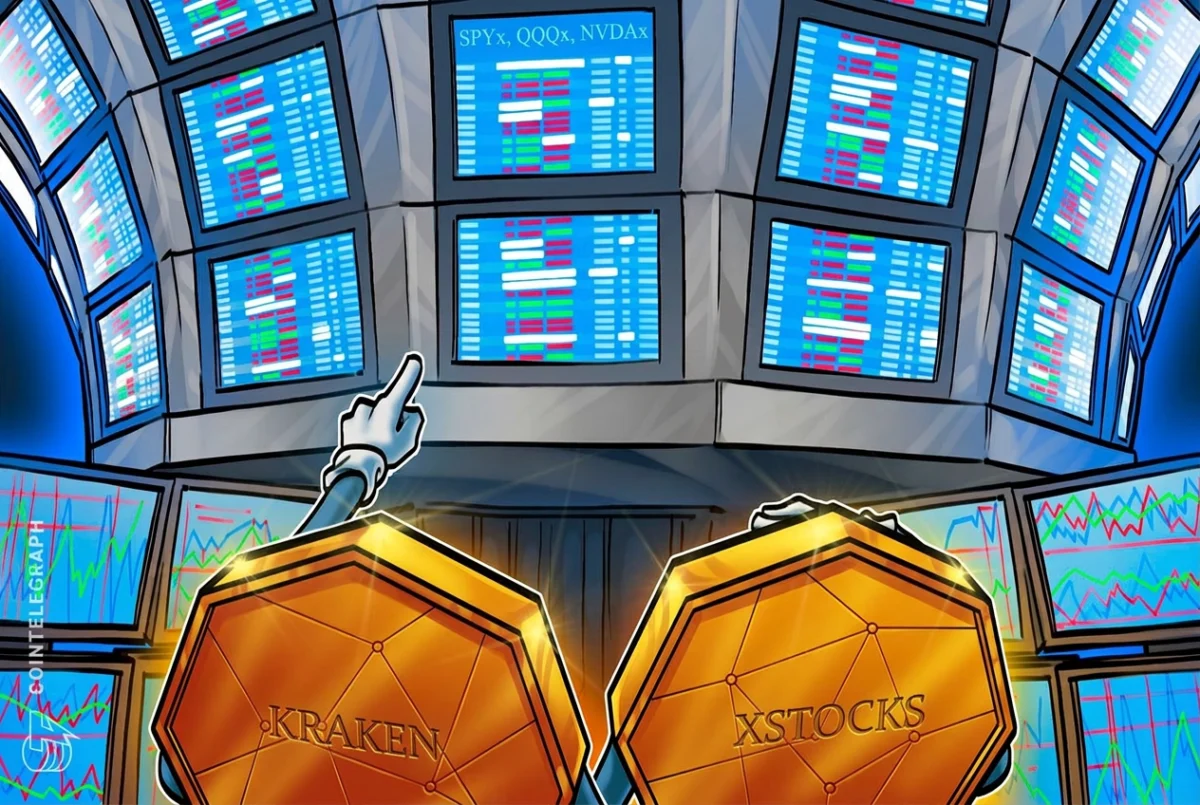
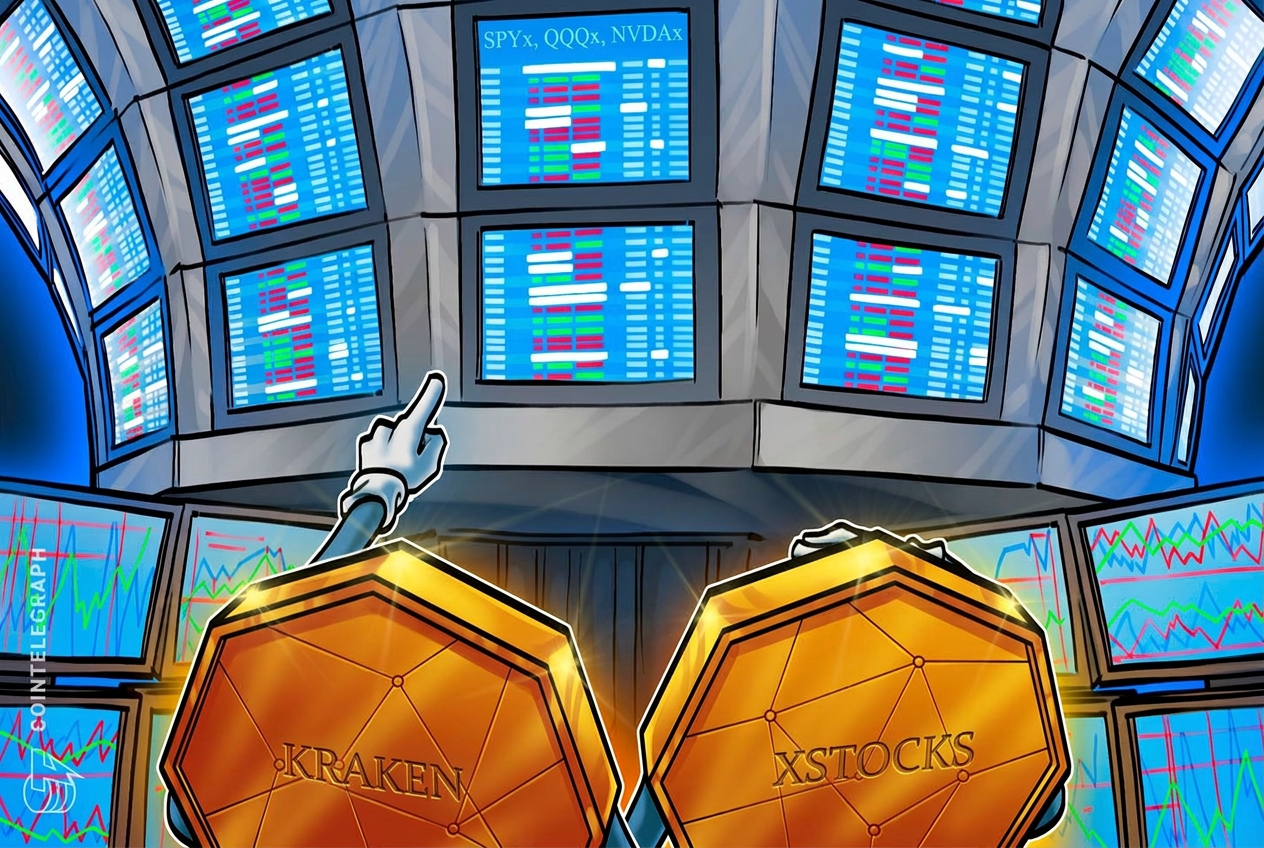
Kraken, one of the world’s longest-standing cryptocurrency exchanges, has officially announced the launch of its xStocks vaults, a new product line designed to offer onchain yield for tokenized versions of major United States equities and exchange-traded funds (ETFs). According to a statement released on Monday, the initiative allows eligible clients to earn returns by lending tokenized assets through decentralized finance (DeFi) protocols, marking a significant step in the convergence of traditional finance (TradFi) and the burgeoning Real World Asset (RWA) sector of the blockchain industry.
The initial rollout of the xStocks vaults supports three primary tokenized assets: the SPDR S&P 500 ETF (represented as SPYx), the Invesco QQQ ETF (QQQx), and Nvidia (NVDAx). By utilizing these vaults, Kraken users can gain exposure to the price movements of these high-demand financial instruments while simultaneously generating yield. The yield is generated through the lending of these tokenized assets within onchain markets, with rewards paid out in the same deposited xStocks. To maintain liquidity and user flexibility, Kraken has implemented a withdrawal process that aims to settle requests within a three-day window.
Technical Infrastructure and Strategic Partnerships
The xStocks vaults are built upon the same foundational infrastructure as Kraken’s DeFi Earn product, which was introduced in January of this year. Since its inception, the DeFi Earn platform has demonstrated significant market traction, attracting more than $800 million in total deposits. This existing framework provides a tested environment for the new equity-focused vaults, ensuring a level of operational stability for users.
To facilitate the complex mechanics of onchain lending for tokenized securities, Kraken has partnered with several key players in the DeFi infrastructure space. The vaults are powered by Veda, a protocol specializing in the creation of yield-bearing vaults. The management and design of the specific lending strategies are handled by Sentora, a firm tasked with optimizing returns while mitigating risk.
The execution of these strategies occurs primarily through established DeFi markets on the Solana blockchain, such as Kamino. Sentora’s role is critical to the security of the product, as the firm is responsible for setting exposure limits and continuously monitoring collateral levels, market liquidity, and the integrity of oracle conditions. By leveraging Solana’s high-throughput and low-latency environment, the xStocks vaults can process transactions and adjust lending positions with greater efficiency than on more congested networks.
The Growth of Tokenized Equities and RWA
Kraken’s entry into the tokenized stock yield market comes at a time of unprecedented growth for the Real World Asset sector. According to data provided by RWA.xyz, the distributed value of tokenized stocks and ETFs has surged to approximately $2.84 billion. This represents a staggering increase from roughly $540 million recorded just one year ago, highlighting a massive shift in how investors and institutions view the utility of blockchain-based representations of traditional securities.
Tokenization involves creating a digital twin of a financial asset on a blockchain. In the case of xStocks, these tokens represent a claim on the underlying shares of the S&P 500, the Nasdaq-100, or Nvidia. The primary appeal of this technology lies in its ability to offer 24/7 trading, fractional ownership, and seamless integration into DeFi protocols. For many investors, the ability to use an equity-backed asset as collateral or as a source of lending yield—without selling the underlying position—represents a significant evolution in capital efficiency.
The selection of Nvidia (NVDAx) as one of the inaugural assets is particularly noteworthy. As a leader in the artificial intelligence hardware sector, Nvidia has become a bellwether for the modern tech economy. By offering a tokenized, yield-bearing version of NVDA, Kraken is catering to a demographic that seeks exposure to high-growth tech stocks while participating in the decentralized economy.
Geographic Restrictions and Regulatory Context
Despite the global nature of blockchain technology, Kraken has maintained a cautious approach regarding regulatory compliance. The xStocks vaults are available only to eligible clients in specific jurisdictions, primarily within the European Economic Area (EEA) and other select international markets.
Conversely, the product is explicitly excluded for residents and citizens of the United States, the United Kingdom, Canada, Australia, and the United Arab Emirates. This geographic segmentation reflects the complex and often fragmented regulatory landscape governing tokenized securities. In the United States, for instance, the Securities and Exchange Commission (SEC) has maintained a strict stance on the registration requirements for any platform offering products that resemble securities or investment contracts. Similarly, the UK’s Financial Conduct Authority (FCA) has implemented rigorous marketing and operational rules for crypto-asset service providers.
By focusing on the EEA, Kraken is likely positioning itself to take advantage of the Markets in Crypto-Assets (MiCA) regulation, which provides a more defined legal framework for the issuance and trading of digital assets across the European Union. This regulatory clarity is often cited by industry leaders as a prerequisite for the mass adoption of RWA products.
Chronology of Kraken’s DeFi Integration
The launch of xStocks is the latest milestone in a broader strategy by Kraken to integrate decentralized services into its centralized exchange platform.
- January 2024: Kraken launches "DeFi Earn," allowing users to access yield-generating protocols directly through the exchange interface. The product focuses initially on native crypto assets like Ethereum and various stablecoins.
- Q2 2024: DeFi Earn surpasses $500 million in deposits, signaling strong demand for institutional-grade access to DeFi protocols.
- August 2024: Industry data reveals a 400% year-over-year growth in the tokenized equity market, prompting major exchanges to accelerate their RWA product pipelines.
- September 2024: Kraken officially announces the xStocks vaults, expanding the DeFi Earn infrastructure to include tokenized versions of the S&P 500, Nasdaq-100, and Nvidia.
This timeline suggests a deliberate pivot toward becoming a "financial super-app" that bridges the gap between the $100 trillion traditional stock market and the $2 trillion cryptocurrency market.
Analysis of Implications for the Broader Industry
The introduction of yield-bearing tokenized stocks by a major exchange like Kraken carries several implications for the future of finance. First, it validates the "lending" model for tokenized securities. Traditionally, stocks generate returns through price appreciation and dividends. By moving these assets onchain, Kraken is introducing a third revenue stream: decentralized lending yield. This creates a "triple-threat" asset class that could prove highly attractive to yield-starved investors in a fluctuating interest rate environment.
Second, the move strengthens the Solana ecosystem. By choosing Kamino and other Solana-based protocols as the primary venues for lending, Kraken is providing a massive influx of liquidity to the network. This could encourage other traditional financial institutions to look at Solana as a viable layer for institutional-grade RWA applications.
Third, the partnership with specialized firms like Veda and Sentora highlights a shift toward modularity in crypto services. Rather than building every component in-house, Kraken is acting as a curator and distributor, utilizing the expertise of specialized DeFi architects to manage risk and strategy. This model allows for faster product iteration and better risk management through professional oversight.
Risk Considerations and Market Outlook
While the potential for yield is a major draw, the xStocks vaults are not without risk. Because the yield is generated through DeFi lending protocols, users are exposed to smart contract risk—the possibility that a bug or vulnerability in the protocol’s code could lead to a loss of funds. Furthermore, the 3-day withdrawal period suggests that while the assets are tokenized, the underlying liquidity may still be tied to traditional settlement cycles or the time required to unwind complex lending positions.
The reliance on oracles—services that provide real-world price data to the blockchain—also introduces a point of failure. If an oracle provides incorrect pricing for Nvidia or the S&P 500, it could trigger unnecessary liquidations or mispriced lending terms. Sentora’s role in monitoring these conditions is intended to mitigate such risks, but the "onchain" nature of the product means that market volatility can have immediate and automated effects.
Looking forward, the success of xStocks will likely serve as a litmus test for the broader tokenization movement. If Kraken can maintain the security and performance of these vaults while scaling to billions in deposits, it may pave the way for the tokenization of more complex assets, such as private equity, real estate, and debt instruments.
As the digital asset industry matures, the distinction between "crypto" and "finance" continues to blur. Products like xStocks represent the vanguard of this transition, offering a glimpse into a future where the world’s most liquid assets are accessible, tradable, and yield-bearing on a global, 24/7 ledger. For now, Kraken’s strategic focus on the European and international markets allows it to build a track record of success while waiting for regulatory winds to shift in other major economies.








