
 admin
admin
The Bank for International Settlements (BIS) has released a comprehensive working paper revealing that the perceived transparency of blockchain technology often masks a high degree of measurement uncertainty, with estimates of Bitcoin’s on-chain transfer values varying by as much as sixfold depending on the methodology employed. The study, titled "Hidden complexity: measuring stablecoin, crypto and decentralised finance ecosystems," underscores a growing concern among global financial regulators: that the "raw" data provided by public ledgers is frequently misinterpreted, leading to inflated perceptions of economic activity within the digital asset space.
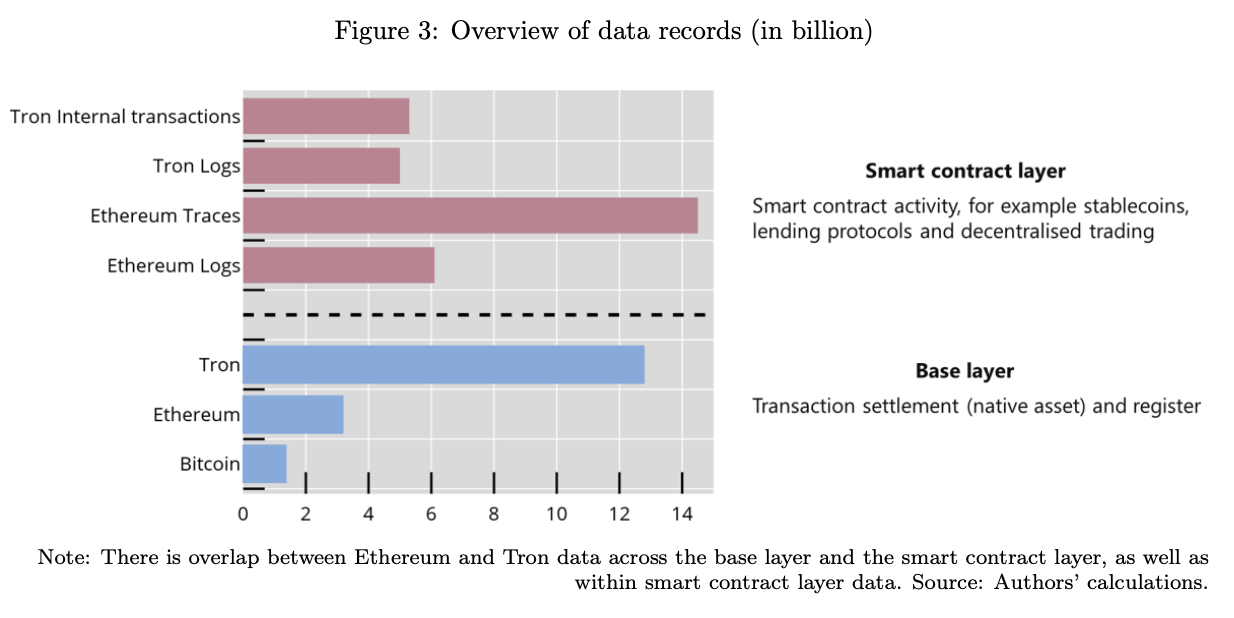
Researchers at the BIS, an international financial institution owned by central banks, conducted an exhaustive analysis of approximately 100 billion blockchain records across the Bitcoin, Ethereum, and Tron networks. Their findings suggest that common metrics—such as transaction volume, market capitalization, and Total Value Locked (TVL)—often present a veneer of precision that is not supported by the underlying technical realities of blockchain architecture. This discrepancy poses significant challenges for policymakers, investors, and researchers who rely on this data to assess the systemic risks and economic utility of decentralized finance (DeFi) and cryptocurrencies.
The Technical Root of the Discrepancy: The UTXO Model
The primary driver of the sixfold gap in Bitcoin transaction estimates lies in the network’s fundamental structure, known as the Unspent Transaction Output (UTXO) model. Unlike traditional bank accounts, which operate on an "account-based" system where a balance is simply debited or credited, Bitcoin transactions function more like physical cash. When a user sends a portion of their holdings, the entire "input" is spent, and the remaining balance is returned to the sender as a "change output."
For example, if a user holds a single UTXO worth 10 BTC and wishes to send 1 BTC to a merchant, the protocol creates a transaction with two outputs: 1 BTC to the merchant and 9 BTC back to a new address controlled by the sender. Without sophisticated filtering, a raw data aggregator might record this as a 10 BTC transfer of value. However, the actual economic transfer is only 1 BTC. The BIS researchers found that failing to account for these internal "change" transfers leads to a massive inflation of reported volumes.
Depending on whether an analytics provider uses "raw" volume or "adjusted" volume—which attempts to filter out change addresses and internal wallet shuffling—the reported value of Bitcoin moved on-chain can vary by 600%. This technical nuance means that many public-facing dashboards may be inadvertently overstating the actual utility of Bitcoin as a medium of exchange.
Market Capitalization and the "Realized" Value Gap
The measurement problem extends beyond daily transaction flows to the very valuation of the network itself. The BIS study highlighted a significant divergence between "conventional" market capitalization and "realized" market capitalization.
Conventional market capitalization is calculated by multiplying the total supply of coins by the current market price. While this is the standard for equities, the BIS argues it is often a poor metric for crypto-assets because it fails to account for "lost" coins—Bitcoins held in addresses where the private keys have been misplaced or coins that have not moved in over a decade.

In contrast, realized capitalization values each coin at the price it was last moved on-chain. This metric effectively "filters" the supply by ignoring dormant or lost coins and focusing on the value at which the current holders actually acquired their positions. The researchers found that the conventional measure has, at various points in market cycles, been as much as four times higher than the realized capitalization. This suggests that the "wealth" stored in the Bitcoin ecosystem may be significantly less than what is suggested by top-line market data, particularly during periods of high price volatility.
Chronology of Blockchain Analytics and the BIS Investigation
The BIS study arrives at a critical juncture in the evolution of digital asset regulation. Over the past decade, the crypto-analytics industry has matured from simple block explorers to sophisticated intelligence firms like Glassnode, Chainalysis, and Allium Labs. However, the BIS notes that there is still no industry-wide standard for what constitutes an "economic" transaction.
The timeline of the BIS investigation involved a deep dive into historical data spanning several years, culminating in the analysis of the 100 billion records mentioned in the report. The study focused on three primary networks:
- Bitcoin: Analyzed for its UTXO-based transfer value discrepancies.
- Ethereum: Analyzed for the complexity of smart contract interactions and the DeFi ecosystem.
- Tron: Analyzed for its high volume of stablecoin (USDT) transactions, often used for payments and value storage.
By comparing these three distinct architectures, the BIS sought to determine if the measurement issues were unique to Bitcoin or systemic across the industry. Their conclusion was the latter: while the causes vary by network, the lack of data reliability is a universal trait of the current crypto landscape.
The Ethereum Challenge: Uncategorized Smart Contracts
While Bitcoin’s issues are rooted in its UTXO model, Ethereum presents a different set of challenges due to its account-based model and the proliferation of smart contracts. The BIS researchers examined roughly 67.5 million active smart contracts on the Ethereum network and found a startling lack of transparency.
Of the contracts analyzed, approximately 54 million could not be categorized using the study’s classification system. This means that a vast majority of the automated activity on the Ethereum blockchain—ranging from complex DeFi arbitrage to simple token swaps—remains a "black box" to observers.
The researchers noted that the "Total Value Locked" (TVL) metric, which is often used to measure the success of DeFi protocols, is particularly prone to inaccuracy. TVL can be artificially inflated through "re-hypothecation," where the same asset is deposited into multiple protocols, being counted as "value" in each one. This creates a circular dependency that can make the ecosystem appear much larger and more liquid than it truly is, potentially hiding systemic vulnerabilities.
Stablecoin Divergence: USDT on Ethereum vs. Tron
The study also shed light on the differing roles of stablecoins across various blockchains, specifically focusing on Tether (USDT). The researchers found that USDT serves fundamentally different purposes depending on the network it resides on, making aggregate data for the asset misleading.
- USDT on Ethereum: This version of the stablecoin is deeply integrated into the DeFi ecosystem. The study found that more than 20% of USDT on Ethereum was held within smart contracts in 2022. This suggests that Ethereum-based USDT is primarily used for decentralized lending, liquidity provision, and trading.
- USDT on Tron: In contrast, USDT on the Tron network is associated more with "payment-like" activity and a store of value. Only about 1% of USDT on Tron was held in smart contracts during the same period. Tron’s lower transaction fees and faster confirmation times have made it a preferred network for cross-border remittances and retail payments, particularly in emerging markets.
The BIS concluded that aggregating USDT activity across all blockchains conflates these different economic behaviors. By treating a DeFi arbitrage trade on Ethereum the same as a retail payment on Tron, analysts obscure how stablecoins are actually being utilized in the global economy.
Industry Responses: Visa’s Push for Adjusted Data
The BIS’s call for more accurate data mirrors recent efforts by major financial institutions to refine blockchain analytics. Visa, through its "Onchain Analytics" dashboard powered by Allium Labs, has already begun implementing filters to distinguish between "noise" and genuine economic activity.
Visa’s methodology aims to remove distortions caused by high-frequency trading bots, internal exchange operations (where exchanges move funds between their own cold and hot wallets), and "bridge routing" (where tokens are moved between blockchains). The results of these filters are dramatic. According to Visa’s dashboard, the total stablecoin transaction volume across tracked networks over a 30-day period was approximately $6.4 trillion. However, after applying filters to reflect only organic economic activity, the "adjusted" volume dropped to just $313.1 billion—a staggering difference that aligns with the BIS’s findings of inflated on-chain data.
Implications for Global Finance and Policy
The BIS researchers concluded that on-chain indicators should be treated as "noisy approximations rather than direct measures of economic activity." This conclusion has profound implications for the future of crypto regulation.
If regulators base their policies on raw data, they risk overestimating the scale of the crypto market and its potential impact on financial stability. Conversely, if they ignore the "noise," they may fail to see the actual risks emerging from high-frequency automated trading or interconnected DeFi protocols.
The study suggests that for cryptocurrencies to be integrated into the formal financial system, there must be a move toward standardized reporting and more sophisticated forensic accounting of blockchain data. Without these standards, the "transparency" of the blockchain remains an illusion—a vast sea of data that is easily accessible but difficult to interpret.
As central banks continue to explore Central Bank Digital Currencies (CBDCs) and stablecoin regulations, the BIS’s findings serve as a cautionary tale. The complexity of measuring even a relatively "simple" asset like Bitcoin suggests that the road to a fully transparent and measurable digital economy is longer and more technically demanding than previously assumed. For now, the "sixfold gap" remains a stark reminder that in the world of crypto-assets, things are rarely as they appear on the surface.








