
 Nila Kartika Wati
Researchers at the Bank for International Settlements (BIS), often referred to as the central bank for central banks, have unveiled a significant challenge in accurately quantifying activity within the cryptocurrency ecosystem, revealing that estimates of Bitcoin on-chain transfer values can vary by as much as sixfold depending on the measurement methodology employed. This profound finding, detailed in BIS Working Paper No. 1377 titled "Hidden Complexity: Measuring stablecoin, crypto and decentralised finance ecosystems," underscores a critical need for enhanced scrutiny and standardized approaches when interpreting seemingly straightforward blockchain data. The discrepancy does not pertain to trading volumes on centralized crypto exchanges but rather to the intrinsic movement of value directly on the blockchain, highlighting a fundamental issue in understanding the true economic scale and nature of decentralized finance (DeFi) and the broader crypto market.
The core of the sixfold measurement gap in Bitcoin stems from its unique transaction structure, particularly how "change outputs" are handled. Unlike traditional banking transactions where a precise amount is debited and credited, Bitcoin transactions operate on a Unspent Transaction Output (UTXO) model. When a user wishes to spend Bitcoin, they typically select one or more UTXOs (analogous to physical bills or coins) that collectively amount to the desired sum. If the total value of the selected UTXOs exceeds the payment amount, the excess is returned to the sender as "change" in a new UTXO. This change output, while an integral part of the transaction, does not represent a transfer of value to a new, distinct party for economic purposes. Yet, depending on the analytical framework, this return of funds to the sender can be inadvertently counted as an additional output, inflating the perceived transfer value. This methodological variance in distinguishing between genuine economic transfers and internal ledger adjustments is the primary driver behind the vast discrepancies observed.
The implications of such a wide variance are far-reaching. For investors, relying on inflated on-chain metrics could lead to misjudgments of market liquidity, adoption rates, and network utility. For regulators and policymakers, a distorted view of on-chain activity complicates efforts to assess systemic risks, formulate effective oversight frameworks, and understand the true integration of crypto assets into the broader financial system. The BIS researchers emphatically stated that "Metrics such as transaction volumes, market capitalisation and total value locked often suggest a degree of accuracy that is not supported by the nature of the underlying data." This statement serves as a stark warning against an uncritical acceptance of raw blockchain figures, urging a more nuanced and sophisticated interpretative lens.
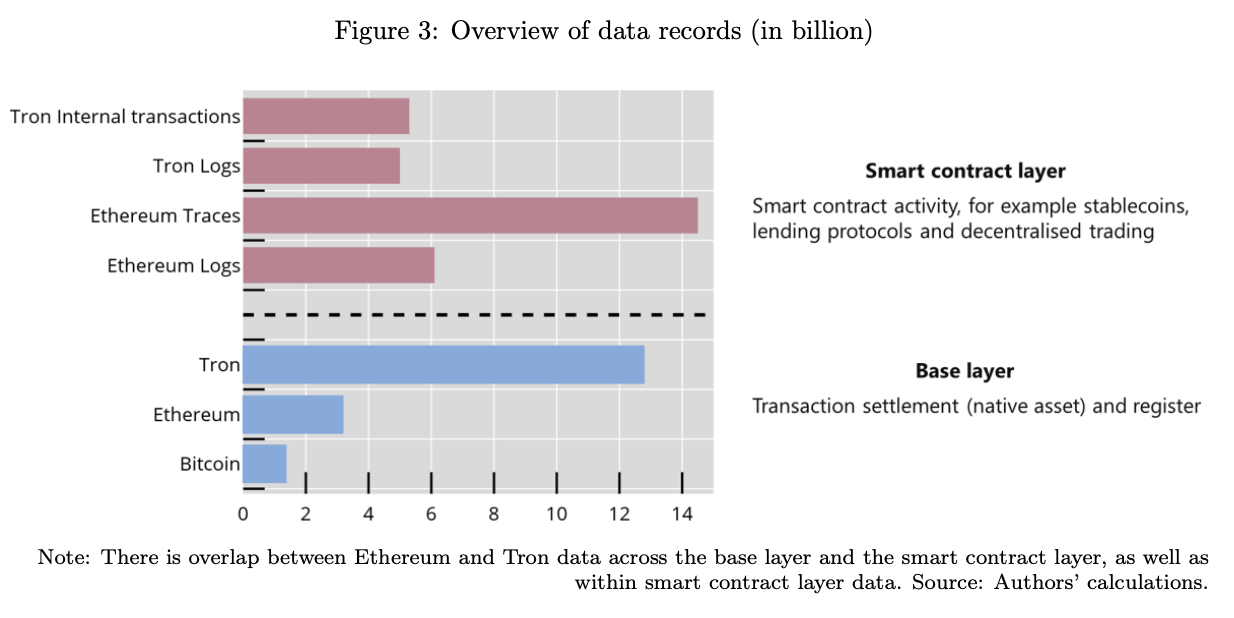
Beyond transfer values, the measurement problem also extends to Bitcoin’s market capitalization. The study found that the conventional measure, which simply multiplies the current price by the total circulating supply, has at times been as much as four times higher than "realized capitalization." Realized capitalization is a more refined metric that values each coin at the price it last moved on the blockchain, effectively filtering out "lost" coins or those held dormant for extended periods since their last transaction. This difference highlights the challenge of assessing true market value and liquidity, as the conventional metric may overstate the investable or actively traded portion of the market. The BIS study, a monumental undertaking, analyzed over 100 billion blockchain records spanning Bitcoin, Ethereum, and Tron, concluding that similar measurement challenges are pervasive across the entire crypto ecosystem, not just isolated to Bitcoin.
The Evolving Landscape of Crypto Data: A Chronological Perspective
The BIS’s deep dive into crypto data complexity is not an isolated event but rather a continuation of growing interest and concern from traditional financial institutions regarding the nascent digital asset space. For years, the rapid growth of cryptocurrencies and decentralized finance has presented a novel challenge to established financial oversight bodies. Initially, institutions like the BIS maintained a cautious, often skeptical, stance towards crypto, primarily focusing on potential risks such as money laundering, illicit financing, consumer protection, and financial stability.
- Early 2010s: Bitcoin emerges, and its on-chain data becomes publicly available. Early analytics tools focus on basic metrics like transaction count, block height, and simple wallet balances. The complexity of UTXO accounting is largely understood by developers but less by mainstream observers.
- Mid-2010s: The rise of altcoins and smart contract platforms like Ethereum introduces new layers of data complexity. Stablecoins begin to gain traction, initially as a means to facilitate crypto trading, but their potential for broader payment uses starts to emerge.
- Late 2010s – Early 2020s: DeFi explodes, bringing with it a proliferation of protocols, tokens, and complex interactions. Terms like "Total Value Locked" (TVL) become popular, often cited as a key indicator of DeFi’s scale, yet their methodologies are often inconsistent. Central banks and international bodies like the BIS begin to ramp up their research efforts into digital currencies, including central bank digital currencies (CBDCs) and the implications of private stablecoins and DeFi.
- 2021-2022: A period of unprecedented crypto market growth followed by significant corrections (e.g., Terra/Luna collapse, FTX bankruptcy). These events intensify the focus on data reliability, market stability, and the need for robust regulatory frameworks. The BIS, through its Innovation Hub, actively explores various aspects of digital finance.
- 2023: The release of BIS Working Paper No. 1377 represents a significant step in systematically dissecting the inherent difficulties in measuring on-chain economic activity. It builds on previous statements, such as the BIS chief Agustín Carstens’ assertion that stablecoins are "not credible for payments at scale," by providing granular data supporting the foundational challenges in even understanding their true usage.
This timeline illustrates a shift from general skepticism to a more granular, evidence-based approach to understanding the crypto ecosystem’s operational intricacies. The BIS’s latest report is a testament to the maturation of this inquiry, moving beyond anecdotal observations to systematic data analysis.

Ethereum’s Multifaceted Measurement Conundrum
The complexities identified by the BIS extend well beyond Bitcoin, presenting distinct challenges within the Ethereum ecosystem. Ethereum, with its pioneering smart contract functionality, introduces a new layer of analytical difficulty. Smart contracts are self-executing agreements whose terms are directly written into code, enabling a vast array of decentralized applications (dApps), DeFi protocols, and non-fungible tokens (NFTs). The sheer proliferation and diversity of these contracts make accurate categorization and functional analysis incredibly difficult.
The BIS study examined approximately 67.5 million active smart contracts on Ethereum, a staggering number reflecting the network’s dynamism. However, a significant finding was that roughly 54 million of these contracts — nearly 80% — could not be reliably categorized using the established classifications within the study’s framework. This inability to neatly pigeonhole smart contract activity means that a substantial portion of Ethereum’s on-chain movements remains ambiguous in terms of its economic purpose. Are these contracts facilitating legitimate financial transactions, powering gaming dApps, managing DAOs, or simply experimental deployments? Without clear categorization, the true economic utility and impact of Ethereum’s vast network remain opaque, hindering efforts to quantify its contribution to the digital economy or assess potential risks.
This ambiguity is critical for researchers and regulators alike. Understanding the function of smart contracts is paramount to assessing financial stability risks, identifying potential areas for regulatory arbitrage, or even simply measuring user adoption and engagement. The current state of affairs suggests that even with publicly available blockchain data, extracting meaningful economic insights from a network as complex as Ethereum requires far more sophisticated analytical tools than currently prevalent.
Stablecoins: A Spectrum of Use Cases Masked by Aggregation
Stablecoins, designed to maintain a stable value relative to a fiat currency or other asset, present yet another layer of measurement challenge. The BIS research highlights that the same stablecoin asset can serve vastly different purposes depending on the blockchain it resides on, complicating any attempt to aggregate activity across networks.
Consider Tether’s USDT, the largest stablecoin by market capitalization. The BIS study found stark differences in its usage patterns on Ethereum compared to Tron. On Ethereum, USDT was found to be more closely linked to DeFi activity, such. This often involves its use in lending protocols, decentralized exchanges (DEXs), and complex yield-farming strategies. The share of USDT held by smart contracts on Ethereum exceeded 20% in 2022, indicating its deep integration into programmatic financial applications.
In contrast, USDT on Tron was primarily associated with payment-like and store-of-value purposes. Tron’s network, known for its lower transaction fees and faster speeds compared to Ethereum (especially before Ethereum’s upgrades), has become a popular conduit for international remittances and everyday transactions, particularly in regions where access to traditional banking services is limited or costly. The share of USDT held by smart contracts on Tron, reflecting less programmatic financial activity, was significantly lower, around 1%.
The researchers conclude that aggregating USDT activity across different blockchains can conflate these distinct types of economic activity. Such aggregation risks obscuring how stablecoins are actually being used, leading to misleading conclusions about their adoption, utility, and potential impact on financial systems. For instance, an aggregate stablecoin volume might suggest widespread adoption for payments, whereas a deeper analysis reveals a significant portion is locked in DeFi protocols on one chain, while another portion facilitates cross-border transfers on a different chain. This distinction is crucial for policymakers attempting to regulate stablecoins, as the regulatory approach for a payment instrument might differ significantly from that for a DeFi collateral asset.
Broader Implications for the Crypto Ecosystem and Official Responses
The overarching conclusion from the BIS researchers is a powerful one: on-chain indicators should be treated as "noisy approximations rather than direct measures of economic activity." This statement serves as a foundational caveat for anyone engaging with cryptocurrency data, from individual investors to national treasuries.
The implications are profound:
- For Investors: It necessitates a more critical approach to metrics often touted in crypto media or by project teams. "Transaction volume" or "total value locked" figures may not accurately reflect genuine economic engagement or value creation. A deeper understanding of the underlying methodology and potential distortions is required for informed decision-making.
- For Regulators and Policymakers: The report validates the cautious stance often adopted by traditional financial authorities. The difficulty in accurately measuring activity complicates efforts to identify systemic risks, monitor compliance with anti-money laundering (AML) and combating the financing of terrorism (CFT) regulations, and implement effective consumer protection measures. It reinforces the need for robust data standards and potentially direct data access from key market participants.
- For Researchers and Academics: The study highlights the fertile ground for further research into sophisticated on-chain analytics. Developing more accurate methodologies to filter out non-economic activity, categorize smart contract functions, and disaggregate cross-chain stablecoin usage is essential for building a reliable evidence base for the crypto economy.
- For the Crypto Industry: The findings present a call to action for greater transparency and standardization in how on-chain metrics are presented. Projects and data providers that adopt rigorous, adjusted methodologies will gain credibility and contribute to a more mature and understandable ecosystem.
While the BIS report points out the problems, some industry players are already working on solutions to provide more refined insights. Visa, a global payments technology giant with increasing involvement in the crypto space, offers its Onchain Analytics dashboard, powered by data from Allium Labs. This dashboard explicitly distinguishes between "total" and "adjusted" stablecoin transaction volumes, acknowledging the very issues highlighted by the BIS.
Visa’s adjusted methodology aims to remove "potential distortions from activity including high-frequency trading, bots, bridge routing and internal exchange operations." These categories represent precisely the "noise" that can inflate raw on-chain figures without reflecting genuine economic transfers between distinct parties. For instance, high-frequency trading often involves rapid, cyclical movements of funds between wallets controlled by the same entity, or between exchanges, which are not true economic payments. Similarly, internal exchange operations, such as rebalancing hot and cold wallets, or routing funds through bridge protocols, while technically on-chain transactions, do not represent a new economic value transfer to an external counterparty.
The disparity shown on Visa’s dashboard is striking. The dashboard currently displays $6.4 trillion in total stablecoin transaction volume across the networks it tracks over a recent 30-day period. However, the adjusted volume for the same period stands at a significantly lower $313.1 billion. This more than 20-fold difference between total and adjusted volume for stablecoins further emphasizes the magnitude of the problem identified by the BIS and the critical importance of applying sophisticated filtering techniques to arrive at meaningful economic data. This proactive approach by Visa, a mainstream financial player, signals a growing industry recognition of the need for more accurate and interpretable on-chain metrics. Other analytics firms, such as Nansen, Glassnode, and Chainalysis, also employ various proprietary methodologies to refine raw blockchain data, but standardization across the industry remains a challenge.
In conclusion, the BIS’s comprehensive study serves as a crucial wake-up call for anyone interpreting data from the cryptocurrency and decentralized finance ecosystems. The inherent structural complexities of blockchains, particularly Bitcoin’s UTXO model, Ethereum’s smart contract proliferation, and the varied cross-chain use cases of stablecoins, lead to significant discrepancies in reported on-chain metrics. These figures, from transfer values to market capitalization, often appear with a misleading degree of precision that masks underlying methodological variances. The report reinforces the idea that raw on-chain data, while transparent, requires sophisticated interpretation and adjustment to reflect genuine economic activity. As the crypto landscape continues to evolve and integrate with traditional finance, the drive for standardized, robust, and nuanced on-chain analytics, exemplified by efforts from institutions like Visa, will be paramount for fostering greater understanding, facilitating effective regulation, and ensuring the long-term credibility and stability of the digital asset space.









