
 admin
admin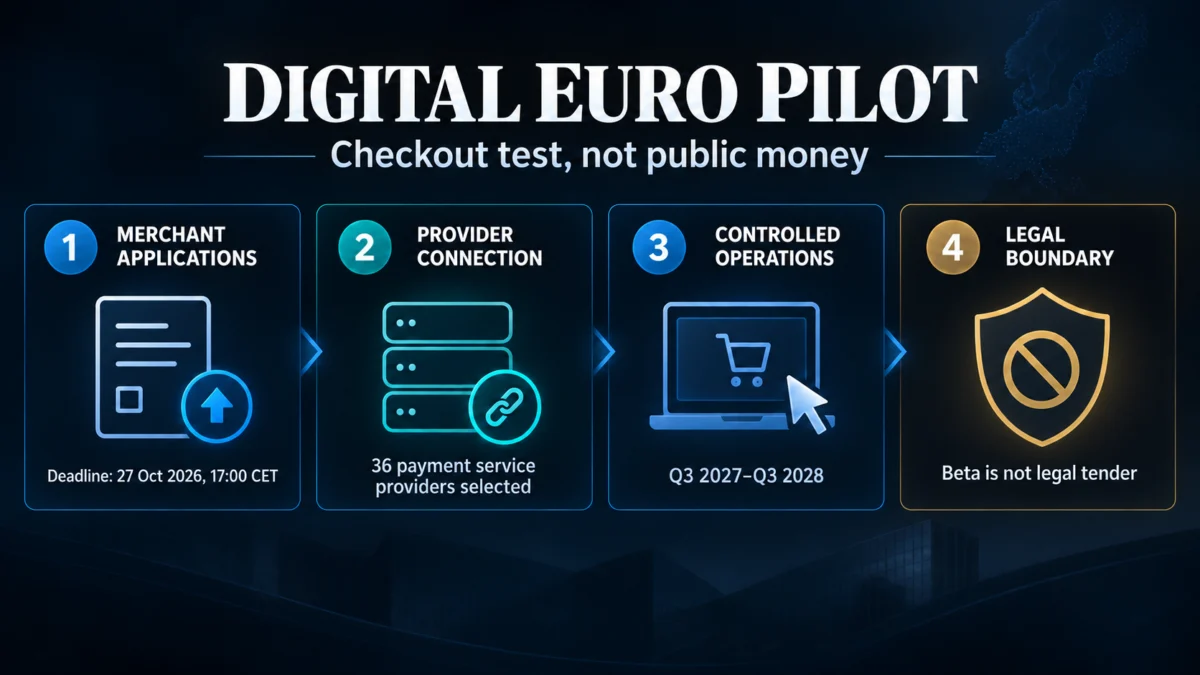
The European Central Bank (ECB) has initiated a critical phase in the development of its proposed retail central bank digital currency (CBDC) by opening applications for online merchants to participate in a controlled pilot program scheduled for 2027. This move signifies a tangible step towards integrating the digital euro into real-world online transactions, though it explicitly states that the pilot will not involve the issuance of the digital euro as legal tender. The application window for eligible e-commerce and mobile-commerce businesses across the euro area will close on October 27th.
This development comes as the European Union continues its legislative process, with the European Parliament having recently authorized negotiations on the proposed legal framework for the digital euro. The pilot program, set to commence its operational phase in the second half of 2027, aims to thoroughly test the technical infrastructure, operational processes, and user experience of the digital euro in a controlled environment. The ECB’s strategy emphasizes a phased approach, meticulously evaluating each component before any decision on a full-scale issuance is made.
A Controlled Environment for Real-World Testing
The call for merchant participation marks a significant acceleration of the digital euro project, bringing its potential integration into the online marketplace closer to reality. However, it is crucial to understand that this pilot is designed as a sandbox, distinct from a public circulation scenario. The digital euro, should it eventually be issued, will be governed by specific EU legislation that is still under development. The current pilot is a deliberate exercise to gather data and refine the system’s functionality without conferring legal tender status upon the test currency.
Businesses interested in joining the pilot must be established within the European Union and demonstrate the capacity to serve customers across at least two euro-area countries participating in the test. A key requirement is an active online or mobile platform that can be adapted to integrate the pilot payment flow. This ensures that the testing encompasses a diverse range of e-commerce environments and user interactions.
Building the Network: Payment Providers and Merchant Integration
To facilitate the pilot, the ECB has already taken a significant step by selecting 36 payment service providers in July. These providers will assume roles in acquiring, distributing, or a combination of both, thereby establishing the necessary network to connect pilot users with participating merchants. Acquirers will be responsible for processing transactions initiated by users and forwarding them to merchants, while distributors will manage the provision of digital euro wallets and related services to consumers.

For merchants, the integration process will involve contracting and collaborating with one of these selected acquiring payment service providers. This partnership will enable them to receive test payments during the pilot phase. The voluntary and unpaid nature of merchant participation underscores the ECB’s focus on understanding the practical feasibility and operational impact of the digital euro on existing e-commerce infrastructures. It is an opportunity for businesses to assess how a potential future payment method might seamlessly fit into their current online and mobile commerce operations.
The Digital Euro Pilot Timeline: From Application to Operation
The journey towards the operational phase of the digital euro pilot is structured with specific milestones. Following the application deadline of October 27th, selected merchants will enter a preparatory period. This phase will involve technical integration and testing with their chosen payment service providers.
The core operational phase of the pilot is slated to begin in the third quarter of 2027 and is expected to last for 12 months, concluding in the third quarter of 2028. This extensive period is crucial for robust data collection and analysis of various transaction scenarios, user behaviors, and system performance under real-world, albeit controlled, conditions. The ECB’s detailed schedule indicates that the operational phase could potentially be extended by up to an additional six months, allowing for further refinement and validation of the digital euro’s capabilities.
This phased approach, from initial application to extended operation, is designed to provide a comprehensive understanding of the digital euro’s technical and practical implications. It allows for iterative improvements and adjustments based on feedback and observed performance, thereby minimizing risks associated with a premature public launch.
Legislative Framework: A Crucial Prerequisite
The development of the digital euro is intrinsically linked to the legislative process at the EU level. In July, the European Parliament signaled its readiness to commence negotiations on the proposed legal framework for the digital euro. This framework will define the legal basis, principles, and operational guidelines for a potential future digital euro. The outcome of these legislative discussions will be a critical determinant in whether the digital euro is ultimately issued.
It is important to note that even if the EU lawmakers adopt a comprehensive legal framework, the decision to issue a digital euro will remain a separate one for the ECB. The current pilot program is intended to inform this decision-making process by providing empirical evidence of the digital euro’s viability and potential impact. The ECB’s approach is characterized by caution and a commitment to ensuring that any issuance of a digital euro is well-justified, technologically sound, and aligned with the broader objectives of the monetary union.

Implications for the Digital Economy
The opening of merchant applications for the digital euro pilot represents a significant moment for the evolution of digital payments within the Eurozone. By engaging with online merchants, the ECB is actively seeking to understand the practical challenges and opportunities associated with integrating a CBDC into the existing e-commerce ecosystem. This includes evaluating aspects such as transaction speed, security, user interface design, and the overall merchant experience.
The pilot’s focus on a non-legal tender beta allows for a risk-managed approach to innovation. It enables the exploration of new payment functionalities and the identification of potential issues without jeopardizing the stability of the existing financial system. The data gathered from this controlled experiment will be invaluable in shaping the final design and implementation strategy for a potential digital euro.
Furthermore, the selection of a diverse range of payment service providers indicates a commitment to fostering a competitive and inclusive digital payment landscape. The collaboration between the ECB, payment providers, and merchants is essential for building a robust and user-friendly digital euro system that can complement existing payment methods and potentially enhance financial inclusion.
The implications of a successful digital euro could be far-reaching. It could offer a more efficient and cost-effective payment option, particularly for cross-border transactions within the Eurozone. It might also provide a hedge against the growing influence of private digital currencies and stablecoins, ensuring that central banks maintain a significant role in the future of money. However, the success of such an endeavor hinges on careful planning, robust technological implementation, and broad public and merchant acceptance.
The current pilot phase is a crucial step in this complex journey. By involving online merchants directly, the ECB is moving beyond theoretical considerations and into the practicalities of everyday commerce. This hands-on approach is vital for building trust and ensuring that the digital euro, if it comes to fruition, meets the needs of both consumers and businesses in the digital age. The upcoming months and years will be critical in observing how this ambitious project unfolds and what its eventual impact will be on the European financial landscape.








