
 admin
admin
The Rise of Onchain Malware Persistence
The Chainalysis report highlights a growing trend where attackers move away from traditional centralized servers, which are susceptible to takedowns by law enforcement and internet service providers. By embedding malicious code or Command and Control (C2) instructions within smart contracts or transaction metadata, hackers ensure that their infrastructure remains accessible as long as the blockchain exists.
A prominent example identified in the report is the activity of UNC5342, a group with confirmed ties to the Democratic People’s Republic of Korea (DPRK). Previously unattributed malicious activity across several major networks, including Tron, Aptos, and the BNB Smart Chain, has now been linked to this entity. The use of these specific chains suggests a strategic choice based on high transaction volumes and low fees, allowing the actors to blend in with legitimate traffic.
In 2024 and leading into 2025, North Korean operatives have refined a technique known as "EtherHiding." This method involves placing crypto-stealing code within smart contracts on the Ethereum network or its layer-2 equivalents. Because the code is hosted on a decentralized ledger, it cannot be "deleted" in the traditional sense, forcing security teams to develop new methods of filtering and blocking interactions with these specific contract addresses.
Geopolitical Implications: Funding State Programs
The surge in cyber activity is not merely an exercise in technical prowess but a critical component of state-sponsored financial strategies. A parallel report from NBC News, cited by Chainalysis, reveals a sophisticated "proxy hiring" scheme employed by the DPRK. North Korean operatives are reportedly using remote workers from third countries, such as Iran and Lebanon, to apply for and secure positions at high-profile U.S. companies.
Once the "proxy" passes the interview process and secures the job, the position is handed over to a North Korean operative. These individuals then work remotely, gaining access to internal corporate networks and earning high salaries in U.S. dollars. The primary objective of this infiltration is to generate revenue to fund the DPRK’s weapons programs, including its ballistic missile and nuclear initiatives. This tactic bypasses international sanctions and provides a steady stream of hard currency directly to the regime.

South Korea and Thailand: Tightening the Regulatory Noose
While state actors exploit the technology, regional regulators in Asia are moving to restrict specific types of onchain activity. In South Korea, authorities have taken a hardline stance against the decentralized prediction market Polymarket. Reports indicate that several South Korean users have been referred to prosecutors for their participation in the platform.
Under South Korea’s Criminal Act, Polymarket transactions are being classified as illegal gambling. The rationale provided by authorities is that users are staking assets on outcomes—such as political elections or sporting events—that cannot be predicted with certainty. Unlike regulated financial derivatives, these activities fall outside the legal framework for "trading" and are instead categorized as unauthorized betting.
Similarly, Thailand’s Securities and Exchange Commission (SEC) has proposed new, stringent regulations for stablecoin transfers. The proposed rule would implement a daily transfer cap of 5 million baht (approximately $151,000) per user. This move is aimed at curbing money laundering and reducing the risk of capital flight, though industry participants argue it may stifle the growth of the local digital asset ecosystem.
Hong Kong: A Strategic Window of Opportunity
In contrast to the restrictive measures seen in South Korea, Hong Kong is being urged to capitalize on the legislative delays occurring in the United States. Following the failure of the "CLARITY" act to pass a key vote in the U.S., industry insiders believe Hong Kong has a "critical strategic window" to establish itself as the premier global crypto hub.
Allen Ding, director of Bitfire Research, noted that the U.S. regulatory stalemate provides Hong Kong with the time needed to refine its own licensing regime and attract global talent. Shawn Yan, founder of Cregis Technology, emphasized that the city should focus on building cross-border infrastructure that operates independently of the regulatory shifts in any single foreign jurisdiction.
Amidst this strategic positioning, Metaplanet, often referred to as "Japan’s MicroStrategy," has announced plans to establish a subsidiary in Hong Kong. This move follows a period of corporate restructuring. After facing backlash over a plan to distribute 20% of its shares to executives, Metaplanet slashed its Series 10 stock pool from 319.46 million potential shares to 188.19 million. This adjustment effectively extinguished over $220 million in warrant value and increased the company’s Bitcoin-per-share ratio by 8.8%.

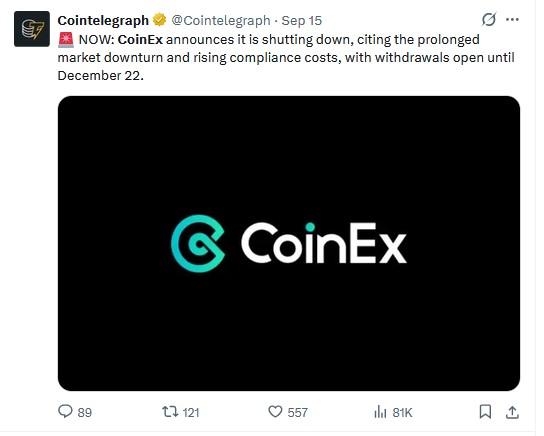
However, the Hong Kong market is not without its casualties. CoinEx, an exchange founded in the city, recently announced it would cease operations after nine years. The company cited a significant contraction in trading volumes during the prolonged bear market, coupled with the escalating costs of regulatory compliance, as the primary reasons for its closure.
India’s Institutional Leap into Tokenization
India is taking a different approach by integrating blockchain technology directly into its traditional financial infrastructure. The Securities and Exchange Board of India (SEBI) and the Reserve Bank of India (RBI) recently launched a pilot project for tokenized corporate bonds.
The "Demat 2.0" initiative allowed three major companies to issue a combined 10.25 billion rupees (approximately $107 million) in bonds held as digital tokens on a distributed ledger. This system is uniquely connected to the RBI’s wholesale central bank digital currency (CBDC) via a "Unified Market Interface." This integration allows for atomic settlement, where the transfer of the bond and the payment occur simultaneously, reducing counterparty risk and increasing market efficiency.
On the legislative front, India’s Parliamentary Standing Committee on Finance has wrapped up a year-long review of cryptocurrency policy. The government is expected to provide a formal response in the coming weeks, which will likely dictate the future of private digital assets in the world’s most populous nation. Concurrently, the Enforcement Directorate (ED) has announced a new mandate to finalize economic crime investigations, including those involving crypto, within an 18-month timeframe.
Vietnam and Malaysia: Emerging Operational Hubs
Vietnam is increasingly becoming a destination for back-office operations and technical development for European crypto firms. Bitcoin Suisse, a veteran Swiss crypto service provider founded in 2013, announced plans to shift up to half of its workforce from Switzerland to Bratislava and Vietnam. The move is part of a broader strategy to maintain global competitiveness by utilizing Vietnam’s growing pool of technical and administrative talent.
Furthermore, Vietnamese regulators are actively developing a supervisory mechanism for crypto asset service providers, guided by the Financial Action Task Force (FATF) recommendations. This move toward compliance is bolstered by a new Memorandum of Understanding (MOU) between the world’s largest exchange, Binance, and local authorities to help develop the Vietnam International Finance Center in Ho Chi Minh City.
In Malaysia, the narrative is focused on religious and financial alignment. According to a report by Fitch Ratings, Malaysia has emerged as one of the most "crypto-friendly" Islamic nations. The local Securities Commission has officially declared major assets like Bitcoin, Ethereum, Ripple (XRP), and Stellar (XLM) as Sharia-compliant, opening the door for massive institutional investment from Islamic finance funds.
Singapore: Legal Precedents and Institutional Expansion
Singapore continues to solidify its role as the region’s institutional anchor. The Singapore Exchange (SGX) recently became the first major Asian traditional finance exchange to receive approval from the U.S. Commodity Futures Trading Commission (CFTC) to offer Bitcoin and Ethereum perpetual futures to U.S. institutional investors. This marks a significant milestone in the convergence of TradFi and DeFi.
On the legal front, the Singapore High Court has provided landmark guidance on the valuation of crypto assets. In a recent ruling, the court departed from the traditional "breach-date" assessment, which values damages at the time a contract was broken. Instead, the court indicated it would not allow claimants to delay legal action for years to seek damages at a higher, present-day market price, emphasizing the duty of claimants to mitigate their losses promptly.
However, the city-state remains vigilant against crypto-related crime. Six Malaysian men were recently sentenced to over 12 years in prison and 24 strokes of the cane for an armed robbery involving $4.9 million in cryptocurrency and luxury items. The severity of the sentence underscores Singapore’s "zero-tolerance" approach to physical and cybercrimes involving digital assets.
Conclusion and Broader Implications
The findings by Chainalysis and the subsequent regional developments suggest that 2025 is a year of paradox for the cryptocurrency industry in Asia. While state-sponsored actors are successfully weaponizing the "unstoppable" nature of blockchain technology to facilitate malware and fund illicit regimes, sovereign nations are simultaneously building the most advanced regulated infrastructures in the world.
The 420% surge in onchain malware highlights a critical security gap: the very decentralization that protects users from censorship also protects malicious code from deletion. As India pilots tokenized bonds and Singapore bridges the gap with U.S. regulators, the industry faces a dual challenge: fostering innovation while defending against increasingly sophisticated, state-backed digital warfare. The upcoming legislative responses in India and the regulatory implementations in Thailand and South Korea will likely determine whether the region remains a fragmented landscape of risk or becomes a unified model for the future of global finance.








