
 admin
admin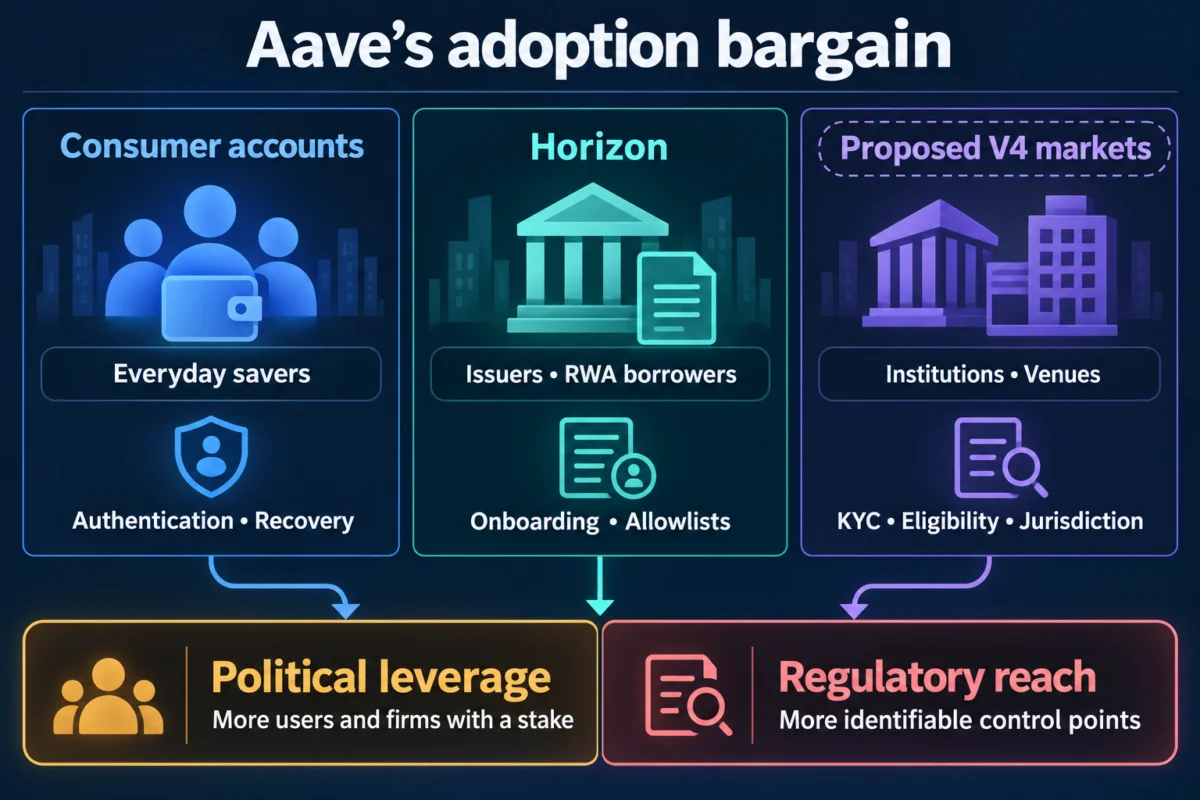
The U.S. Senate’s procedural vote on September 15th, which saw the motion to proceed to H.R. 3633, the CLARITY Act, rejected by a narrow margin of 49-50, represented a significant policy setback for the decentralized finance (DeFi) sector. This legislative defeat, blocking the bill’s immediate path to floor debate, was swiftly reframed by Stani Kulechov, the founder of Aave, a prominent decentralized lending protocol, into a strategic call to action for the industry. Kulechov, speaking via the social media platform X (formerly Twitter), proposed that DeFi should respond to this legislative hurdle by building products that resonate with millions, thereby becoming "too important to ignore" – a strategy he dubbed "The Uber path."
This "Uber path" analogy signifies a deliberate strategy to achieve political leverage through widespread adoption, rather than an assertion that popularity alone can alter legal frameworks. Aave’s own product development roadmap, encompassing consumer-friendly accounts, institutional lending against tokenized assets, and a proposed securities finance architecture, illustrates the nuanced interplay between expanding DeFi’s reach and creating identifiable points of regulatory engagement. While these initiatives aim to broaden the base of individuals and institutions with a vested interest in DeFi, they also inherently assign crucial functions to specific companies, issuers, service providers, and permissioned venues. This dual trajectory suggests that Aave may succeed in making DeFi more difficult for Washington to dismiss, even as its regulated edges simultaneously make the system more accessible to oversight.
The CLARITY Act: A Missed Legislative Opportunity
The CLARITY Act, a federal bill designed to establish a market structure for digital assets, faced a crucial procedural vote in the Senate on September 15th. The motion to proceed, a procedural step required to bring a bill to the Senate floor for debate and potential amendment, failed to achieve the necessary three-fifths majority, with the vote falling 49-50. This outcome, while not a final vote on the bill’s passage, effectively stalled its immediate legislative momentum. The bill had sought to provide a clearer regulatory framework for the burgeoning digital asset industry, addressing issues of market structure, consumer protection, and regulatory clarity that have long been a source of uncertainty for both innovators and investors.
The failure of the CLARITY Act highlights the deep divisions and complexities surrounding cryptocurrency regulation in the United States. Lawmakers are grappling with how to balance fostering innovation in a rapidly evolving technological landscape with safeguarding consumers and maintaining financial stability. The bill’s demise underscores the challenges in forging bipartisan consensus on such a multifaceted issue, with differing views on the nature of digital assets – whether they are commodities, securities, or a new asset class entirely – contributing to legislative gridlock.
Kulechov’s "Uber Path": A Strategic Pivot
Approximately 46 minutes after the Senate’s procedural vote, at 2:19 p.m. Eastern Time, Stani Kulechov took to X to articulate his vision for DeFi’s response. He argued that the industry should channel its efforts into developing products that offer tangible value and broad appeal, echoing the transformative impact of services like Uber on traditional industries. The core of his message was that by becoming indispensable to millions of users, DeFi could command greater attention and influence in policy discussions.
Kulechov’s analogy is not merely aspirational; it represents a pragmatic approach to navigating the complex regulatory environment. The strategy hinges on the principle that widespread user adoption creates a powerful constituency with a vested interest in the continued development and accessibility of DeFi services. This growing base of users, consumers, and businesses engaging with DeFi platforms can exert political pressure on lawmakers, advocating for sensible and supportive regulations rather than outright prohibition.
The Consumer Frontier: Aave Accounts and the Service Layer
Aave Labs is actively working to bridge the gap between the technical intricacies of on-chain finance and the user-friendly experience expected from modern financial applications. Their revamped account design aims to simplify the process of engaging with DeFi, moving away from the often-intimidating interface of traditional crypto wallets. Features such as email or phone number sign-in, password authentication, and optional passkeys are being integrated to lower the barrier to entry. Furthermore, smart accounts are being developed to facilitate features like gas sponsorship, batch transactions, and the pre-authorization of withdrawal destinations, all designed to enhance user convenience and security.
A critical aspect of this consumer-facing strategy is the balance between self-custody and user experience, particularly concerning account recovery. While Aave maintains that its accounts remain self-custodial, the convenience of recovery is underpinned by an infrastructure that extends beyond the core DeFi protocol. The system employs a password and authentication-encrypted signer, stored on Aave’s backend. Users can regain access via a previously authenticated device. For scenarios involving lost devices, encrypted private-key material is segmented and held by third-party services, CoinCover and Aave. Access to this material is contingent upon biometric verification and a one-time password check, after which the two services collaborate to facilitate recovery.
It is important to note that this arrangement is designed to prevent any single entity, including Aave Labs, from unilaterally reconstructing a user’s private key, seizing assets, or reversing blockchain transactions. Aave’s app disclosures explicitly state that users retain control over their assets and warn of the permanent loss of access should all recovery options be exhausted.
However, this product architecture inherently establishes an operational perimeter. The smart account grants Aave Labs a defined permission to move stablecoins into a vault for deposit and yield generation without requiring immediate user intervention. The integration of email and phone authentication, backend services, CoinCover for recovery, and withdrawal allowlists all represent identifiable services. These components are crucial for making the product accessible to a mainstream audience and, critically, are more visible to policymakers than the abstract nature of smart contract code.
The separation between Aave’s corporate and protocol layers is also a key element of its strategy. Aave Labs’ terms of service delineate the Aave Protocol as open-source, self-executing infrastructure that the company does not own, operate, or control. Aave Labs focuses on building software, interfaces, and services that interface with this foundational infrastructure, while the Aave DAO governs protocol upgrades and third-party integrations play distinct roles. This division of responsibilities limits the degree of centralized control attributed to any single actor, though it does not render all layers equally inaccessible to regulatory scrutiny.
Institutional Expansion: Aave Horizon and the Gatekeepers of Access
Aave Horizon extends this strategic tension into the institutional realm. This market enables eligible borrowers to leverage tokenized securities and other real-world assets (RWAs) as collateral for stablecoin loans. Its published architecture consolidates stablecoin liquidity while maintaining compliance tailored to each specific collateral asset.
The stablecoin side of the market remains open, allowing anyone to supply stablecoins and for wallets holding approved assets to interact with the lending contracts within the defined parameters. The collateral side, however, is intentionally permissioned. Asset issuers are responsible for onboarding and verifying investors, establishing eligibility criteria, and managing wallet allowlists that dictate who can hold the tokenized asset.
Other critical functions are also explicitly allocated. LlamaRisk conducts asset due diligence and provides recommendations or maintains loan-to-value ratios, liquidation thresholds, and supply or borrow caps. Chainlink contributes by providing on-chain validation of net-asset values. The core lending logic is executed by smart contracts.
This division of duties is designed to facilitate the integration of asset managers, issuers, and qualified investors into the DeFi ecosystem without requiring them to compromise on regulatory compliance. It also broadens the constituency that would likely resist policies aimed at excluding tokenized-asset lending from the United States market.

However, the expansion of the political constituency is intrinsically linked to the expansion of the regulatory perimeter. Issuer onboarding, Know Your Customer (KYC) decisions, allowlist management, price validation, and the setting of risk parameters are not abstract features of a decentralized network. Instead, they represent functions directly tied to identifiable actors.
| Aave Initiative | Constituency it could widen | Controlled Function | Practical Point of Contact |
|---|---|---|---|
| Aave App Accounts | Everyday stablecoin savers | Authentication, recovery, and withdrawal allowlists | Aave Labs and recovery providers |
| Horizon | Issuers and qualified RWA borrowers | Investor eligibility, asset allowlists, and risk settings | Issuers and risk-service providers |
| Proposed V4 Securities Finance | Brokers, lenders, and tokenized-asset venues | Venue rules, jurisdiction, and collateral eligibility | Permissioned venue operators |
The Future of Securities Finance: Aave’s V4 Proposal
Aave Labs’ June 2026 research on rebuilding securities finance using V4 outlines a sophisticated hub-and-spoke design for lending against tokenized securities, repos, and securities lending. This proposal presents two primary architectural options. The first involves a single, deep liquidity hub beneath multiple specialized spokes, each capable of managing its own assets, risk parameters, and rules while drawing liquidity from the central pool. The second option proposes multiple hubs, segmented by asset category and risk profile, allowing for a distinct Treasury market, for instance, to remain structurally separate from higher-risk equity markets.
This architectural choice is framed as a trade-off. A single hub maximizes liquidity depth but necessitates the configuration of risk isolation at the spoke level. Conversely, multiple hubs offer structural isolation but can fragment liquidity. The proposal also allows for spokes to connect to more than one hub.
From a regulatory perspective, the critical feature lies at the edge of these structures. A permissioned spoke or a jurisdiction-specific hub could enforce KYC requirements, eligible-asset rules, and location-based restrictions while leveraging shared liquidity. While this represents a proposed market structure rather than an existing deployed network, it signifies that institutional scale in DeFi is unlikely to be achieved by eliminating regulated functions. Instead, it involves translating these functions into software parameters and clearly defined operator roles. This approach could streamline compliance efforts and, crucially, make responsibility more readily identifiable.
The Regulatory Landscape Post-CLARITY
The Senate’s procedural rejection of the CLARITY Act has not created a legal vacuum for digital assets. Interfaces, issuers, and intermediaries remain subject to existing laws, with regulatory authority typically following the specific function in question.
The Securities and Exchange Commission (SEC) asserts its authority to apply federal securities laws when an asset or arrangement is deemed a security. In April, SEC staff issued a non-binding statement regarding certain self-custodial crypto interfaces, focusing on broker-dealer registration under Section 15 of the Exchange Act. The conditions outlined in this statement – including solicitation, routing, fees, defaults, and disclosures – underscore the SEC’s view that these interface-level activities can trigger regulatory obligations. Furthermore, a separate staff statement on tokenized securities reiterated that the mere act of placing a security on a blockchain does not alter the fundamental securities law analysis.
The Commodity Futures Trading Commission (CFTC) operates in a different regulatory domain. The CFTC maintains anti-fraud and anti-manipulation enforcement authority in spot digital-commodity markets and exercises full regulatory and enforcement authority over derivatives. While this does not constitute general supervision of all spot lending products, it provides an established avenue for oversight when conduct or instruments fall within the agency’s purview.
FinCEN’s guidance on virtual currency also adopts an activity-based approach. The mere development of software does not automatically classify an individual as a money transmitter. However, a business that utilizes or operates software to accept and transmit value may be subject to Bank Secrecy Act obligations, depending on the specific facts and circumstances.
State laws add another layer of complexity. Licensing requirements vary significantly by jurisdiction and the nature of the activity. The Conference of State Bank Supervisors (CSBS) offers a model framework for modernizing money transmission rules. New York’s virtual currency regulations, for example, encompass activities such as transmission, custody, customer exchange, and the issuance or administration of virtual currency, while also providing certain exemptions.
The absence of the CLARITY Act does not mean that products like Aave App, Horizon, or potential future V4 venues are exempt from regulatory scrutiny. Instead, it reinforces that regulatory analysis extends beyond the protocol code itself to encompass the functions and activities undertaken by these platforms and their associated entities.
Broader Implications and the Path Forward
Kulechov’s "Uber path" articulates a tangible mechanism for political influence. A product that gains traction among millions of users cultivates a diverse constituency comprising voters, customers, counterparties, and businesses. This group can then advocate for workable regulatory frameworks rather than policies that stifle innovation. Institutional adoption, by bringing asset managers and financial firms into the DeFi fold, further strengthens this coalition.
Aave’s product strategy is strategically positioned to test this proposition by targeting both consumer savings and institutional collateral markets. If these initiatives achieve significant scale, policymakers will be confronted with a broader spectrum of interests when determining the future regulatory treatment of DeFi.
However, widespread adoption does not inherently resolve fundamental regulatory questions. Determining whether a tokenized instrument constitutes a security, whether a derivative falls under CFTC jurisdiction, whether a service is engaging in value transmission, or whether a state license is required remains contingent on the specific functions performed and the factual circumstances.
Aave’s most user-friendly products serve to illuminate this reality. Features such as recovery systems, corporate interfaces, issuer allowlists, risk management protocols, and permissioned venues enable DeFi to serve a wider audience, including individuals and institutions that might not engage with a bare protocol. Simultaneously, these elements provide regulators with clear points of engagement for requiring disclosures, qualifications, controls, or registration where existing laws are applicable.
The likely outcome is not that Aave becomes too important to regulate. Rather, Aave has the potential to become important enough to shape the direction and focus of regulation. While the core protocol may remain distributed, the consumer and institutional layers of Aave’s ecosystem are poised to engage in a direct dialogue with Washington. These are the layers where adoption, responsibility, and political leverage converge, shaping the future regulatory landscape for decentralized finance.








