
 Lina Irawan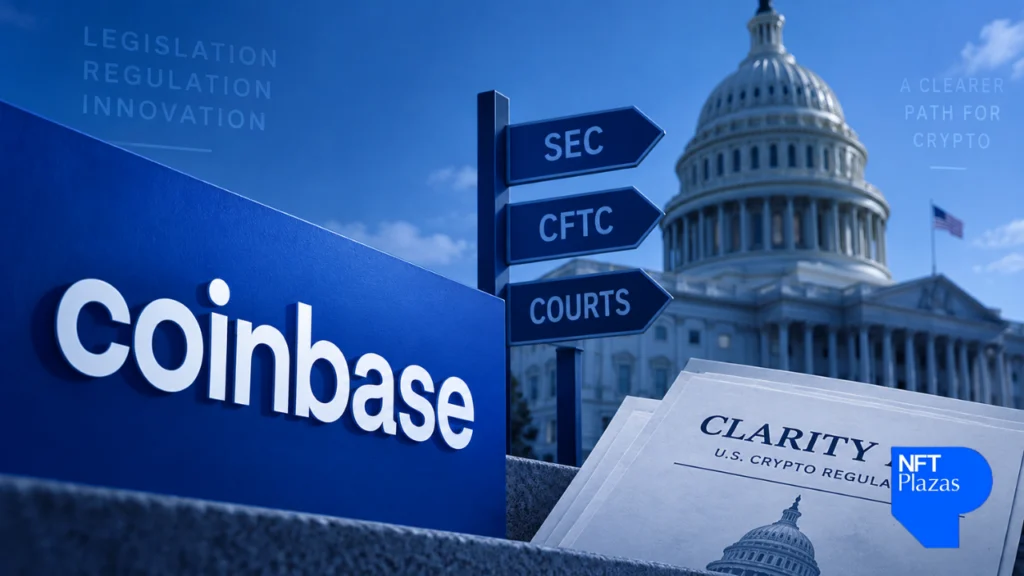
Coinbase, a leading cryptocurrency exchange, is proactively preparing for the possibility that the long-awaited U.S. crypto market-structure bill, known as the CLARITY Act, may not clear Congress. Despite this potential legislative hurdle, the exchange has affirmed its unwavering commitment to its ambitious product development and service expansion plans. This strategic stance underscores Coinbase’s confidence in navigating the evolving regulatory landscape through alternative channels, even if Capitol Hill proves unable to finalize comprehensive digital asset legislation this year.
Alesia Haas, Coinbase’s Chief Financial Officer, articulated the company’s multi-pronged approach to achieving regulatory clarity during an interview at the Goldman Sachs Communacopia & Technology Conference. She highlighted that the path to regulatory certainty is not solely contingent on congressional action. "There was always three paths to getting Clarity," Haas stated, identifying Congress, federal agencies, and the courts as the primary avenues. This perspective positions Coinbase as a resilient player, capable of adapting its strategy based on the regulatory outcomes.
"If Clarity doesn’t pass by Congress, we believe that we have a path via the SEC and the CFTC," Haas elaborated. She pointed to recent initiatives by Securities and Exchange Commission (SEC) Chair Gary Gensler and Commodity Futures Trading Commission (CFTC) Chair Christy Yamaguchi to advance crypto regulation through agency rulemaking. This suggests a growing reliance on executive branch agencies to provide the much-needed regulatory framework for the digital asset industry. The comments come at a critical juncture, just days before a pivotal Senate vote that could determine the bill’s momentum in the current legislative session.
Coinbase Looks Beyond Congressional Stalemate
The CLARITY Act, a bipartisan effort, aims to establish a definitive federal framework for the digital asset market. Its core objectives include delineating clearer jurisdictional boundaries between the SEC and the CFTC, and providing explicit rules for classifying digital assets as either securities or commodities. Such a framework is widely seen by industry participants as crucial for fostering innovation, attracting institutional investment, and safeguarding consumers in the burgeoning digital asset space. The absence of such clarity has been a persistent concern, cited by many as a significant impediment to the growth and maturation of the U.S. crypto market.
A procedural vote, known as a cloture vote, is scheduled for September 15th in the Senate. While not a final vote on the bill itself, it represents a critical hurdle, requiring 60 votes to advance the legislation. The stakes are exceptionally high for an industry that has for years argued that regulatory ambiguity is stifling investment and hindering product development within the United States. Senator Cynthia Lummis, a prominent advocate for the CLARITY Act, has cautioned that a failure to pass market-structure legislation during the current Congress could postpone comprehensive reform opportunities for several years, potentially ceding ground to international competitors with more defined regulatory environments.

However, for Coinbase, a legislative setback would not necessitate a rollback of its strategic ambitions. Emilie Choi, Coinbase’s President and Chief Operating Officer, echoed Haas’s sentiment during the same interview, stating, "We never have to roll back our ambitions." Choi emphasized that the company’s strategy has been built with regulatory compliance at its core, and that Coinbase possesses the expertise to launch new products within the existing, albeit evolving, regulatory framework. The primary difference, she suggested, would be the pace of market development and adoption. "I think it’s more about the acceleration of adoption and how quickly money comes off the sidelines for Clarity," she remarked. This implies that while Coinbase can proceed with its plans, the absence of clear federal legislation might slow the broader market’s embrace of digital assets and related financial products.
SEC and CFTC Emerge as Potential Alternative Regulatory Pathways
Coinbase’s proposed fallback strategy hinges significantly on the regulatory actions and pronouncements of the SEC and CFTC. Haas specifically lauded the efforts of SEC Chair Gensler and CFTC Chair Yamaguchi in pursuing rulemaking that could provide greater clarity without waiting for Congress to enact comprehensive legislation. The CFTC, in particular, has signaled its exploration of how its existing statutory authority can be leveraged to establish a more defined framework for crypto markets, should the CLARITY Act remain stalled.
The SEC, under Chair Gensler’s leadership, has also been engaged in developing a broader crypto regulatory framework. Coinbase’s belief is that these agency-level initiatives, if effectively implemented, could generate sufficient regulatory certainty to support the introduction and growth of additional products and services. This approach, while potentially faster to implement than legislation, carries inherent differences. Agency rules can be introduced or modified more readily by subsequent administrations and regulators, making them less durable than statutes passed by Congress. This dynamic introduces a degree of inherent uncertainty that a legislative solution would aim to eliminate.
Coinbase also possesses considerable experience navigating the regulatory landscape through legal channels. Haas cited litigation as the third potential path to clarity, referencing the company’s past legal battles with the SEC. These legal challenges, while often contentious and resource-intensive, have historically provided significant insights into regulatory expectations and the boundaries of existing legal frameworks. This demonstrates Coinbase’s preparedness to engage with regulators and the judicial system to shape and clarify the rules governing its operations.
Product Ambitions Remain Robust Amidst Regulatory Uncertainty
Coinbase’s resolute determination to continue expanding its offerings is intrinsically linked to its overarching strategy of transforming into more than just a traditional cryptocurrency exchange. The company has been actively pursuing an "Everything Exchange" model, a vision that encompasses not only crypto trading but also integrated payment solutions, tokenized assets, and a wider array of financial products. The availability of clearer U.S. regulations would significantly streamline the process of bringing these innovative offerings to American customers and would likely catalyze institutional investors to allocate more capital into digital assets.
Coinbase CEO Brian Armstrong has consistently maintained a public stance of optimism regarding the CLARITY Act. In recent public statements, he expressed his expectation that the bill would ultimately pass, emphasizing that clearer regulatory rules could unlock substantial institutional investment. Armstrong has previously projected a price target of $400,000 for Bitcoin by 2030, a forecast that reflects his broader bullish outlook on the cryptocurrency market’s long-term potential. He has frequently cited the passage of the GENIUS Act, which provided regulatory clarity for stablecoins, as a prime example of how well-defined rules can accelerate corporate adoption. Armstrong noted that over 150 large companies integrated stablecoin functionalities within three months of that legislation’s enactment, anticipating a similar, potentially more profound, effect from the CLARITY Act, particularly for nascent products like tokenized equities.

The September Vote Remains a Critical Juncture
Despite Coinbase’s well-defined contingency plans, the company retains a strong incentive for Congress to successfully pass the CLARITY Act. A legislative solution would offer a more comprehensive, durable, and universally understood framework compared to a patchwork of agency rules. Furthermore, it has the potential to definitively establish jurisdictional clarity between regulators, thereby mitigating the uncertainty that has complicated the launch of novel crypto products and services in the U.S. market.
The Senate’s September 15th cloture vote therefore represents a crucial test for the industry’s collective efforts to secure regulatory certainty. The bill’s text has reportedly undergone revisions in the lead-up to the vote, with Senate Republicans releasing updated language addressing key areas such as decentralized finance (DeFi) and compliance requirements. These ongoing negotiations highlight the complexity of crafting legislation that can satisfy diverse stakeholder interests and navigate the rapidly evolving technological landscape of digital assets.
For Coinbase, a failure of the CLARITY Act to advance would constitute a significant setback rather than a terminal blow. The exchange is strategically positioning itself to adapt to two primary outcomes: either the passage of comprehensive congressional legislation, should lawmakers secure sufficient support, or a continued reliance on the SEC, CFTC, and judicial processes to forge regulatory clarity, should legislative efforts falter.
Regardless of the immediate outcome in Congress, Coinbase’s message to investors and the broader market is becoming increasingly unambiguous: the company’s U.S. expansion plans are not solely dependent on the passage of a single piece of legislation. While the CLARITY Act could significantly accelerate the pace of these plans, Coinbase appears unwilling to indefinitely postpone its growth and innovation strategies while awaiting definitive action from Washington. This proactive approach signals a company that is both resilient and strategically positioned to thrive, irrespective of the prevailing regulatory winds.









