
 Lina Irawan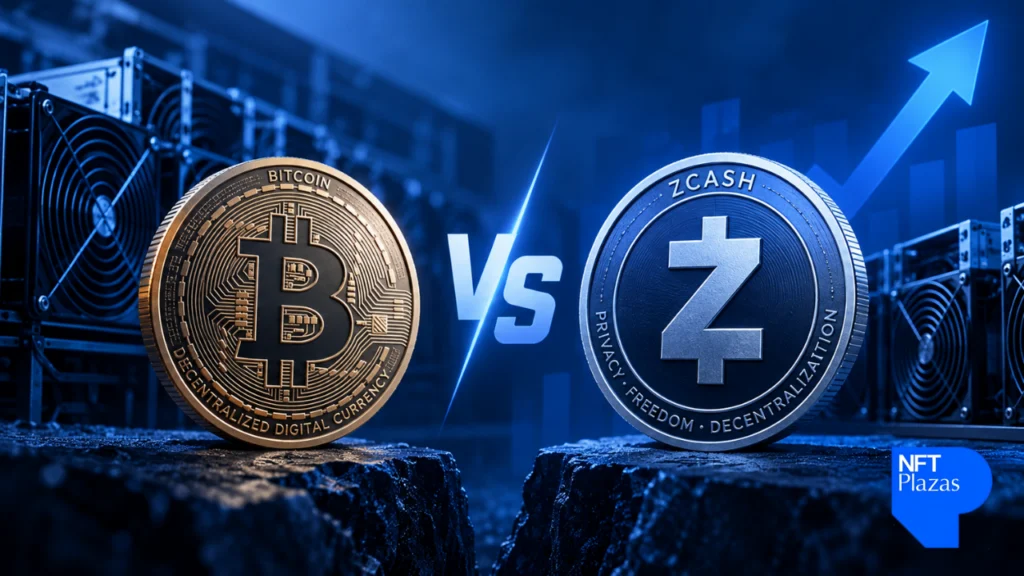
A recent analysis by Grayscale Research has revealed a compelling shift in the cryptocurrency mining landscape, indicating that Zcash (ZEC) mining has become significantly more profitable than Bitcoin mining for individual operators, particularly when considering returns per machine and per unit of electricity consumed. While Bitcoin continues to dominate the mining industry in terms of overall scale and total rewards distributed to miners, this new research highlights a divergence in efficiency and short-term profitability, driven largely by Zcash’s substantial price appreciation.
The comprehensive report, spearheaded by Zach Pandl, Director of Grayscale Research, draws a stark contrast between the two leading proof-of-work (PoW) networks. Bitcoin, with its vast market capitalization, extensive mining infrastructure, and robust network activity, generates a considerably larger collective reward pool for its miners. Grayscale estimates that Bitcoin miners collectively earn approximately $35 million in daily rewards. In comparison, Zcash miners currently generate around $2 million daily. This substantial difference underscores Bitcoin’s entrenched position and the sheer scale of its mining operations.
However, when the focus shifts from aggregate rewards to the performance of individual mining rigs, the narrative changes dramatically. According to Grayscale’s findings, a typical Zcash mining machine is currently generating roughly double the daily revenue of a comparable Bitcoin mining machine. This advantage becomes even more pronounced when factoring in electricity consumption. Under Grayscale’s analytical assumptions, Zcash mining is estimated to produce approximately four times more revenue per megawatt-hour (MWh) than Bitcoin mining. This efficiency gain positions Zcash mining as potentially more lucrative per unit of energy than even some high-performance computing and artificial intelligence cloud services, a remarkable feat for a cryptocurrency mining operation.

It is crucial to note, however, that these figures represent revenue before operational expenses. The actual net profit for individual miners can vary significantly based on a multitude of factors, including local electricity prices, hardware acquisition costs, cooling systems, maintenance expenses, and mining pool fees. A miner operating in a region with high electricity costs, for instance, might find that the apparent profitability advantage of Zcash mining diminishes considerably once these operating expenditures are factored into the equation.
The resurgence in Zcash mining’s economic appeal is intrinsically linked to the cryptocurrency’s impressive price performance over recent months. ZEC has experienced one of its strongest rallies in years, pushing its price past the $1,000 mark and reaching approximately $1,155, its highest level in roughly nine years. This significant price surge has positioned ZEC as one of the top-performing large-cap cryptocurrencies, outperforming Bitcoin during certain periods. For example, ZEC saw gains exceeding 14% over a week while Bitcoin experienced a nearly 3% decline in the same timeframe. This upward price trajectory has bolstered ZEC’s market capitalization to approximately $19.5 billion.
This dramatic price appreciation has directly incentivized miners to allocate more computing power to the Zcash network. Grayscale’s research indicates that the total mining activity on the Zcash network has increased by more than 2.5 times since the beginning of the year. This surge in hashrate creates a positive feedback loop for the network: higher ZEC prices make mining more attractive, drawing in more miners, which in turn enhances the network’s security and decentralization. Zach Pandl has characterized this relationship as potentially reinforcing, where improved mining economics bolster network security and could, in turn, sustain investor interest.
The Incompatibility of Mining Hardware: A Key Differentiator
A fundamental limitation in directly comparing Bitcoin and Zcash mining profitability lies in the specialized nature of the hardware required for each network. The two cryptocurrencies utilize distinct mining algorithms and, consequently, require different Application-Specific Integrated Circuits (ASICs). Bitcoin mining relies on the SHA-256 algorithm, necessitating SHA-256 ASIC miners. In contrast, Zcash employs the Equihash algorithm, which requires specialized Equihash ASIC miners. This critical difference means that a miner cannot simply repurpose Bitcoin ASICs to mine Zcash, even when ZEC mining becomes more economically favorable. The hardware is fundamentally incompatible across the two networks.

Grayscale’s comparative analysis, for instance, pitted a Bitmain S23 Hydro Bitcoin miner against a Bitmain Z15 Pro Zcash miner. The firm’s calculations were based on specific assumptions, including an electricity cost of $0.05 per kilowatt-hour (kWh), full operational uptime, and the exclusion of transaction fee revenue, which can contribute to miner income. These assumptions allow for a focused comparison of block reward profitability relative to energy consumption. The study’s emphasis on revenue per unit of electricity consumption highlights the efficiency gains in Zcash mining, rather than the absolute profitability of an operation, which is subject to a broader array of financial variables.
Zcash’s Smaller Reward Pool: A Potential Bottleneck
Despite the current profitability advantage, a significant question looms over the sustainability of Zcash’s superior mining economics: the size of its reward pool. Zcash’s daily mining rewards, while substantial enough to attract miners, represent a fraction of Bitcoin’s. With approximately $2 million distributed across the Zcash mining network each day, the total pool of rewards is relatively limited.
As more miners enter the Zcash network, this finite reward pool must be divided among a larger number of participants. An increase in hashrate directly translates to a rise in network difficulty, meaning that each machine will earn progressively less, even if the price of ZEC remains stable. This dynamic is already evident in the rapid expansion of Zcash’s hashrate. The more than 2.5-fold increase in mining activity observed this year demonstrates the swift response of miners to improved economic conditions. While Bitcoin faces a similar mechanism, its significantly larger mining ecosystem and reward pool operate on an entirely different scale, potentially allowing for greater resilience to hashrate fluctuations.
Institutional Interest Bolsters Zcash’s Ecosystem
The burgeoning mining activity for Zcash is unfolding against a backdrop of increasing institutional interest in the cryptocurrency. Grayscale, a prominent digital asset management firm, recently launched its Zcash Investment Product, ZCSH, which began trading on the NYSE Arca on August 25th. This new exchange-traded product has demonstrated significant early traction, attracting approximately $179 million in net assets within its initial 11 trading days, bringing its total assets under management to over $700 million.

According to Grayscale’s own data, ZCSH has positioned itself among the top 1% of nearly 4,000 exchange-traded products in terms of net asset growth and has been identified as the fastest-growing altcoin exchange-traded product by net assets. This strong institutional demand, coupled with ZEC’s robust price performance and the improving mining economics, has created a more favorable environment for Zcash than it has experienced in recent years.
Efficiency, Not Dominance, is the Key Takeaway
Grayscale’s research does not suggest that Zcash has eclipsed Bitcoin as the dominant force in the overall mining industry. Bitcoin’s sheer scale in terms of total mining revenue, market capitalization, and established infrastructure remains unparalleled. Instead, the analysis highlights a crucial distinction: the revenue generated by an individual mining machine relative to the electricity it consumes.
On this specific metric of efficiency, Zcash currently holds a distinct advantage. The future trajectory of this advantage will likely depend on a confluence of factors, including the sustained price of ZEC, the cost of electricity in various mining regions, the evolution of network difficulty, and the rate at which new specialized mining hardware enters the market. The rapid growth in Zcash’s hashrate already indicates that miners are actively responding to the perceived opportunity.
In conclusion, while Bitcoin continues to reign supreme in the overall mining landscape, Grayscale’s latest research underscores a significant development: Zcash is currently offering considerably more attractive mining economics for individual machines and per unit of electricity consumed. This shift, driven by a potent combination of price appreciation and algorithmic efficiency, represents a noteworthy evolution in the competitive dynamics of cryptocurrency mining.









