
 Nila Kartika Wati
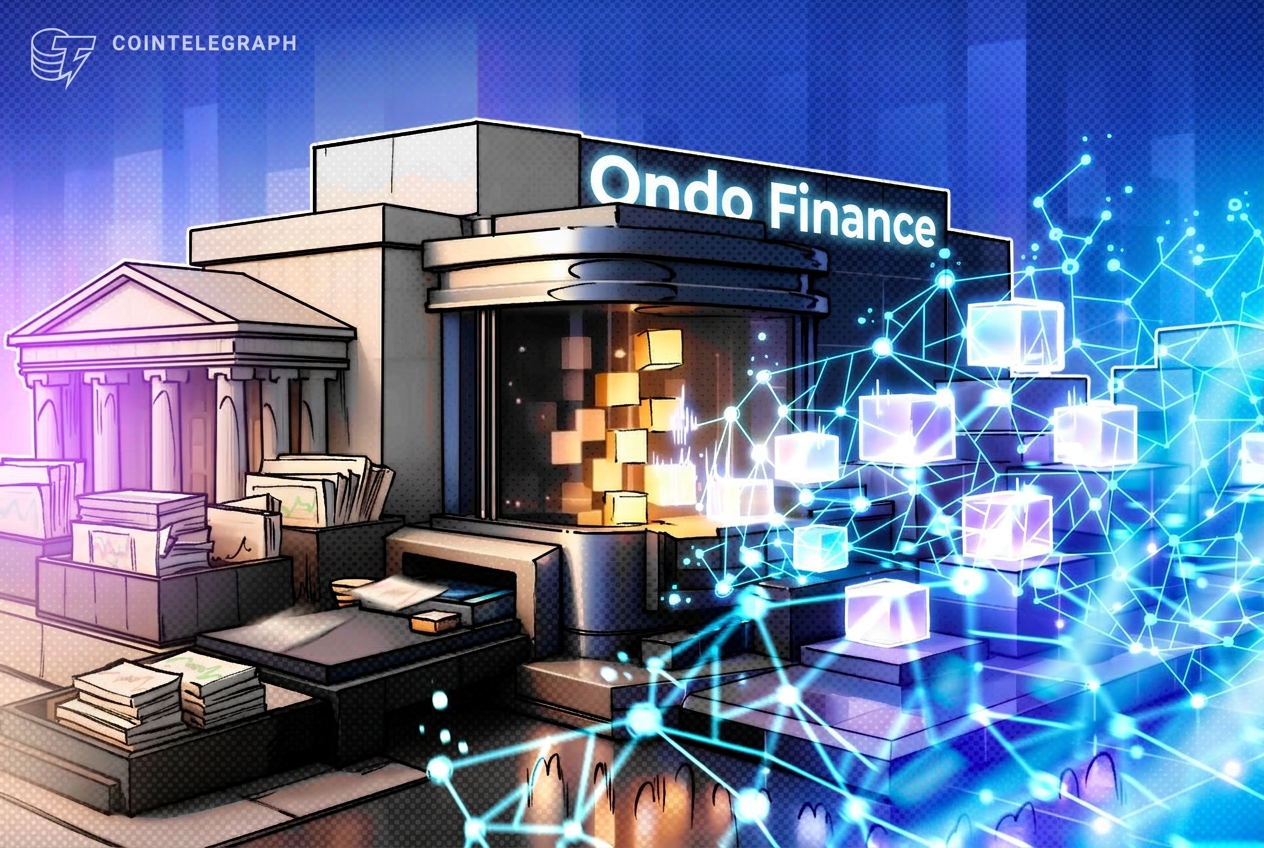
Ondo Finance, a prominent player in the real-world asset (RWA) tokenization sector, has unveiled a groundbreaking mechanism enabling eligible institutional clients to directly convert traditional stocks and exchange-traded funds (ETFs) into their tokenized blockchain equivalents, and vice-versa. This innovative "in-kind" conversion system marks a significant evolution in bridging conventional financial markets with the burgeoning world of decentralized finance (DeFi), streamlining processes that previously required multi-step cash-based transactions. The new offering is poised to redefine capital efficiency and operational agility for institutional investors navigating the convergence of these two financial paradigms.
The core of this new system lies in its direct transfer capability. Approved institutions can now seamlessly transfer shares from their existing accounts with Alpaca, a leading API-first brokerage platform, to Ondo via an internal book transfer. Upon successful transfer, corresponding Ondo Stocks tokens are then issued on-chain, representing ownership of the underlying traditional securities. This process is fully reversible, allowing institutions to redeem their Ondo Stocks tokens for the underlying physical shares, ensuring a fluid two-way conversion pathway. This direct method stands in stark contrast to Ondo’s prior cash-funded model, where institutions holding physical shares would still need to provide separate cash capital to mint equivalent tokens, a system that often introduced complexities and inefficiencies.
Understanding the Paradigm Shift: Tokenization of Real-World Assets
The introduction of in-kind conversion by Ondo Finance is a pivotal moment in the broader trend of real-world asset (RWA) tokenization. RWA tokenization involves representing tangible and intangible assets—ranging from real estate and commodities to government bonds, equities, and intellectual property—as digital tokens on a blockchain. This process leverages blockchain technology’s inherent advantages of immutability, transparency, programmability, and fractional ownership to unlock new levels of liquidity, accessibility, and efficiency for traditional assets. The RWA sector has witnessed explosive growth, driven by institutional interest seeking to harness blockchain’s benefits without abandoning familiar asset classes.
Historically, traditional financial markets have operated on fragmented infrastructure, often leading to slow settlement times, high transaction costs, and limited global accessibility. Blockchain technology offers a powerful alternative, promising near-instantaneous settlement, reduced intermediaries, and enhanced transparency. By tokenizing assets like stocks and ETFs, Ondo Finance is effectively creating a digital bridge that allows these conventional securities to inherit the efficiencies and programmability of blockchain networks. This convergence is not merely about digitizing assets; it’s about reimagining their lifecycle, from issuance and trading to settlement and custody, within a more agile and interconnected global financial ecosystem.
The Evolution of Ondo Finance and its Strategic Position
Ondo Finance has rapidly ascended to become one of the preeminent tokenization platforms globally, distinguished by its focus on bringing institutional-grade financial products onto the blockchain. Its journey reflects a strategic vision to cater to sophisticated investors by offering compliant, transparent, and robust tokenized representations of traditional assets. Prior to this innovation, Ondo’s offerings, such as its tokenized U.S. Treasuries and money market funds, operated primarily on a cash-funded model. While successful, this model required institutions to commit additional capital, even if they already held the underlying assets, creating a capital-inefficiency hurdle for large-scale adoption.
Data from RWA.xyz, a leading analytics platform for tokenized assets, underscores Ondo’s significant footprint in the market. The platform currently reports approximately $3.63 billion in distributed assets across 441 distinct products. This impressive figure positions Ondo as the second-largest tokenization platform by on-chain value, trailing only Securitize. This robust growth highlights the increasing demand for tokenized financial instruments among institutions and validates Ondo’s approach to delivering secure and compliant solutions. The firm’s consistent innovation, including this latest in-kind conversion feature, is crucial for maintaining its competitive edge and attracting an even broader institutional client base.
Mechanism in Detail: Bridging Alpaca and Ondo
The operational mechanics of the new in-kind conversion system are designed for institutional-grade reliability and compliance. When an approved institution wishes to convert traditional shares into Ondo Stocks tokens, they initiate an internal book transfer within Alpaca’s regulated brokerage environment. This ensures that the underlying shares are moved from the institution’s Alpaca account into a dedicated omnibus account managed by Ondo, or a designated third-party custodian, without ever leaving the regulated TradFi rails. Once the transfer is confirmed, Ondo’s smart contracts are triggered to mint and issue the corresponding quantity of Ondo Stocks tokens directly to the institution’s designated wallet on the Ethereum or BNB Chain.
This direct linkage with Alpaca is a critical component of the system’s compliance and operational integrity. Alpaca, known for its Brokerage-as-a-Service model, provides the necessary regulatory framework and infrastructure for handling traditional securities. By integrating with Alpaca, Ondo ensures that the process of acquiring and holding the underlying assets adheres to established financial regulations, including KYC (Know Your Customer) and AML (Anti-Money Laundering) requirements for institutional participants. The reverse process, token redemption, follows a similar secure pathway: institutions burn their Ondo Stocks tokens, and upon verification, the underlying shares are transferred back to their Alpaca account. This seamless, integrated approach minimizes counterparty risk and enhances trust in the tokenization process.
Profound Benefits for Institutional Investors
The introduction of in-kind conversion offers several profound advantages for institutional clients, addressing key pain points in the traditional cash-funded tokenization model:
-
Reduced Capital Requirements: Perhaps the most immediate and significant benefit is the reduction in additional capital needed to create tokenized inventory. Under the previous model, an institution holding 100 shares of a particular stock would still need to provide separate cash collateral to mint 100 corresponding tokens. With in-kind conversion, the actual shares serve as the collateral, eliminating the need for duplicate capital allocation. This frees up significant capital that can be deployed elsewhere, enhancing overall portfolio efficiency.
-
Lower Financing Costs: By reducing the necessity for additional cash outlays, institutions can also expect to see a decrease in their overall financing costs. The cost of capital is a critical consideration for large financial entities, and any mechanism that minimizes idle capital or the need for short-term borrowing to facilitate tokenization will directly translate into cost savings. This efficiency improvement makes tokenized assets a more economically attractive option for treasury management and investment strategies.
-
Mitigated Timing Mismatches: The traditional financial world operates on settlement cycles (e.g., T+2 for equities) that are vastly different from the near-instantaneous settlement capabilities of blockchain networks. When converting assets via a cash-funded model, institutions often faced timing mismatches between the availability of cash and the issuance of tokens, or vice versa, leading to operational complexities and potential market exposure. The in-kind conversion bypasses these delays by directly linking the transfer of physical assets to the issuance of digital tokens, significantly reducing reconciliation challenges and enhancing operational fluidity.
-
Enhanced Operational Efficiency: The streamlined nature of in-kind transfers reduces manual processing, reconciliations, and the number of intermediaries involved. This leads to greater operational efficiency, fewer errors, and a more robust, automated workflow for managing tokenized positions. For institutions dealing with high volumes, these efficiencies can result in substantial cost savings and improved resource allocation.
-
Increased Flexibility and Liquidity: The ability to move seamlessly between traditional and tokenized formats for stocks and ETFs provides institutions with unprecedented flexibility. This can unlock new liquidity pools by allowing assets to be utilized in both traditional and DeFi protocols, potentially enabling new investment strategies, collateralization opportunities, and access to a wider range of market participants.
Multi-Chain Strategy and Regulatory Compliance
The decision to make these conversions available on both Ethereum and BNB Chain underscores Ondo Finance’s commitment to a multi-chain strategy. Ethereum, as the largest and most established smart contract platform, offers unparalleled security, decentralization, and a vast ecosystem of DeFi applications. Its robust infrastructure is preferred by many institutional players for high-value transactions. BNB Chain, while more centralized, provides a faster and lower-cost alternative, appealing to institutions seeking greater transaction throughput and reduced gas fees. This dual-chain approach ensures that Ondo can cater to a diverse range of institutional preferences and use cases.
Crucially, access to this in-kind conversion system is strictly restricted to institutional clients who have undergone a rigorous approval process by Alpaca and maintain active accounts with both Alpaca and Ondo. This permissioned access model is fundamental to ensuring regulatory compliance and maintaining the integrity of the tokenized asset ecosystem. Institutions typically operate under strict regulatory oversight, and any platform facilitating the tokenization of regulated securities must incorporate robust KYC, AML, and accreditation procedures. Ondo’s adherence to these standards is vital for fostering trust and encouraging broader institutional adoption of tokenized assets.
Broader Market Implications and Future Outlook
Ondo Finance’s move is more than just a product update; it represents a significant step forward in the maturation of the RWA tokenization market. By lowering barriers to entry and improving capital efficiency, it is likely to accelerate the adoption of tokenized stocks and ETFs among institutional investors. This could pave the way for other complex financial instruments to be tokenized directly, further blurring the lines between traditional finance and blockchain-based systems.
The trend towards tokenization is driven by a fundamental shift in how financial assets are managed and traded. Analysts predict that the RWA tokenization market will grow exponentially in the coming years, with some forecasts estimating trillions of dollars in tokenized assets by the end of the decade. Innovations like Ondo’s in-kind conversion are critical enablers of this growth, addressing practical challenges that have historically limited the seamless integration of blockchain into mainstream finance.
Industry experts anticipate that this development will spur further innovation among competing platforms and traditional financial institutions looking to embrace blockchain technology. It sets a new benchmark for capital efficiency in the tokenized asset space, forcing others to adapt or risk being left behind. The collaboration between a DeFi native firm like Ondo and a regulated brokerage platform like Alpaca also highlights a growing trend of synergy between traditional finance and blockchain innovators, fostering an environment where each sector leverages the strengths of the other to create more robust and efficient financial solutions. The long-term implications point towards a future where digital assets are not just a niche market but an integral, interoperable component of the global financial infrastructure.









