
 Layla Zulfa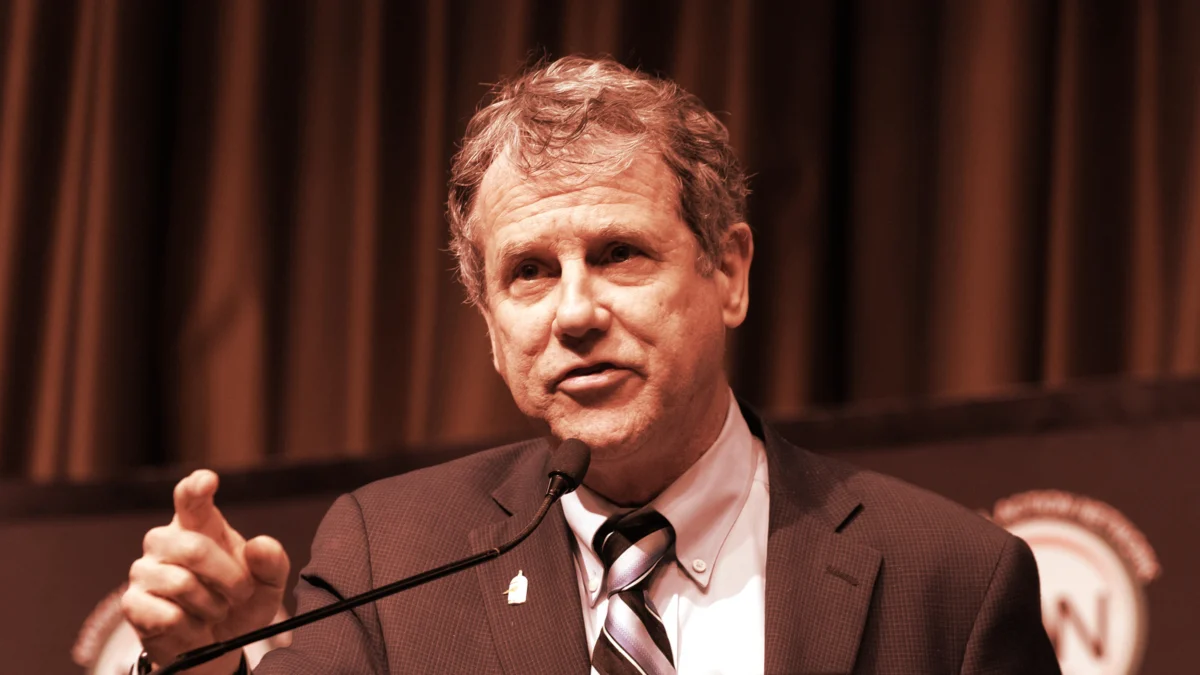
The digital asset industry’s most influential political organization, Fairshake, has officially announced a $30 million advertising and advocacy campaign aimed at defeating former Democratic Senator Sherrod Brown in the upcoming Ohio Senate race. This strategic move comes in the immediate wake of a high-profile legislative failure in the United States Senate, where the Digital Asset Market Clarity Act failed to clear a critical procedural hurdle. The decision to target Brown, a long-time skeptic of the cryptocurrency industry and former Chair of the Senate Banking Committee, underscores a deepening rift between Capitol Hill’s progressive wing and a well-funded coalition of blockchain advocates determined to reshape the federal regulatory landscape.
The Legislative Catalyst: Rejection of the Clarity Act
The catalyst for Fairshake’s renewed offensive was the Senate’s inability to advance the Digital Asset Market Clarity Act, a piece of legislation designed to provide a comprehensive federal framework for the oversight of digital assets. The bill sought to resolve long-standing jurisdictional disputes by dividing regulatory authority between the Securities and Exchange Commission (SEC) and the Commodity Futures Trading Commission (CFTC). Proponents of the bill argued it would provide the "clarity" necessary for domestic innovation, while critics expressed concerns over consumer protection and market volatility.
The Senate vote on the motion to proceed to the bill resulted in a 49-50 tally, failing to reach the 60-vote threshold required to invoke cloture and end a potential filibuster. The vote was largely split along party lines, with all present Democrats voting against the measure. Notably, the opposition was joined by three Republicans: Senators Susan Collins of Maine, Josh Hawley of Missouri, and Jerry Moran of Kansas. Senator Thom Tillis, a Republican from North Carolina, also recorded a "no" vote, though his move was described as a procedural maneuver intended to preserve the ability to reintroduce the legislation at a later date.
The failure of the Clarity Act is seen as a significant setback for the crypto industry, which has spent millions of dollars lobbying for a specialized regulatory regime. The timing of the vote, occurring just weeks before the November 3 midterm elections, has left virtually no window for the legislation to be revived in the current session.
The Battle for Ohio: Brown vs. Husted
The $30 million commitment from Fairshake will be deployed in Ohio, a state that has become the primary battleground for the intersection of cryptocurrency and national politics. Sherrod Brown is seeking to return to the Senate after losing his seat in 2024. He is challenging Republican Senator Jon Husted, who currently holds the seat.
The political dynamics in Ohio are complex. Jon Husted, the former Lieutenant Governor of Ohio, was appointed to the Senate in January 2025 to fill the vacancy left by JD Vance, who vacated the seat to serve as Vice President of the United States. Husted is viewed as a more traditional conservative who is generally more receptive to the arguments of the fintech and digital asset sectors than his predecessor’s opponent.
For Sherrod Brown, the 2026 race represents an attempt at political redemption. During his tenure as the head of the Senate Banking Committee, Brown was one of the most vocal critics of the crypto industry, frequently highlighting the risks of fraud, money laundering, and environmental degradation associated with mining operations. His campaign has already signaled that it will frame the PAC’s spending as an attempt by "special interests" to buy an election.
Patrick Eisenhauer, Brown’s campaign manager, issued a defiant statement following the Fairshake announcement. "Of course the special interests are panicking," Eisenhauer said. "They know Sherrod will fight the rigged system they’re feasting on to stand up for working Ohioans. This is a clear attempt to silence a voice that demands accountability from an industry that has too often left consumers holding the bag."
Historical Context: The 2024 Precedent
This is not the first time Fairshake has targeted Sherrod Brown. The PAC played a decisive role in the 2024 election cycle, where it spent approximately $40 million to support Republican Bernie Moreno in his successful bid to unseat Brown. That campaign was widely cited by political analysts as a demonstration of the "crypto voter" phenomenon and the sheer power of industry-specific super PACs.
In 2024, Fairshake’s strategy was notable for its focus on non-crypto issues. Rather than running advertisements about blockchain technology or decentralized finance—topics that may not resonate with the average swing voter—the PAC funded "attack ads" that questioned Brown’s record on immigration, the economy, and border security. This "stealth" approach allowed the PAC to influence the electorate by appealing to broader grievances while achieving its specific goal of removing a legislative obstacle to crypto-friendly policies.
The new $30 million commitment suggests that Fairshake intends to double down on this strategy. By attacking Brown on multiple fronts, the PAC aims to ensure that one of the industry’s most effective critics does not return to a position of power where he could once again influence the Senate Banking Committee’s agenda.
Financial Might: The Fairshake War Chest
Fairshake has emerged as one of the most well-capitalized political action committees in American history. The group is primarily funded by a "who’s who" of the digital asset world, including major exchanges and venture capital firms. Key contributors include:
- Coinbase: The largest U.S.-based cryptocurrency exchange.
- Ripple: The enterprise blockchain company currently involved in a high-stakes legal battle with the SEC.
- Andreessen Horowitz (a16z): A leading venture capital firm with significant investments in Web3 and blockchain startups.
As of January 2025, Fairshake reported having raised $116 million for the 2026 election cycle. By the end of August 2026, the group reported a remaining balance of $108 million, even after accounting for significant expenditures during the primary season. This financial cushion allows the PAC to engage in sustained, high-saturation advertising campaigns in key markets like Ohio.
Fairshake maintains that its mission is bipartisan, supporting candidates from both sides of the aisle who demonstrate a willingness to engage constructively with the digital asset industry. However, the lopsided nature of its spending against high-profile Democrats like Brown has led to accusations from progressive groups that the PAC is effectively an arm of the Republican Party’s campaign apparatus.
The Role of "Stand With Crypto" and Voter Mobilization
While Fairshake handles the financial heavy lifting of television and digital advertising, its efforts are bolstered by grassroots organizations like Stand With Crypto. This Coinbase-backed advocacy group focuses on mobilizing individual voters who own or use digital assets.
Following the Senate’s rejection of the Clarity Act, Stand With Crypto issued a warning to lawmakers, stating that the vote would have lasting electoral consequences. The group maintains a "lawmaker scorecard" that rates members of Congress based on their voting record and public statements regarding cryptocurrency. The organization announced that the recent "no" votes on the Clarity Act would be added to these scorecards, serving as a guide for its millions of supporters as they head to the polls.
The mobilization of the "crypto voter" is a relatively new phenomenon in American politics. Estimates suggest that over 50 million Americans have owned or interacted with digital assets. If even a small percentage of these individuals vote based on a candidate’s stance on crypto regulation, they could serve as a decisive "swing" demographic in close races like the one in Ohio.
Timeline of Events and Legislative Milestones
To understand the current tension, it is necessary to look at the timeline of the digital asset industry’s political evolution over the last two years:
- November 2024: Sherrod Brown loses his Senate seat to Bernie Moreno following a $40 million opposition campaign by Fairshake.
- January 2025: JD Vance is sworn in as Vice President. Jon Husted is appointed by the Ohio Governor to fill Vance’s Senate seat.
- January 2025: Fairshake reports raising $116 million for the 2026 midterms.
- Early 2026: The Digital Asset Market Clarity Act is introduced in the House and Senate with bipartisan sponsorship.
- August 2026: Fairshake reports $108 million in cash on hand.
- September 2026: The Senate votes 49-50 against the Clarity Act, failing to reach cloture.
- September 21, 2026: Fairshake confirms a $30 million spend to oppose Sherrod Brown’s attempt to reclaim a Senate seat.
Broader Implications and Future Outlook
The outcome of the Ohio Senate race will have implications far beyond the state’s borders. If Brown is successful in his comeback, it will signal that the "crypto-attack" strategy has limits and that voters may be more concerned with traditional economic issues than the regulatory fate of digital tokens. Conversely, if Husted retains the seat with Fairshake’s help, it will solidify the crypto industry’s status as a "kingmaker" in American politics.
Furthermore, the failure of the Clarity Act leaves the U.S. crypto industry in a state of continued regulatory uncertainty. Without a clear legislative mandate, the SEC is likely to continue its "regulation by enforcement" approach, while the CFTC remains limited in its ability to oversee spot markets for digital commodities. This vacuum often drives domestic companies to seek more predictable regulatory environments abroad, in jurisdictions like the European Union or the United Arab Emirates.
As the November midterms approach, the $30 million campaign against Sherrod Brown will likely serve as a litmus test for the industry’s political maturity. Whether the PAC’s ads focus on crypto or broader political grievances, the underlying message is clear: the digital asset industry is no longer a peripheral player in Washington. It is a central, well-funded force capable of shaping the composition of the United States Senate.
The fight for Ohio is not just about one seat; it is a battle over the future of financial regulation in the digital age. With millions of dollars flowing into the state and a polarized electorate watching closely, the clash between Sherrod Brown and the crypto-backed Fairshake PAC is set to be one of the defining narratives of the 2026 election cycle.









