
 Nila Kartika Wati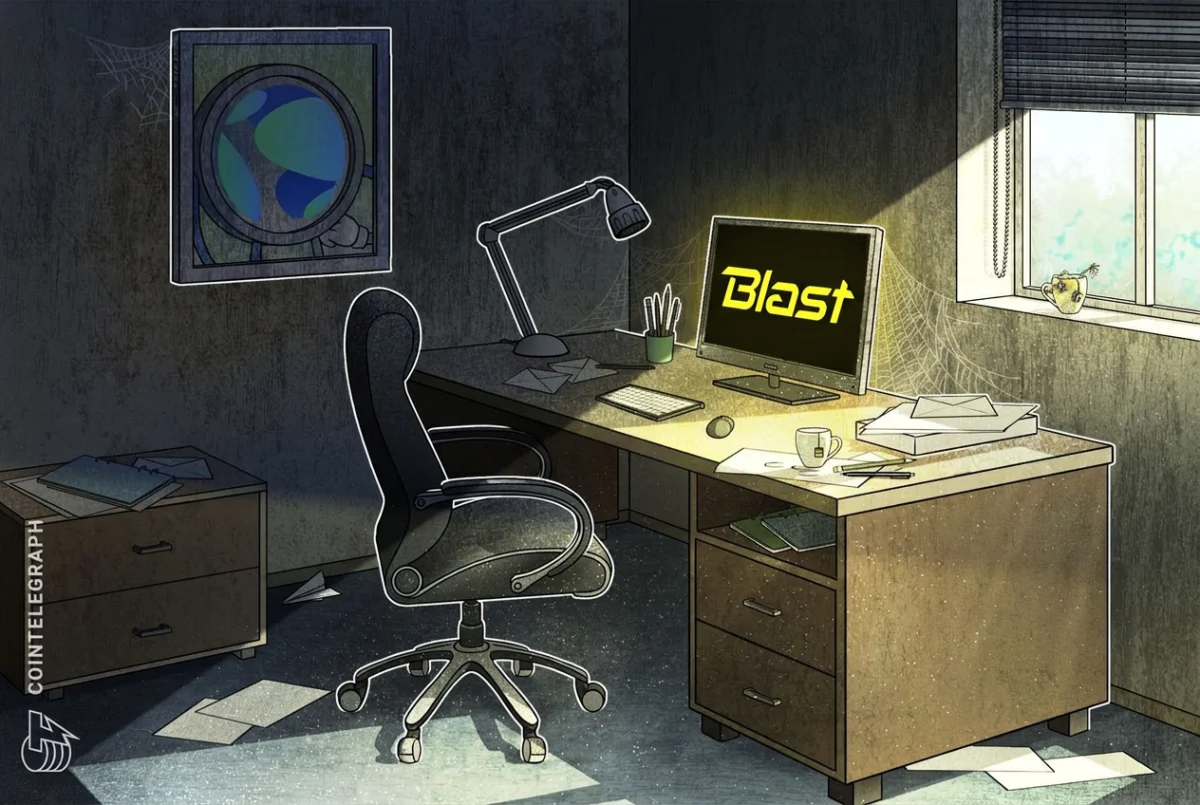
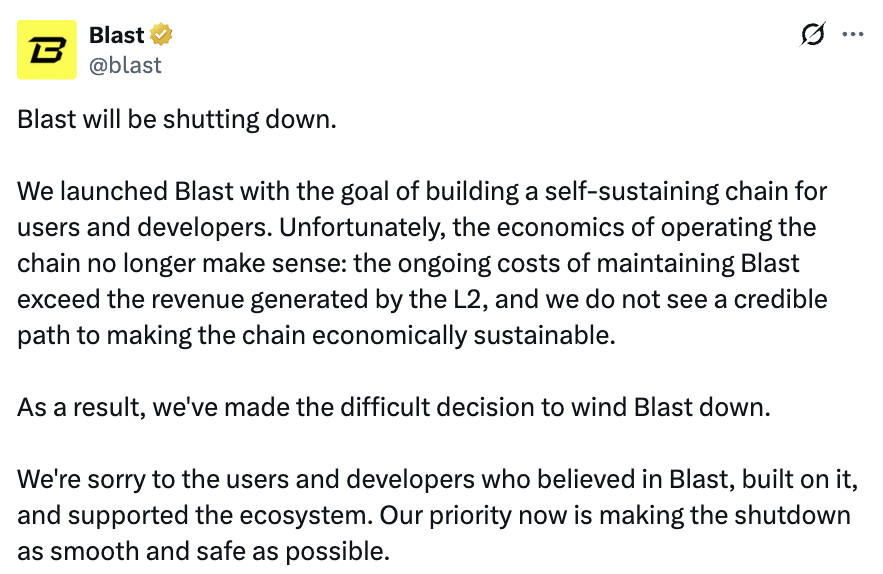
The Ethereum layer-2 scaling solution, Blast, has announced its imminent shutdown, citing an insurmountable challenge in achieving economic sustainability. The decision, communicated to its community via an official post on X (formerly Twitter) on a recent Friday, revealed that the network’s operating costs had consistently outstripped its revenue generation, leaving no "credible path" to a viable future. Users have been urged to withdraw their digital assets to the Ethereum mainnet, marking the end of a project that, despite attracting over $2 billion in deposits at its peak, ultimately succumbed to the harsh economic realities of the competitive blockchain landscape.
"We launched Blast with the goal of building a self-sustaining chain for users and developers," the Blast team stated in their public announcement. "Unfortunately, the economics of operating the chain no longer make sense." This frank admission underscores the profound challenges faced by many nascent blockchain projects attempting to carve out a niche in a rapidly evolving and capital-intensive industry. The closure of Blast serves as a stark reminder that innovation alone does not guarantee longevity; a robust and sustainable business model is equally crucial.
The Road to Shutdown: A Chronology of Blast’s Journey
Blast’s journey began with significant fanfare, riding on the coattails of its founder’s previous success in the non-fungible token (NFT) space. Tieshun "Pacman" Roquerre, the visionary behind the popular NFT marketplace Blur, unveiled Blast in November 2023. At its core, Blast distinguished itself with a unique value proposition: offering native yield on deposited Ether (ETH) and stablecoins. This mechanism aimed to provide users with passive income, a feature designed to attract liquidity and differentiate it from the burgeoning number of other Ethereum layer-2 solutions. The promise of an anticipated token airdrop, tied to a points program, further incentivized early adoption and drew substantial capital into the network.
The strategy initially proved highly effective. Before its mainnet launch in February 2024, Blast had already amassed over $2 billion in deposits, a testament to the community’s enthusiasm and the allure of its yield-generating model. This rapid accumulation of Total Value Locked (TVL) positioned Blast as a formidable newcomer in the L2 ecosystem, suggesting a bright future. For a period, Blast’s DeFi TVL peaked at approximately $2.2 billion in June 2024, reflecting widespread confidence and active participation.
However, the momentum proved difficult to sustain. The broader cryptocurrency market, particularly the NFT sector from which Blast drew much of its initial inspiration, experienced a significant downturn. This macro shift, coupled with internal operational challenges and intense competition within the layer-2 space, began to erode Blast’s foundations. Data from DefiLlama indicates a precipitous decline in Blast’s DeFi TVL, plummeting by more than 98% from its June 2024 peak. This drastic reduction in locked assets signaled a loss of user confidence and a significant drain on the network’s financial viability. Similarly, Blur, the NFT marketplace that propelled Pacman to prominence, also witnessed a substantial decline in its TVL, falling from an early-2024 peak of over $200 million to approximately $27 million. This parallel decline within the founder’s ecosystem painted a clear picture of an interconnected struggle.
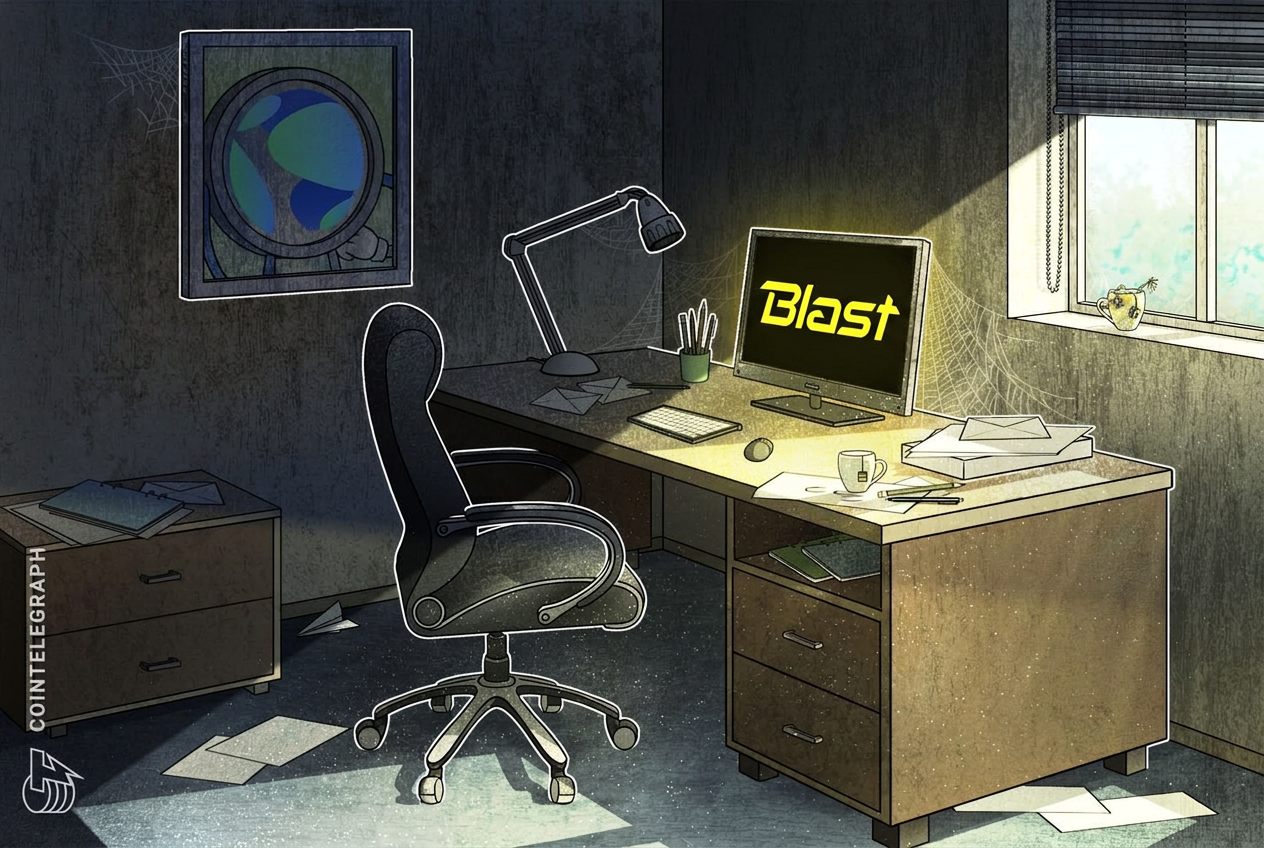
The decision to shut down was thus a culmination of these compounding factors, forcing the Blast team to confront the economic realities. The Friday announcement outlined critical steps for users, including a reduction in the withdrawal delay to 24 hours. However, withdrawals will be temporarily paused while Blast unwinds its Lido assets, a process estimated to take about a week. Users have been given a firm deadline of October 26 to withdraw their funds through Blast’s official interface. Beyond this date, assets will remain accessible, but the process will become more complex, requiring direct interaction with the Blast bridge contracts on the Ethereum mainnet. The team has committed to publishing detailed instructions for this more technical withdrawal method ahead of the October 26 cutoff, strongly advising users to complete their withdrawals well in advance.
Understanding Layer-2 Networks and Blast’s Niche
To fully appreciate the implications of Blast’s shutdown, it’s essential to understand the role of Ethereum layer-2 networks. Ethereum, despite its robust security and decentralization, faces scalability challenges, leading to high transaction fees and slower processing times during periods of high demand. Layer-2 solutions were developed to address these issues by processing transactions off the main Ethereum chain (Layer-1) and then batching them back to the mainnet, thereby reducing costs and increasing throughput. Projects like Arbitrum, Optimism, zkSync, and Polygon have emerged as leading players in this "L2 War," each employing different technological approaches (e.g., optimistic rollups, zero-knowledge rollups) to achieve scalability.
Blast attempted to differentiate itself not only through scalability but also through its "native yield" offering. This meant that users depositing ETH or stablecoins onto Blast would automatically earn a yield. For ETH, this yield was generated by staking the underlying ETH with liquid staking protocols like Lido, which then passes a portion of the staking rewards back to Blast users. For stablecoins, the yield was theoretically derived from protocols engaging in real-world asset (RWA) activities or other decentralized finance (DeFi) strategies. This mechanism was designed to make Blast a more attractive destination for capital, essentially paying users to use the network.
However, this native yield model also introduced layers of complexity and potential risk. Operating an L2 involves significant costs: maintaining sequencers (which order and execute transactions), ensuring data availability, development and maintenance of the bridge infrastructure, security audits, and ongoing research and development. Generating sufficient revenue to cover these costs, especially in a bear market where transaction volumes and fees are lower, proved to be a critical hurdle for Blast. The promise of yield might have attracted initial deposits, but without a sustainable economic engine driven by organic usage, application development, and transaction fees that outweighed the operational burden and yield payouts, the model became untenable.
The Broader Context: NFT Market Dynamics and L2 Competition
Blast’s origins are deeply intertwined with the NFT market. Tieshun "Pacman" Roquerre’s success with Blur, launched in October 2022, demonstrated a keen understanding of market dynamics and user incentives. Blur rapidly ascended to prominence by targeting professional NFT traders with aggressive token incentives and a sophisticated trading interface, quickly surpassing OpenSea, the then-dominant NFT marketplace, in trading volume. This success was largely fueled by its token airdrop and continuous trader rewards, creating a vibrant, albeit speculative, ecosystem.
However, the NFT market, after experiencing a spectacular boom in 2021 and early 2022, entered a prolonged bear market. Trading volumes plummeted, floor prices of many collections collapsed, and speculative interest waned. This downturn directly impacted Blur’s underlying economics and, by extension, Blast. The diminished activity in the NFT space meant less organic demand for the broader ecosystem built by Pacman, including Blast, which was conceived as a general-purpose L2 but undoubtedly benefited from the narrative and community established by Blur. The decline in Blur’s TVL and overall activity mirrored the struggles of its sister project, highlighting the interconnectedness of these ventures within the same founder’s portfolio.
Furthermore, the layer-2 landscape is intensely competitive. With numerous well-funded projects vying for developer talent, user adoption, and liquidity, the barrier to sustainable success is incredibly high. New L2s must not only offer technological superiority or unique features but also build robust ecosystems of decentralized applications (dApps), cultivate strong developer communities, and attract consistent user activity to generate transaction fees. Without a critical mass of genuine usage beyond initial speculative interest, even innovative L2s can struggle to cover their operational expenses and maintain growth. Blast’s rapid TVL accumulation was impressive, but without a corresponding surge in sustained, organic usage and fee generation, it became a hollow victory.
Implications and Future Outlook
The shutdown of Blast carries significant implications for various stakeholders and the broader cryptocurrency ecosystem.
- For Users: The immediate impact is the inconvenience and potential anxiety of withdrawing assets. While Blast has provided a withdrawal window and instructions, the process can be daunting for less technically savvy users, especially those who might need to interact directly with bridge contracts after the October 26 deadline. This event could also erode user trust in new L2 projects, making them more cautious about depositing funds into nascent chains, even those backed by prominent figures.
- For Developers: Projects that had begun building on Blast will now face the arduous task of migrating their dApps to other L2s or the Ethereum mainnet, or ceasing operations entirely. This represents a significant loss of time, resources, and potentially user base. It also serves as a cautionary tale, emphasizing the need for developers to assess the long-term sustainability and economic viability of the L2s they choose to build on.
- For the L2 Ecosystem: Blast’s closure highlights the fierce competition and the challenging path to sustainability for layer-2 networks. It underscores that technological innovation must be paired with a sound economic model. This event might lead to increased scrutiny on the business models of other L2s, particularly those relying heavily on speculative incentives rather than organic usage and robust fee generation. It could signal a phase of consolidation in the L2 space, where only the most resilient and well-capitalized projects with strong network effects will survive.
- For Blur and Pacman’s Ventures: The shutdown of Blast, coupled with the decline in Blur’s metrics, casts a shadow over Pacman’s entrepreneurial ventures in the crypto space. While Blur was a success, the inability to sustain Blast raises questions about the long-term viability of an ecosystem heavily reliant on incentive-driven growth rather than fundamental utility and profitability. It could impact future fundraising efforts or investor confidence in related projects.
- For Investor Sentiment: Venture capitalists and institutional investors might become more discerning when evaluating investments in new blockchain infrastructure projects. The focus could shift from solely technical innovation or user acquisition metrics (like TVL) to include a deeper analysis of operational costs, revenue streams, and a clear path to profitability. This could lead to a more mature and economically rational approach to funding in the crypto space.
- Regulatory Considerations: While not directly tied to regulatory action, events like this can attract the attention of regulators. The complexities of yield-generating mechanisms, the movement of assets across chains, and the potential for user loss can prompt calls for greater transparency, consumer protection, and clearer regulatory frameworks for decentralized financial products and services.
In conclusion, the shutdown of Blast is a significant event in the Ethereum layer-2 landscape. It underscores the inherent difficulties in building and sustaining blockchain networks in a highly competitive and volatile market. While Blast’s innovative native yield model initially attracted substantial capital, it ultimately failed to generate sufficient revenue to cover its operational costs, leading to an unsustainable economic model. As users navigate the withdrawal process, the industry will undoubtedly reflect on this outcome, drawing lessons about the critical importance of long-term economic viability, sustainable growth strategies, and robust business models in the ever-evolving world of decentralized technology. The "L2 Wars" continue, but with a renewed emphasis on economic realism alongside technological prowess.









