James Watt
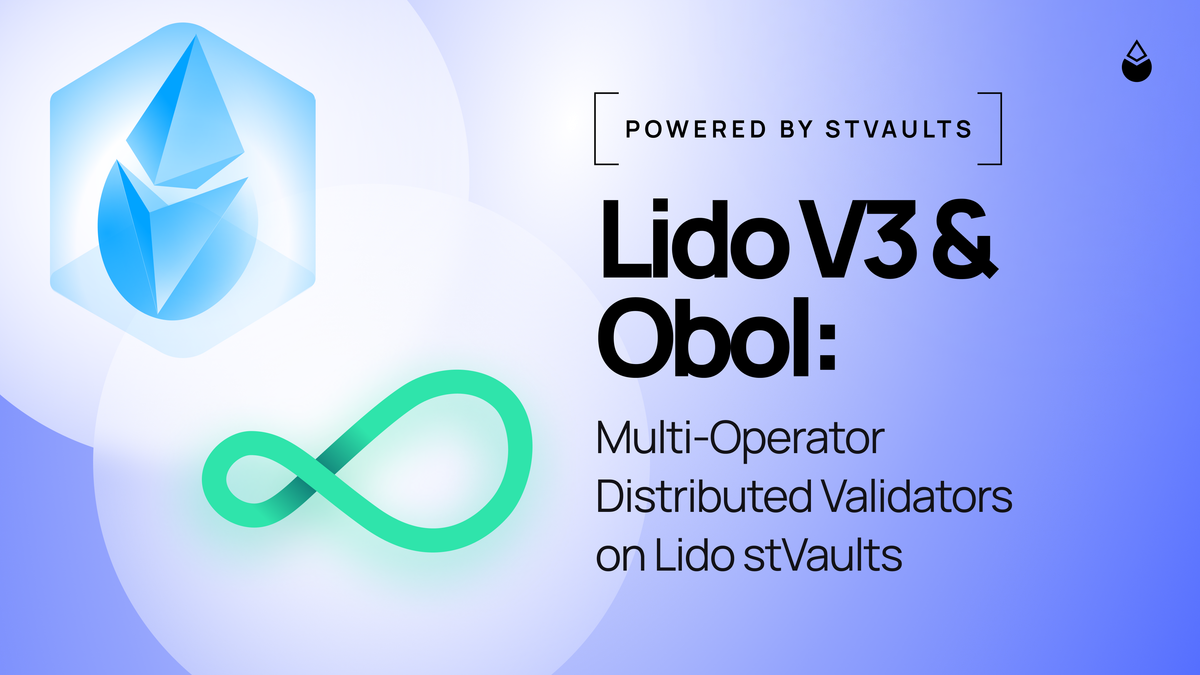
January 26, 2026 – In a significant development for the Ethereum staking ecosystem, Obol, a leading innovator in Distributed Validator Technology (DVT), has officially launched the Ethereum Client Team Vault. This multi-operator, DVT-powered stVault, built upon the robust infrastructure of Lido V3, is poised to redefine standards for security, decentralization, and client diversity within pooled staking. Operated by four of Ethereum’s most integral infrastructure organizations—Sigma Prime, ChainSafe, Develp, and Nethermind—the initiative marks a concerted effort to align staking practices with the core principles of network resilience and credible neutrality.
The Ethereum Client Team Vault is specifically designed for ETH-aligned stakers, discerning DAO treasuries, and strategic capital allocators who prioritize the foundational health and security of the Ethereum network. Its launch addresses long-standing limitations within existing pooled staking architectures, which often did not afford users the granular control to express preferences for client diversity or to engage with multi-operator security models. Until now, mechanisms for creating curated, operator-specific vaults where rewards and responsibilities are intrinsically tied to a defined set of highly reputable operators have been absent. Obol’s innovative product directly remedies this by offering a credibly decentralized, multi-operator DVT stVault, meticulously curated by design.
A Deep Dive into the Ethereum Client Team Vault
At its core, the Ethereum Client Team Vault represents a collaborative effort to fortify Ethereum’s staking layer. The four operating entities—Sigma Prime, ChainSafe, Develp, and Nethermind—are not merely node operators; they are the architects behind critical client software that underpins and secures the entire Ethereum network. Sigma Prime, for instance, is renowned for its work on Lighthouse, a popular Ethereum consensus client. ChainSafe contributes significantly with Lodestar, another widely adopted consensus client, alongside various Web3 infrastructure projects. Develp focuses on developer tools and infrastructure, further strengthening the ecosystem, while Nethermind is a key player in the execution layer client space, providing the Nethermind client. These teams possess unparalleled operational expertise and a deep, intrinsic alignment with Ethereum’s long-term mission and technical roadmap.
For stakers, the vault offers a unique proposition: the ability to stake ETH while directly signaling support for these foundational organizations. This not only channels resources towards the teams crucial for network health but also allows stakers to benefit from their profound technical knowledge and operational excellence. By participating in this vault, users are not just earning yield; they are actively contributing to the robustness and decentralization of the Ethereum network, ensuring that the validator set is diversified both in terms of operators and the client software they run.
Addressing Historical Limitations and the Rise of DVT
The journey towards this advanced staking solution has been shaped by the evolving landscape of Ethereum and the inherent challenges of traditional pooled staking. Early pooled staking models, while democratizing access to staking, often centralized control over validator keys and introduced single points of failure. More critically, they struggled to natively support the imperative of client diversity.
Client diversity refers to the distribution of different client software implementations (e.g., Geth, Erigon for execution layer; Prysm, Lighthouse, Teku, Lodestar for consensus layer) across the network’s validators. A lack of client diversity poses a systemic risk: if a single dominant client contains a critical bug, a large portion of the network could go offline simultaneously, potentially leading to significant slashing events or even a network halt. Historically, Ethereum has faced periods where a single client commanded a supermajority of the network, raising concerns among core developers and researchers about this potential vulnerability. The Ethereum Client Team Vault, by design, champions the use of diverse infrastructure stacks among its operators, explicitly mitigating this risk.
Distributed Validator Technology (DVT) emerged as a transformative solution to these challenges. DVT allows a single validator key to be split and distributed among multiple independent operators, forming a "Distributed Validator Cluster." This innovative approach means no single operator holds the complete key, requiring a threshold of operators to sign off on validator duties. This significantly enhances security, reduces the risk of slashing (as a single operator’s error won’t bring down the entire validator), and improves fault tolerance and uptime. Obol has been at the forefront of developing and standardizing DVT, making their expertise invaluable in architecting this new stVault. The Ethereum Client Team Vault leverages Obol’s pioneering DVT implementation, ensuring that it is credibly decentralized from its architectural foundation.
The Strategic Nexus: Why Lido V3 and stVaults?
The decision to build the Ethereum Client Team Vault on Lido V3 stVaults is a testament to the strategic alignment between Obol and Lido, two pillars of the Ethereum staking ecosystem. Lido, as the largest liquid staking protocol, commands a significant share of staked ETH, with its stETH token serving as a foundational DeFi primitive. Its brand carries immense trust and recognition within the Ethereum community, built on years of battle-tested on-chain infrastructure and robust smart contract architecture.
For Obol, leveraging Lido V3 provides immediate access to this proven infrastructure. It eliminates the need to develop complex deposit flows, deploy entirely new smart contracts from scratch, or build standalone frontends. This synergy allows Obol to concentrate its efforts on its core competency: the deployment and management of DVT clusters and ensuring optimal operator performance. The stVaults framework within Lido V3 is designed to be permissionless and modular, enabling various staking strategies and operator sets to integrate seamlessly. This architectural flexibility makes Lido V3 an ideal platform for initiatives like the Ethereum Client Team Vault, which seeks to offer a specialized, curated staking experience.
This partnership is a classic example of organizations playing to their strengths. Lido contributes its robust and trusted staking infrastructure and tooling, offering a secure gateway for users to access staking services. Concurrently, Obol and the client teams focus on the intricate operational aspects "under the hood"—delivering best-in-class uptime, optimizing performance, and meticulously running a decentralized, client-diverse Distributed Validator cluster. This collaborative model ensures that the community gains a powerful new avenue to signal their commitment to fundamental Ethereum values: client diversity, decentralization, and the inherent benefits offered by DVT.
Integration and a Conservative Security Approach
The technical implementation of the Ethereum Client Team Vault is grounded in Obol’s multi-operator Distributed Validator (DV) clusters. The critical process begins with a Distributed Key Generation (DKG) ceremony, where validator keys are generated in a decentralized manner, and their shares are then distributed across the multiple independent node operators. This cryptographic architecture ensures that no single operator possesses enough key shares to act unilaterally, thus preventing malicious activity or accidental mismanagement by a sole entity.
Furthermore, each participating node operator within the cluster runs a diverse infrastructure stack. This means they utilize different Execution Layer (EL) and Consensus Layer (CL) clients, strategically chosen to minimize the risk of correlated failures and downtime. If a bug were to emerge in one client, the other operators running different clients would remain unaffected, ensuring the cluster’s continued operation and the validator’s performance. This commitment to diversity at the infrastructure level is paramount for achieving high resilience, robust diversity, and superior fault tolerance.
Crucially, the Ethereum Client Team Vault launches with a "vanilla, conservative configuration." This means the vault explicitly eschews complex DeFi strategies, leverage, or looping mechanisms that might chase higher, but inherently riskier, APRs. This deliberate design choice underscores a prioritization of brand integrity, risk management, and the long-term health of the network over short-term yield maximization. The primary focus remains squarely on validator performance and operator quality. By adopting this conservative stance, the Ethereum Client Team Vault positions itself as the most secure and trusted option for stakers who firmly believe that infrastructure quality, reliability, and network alignment are more important than aggressively pursuing the highest possible yield. It establishes a benchmark for responsible staking within the burgeoning DVT landscape.
Statements from Key Stakeholders (Inferred)
While direct quotes are not available in the original text, we can infer the sentiment and strategic outlook of the involved parties.
A spokesperson for Obol might emphasize, "The launch of the Ethereum Client Team Vault on Lido V3 is a landmark achievement in our mission to bring credibly decentralized and resilient staking solutions to the forefront. By collaborating with Ethereum’s core client teams and leveraging Lido’s trusted infrastructure, we are not just offering a staking product; we are enabling stakers to directly contribute to the network’s foundational security and client diversity. This vault is for those who understand that the integrity of Ethereum depends on robust, decentralized infrastructure, and we are proud to provide a secure, low-risk avenue for them to participate."
From Lido’s perspective, a representative could state, "Lido V3 was designed to be a permissionless platform, fostering innovation and allowing diverse staking strategies to flourish. Obol’s Ethereum Client Team Vault is a prime example of this vision realized. It brings an unparalleled level of operator expertise and a dedicated focus on client diversity to our ecosystem, offering stakers a unique choice that directly strengthens Ethereum’s resilience. This partnership underscores Lido’s commitment to supporting initiatives that align with the broader goals of decentralization and network health."
Representatives from the client teams – Sigma Prime, ChainSafe, Develp, and Nethermind – would likely echo similar sentiments regarding their involvement. A joint statement could infer, "Our participation in the Ethereum Client Team Vault is a natural extension of our ongoing commitment to securing and advancing Ethereum. By operating these DVT clusters, we not only ensure the highest standards of validator performance but also directly reinforce the critical importance of client diversity. This initiative provides a tangible mechanism for the community to support the very teams dedicated to building and maintaining the core software that makes Ethereum possible."
Broader Implications for Ethereum’s Future
The introduction of the Ethereum Client Team Vault carries profound implications for the future trajectory of Ethereum’s decentralization and staking ecosystem. Firstly, it offers a tangible and accessible pathway for a wider array of stakers—from individual ETH holders to large institutional treasuries—to actively participate in strengthening network resilience. By making client diversity an explicit feature rather than an afterthought, Obol and Lido are setting a new precedent for what "responsible staking" entails.
Secondly, this initiative could serve as a powerful catalyst for broader DVT adoption. As more stakers experience the enhanced security, fault tolerance, and decentralization offered by DVT, demand for similar solutions is likely to grow. This could spur further innovation within the DVT space, leading to more diverse offerings and greater competition among DVT providers, ultimately benefiting the entire ecosystem.
Thirdly, the focus on "operator credibility and security over yield maximization" within the Ethereum Client Team Vault challenges the prevailing narrative in some parts of the crypto space that often prioritizes maximum APR above all else. By demonstrating that a secure, conservative approach can also be highly desirable, this vault helps to educate the market and shift focus towards sustainable, long-term value creation and network health. This shift in emphasis could lead to a more mature and risk-aware staking environment.
Finally, the collaboration between Obol, Lido, and the core client teams exemplifies the spirit of cooperation that is vital for the continued success of decentralized networks. It showcases how different layers of the ecosystem—protocol developers, staking service providers, and DVT innovators—can work together to build more robust, secure, and decentralized infrastructure. This kind of synergistic development is crucial for Ethereum as it scales and matures, facing new challenges and opportunities.
The Path Forward: A New Standard for Trust
The Ethereum Client Team Vault represents more than just another staking product; it is a declaration of intent. It allows users to actively support Ethereum’s most trusted infrastructure builders and advance the critical imperatives of client diversity and decentralization, all within a meticulously designed, low-risk, and conservative staking framework.
By deliberately prioritizing operator credibility, foundational security, and network alignment over the pursuit of the highest possible yield, the Ethereum Client Team Vault establishes a new and elevated standard for trust and infrastructure quality within the burgeoning Lido V3 ecosystem and the broader Ethereum staking landscape. This development is not merely incremental; it signifies a qualitative leap forward, reinforcing Ethereum’s commitment to resilience, decentralization, and the long-term viability of its proof-of-stake consensus mechanism. As the network continues to evolve, such initiatives will be pivotal in ensuring its robust and secure future.