Lina Irawan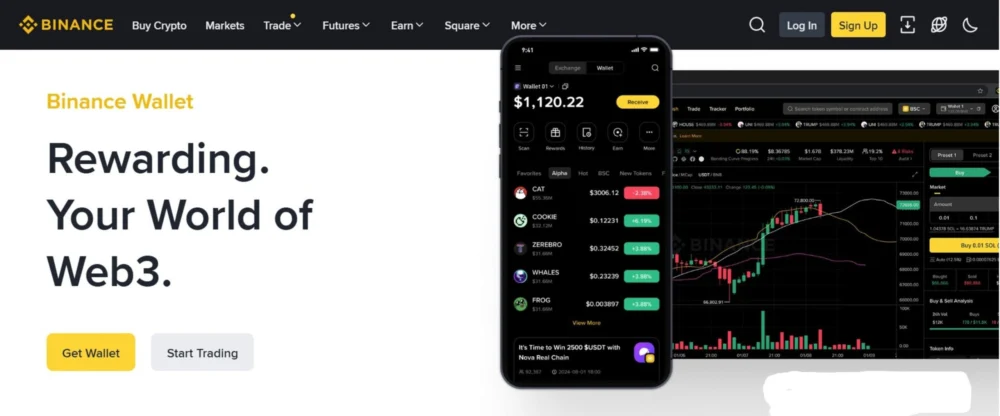
The Pinnacle of Web3 Wallets in 2026: A Comparative Overview
The evolution of Web3 wallets has been characterized by a race for innovation, focusing on user experience, security enhancements, and expanded blockchain compatibility. As of 2026, the market offers a diverse range of solutions, each catering to specific user needs and preferences.
| Wallet | Best For | Multi-Chain Support | Hardware Wallet Integration | Mobile App | Browser Extension |
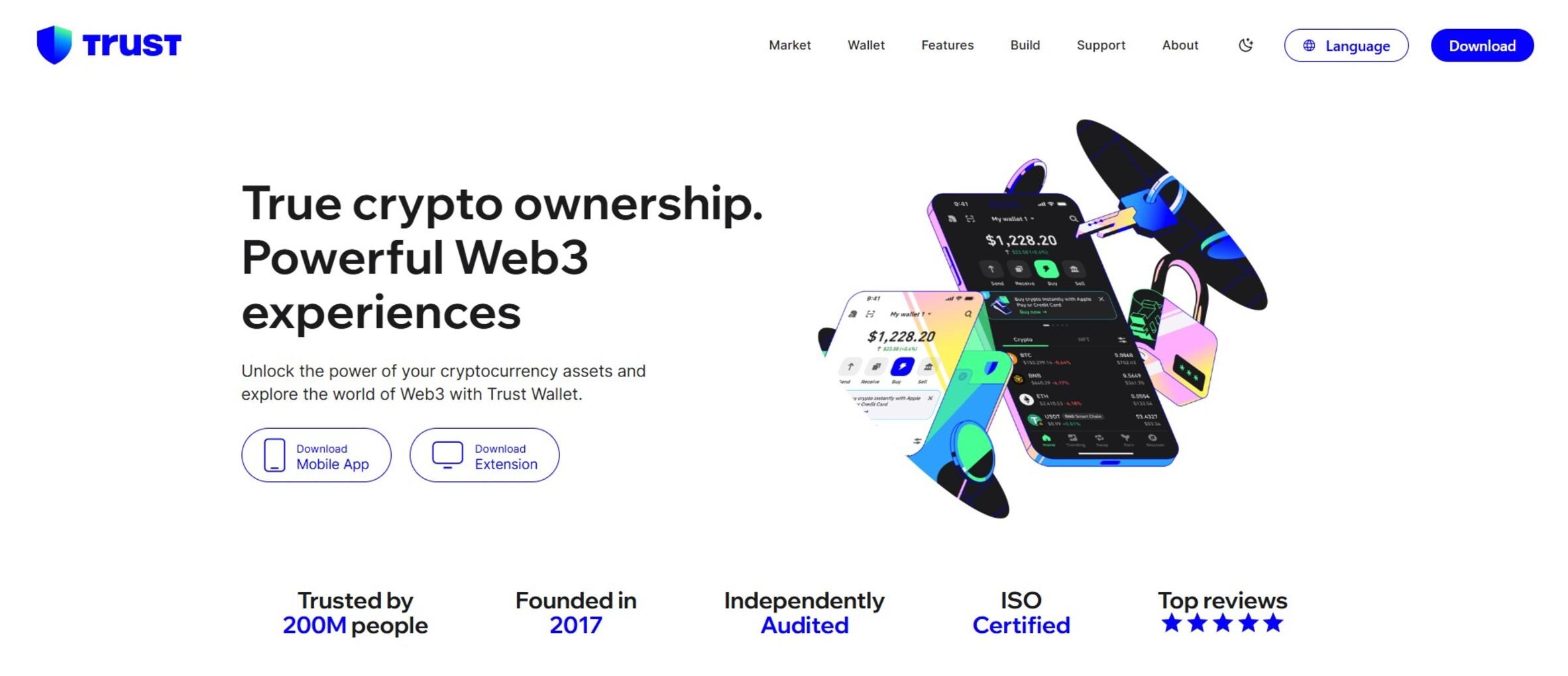
|---|---|---|---|---|---|
| MetaMask | Overall Web3 Wallet | Yes | Yes | Yes | Yes |
| Binance Web3 Wallet | Integrated Ecosystem | Yes | No | Yes | Yes |
| Phantom | Solana & Multi-Chain | Yes | Not natively | Yes | Yes |
| Trust Wallet | Mobile Web3 Wallet | Yes | No | Yes | No |
| Rabby Wallet | DeFi Power Users | Yes | Yes | No | Yes |
| Base App (Coinbase) | Beginners | Yes | Yes | Yes | Yes |
| Ledger Live | Hardware Web3 Wallet | Yes | No | Yes | Yes |
| Rainbow Wallet | NFT Collectors | Yes | Yes | Yes | Yes |
| Safe (ex. Gnosis Safe) | DAOs and Organizations | Yes | Yes | Yes | Yes |
| Ready (Argent) | Smart Wallets | Yes | Yes | Yes | Yes |
A Deep Dive into the Top 10 Web3 Wallets of 2026
1. MetaMask — The Unrivaled All-Rounder
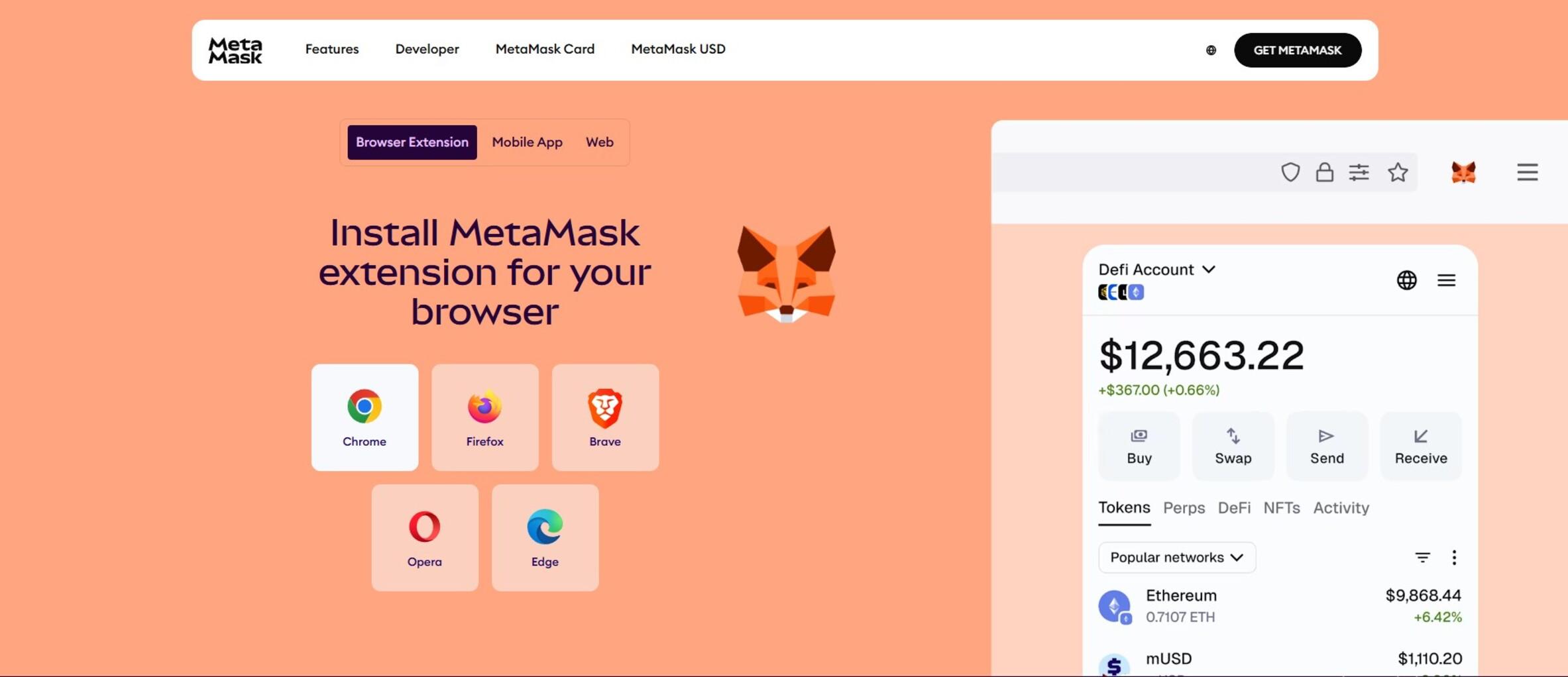
MetaMask continues its reign as a dominant force in the Web3 wallet space, a testament to its early market entry and sustained innovation. Initially conceived as a browser extension for the Ethereum blockchain, it has since blossomed into a comprehensive digital wallet trusted by millions globally. Its non-custodial architecture ensures users retain absolute control over their private keys, thereby safeguarding their cryptocurrency assets. The wallet’s inherent ability to connect effortlessly with decentralized applications (dApps) facilitates seamless transaction signing and interaction with smart contracts across an expanding spectrum of blockchain networks.
Key Features:
- Non-Custodial Control: Users hold their private keys, ensuring complete ownership of assets.
- DApp Connectivity: Facilitates easy integration and interaction with a vast ecosystem of decentralized applications.
- Token Swapping: In-built functionality for swapping tokens directly within the wallet interface.
- NFT Management: Growing capabilities for viewing and managing Non-Fungible Tokens.
Developer Integration:
MetaMask provides a robust suite of developer tools, most notably the MetaMask SDK, which streamlines the integration of the wallet into dApps. This SDK ensures a consistent and secure connection experience across both browser extensions and mobile applications, fostering a dynamic developer ecosystem.
Supported Chains:
Originally focused on Ethereum and its EVM-compatible counterparts such as BNB Smart Chain, Polygon, Avalanche, Arbitrum, Optimism, Fantom, and Linea, MetaMask significantly expanded its reach by launching support for non-EVM chains like Solana and Tron through its multichain accounts in 2025. This strategic move solidified its position as a truly universal Web3 gateway.

2. Binance Web3 Wallet — The Integrated Ecosystem Hub
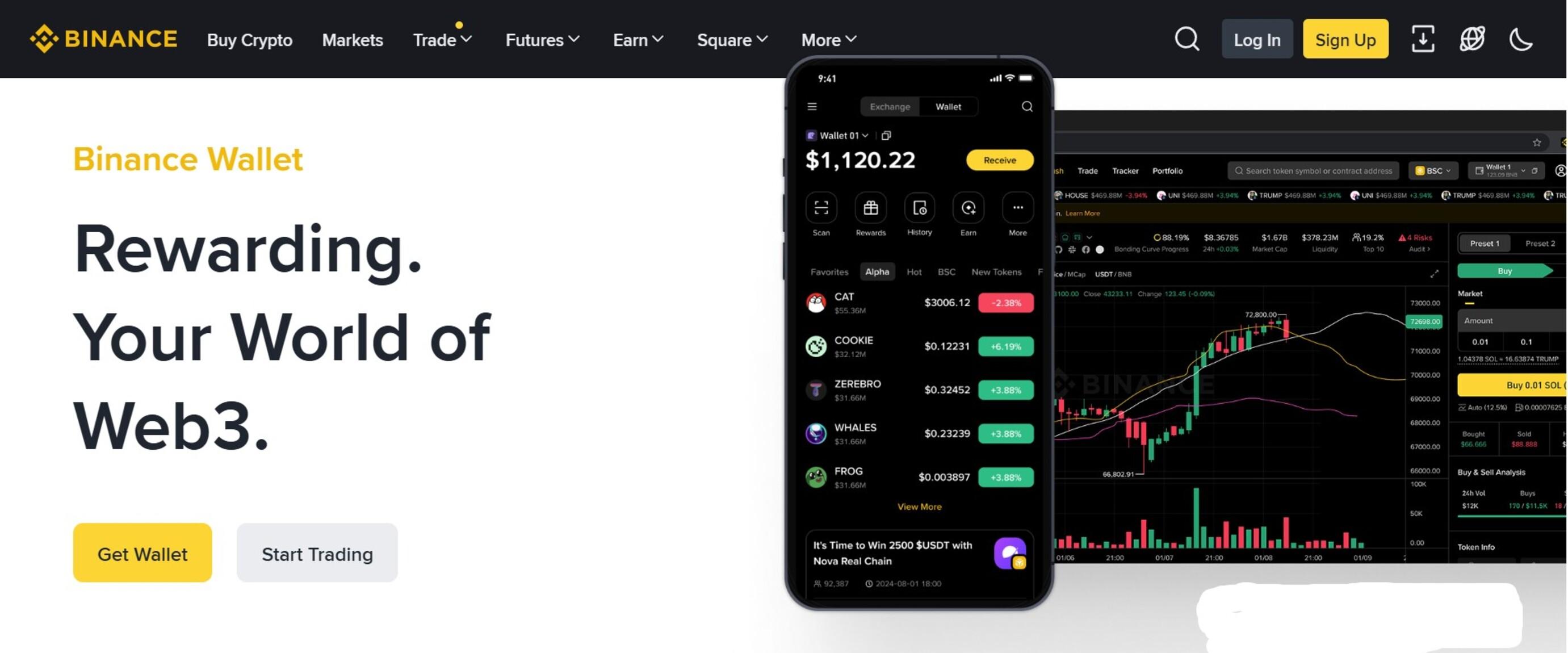
Designed for users who prefer to remain within the orbit of a major exchange ecosystem while exploring the decentralized web, the Binance Web3 Wallet offers a compelling proposition. Integrated directly within the Binance app, it provides a unified platform for interacting with dApps, managing digital assets, and navigating the blockchain landscape. Crucially, it distinguishes itself from traditional custodial offerings by granting users direct control over their crypto assets. Its security architecture employs multi-party computation (MPC), distributing private keys into encrypted shares rather than relying on a single seed phrase, thereby enhancing resilience against single points of failure.
Key Features:
- Unified Access: Seamlessly access dApps from within the familiar Binance app.
- Asset Control: Users maintain ownership of their digital assets.
- MPC Security: Enhanced security through the distribution of private key components.
- In-App Swaps & Bridges: Facilitates easy token swaps and cross-chain bridging.
Developer Integration:
The Binance Web3 Wallet supports integration via its Wallet SDK and injected provider (window.BinanceChain), enabling multi-chain EVM interactions, swaps, and direct transfers with Binance’s centralized exchange (CEX) through standard Ethereum RPC methods.
Supported Chains:
Boasting support for over 60 public chain networks, the Binance Web3 Wallet covers major ecosystems including EVM (Ethereum, BNB Smart Chain, Polygon, Arbitrum), Solana, Bitcoin (BTC, BCH, LTC), Cosmos, and the Move ecosystem (Sei). This extensive compatibility makes it a versatile tool for a broad range of crypto activities.
3. Phantom — The Solana Powerhouse and Beyond
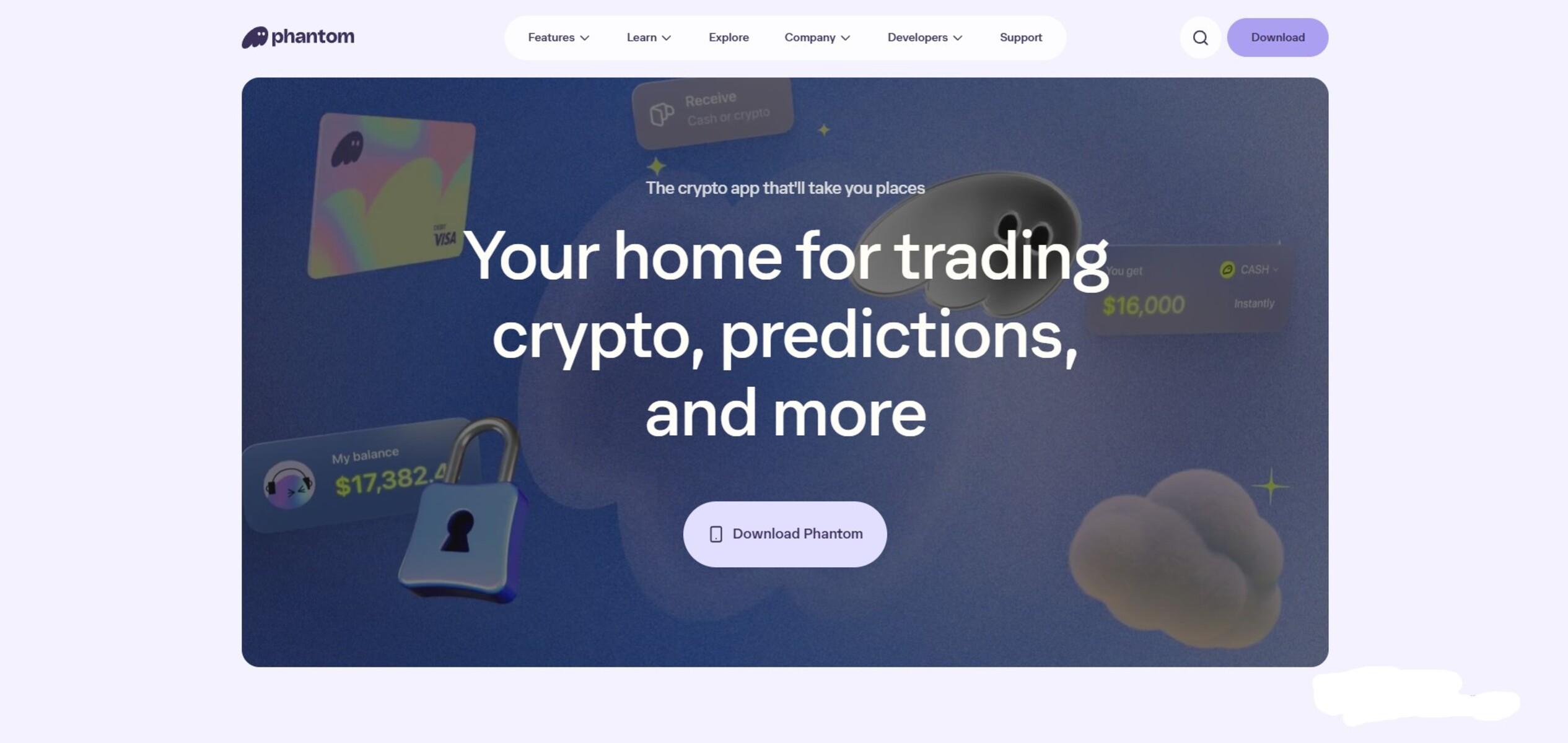
Originating as a specialized wallet for the Solana ecosystem, Phantom has evolved into a robust multi-chain solution, catering to a wider audience within the crypto community. Its user-friendly interface simplifies the storage and management of digital assets, alongside intuitive interaction with dApps. Available as both a browser extension and a mobile application, Phantom provides a streamlined gateway to the decentralized internet.
Key Features:
- Solana Native: Deep integration and optimized experience for the Solana network.
- Multi-Chain Expansion: Growing support for Ethereum, Polygon, and other major blockchains.
- NFT Gallery: Dedicated features for showcasing and managing NFT collections.
- Staking Integration: Enables direct staking of Solana and other supported assets.
Developer Integration:
Phantom offers developer-friendly SDKs for web, mobile, and server-side applications, supporting Solana, Ethereum, and other chains. Key integration options include the React SDK for UI components, the Browser SDK for direct wallet connections, and the Server SDK for backend wallet management.
Supported Chains:
Phantom’s current chain support includes Solana, Polygon, Ethereum, Sui, Base, Bitcoin (Native Segwit/Taproot), Monad, and HyperEVM, reflecting its commitment to expanding its multi-chain capabilities.
4. Trust Wallet — The Mobile-First Champion
As one of the most widely adopted mobile applications for cryptocurrency management and decentralized web exploration, Trust Wallet, owned by Binance, is a prime choice for mobile-centric users. It provides a straightforward method for storing digital assets and connecting to dApps. Its emphasis on a mobile-first experience has cemented its popularity among users who prioritize convenience and accessibility.
Key Features:
- Mobile-Optimized: Designed for intuitive use on smartphones and tablets.
- Extensive Coin Support: Hosts a vast array of cryptocurrencies and tokens.
- In-App Browser: Allows direct access to dApps without leaving the wallet.
- Staking Capabilities: Offers opportunities to earn rewards through staking.
Developer Integration:
Trust Wallet leverages open-source libraries like Wallet Core and WalletConnect. Wallet Core provides cross-platform cryptographic primitives for over 130 blockchains, while WalletConnect facilitates secure dApp connections via QR codes or deep links, establishing WebSocket JSON-RPC channels for transaction signing.
Supported Chains:
With support for over 100 blockchain networks, Trust Wallet’s extensive compatibility includes Bitcoin (BTC), Ethereum (ETH), Solana (SOL), BNB Chain (BNB), Tron (TRX), and Ripple (XRP), among many others.
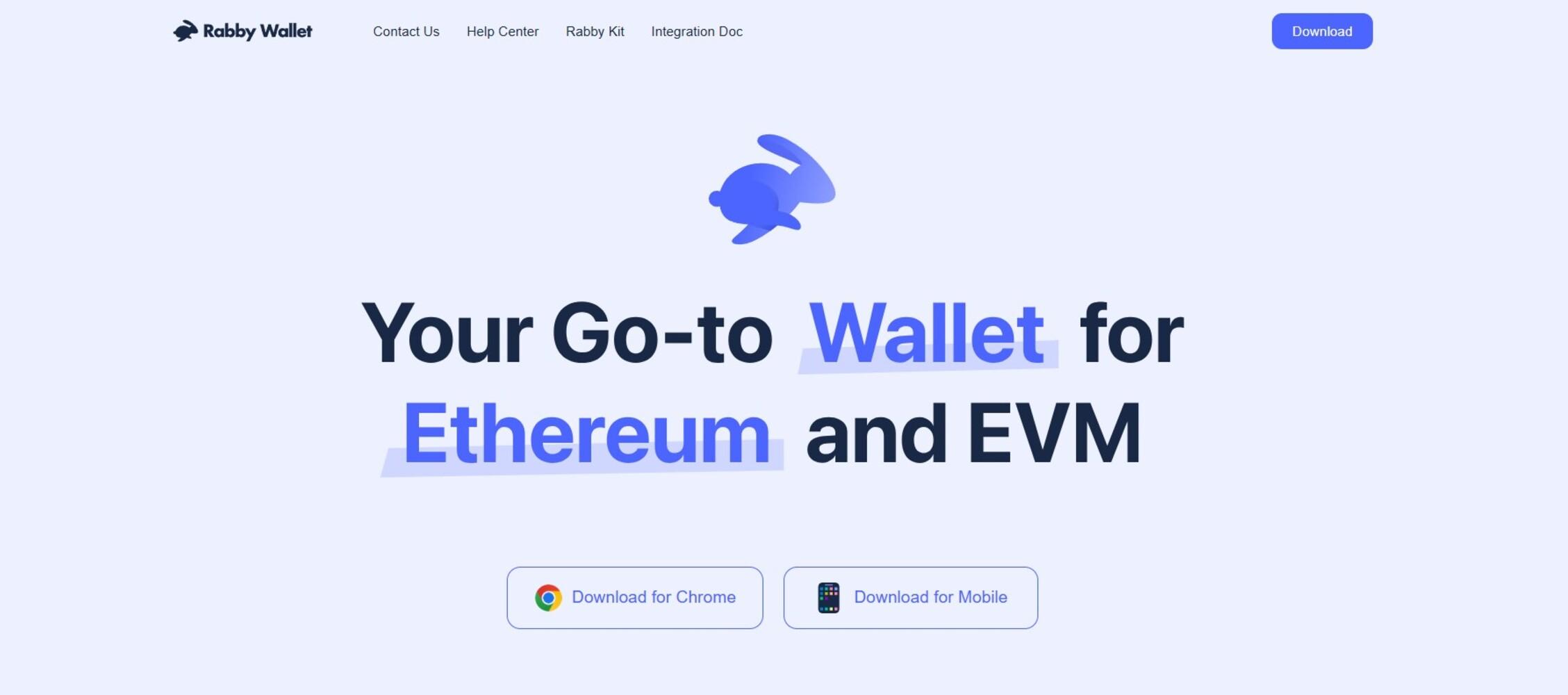
5. Rabby Wallet — The DeFi Power User’s Choice
Developed by DeBank, Rabby Wallet is a non-custodial solution meticulously engineered for users deeply immersed in Decentralized Finance (DeFi) and complex blockchain environments. Its core strength lies in its commitment to transparency when interacting with smart contracts and dApps. A standout feature is its automatic detection of the correct blockchain networks when users connect to DeFi platforms, significantly mitigating the risk of common transaction errors.
Key Features:
- DeFi Focus: Optimized for complex DeFi interactions and yield farming.
- Transaction Simulation: Previews transaction outcomes to prevent errors.
- Multi-Chain Aggregation: Manages assets across multiple EVM chains seamlessly.
- Security Alerts: Provides real-time warnings about potential smart contract risks.
Developer Integration:
Rabby Wallet utilizes EIP-6963 to detect multi-injected providers, offering advanced gas estimation, automatic chain switching, and critical security alerts to enhance the user experience for dApps on EVM networks.
Supported Chains:
Rabby Wallet boasts comprehensive support for all EVM chains, including popular networks like Polygon, Morph, Dogechain, Linea, Shibarium, Plasma, Ethereum, HyperEVM, and over 81 additional networks.
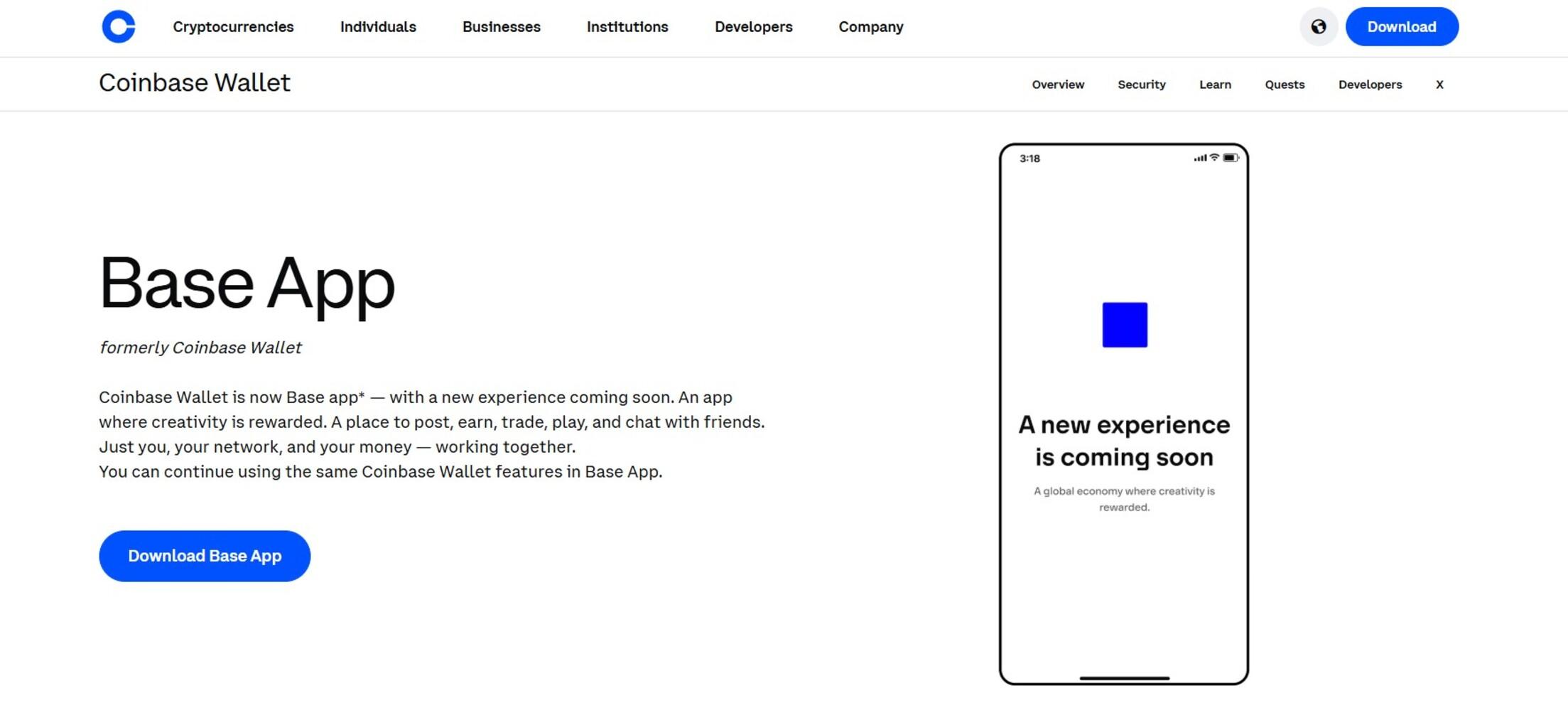
6. Base App (formerly Coinbase Wallet) — The Gateway for Beginners
The Base App, formerly recognized as Coinbase Wallet, is strategically designed to simplify the entry into the Web3 space for newcomers to cryptocurrency. Operating as a non-custodial wallet, it empowers users to manage their crypto assets, wallet addresses, and private keys without reliance on centralized servers. Its straightforward connectivity to dApps and support for multiple blockchain networks make it an accessible starting point for individuals new to decentralized technologies.
Key Features:

- User-Friendly Interface: Designed with simplicity for beginners.
- Non-Custodial Security: Users control their private keys.
- DApp Browser: Easy access to decentralized applications.
- NFT Support: Basic functionality for viewing and managing NFTs.
Developer Integration:
Base provides official SDKs such as OnchainKit and MiniKit for seamless integration. OnchainKit offers React components for wallet connections, transactions, and NFT handling, while MiniKit is designed for Mini Apps deployable across Base App and Farcaster clients.
Supported Chains:
Base App supports Ethereum, Solana, and a broad array of EVM-compatible networks, including Base, Arbitrum, Avalanche C-Chain, BNB Chain, Fantom, and Optimism.
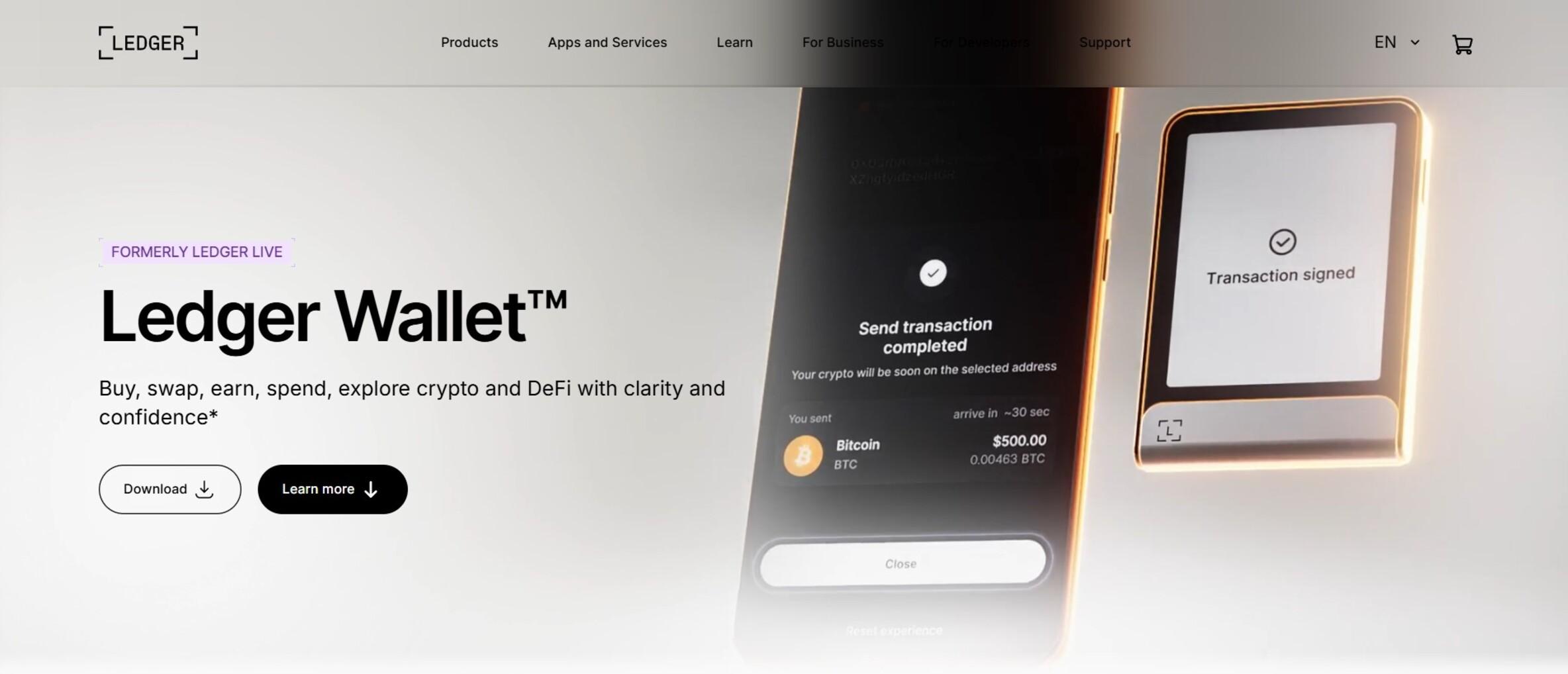
7. Ledger Live — The Gold Standard in Hardware Security
Ledger Live serves as the essential companion software for Ledger’s acclaimed hardware wallets, representing the pinnacle of security for cryptocurrency storage. Unlike typical hot wallets, this integrated solution prioritizes offline private key storage on a physical Ledger device, providing robust protection against online threats. Users can manage their digital assets, authorize transactions, and interact with supported blockchain networks through the intuitive Ledger Live application, which synchronizes with the hardware device.
Key Features:
- Hardware Security: Private keys stored offline on a physical device.
- Multi-Asset Support: Manages a vast portfolio of cryptocurrencies and tokens.
- Transaction Verification: Users physically confirm transactions on their Ledger device.
- Secure DApp Interaction: Connects to dApps while keeping private keys isolated.
Developer Integration:
Ledger Live supports developers through the Ledger Connect Kit (LCK), enabling hardware-secured signing for Ethereum and Bitcoin transactions via USB/Bluetooth APIs, ensuring a secure development environment.
Supported Chains:
Ledger Live natively supports major blockchains including Bitcoin, Ethereum, Solana, Cardano, Ripple, Polkadot (DOT), Polygon (MATIC), BNB Chain, and Tron (TRX). Its compatibility extends to over 15,000 crypto assets, making it a comprehensive solution for storing a diverse range of assets in a single cold wallet.
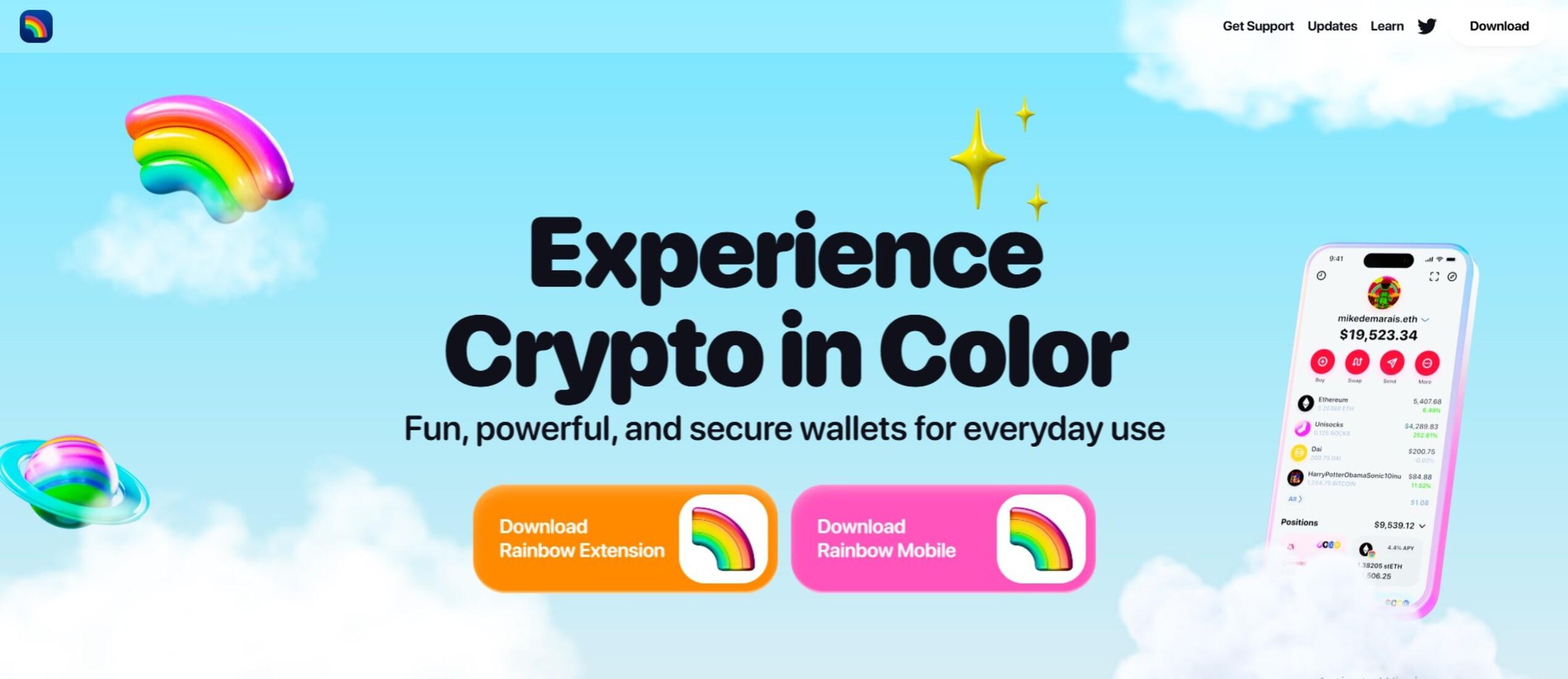
8. Rainbow Wallet — The NFT Collector’s Delight
Rainbow Wallet is an elegantly designed, non-custodial wallet primarily focused on the Ethereum ecosystem, with a strong emphasis on NFTs. It simplifies the process for crypto users to view, manage, and showcase their valuable digital assets. Its mobile-first approach and clean, visually appealing interface have made it a favorite among mobile-first users and NFT enthusiasts looking to explore the decentralized web’s creative frontier.
Key Features:
- NFT-Centric Design: Enhanced features for viewing, organizing, and displaying NFTs.
- Intuitive Interface: User-friendly design for easy navigation.
- Ethereum Focus: Optimized for the Ethereum blockchain and its ecosystem.
- Social Features: Growing integration of social elements for sharing collections.
Developer Integration:
Rainbow Wallet leverages RainbowKit (built on wagmi), offering robust ENS name resolution, NFT previews, and mobile deep linking for vibrant EVM dApp integrations, fostering a rich developer experience.
Supported Chains:
The wallet supports over 24 chains, including Ethereum, Base, Optimism, Arbitrum, Zora, Blast, ApeChain, Polygon, Gravity, Sonic, Scrol, Gnosis, and HyperEVM, demonstrating its expanding multi-chain capabilities.
9. Safe (formerly Gnosis Safe) — The Organizational Powerhouse
Safe Wallet, formerly known as Gnosis Safe, is a programmable smart contract wallet purpose-built for the secure management of crypto assets on Ethereum and other EVM-compatible chains. It functions as a non-custodial multisignature solution, employing smart contracts to mandate multiple approvals for transactions. This multi-layered security approach makes it an indispensable tool for teams, Decentralized Autonomous Organizations (DAOs), and individuals managing high-value digital assets, eliminating single points of failure.
Key Features:
- Multisignature Security: Requires multiple approvals for transactions, enhancing security for shared assets.
- Smart Contract Wallet: Offers programmatic control and advanced features.
- DAO Management: Ideal for managing organizational treasuries and governance.
- Modular Extensions: Customizable features and integrations for specific needs.
Developer Integration:
Safe utilizes the Safe Core SDK, enabling multi-signature smart accounts, batch transactions, and modular extensions across various EVM chains, providing a flexible platform for developers.
Supported Chains:
Safe Wallet supports a comprehensive suite of EVM-compatible chains, including Ethereum, Polygon, Avalanche, Arbitrum, Optimism, Base, Gnosis Chain, Scroll, zkSync Era, Sonic, XLayer, Aurora, Celo, Linea, Berachain, and numerous testnets like Sepolia and Base Sepolia.
10. Ready (formerly Argent) — The Innovator in Smart Wallets
Ready Wallet, previously known as Argent Wallet, pioneers the concept of smart wallets, focusing on enhanced security and streamlined account recovery mechanisms. Moving beyond the traditional reliance on seed phrases, Ready Wallet introduces modern recovery tools, including social recovery options and guardian approvals. As a non-custodial wallet, it ensures users retain full control over their crypto assets while connecting seamlessly to decentralized applications across supported blockchain networks.
Key Features:
- Smart Recovery: Advanced recovery options, including social recovery.
- Account Abstraction: Leverages modern smart contract features for enhanced usability and security.
- Guardian System: Allows trusted contacts or devices to assist with recovery.
- Non-Custodial Control: Users maintain full ownership of their private keys.
Developer Integration:
Ready (Argent) integrates via its Argent SDK, emphasizing account abstraction with guardian approvals, session keys, and simplified onboarding for EVM smart wallets, offering a cutting-edge developer experience.
Supported Chains:
Ready Wallet primarily supports the Ethereum mainnet and Starknet. It has deprecated support for zkSync Lite and does not offer compatibility for sidechains or other EVM networks like Optimism, Polygon, Arbitrum, BSC, or Solana, indicating a focused strategy on its core supported ecosystems.
Understanding the Web3 Wallet Ecosystem
What is a Web3 Wallet?
A Web3 wallet is a crucial interface that enables users to store, manage, and interact with their cryptocurrency assets on blockchain networks. Unlike conventional applications residing on centralized servers, Web3 wallets serve as direct conduits to the decentralized internet. The majority operate on a non-custodial model, granting users complete dominion over their private keys and, by extension, their funds. These keys are typically secured by a seed or recovery phrase. Web3 wallets are instrumental in signing transactions, engaging with smart contracts, and accessing the full spectrum of decentralized applications. Prominent examples include MetaMask, Trust Wallet, and the former Coinbase Wallet, now integrated into the Base App.
Types of Web3 Wallets
The diversity in Web3 wallet design caters to a spectrum of user needs, broadly categorized by their security and control models.
Custodial Wallets
In a custodial wallet setup, a third party assumes responsibility for managing the user’s private keys. The platform effectively holds the keys, granting access to crypto assets typically through accounts hosted on centralized servers. Many prominent exchanges offer custodial wallets, often favored for their straightforward setup process, making them accessible to beginners. However, this model entails a relinquishing of complete control over digital assets, as the platform’s security and operational integrity become paramount. Any compromise or restriction imposed by the service provider could potentially lead to temporary loss of access to funds.
Non-Custodial Wallets
Conversely, non-custodial wallets empower users with full ownership of their private keys and, consequently, their cryptocurrency holdings. Instead of entrusting a company, users store their keys locally on their device’s software or, for enhanced security, on a dedicated hardware wallet. This architecture ensures users maintain absolute control over their funds and can interact directly with blockchain networks and decentralized applications. Access to a non-custodial wallet is typically protected by a seed or recovery phrase, which is vital for regaining access in the event of device loss or failure. Leading Web3 wallets such as MetaMask and Trust Wallet exemplify this user-centric, self-sovereign model.
Smart Wallets
Smart wallets represent an advanced evolution in the Web3 wallet landscape, leveraging smart contracts for sophisticated access management and enhanced security. Departing from the sole reliance on seed phrases, these wallets incorporate features like multi-party computation, customizable spending limits, and social account recovery mechanisms. This design philosophy imbues them with an additional layer of protection for valuable digital assets while simultaneously offering greater flexibility and user-centric recovery pathways. Many smart wallets support a multitude of blockchains and facilitate effortless connection to dApps across the decentralized web. Examples like Ready Wallet underscore the trend towards improved security and usability in the crypto space.
Methodology: Selecting the Premier Web3 Wallets
The selection of the top Web3 wallets for 2026 was guided by a rigorous evaluation process, prioritizing key attributes that define user experience, security, and functionality in the evolving decentralized ecosystem.
Security and Custody Type
A primary consideration was the wallet’s security framework and its custody model. Wallets offering hardware wallet integration, cold storage capabilities, robust biometric authentication, or multi-party computation were assigned higher scores for their enhanced security provisions. The distinction between custodial and non-custodial wallets was fundamental, with a strong preference for non-custodial solutions that empower users with self-sovereignty over their digital assets.
Chain and dApp Compatibility
The ability to support multiple blockchains and maintain EVM (Ethereum Virtual Machine) compatibility is paramount in the interconnected Web3 landscape. Wallets demonstrating broad multi-chain support and seamless interaction with a vast array of decentralized applications were prioritized. The capacity for users to sign transactions across diverse blockchain networks was a critical evaluation criterion.
Ease of Use
A user-friendly interface, a streamlined setup process, and availability across multiple platforms, including mobile apps and browser extensions, were deemed essential. Wallets that facilitated an intuitive navigation experience, particularly for mobile-first users managing their digital assets, received higher ratings. The goal was to identify wallets that democratize access to Web3 without compromising on functionality.
NFT and DeFi Support
The growing importance of Non-Fungible Tokens (NFTs) and Decentralized Finance (DeFi) protocols necessitates wallets that are optimized for these specific use cases. Features such as dedicated NFT galleries, in-app token swapping capabilities, and tools that facilitate authorization of transactions within DeFi platforms were key considerations. The ability to effectively manage valuable digital assets and interact with smart contracts across these burgeoning sectors was a significant factor in our assessment.
A Step-by-Step Guide to Setting Up Your Web3 Wallet
Embarking on your Web3 journey begins with securing your digital assets through a reliable wallet. Here’s a straightforward guide to getting started:
Step 1: Choose Your Wallet
The initial and perhaps most critical step is selecting a wallet that aligns with your individual requirements. Consider whether your priority is complete control (non-custodial), enhanced security through advanced features (smart wallets), or on-the-go convenience (mobile apps). If you anticipate engaging with multiple blockchain networks, prioritize wallets that offer robust multi-chain support.
Step 2: Install and Create a Wallet
Once you’ve made your selection, download the wallet software exclusively from its official website or a verified app store to prevent exposure to malicious versions. Follow the on-screen instructions to create a new wallet. This typically involves setting a strong, unique password to secure access to the application interface.
Step 3: Save Your Seed Phrase
Upon successful wallet creation, you will be presented with a seed phrase, also known as a recovery phrase. This is a sequence of words that acts as the master key to your wallet. It is imperative to write this phrase down accurately and store it securely offline in multiple locations. This phrase is your sole recourse for regaining access to your wallet and assets if you lose access to your device or forget your password. Never share your seed phrase with anyone, and avoid storing it digitally in an easily accessible format.
Step 4: Connect to a dApp
With your wallet set up and secured, you are ready to explore the decentralized web. Navigate to the decentralized application (dApp) you wish to interact with. Most dApps will prompt you to connect your wallet. Select your installed wallet and authorize the connection. You can then use your wallet address to receive funds, authorize transactions, and engage with smart contracts, all while maintaining control over your digital assets.
Web3 Wallet Security: A Proactive Approach
While leading wallet providers implement sophisticated security measures, the ultimate responsibility for safeguarding digital assets rests with the user. Adopting best practices is paramount to preventing potential losses. A comprehensive understanding of cryptocurrency security principles, including the importance of private key management, secure network practices, and vigilance against phishing attempts, is essential. Users are strongly encouraged to consult detailed security guides and stay informed about emerging threats within the crypto space.
Conclusion
The selection of an appropriate Web3 wallet is a pivotal decision that hinges on an individual’s specific cryptocurrency journey, security imperatives, and engagement with the decentralized web. Non-custodial wallets offer unparalleled control, smart wallets introduce advanced layers of protection, and hardware wallets provide the highest echelon of security for long-term asset preservation. When making your choice, always evaluate multi-chain compatibility, ease of use, and the wallet’s seamless integration with decentralized applications. By adhering rigorously to established wallet security best practices, you can confidently manage your digital assets and navigate the exciting landscape of the decentralized internet.
Frequently Asked Questions
What is considered the best Web3 wallet in 2026?
The determination of the "best" Web3 wallet is subjective and depends on individual needs. MetaMask is highly regarded for its comprehensive Web3 access, Ledger Live excels in providing maximum security through hardware integration, Trust Wallet is a strong contender for mobile users, and Phantom offers a specialized, yet expanding, solution for Solana and multi-chain environments.
What distinguishes a Web3 wallet from a crypto exchange wallet?
The fundamental difference lies in control. A Web3 wallet grants users full ownership and control over their private keys and digital assets. In contrast, a crypto exchange wallet is typically custodial, meaning the exchange holds the private keys and manages access to the assets. This distinction is crucial for self-sovereignty in the cryptocurrency space.
Which Web3 wallet offers the most extensive blockchain support?
Wallets such as MetaMask, Trust Wallet, and Rabby Wallet are recognized for their broad multi-chain support, enabling users to manage assets and interact with a vast array of blockchain networks from a single interface. Their ongoing development continuously expands their compatibility.
Are Web3 wallets inherently safe?
Web3 wallets can be very safe when used correctly. Non-custodial wallets, hardware wallets, and smart wallets offer robust security features. However, the safety of your assets ultimately depends on your diligence in protecting your seed phrase and private keys, and your awareness of potential security threats.
What are the consequences of losing my seed phrase?
If you lose your seed phrase and have no backup, you will permanently lose access to your wallet and all the cryptocurrency assets held within it. There is no recovery mechanism for a lost seed phrase. Therefore, meticulous offline storage of your seed phrase is non-negotiable.
Is it permissible to utilize multiple Web3 wallets?
Absolutely. Many users maintain several Web3 wallets to segment assets, enhance security, manage different blockchain ecosystems, or cater to specialized use cases such as DeFi or NFTs. You can connect multiple wallets to the same decentralized applications without issue.