Lina Irawan
The integration of cryptocurrency payments into business operations is no longer a niche trend but a strategic imperative for businesses seeking to expand their reach, streamline transactions, and remain competitive in the rapidly evolving digital economy. The choice of a cryptocurrency payment gateway profoundly impacts a business’s ability to accept digital assets like Bitcoin and other cryptocurrencies, offering the potential to unlock new customer segments and enhance operational efficiency. Ensuring security, fostering customer satisfaction, and maintaining transaction integrity are paramount considerations in this decision-making process.
This comprehensive guide delves into the best cryptocurrency payment gateways available to businesses today. It aims to demystify the selection process, provide actionable insights on setting up a gateway, and elucidate the criteria used to identify the top contenders. Whether you are a burgeoning startup or an established enterprise, this analysis is designed to equip you with the knowledge necessary to make an informed decision. We will explore the leading options, offering a detailed breakdown of their features, benefits, and potential drawbacks, culminating in a curated list of the top 10 cryptocurrency payment gateways for businesses.
Top Bitcoin & Crypto Payment Gateways: Quick Picks at a Glance
To provide a swift overview of the market, here’s a comparative snapshot of leading cryptocurrency payment gateways, highlighting key features such as supported cryptocurrencies, transaction fees, fiat conversion capabilities, cross-chain functionality, and custodial options.
| Gateway | Coins Supported | Transaction Fees | Fiat Conversion | Cross-Chain | Self-Custodial |
|---|---|---|---|---|---|
| NOWPayments | 200+ tokens | 0.5% to 1% | Via partner | No | Optional |
| CoinGate | 70+ tokens | 1% | EUR/USD | No | No |
| BitPay | BTC, ETH, select tokens | 1% | Yes via bank accounts settlement | No | No |
| Coinbase Commerce | BTC, ETH, USDC, DAI, others | 1% | Yes, managed plan | No | Optional |
| OpenNode | BTC + Lightning | Custom | Yes | No | Yes |
| CryptoWoo | BTC, ETH, others | Custom | No | No | Yes |
| Plisio | 50+ tokens | 0.5% | No | No | No |
| TripleA | BTC, ETH, others | Custom | Yes | No | No |
| Crypto.com Pay | CRO, BTC, ETH, others | 0.5% | No | No | No |
| Strike | BTC + Lightning | Custom | Yes | No | No |
10 Best Crypto Payment Gateways Reviewed & Ranked: Full Breakdown
The selection of a cryptocurrency payment processor is a critical decision that can significantly influence the efficiency and security of a business’s digital payment infrastructure. While some platforms excel in offering low transaction fees, others distinguish themselves through robust fiat conversion mechanisms or extensive cryptocurrency support. The optimal choice is intrinsically linked to a business’s specific operational model, the range of digital assets it wishes to accept, and the degree of control it desires over its digital funds. This detailed analysis presents our top 10 selections, offering an in-depth review of the leading cryptocurrency payment gateways available for businesses.

1. NOWPayments — Best Overall Crypto Payment Gateway
NOWPayments emerges as a leading contender for businesses aiming to integrate cryptocurrency payments seamlessly. Its comprehensive support for over 200 cryptocurrencies provides unparalleled flexibility for a diverse range of businesses, including Software as a Service (SaaS) providers, e-commerce platforms, and global service providers. A key feature is its auto-conversion capability, which simplifies transactions by allowing for automatic conversion between different tokens at the point of payment. This feature is particularly valuable in a market characterized by numerous altcoins with varying liquidity.
Pros:
- Extensive Coin Support: Offers compatibility with over 200 cryptocurrencies, providing broad altcoin acceptance.
- Simplified Transactions: Auto-conversion between tokens streamlines the payment process for both merchants and customers.
- Broad Integration: Easy integration via plugins for popular e-commerce platforms such as Shopify, WooCommerce, and others.
- Flexible Billing: Supports subscription and recurring billing, enhancing payment flexibility for service-based businesses.
- Non-Custodial Control: Enables businesses to retain full control over their digital assets, enhancing security and autonomy.
Cons:
- No Direct Fiat Settlement: Requires third-party partners for fiat off-ramps, adding an extra layer to the conversion process.
- Limited Enterprise Track Record: May not possess the same depth of enterprise-level experience as some long-standing competitors.
- No Cross-Chain Aggregation: Tokens are processed on their native blockchain networks, potentially limiting efficiency for certain cross-chain operations.
- May Not Suit All Enterprises: Businesses requiring highly specialized enterprise features might find it less tailored than other solutions.
2. CoinGate — Best for Wide Crypto Selection
CoinGate stands out as a premier Bitcoin payment gateway, making it an attractive option for businesses that aim to accept a broad spectrum of cryptocurrencies. With support for over 70 digital tokens, it effectively caters to both small businesses and larger enterprises, offering a blend of flexibility and user-friendliness. The platform’s intuitive interface and diverse integration options position it as a preferred solution for businesses looking to broaden their payment acceptance capabilities.
Pros:
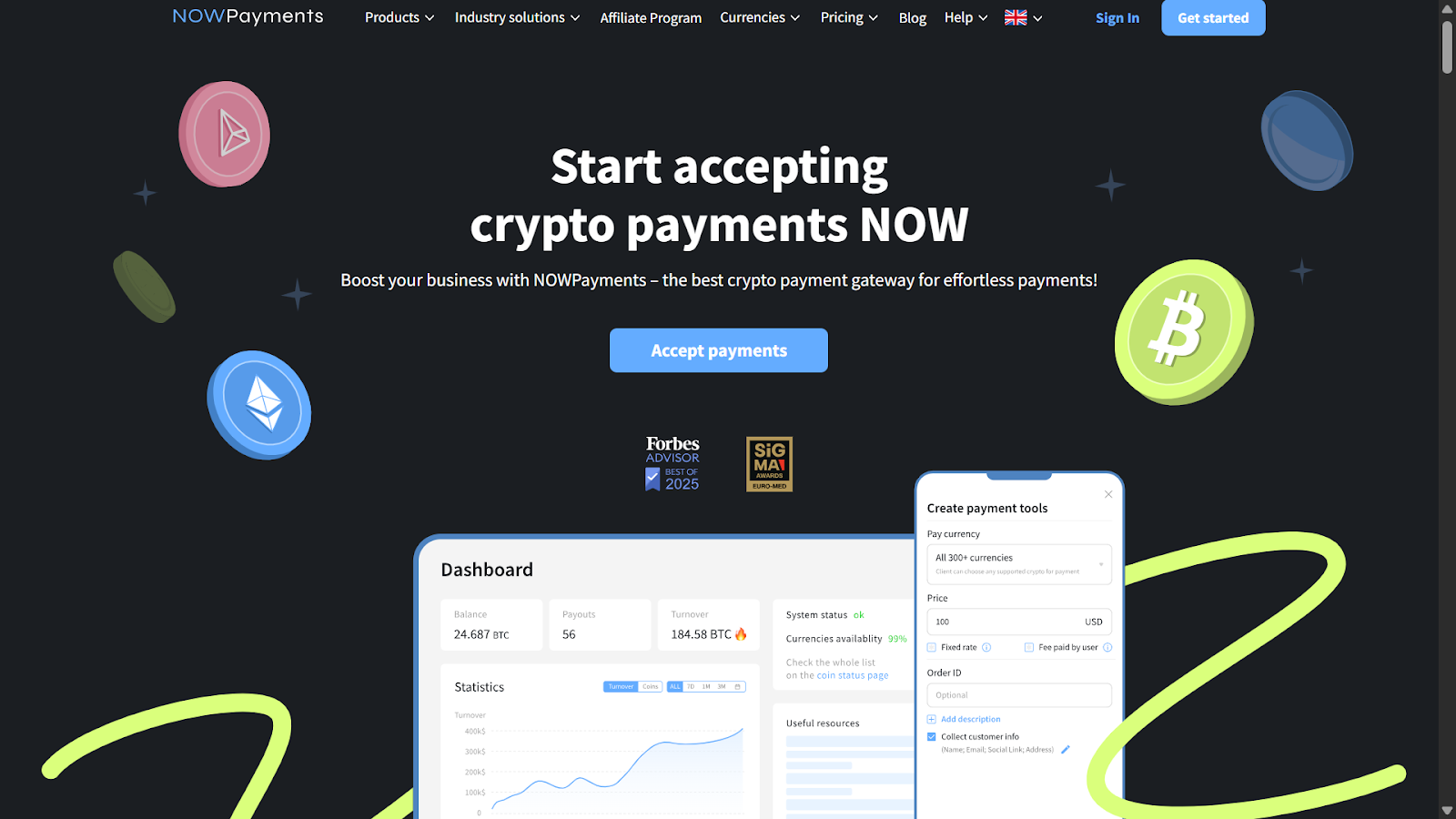
- Broad Cryptocurrency Support: Accommodates over 70 cryptocurrencies, including prominent ones like Bitcoin.
- Transparent Fees: A straightforward 1% transaction fee structure with no undisclosed charges.
- Seamless Integration: Facilitates easy integration with popular e-commerce platforms and through robust APIs.
- Versatile Services: Offers the ability to purchase gift cards using crypto, adding an extra layer of utility.
- User-Friendly Interface: Designed for ease of use, making it accessible for small businesses.
Cons:
- Custodial Model: May not appeal to businesses prioritizing complete control over their funds.
- No Cross-Chain Functionality: Lacks the capability for cross-chain token transfers, potentially limiting certain operational workflows.
- Limited Advanced Features: Enterprise-level businesses might find its advanced feature set less comprehensive compared to specialized solutions.
- Restricted Fiat Conversion: Fiat conversion options are primarily limited to EUR and USD.
3. BitPay — Best for Bitcoin Payments
For businesses primarily focused on Bitcoin transactions, BitPay is a distinguished choice among the best cryptocurrency payment gateways. Renowned for its steadfast reliability and enterprise-grade solutions, BitPay simplifies the process of accepting Bitcoin and a curated selection of other cryptocurrencies. Its daily bank settlement feature is particularly advantageous, enabling businesses to swiftly convert crypto holdings into fiat currency, thereby making it a pragmatic solution for integrating digital payments into existing financial workflows.
Pros:
- Established Reliability: Trusted by numerous enterprise-level businesses, signifying a high degree of dependability.
- Efficient Fiat Conversion: Daily bank settlements facilitate rapid conversion of cryptocurrency to fiat.
- Clear Fee Structure: A consistent 1% transaction fee with no hidden charges.
- Bitcoin Focus: Strong emphasis on Bitcoin payments, ideal for businesses with a Bitcoin-centric strategy.
- Enhanced Security: Implements robust security measures to safeguard all transactions.
Cons:
- Custodial Nature: The custodial model might not align with the preferences of businesses seeking full fund ownership.
- Limited Altcoin Support: Offers less extensive support for altcoins compared to some competitors.
- No Cross-Chain Aggregation: Lacks cross-chain functionality for token transfers.
- Enterprise-Oriented: Advanced features may be less suited for the needs of very small businesses.
4. Coinbase Commerce — Best for Beginners
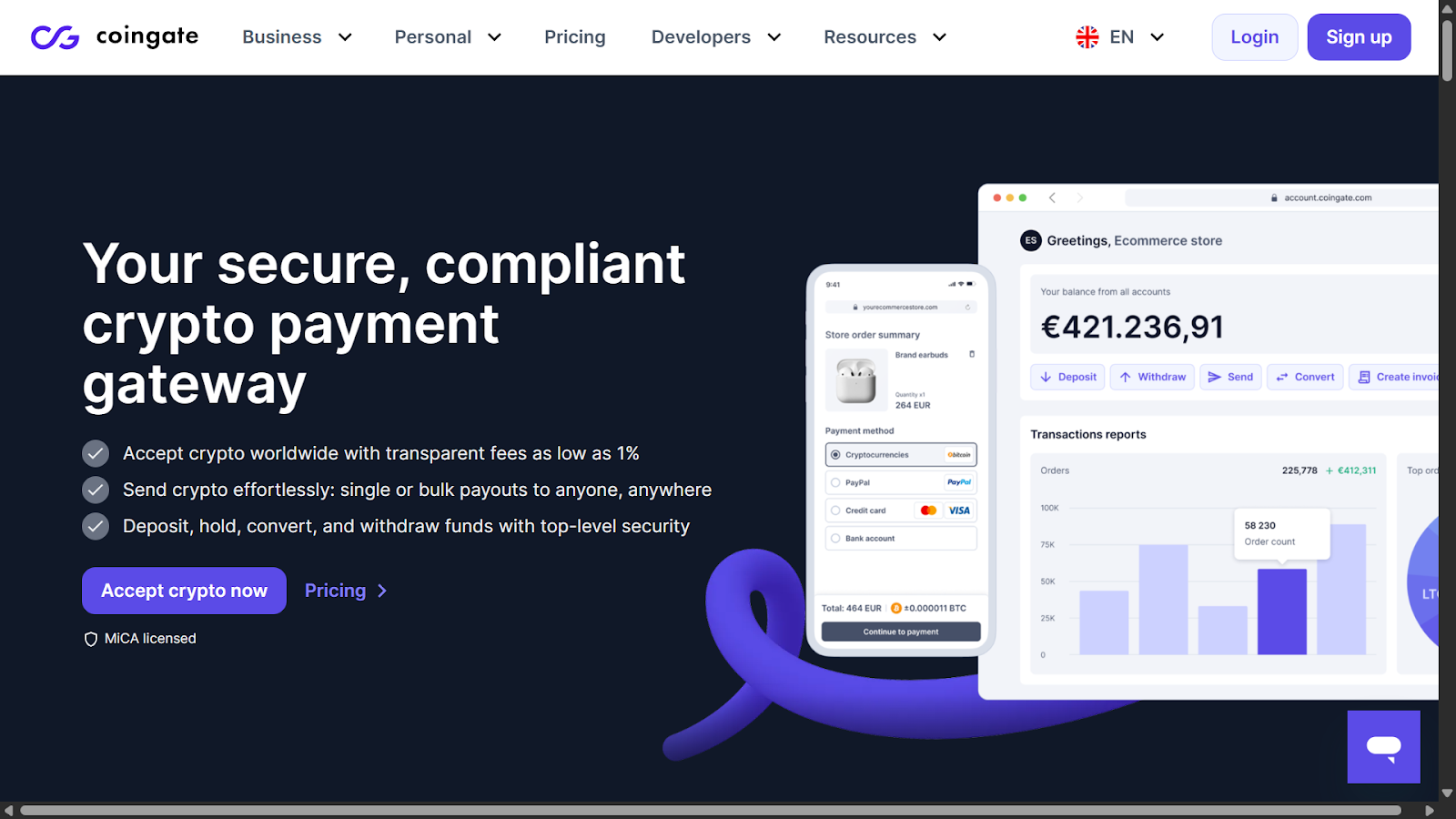
Coinbase Commerce presents an accessible entry point for individuals and businesses new to cryptocurrency payments. It supports a range of popular cryptocurrencies and offers a managed plan for fiat conversion, making it particularly user-friendly for those venturing into the crypto space. The optional custody model provides businesses with the flexibility to manage their own funds or leverage Coinbase’s secure custodial services. Its intuitive interface and the backing of a trusted brand make it a reliable gateway for startups and small businesses.
Pros:
- Beginner-Friendly: An intuitive interface designed for ease of use, ideal for newcomers.
- Popular Crypto Support: Accepts widely used cryptocurrencies such as Bitcoin and Ethereum.
- Trusted Brand: Benefits from the strong reputation and trust associated with the Coinbase brand.
- Flexible Fund Management: An optional custody model offers businesses choices in managing their assets.
Cons:
- Limited Advanced Features: May lack the depth of advanced functionalities required by larger enterprises.
- Fiat Conversion Constraints: Fiat conversion is exclusively available through a managed plan.
- No Cross-Chain Functionality: Does not support cross-chain token transfers.
5. OpenNode — Best for Lightning Network Payment
OpenNode distinguishes itself as a specialized gateway for businesses eager to utilize the Lightning Network for rapid and cost-effective Bitcoin transactions. It supports both standard Bitcoin and Lightning Network payments, making it an optimal choice for businesses prioritizing transaction speed and efficiency. With its non-custodial architecture, OpenNode ensures businesses maintain complete control over their funds. The platform’s custom pricing model is adaptable, catering to a wide spectrum of businesses, from individual merchants to large-scale enterprises.
Pros:
- Lightning Network Integration: Leverages the Lightning Network for exceptionally fast and low-cost Bitcoin payments.
- Non-Custodial: Guarantees businesses full control and ownership of their funds.
- Customizable Pricing: Offers tailored pricing structures to meet diverse business needs.
- Speed and Efficiency Focus: Ideal for businesses where transaction speed is a critical factor.
Cons:
- Limited Coin Support: Exclusively supports Bitcoin and Lightning Network payments, excluding altcoins.
- No Cross-Chain Functionality: Does not offer cross-chain capabilities for token transfers.
6. CryptoWoo — Best for WooCommerce Users
CryptoWoo is a specialized payment gateway meticulously designed for WooCommerce users, offering seamless integration with WordPress-based e-commerce stores. It supports major cryptocurrencies, including Bitcoin and Ethereum, rendering it a versatile option for online retailers. The non-custodial model empowers businesses to manage their funds independently. Furthermore, CryptoWoo integrates smoothly with select top-tier cryptocurrency wallets, enhancing its functionality for its target user base.
Pros:
- WooCommerce Integration: Provides seamless integration specifically for WooCommerce-powered WordPress sites.
- Major Crypto Support: Accepts prominent cryptocurrencies like Bitcoin and Ethereum.
- Non-Custodial: Allows businesses to manage their funds autonomously.
- Customizable Pricing: Offers tailored pricing to suit various business requirements.
Cons:
- Platform Specificity: Primarily limited to WooCommerce-based e-commerce platforms.
- No Fiat Conversion: Does not offer any fiat conversion options.
- No Cross-Chain Functionality: Lacks the ability to facilitate cross-chain token transfers.
7. Plisio — Best for Low-Fee Crypto Payments
Plisio stands out as a highly cost-effective cryptocurrency payment gateway, supporting over 50 cryptocurrencies, including Bitcoin and Ethereum. With a competitive flat transaction fee of 0.5%, it presents an attractive and affordable solution for small businesses. While it does not provide direct fiat conversion, its straightforward pricing and user-friendly interface make it a practical choice for cost-conscious merchants. Plisio operates on a custodial model, ensuring secure management of funds.
Pros:

- Low Transaction Fees: A minimal 0.5% transaction fee makes it highly economical for small businesses.
- Broad Crypto Support: Accepts over 50 cryptocurrencies, including major digital assets.
- User-Friendly: Features an intuitive interface that simplifies integration and usage.
Cons:
- Custodial Model: May not be suitable for businesses that require complete control over their funds.
- No Fiat Conversion: Does not offer any fiat conversion capabilities.
- No Cross-Chain Functionality: Lacks support for cross-chain token transfers.
8. TripleA — Best for Fiat Conversion
TripleA is a cryptocurrency payment gateway engineered for businesses that prioritize efficient fiat conversion. It supports major cryptocurrencies like Bitcoin and Ethereum, facilitating seamless conversion into traditional fiat currencies. Operating under a custodial model, TripleA ensures the secure management of business funds. Its custom pricing structure offers flexibility, making it accessible to businesses of all sizes.
Pros:
- Seamless Fiat Conversion: Facilitates smooth conversion of cryptocurrency payments into fiat.
- Major Crypto Support: Accepts key cryptocurrencies such as Bitcoin and Ethereum.
- Customizable Pricing: Offers flexible pricing tailored to individual business needs.
- Secure Fund Management: Provides reliable and secure handling of digital assets.
Cons:
- Custodial Model: May not appeal to businesses seeking full fund control.
- No Cross-Chain Functionality: Does not support cross-chain token transfers.
- Limited Altcoin Support: Its altcoin support may be less extensive compared to some competitors.
9. Crypto.com Pay — Best for Crypto.com Users
Crypto.com Pay is a payment gateway specifically designed for users within the Crypto.com ecosystem. It supports a range of cryptocurrencies, including its native CRO token, Bitcoin, and Ethereum, and charges a flat transaction fee of 0.5%. While it does not offer direct fiat conversion, its tight integration with the Crypto.com platform makes it a convenient option for existing users. Crypto.com Pay operates on a custodial model, ensuring secure fund management.

Pros:
- Competitive Fee: A flat 0.5% transaction fee offers cost-effective payment processing.
- Ecosystem Integration: Seamless integration with the broader Crypto.com platform.
- Major Crypto Support: Accepts key cryptocurrencies like Bitcoin and Ethereum.
- User-Friendly Interface: Designed for straightforward adoption and use.
Cons:
- Custodial Model: May not suit businesses that require full control over their funds.
- No Fiat Conversion: Does not provide fiat conversion options.
- Ecosystem Dependency: Full functionality is best realized by users already integrated into the Crypto.com ecosystem.
10. Strike — Best for Bitcoin & Lightning Payments
Strike is a payment gateway focused on Bitcoin and Lightning Network transactions, designed to facilitate fast and low-cost payments. It represents an excellent choice for businesses that prioritize Bitcoin payments and aim to leverage the efficiency of the Lightning Network. Strike employs a custodial model, ensuring the secure management of funds. Its custom pricing structure makes it an accessible option for businesses of varying sizes.
Pros:
- Lightning Network Efficiency: Utilizes the Lightning Network for rapid, low-fee Bitcoin payments.
- Custodial Security: Operates on a custodial model to ensure secure fund management.
- Customizable Pricing: Offers pricing tailored to the specific needs of businesses.
- Bitcoin Focus: Ideal for businesses primarily accepting Bitcoin payments.
Cons:

- Limited Coin Support: Exclusively supports Bitcoin and Lightning Network transactions, excluding altcoins.
- No Cross-Chain Functionality: Does not offer cross-chain capabilities for token transfers.
What Is a Cryptocurrency Payment Gateway?
A cryptocurrency payment gateway serves as a crucial digital intermediary, enabling businesses to accept payments in various cryptocurrencies, including Bitcoin, Ethereum, and a multitude of other altcoins. Functioning as a bridge between consumers and merchants, it simplifies the entire process of receiving, verifying, and processing crypto transactions. Unlike the direct use of a cryptocurrency wallet, these gateways often incorporate advanced features such as automated currency conversion, detailed transaction tracking, and seamless integration with popular e-commerce platforms. For businesses, a reliable cryptocurrency payment processor is indispensable for ensuring the secure and efficient handling of digital payments, thereby facilitating access to the burgeoning cryptocurrency economy.
How We Chose the Best Crypto Payment Gateways
The selection of an optimal cryptocurrency payment solution necessitates a meticulous evaluation of several critical factors that impact both businesses and their clientele. From the breadth of supported cryptocurrencies to the simplicity of integration, each gateway was assessed against a set of stringent criteria designed to meet the diverse needs of the modern business landscape. Our objective was to identify gateways that offer a harmonious balance of affordability, robust security, and comprehensive functionality. The following criteria guided our selection process:
Supported Cryptocurrencies
A gateway’s capacity to support an extensive array of cryptocurrencies is a vital attribute for businesses aiming to cater to a diverse global customer base. Platforms that encompass not only leading digital assets like Bitcoin and Ethereum but also a significant number of altcoins provide greater transactional flexibility. Features such as automated currency conversion were also given considerable weight, as they greatly simplify transactions involving multiple or less common tokens, ensuring businesses can adapt adeptly to the dynamic cryptocurrency market.
Transaction Fees
Cost-effectiveness and transparency in fee structures are significant determinants of a gateway’s appeal. Gateways that offer predictable, flat-rate fees or competitive pricing for high-volume transactions were prioritized. The absence of hidden charges was a non-negotiable criterion, as businesses require clear visibility and predictability in their operational expenses. By focusing on economically viable solutions, we aimed to ensure these gateways are accessible to businesses of all scales.
Security & Non-Custodial Options
Security is of paramount importance in the realm of cryptocurrency transactions. We placed a strong emphasis on gateways that implement robust security protocols, including advanced encryption and sophisticated fraud detection mechanisms. Furthermore, non-custodial options were highly valued, as they empower businesses with complete control over their digital assets. Gateways demonstrating a strong track record of reliability and secure fund management were favored throughout our evaluation.

Ease of Use & Setup
An intuitive user interface and a straightforward setup process are essential for businesses looking to adopt cryptocurrency payments. We identified gateways that offer seamless integration with widely used e-commerce platforms such as Shopify and WooCommerce. Additionally, gateways that provide comprehensive documentation and responsive customer support were given preference, as these resources are invaluable for assisting businesses during the onboarding phase and beyond.
Fiat Conversion Options
The availability of fiat conversion is a highly beneficial feature for businesses seeking to mitigate the inherent volatility of cryptocurrency markets. Gateways offering automatic or partner-facilitated fiat conversion were prioritized. This capability ensures that businesses can efficiently and reliably convert their cryptocurrency receipts into traditional fiat currencies like USD or EUR. Gateways that provide flexible fiat conversion options offer an added layer of convenience for businesses operating across various international markets.
How to Set Up a Crypto Payment Gateway
Establishing a cryptocurrency payment gateway might appear intricate at first glance, but with a systematic approach, it can become a remarkably straightforward process. Regardless of whether your business operates on a small or large scale, integrating cryptocurrency payments can unlock significant new opportunities. From the judicious selection of appropriate tools to a thorough understanding of wallet address functionalities, each step is critical in supporting the successful deployment of these payment solutions. Below are the essential steps for effectively setting up your cryptocurrency payment solutions.
1. Choose the Right Platform
The initial step involves selecting a dependable cryptocurrency payment gateway platform that aligns perfectly with your business objectives and operational requirements. Key features to look for include multi-currency support, competitive transaction fees, and straightforward integration capabilities. Platforms that allow you the flexibility to choose your preferred Web3 wallets provide an additional layer of security and control over your digital asset management.
2. Set Up Your Wallet
To receive cryptocurrency payments, you will need a secure cryptocurrency wallet. A clear understanding of wallet address functionality is fundamental, as this is the address to which customers will direct their payments. It is advisable to opt for wallets that support the specific cryptocurrencies you intend to accept and to ensure their compatibility with your selected payment gateway.

3. Integrate with Your Website or Store
Most reputable gateways provide specialized plugins or APIs that facilitate seamless integration with popular e-commerce platforms such as Shopify or WooCommerce. Carefully follow the provided documentation to establish the connection between the gateway and your website. This crucial step ensures that customers can effortlessly complete payments during the checkout process.
4. Configure Payment Settings
Customize your payment settings to precisely match your business’s unique requirements. This includes setting appropriate transaction fees, enabling fiat conversion if deemed necessary, and configuring notification systems for payment confirmations. Optimizing these settings is vital for ensuring smooth operational workflows and enhancing the overall customer experience.
5. Test and Launch
Before officially launching your cryptocurrency payment gateway, it is imperative to conduct thorough testing to verify that all functionalities operate as expected. Perform test transactions to confirm the accuracy of payment processing, the correctness of wallet addresses, and the integrity of the integration. Once you are confident in its performance, launch the gateway and commence accepting cryptocurrency payments.
What Fees Do Crypto Payment Gateways Charge?
Cryptocurrency payment gateways typically impose transaction fees that generally range between 0.5% and 1% of the total transaction value. These fees are applied to each payment processed and are often significantly lower than the fees associated with traditional payment methods, such as credit card processing. While some gateways, like NOWPayments, offer straightforward flat-rate fees, others, such as OpenNode, provide customized pricing structures that may vary based on transaction volume. It is important to note that certain gateways may levy additional charges for supplementary features like fiat conversion or advanced integration services. Therefore, a careful review of the fee structure is essential before committing to a particular provider.
Conclusion
Cryptocurrency payment gateways are indispensable tools for businesses that are embracing digital assets and seeking to expand their payment acceptance capabilities. These sophisticated platforms offer a suite of features, including multi-currency support, competitive transaction fees, and seamless integration, making them suitable for businesses of all sizes and operational complexities. By prioritizing specific needs such as enhanced security, user-friendliness, or advanced functionalities like fiat conversion, businesses can effectively leverage these gateways to unlock new opportunities and thrive within the expanding cryptocurrency economy. The strategic adoption of the right gateway is a key enabler for future growth in the decentralized financial landscape.

FAQs
Which is the best crypto payment gateway for business?
The optimal crypto payment gateway for a business is contingent upon its specific requirements. However, NOWPayments is frequently recognized as a leading overall choice due to its competitive fees and extensive support for a wide array of digital tokens.
How to accept Bitcoin payments on your website?
To accept Bitcoin payments on your website, you can integrate a reputable crypto payment gateway, such as BitPay or Coinbase Commerce, which typically provide user-friendly plugins or APIs to facilitate a straightforward setup process.
Can I use a crypto payment gateway without KYC?
Yes, certain cryptocurrency payment gateways, including NOWPayments, permit businesses to operate without undergoing Know Your Customer (KYC) verification. However, this may limit access to certain features, such as fiat conversion services.
What is the cheapest crypto payment gateway?
Plisio is often cited as one of the most cost-effective cryptocurrency payment gateways, offering a flat transaction fee of 0.5% without any hidden charges. This positions it as an economical option for businesses aiming to accept crypto payments while minimizing processing costs.
What is the difference between a crypto wallet and a payment gateway?
A cryptocurrency wallet is primarily used for storing and managing digital assets, whereas a payment gateway facilitates the acceptance and processing of cryptocurrency payments on behalf of businesses.