admin
admin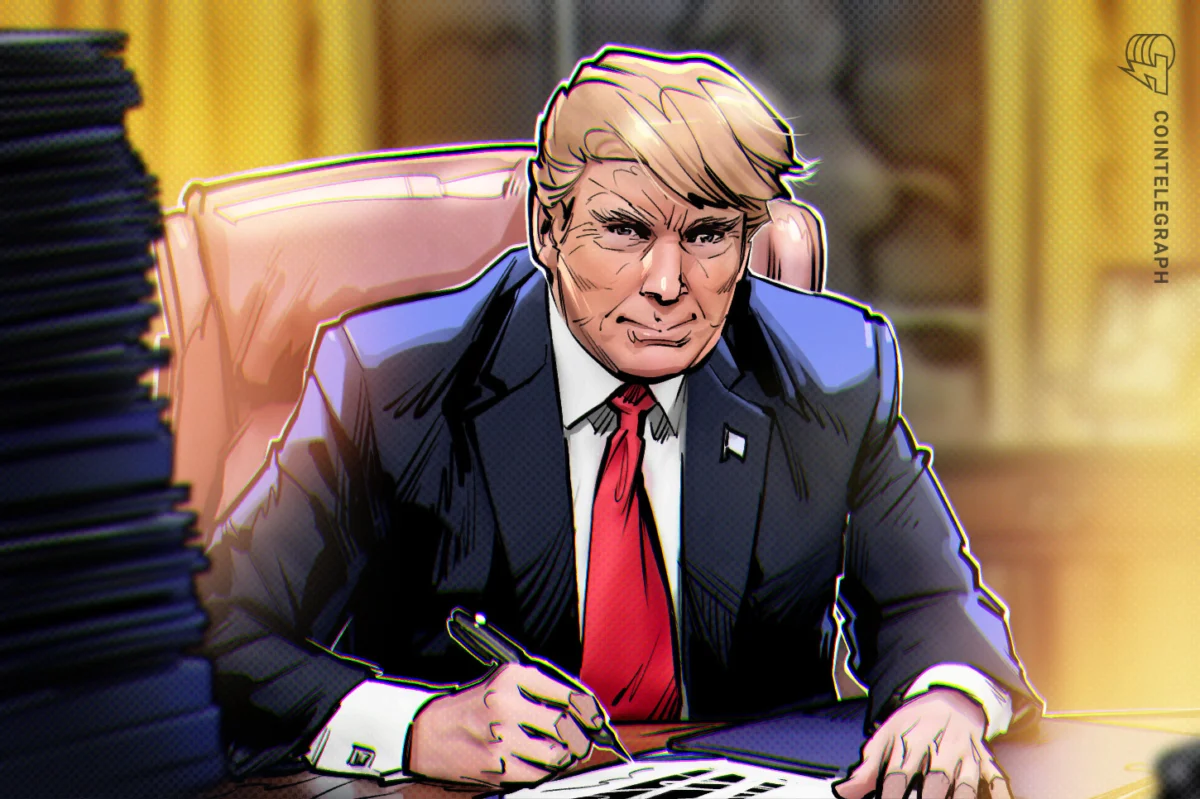
United States President Donald Trump is scheduled to host a high-profile meeting at the White House this Thursday, convening a select group of Republican senators to evaluate the progress of the crypto market structure bill, known formally as the CLARITY Act. This meeting signals a critical juncture for digital asset regulation in the United States, as the administration and legislative leaders attempt to solidify a framework for the burgeoning industry before the fast-approaching August recess.
According to reports from Politico, Senator Bernie Moreno of Ohio indicated that the group of lawmakers intends to brief the President on the current status of the legislation and outline what they describe as a "path to success" for its passage. Senator Cynthia Lummis of Wyoming, a long-standing advocate for digital asset integration into the American financial system, is also confirmed to attend the session, according to a Senate Republican aide. The meeting underscores the President’s direct involvement in the legislative process, a move that supporters suggest could provide the necessary political momentum to overcome long-standing partisan and regulatory hurdles.
The Presidential Role and the Drive for Innovation
The involvement of the White House at this stage of the legislative process is seen by many as a strategic move to ensure the CLARITY Act remains a priority on the Senate’s crowded docket. Senator Moreno emphasized the President’s personal interest in the bill, noting that the administration has been deeply involved in shaping its core components.
"We’ll be talking about the entirety of the bill. I mean, obviously the president’s been very engaged in this bill," Moreno stated in a press briefing. He further credited the President with fostering an environment conducive to technological advancement, adding, "He’s the one who’s really driven the innovation that I think will pay dividends."
The CLARITY Act aims to provide a comprehensive regulatory framework for digital assets, seeking to resolve the jurisdictional ambiguities that have historically plagued the sector. For years, the industry has operated in a "regulation by enforcement" environment, where the Securities and Exchange Commission (SEC) and the Commodity Futures Trading Commission (CFTC) often clashed over which agency held authority over specific types of tokens. The proposed legislation seeks to codify definitions for digital assets, distinguishing between commodities and securities, and establishing clear guidelines for market participants, exchanges, and custodians.
A Race Against the Legislative Calendar
The timing of this White House meeting is not incidental. Lawmakers are operating under a tight deadline, with the Senate’s August recess looming as a major obstacle. Historically, major legislation that fails to clear the floor before the summer break faces a significantly higher risk of stalling permanently, particularly in an election year. Many Washington insiders view the current window as the last realistic opportunity to pass meaningful crypto legislation before the focus shifts entirely to the upcoming midterm elections.
Senator Thom Tillis, a key figure in the negotiations who has been working through the bill’s more contentious and unresolved provisions, highlighted the urgency of the situation. Tillis has been instrumental in bridging the gap between various stakeholders, including traditional banking associations and the crypto industry.
"I’m hoping that we can come up with some agreement by the end of this week," Tillis told Politico. "I think it’s critical if we’re going to try and get this across the floor before August recess."
The "unresolved provisions" mentioned by Tillis likely include technical details regarding stablecoin reserve requirements, anti-money laundering (AML) compliance standards, and the specific thresholds for decentralization that would allow a token to be classified as a commodity rather than a security. Reaching a consensus on these points is essential for the bill to gain the broad support needed for a floor vote.
Revised Drafts and the Path to the Senate Floor
As the White House meeting approaches, the Senate is awaiting a revised draft of the CLARITY Act. This new version is expected to incorporate feedback from various committees and address some of the concerns raised by both the administration and industry leaders.
In a recent interview with Fox Business, Senator Cynthia Lummis provided a glimpse into the timeline for the bill’s progression. She indicated that a new draft version of the legislation is slated for introduction within the next few days. Lummis expressed optimism regarding its trajectory, stating that she expects the bill to be presented on the Senate floor as early as next week.
The introduction of a revised draft is a pivotal step. It allows lawmakers to see the final compromises made during the negotiation phase and provides a basis for the final push for votes. The involvement of Senator Lummis is particularly noteworthy; as a co-author of several previous attempts at crypto regulation, her endorsement of the current draft carries significant weight among both pro-innovation Republicans and moderate Democrats.
Market Sentiment and Prediction Market Insights
The legislative developments have triggered a sharp reaction in prediction markets, which serve as a real-time barometer for public and professional sentiment regarding the bill’s chances of success. Traders on the prediction platform Kalshi have significantly adjusted their outlook following the news of the White House meeting.
As of the latest data, Kalshi traders have placed a 79% probability on the CLARITY Act being voted on by the Senate before the August recess. This represents a notable increase from the 68.8% chance recorded just 24 hours prior. This surge in confidence suggests that the market views the President’s direct engagement as a catalyst that could break the current legislative logjam.
However, a distinction remains between the likelihood of a vote and the likelihood of the bill becoming law. While traders are increasingly certain that a vote will occur, they remain more cautious about the final outcome. A $3 million prediction market on Kalshi currently gives the crypto bill a 36% chance of becoming law within the 2026 calendar year, with the odds rising to 62% for it to be enacted before the end of 2027.
Similarly, on the decentralized prediction platform Polymarket, traders are pricing in a 39% chance that the CLARITY Act will be signed into law this year. These figures reflect the inherent difficulties in passing complex financial legislation, which requires not only Senate approval but also reconciliation with the House of Representatives and a final signature from the President, all while navigating a polarized political landscape.
Internal Opposition and Ethical Concerns
Despite the momentum, the CLARITY Act faces internal headwinds within the Senate. At least three U.S. senators have voiced opposition to the bill, citing ethical grounds. While the specific names of all opposing senators have not been formally consolidated in a single public manifest, the opposition generally centers on concerns regarding the potential for conflicts of interest and the speed at which the legislation is being moved through the chamber.
Critics of the bill argue that the rapid pace of the "Senate push" may not allow for sufficient scrutiny of how the new rules might benefit specific industry players who have been active in lobbying efforts. Some senators have called for more transparency regarding the bill’s impact on consumer protection and the broader stability of the traditional financial system. These ethical objections represent a hurdle that the bill’s proponents must clear if they hope to secure a "veto-proof" or even a simple majority in a closely divided Senate.
Broader Implications for the Digital Asset Industry
The outcome of the CLARITY Act will have far-reaching implications for the United States’ position in the global digital economy. Proponents of the bill argue that without a clear legislative framework, the U.S. risks losing its competitive edge to other jurisdictions, such as the European Union, which has already implemented its Markets in Crypto-Assets (MiCA) regulation.
The bill’s success would likely lead to:
- Increased Institutional Adoption: Clear rules of the road would allow large institutional investors, such as pension funds and insurance companies, to enter the digital asset space with greater legal certainty.
- Enhanced Consumer Protection: By establishing standards for exchanges and custodians, the bill aims to prevent the kind of systemic failures seen in previous years, such as the collapse of major offshore entities.
- Regulatory Clarity: Distinguishing between the SEC and CFTC’s roles would reduce the cost of compliance for startups and established firms alike, potentially sparking a new wave of domestic innovation.
Conversely, if the bill fails to pass before the August recess, the resulting regulatory vacuum could lead to further litigation and a continued exodus of crypto firms to more "crypto-friendly" nations. The midterm elections would likely push any further discussion of the bill into the next year, leaving the industry in a state of flux for several more months.
Conclusion and Future Outlook
As President Trump prepares to meet with Senators Moreno and Lummis, the eyes of the financial world are on the White House. The CLARITY Act represents more than just a set of rules for Bitcoin and Ethereum; it is a fundamental attempt to modernize the American financial regulatory apparatus for the 21st century.
The coming days will be decisive. If the revised draft gains the necessary traction and the White House meeting results in a unified front, the CLARITY Act could indeed see a historic floor vote before the summer break. However, with unresolved provisions still on the table and ethical concerns lingering among some lawmakers, the path to the President’s desk remains fraught with challenges. The digital asset industry, investors, and regulators alike now await the outcome of Thursday’s briefing, which may well determine the future of crypto in America.