Lina Irawan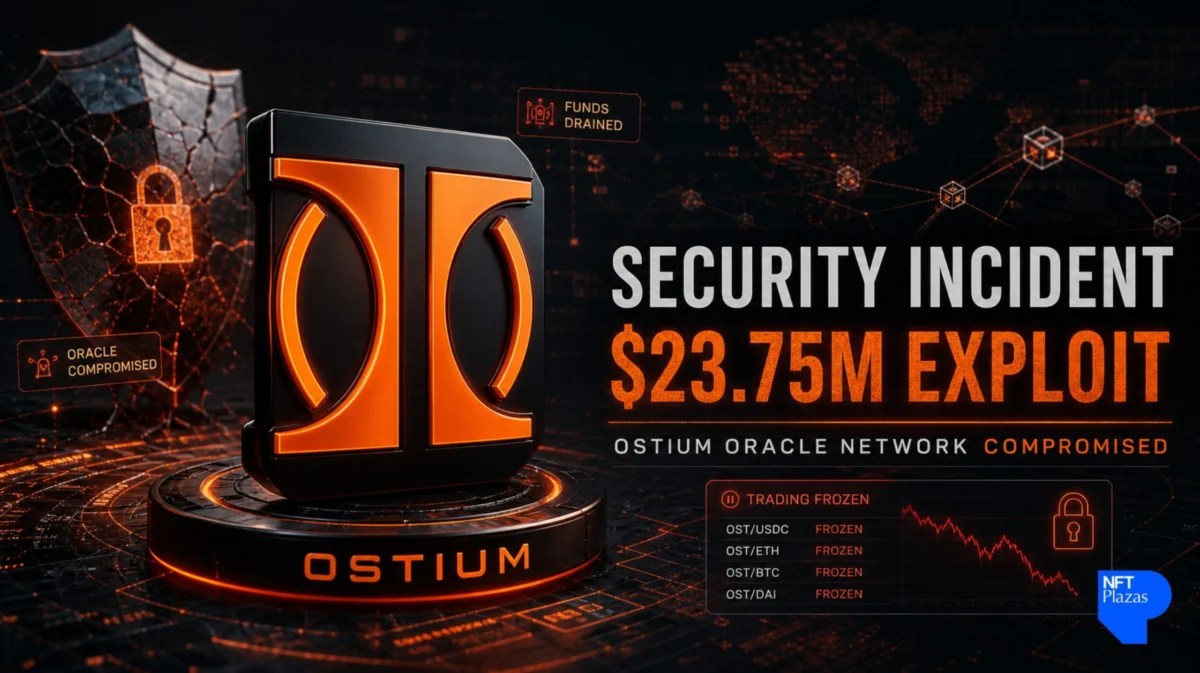
On the morning of July 16th, the decentralized finance (DeFi) landscape was jolted by the announcement from Ostium, a prominent on-chain perpetual trading protocol, that it had been compelled to pause all trading activities due to a significant security incident. On-chain analytics firms immediately flagged a substantial outflow of funds from wallets associated with the protocol, raising alarms within the tightly-knit DeFi community. While Ostium assured its users that their existing positions remain open and their margin funds are secure within frozen smart contracts, the inability to modify these positions has created considerable uncertainty. The protocol has yet to release a definitive technical explanation for the breach or a concrete timeline for its recovery, thrusting Ostium into the immediate and intense scrutiny of the DeFi market.
The Unfolding Crisis: A Rapid Sequence of Events
The security incident at Ostium reportedly occurred within a narrow five-minute window, between 14:18 and 14:23 UTC on July 16th. According to the protocol’s official statement, the Ostium team detected anomalies within this timeframe, prompting an immediate and coordinated response to isolate the risk. This rapid detection led to the swift decision to halt trading and lock the affected trading contracts.
The implications of this swift action were immediately apparent: user positions were frozen in an unmodifiable state, and trading activities were suspended. This suggests that the primary objective of the protocol’s intervention was to prevent further exploitation and to secure user assets, rather than an outright system failure. The exact technical nature of the exploit remains undisclosed by Ostium, but the described measures point towards a critical vulnerability that necessitated an immediate shutdown of transactional capabilities.
The sequence of events can be reconstructed as follows:
- July 16, 14:18 UTC: The security incident begins.
- July 16, 14:23 UTC: The incident concludes, and the Ostium team detects anomalies.
- Immediately following detection: Ostium announces the pause in trading and locks trading contracts.
- Concurrent monitoring: On-chain trackers begin observing significant fund outflows from Ostium-associated wallets.
- Subsequent announcements: Ostium provides updates confirming the pause and the status of user positions and margins, while on-chain data reveals the movement and laundering of stolen funds.
The rapid response, while critical for risk mitigation, has left users in a state of limbo, awaiting clarity on the incident’s root cause and the path to full operational recovery.
Tracing the Digital Trail: Fund Flows and Laundering Tactics
On-chain forensic analysis has provided a clearer, albeit alarming, picture of the financial repercussions of the security incident. Data from blockchain analytics firm Lookonchain revealed that approximately 23.75 million USDC, a stablecoin pegged to the US dollar, was drained from Ostium. This substantial sum was then swiftly converted into 12,084 Ether (ETH), with the exchange occurring at an average price of approximately $1,966 per ETH. This conversion strategy is a common tactic employed by malicious actors to obfuscate the origin of stolen funds by moving them into a more liquid and decentralized asset.
The subsequent actions of the exploiter further underscore a deliberate effort to launder the illicit gains. A significant portion of the acquired ETH was then transferred to Tornado Cash, a popular cryptocurrency mixer known for its privacy-enhancing features. This move is a classic technique to break the on-chain trail, making it exceedingly difficult to trace the funds back to their original source.
Further analysis by Arkham, another blockchain intelligence platform, corroborated and expanded upon these findings. Arkham identified multiple intermediary addresses that were part of the cluster associated with the "Ostium Exploiter." This detailed mapping indicated that the funds did not follow a direct path from the exploit wallet to Tornado Cash. Instead, the ETH was routed through a series of intermediate wallets. This layering process, often involving splitting transactions into multiple smaller batches, is a sophisticated method to further obscure the flow of stolen assets, making it a more arduous task for investigators and law enforcement to track. The deliberate complexity of these transactions highlights the professional nature of such exploits.
Broader Implications: Ostium’s Unique Position in DeFi
The security incident at Ostium carries a weight that extends beyond the immediate financial losses. Ostium distinguishes itself as an on-chain perpetual trading protocol that aims to replicate the functionalities of traditional financial markets, offering trading in assets such as stocks, commodities, and forex within a self-custody framework. This ambition to bridge the gap between traditional finance (TradFi) and decentralized finance (DeFi) makes such a breach particularly significant.
For a protocol positioning itself as a robust alternative to established trading platforms, any security vulnerability immediately raises critical questions about the fundamental resilience of its model. These concerns encompass the efficacy of its user protection mechanisms, the inherent risks of operating in a nascent and rapidly evolving technological environment, and the reliance on emergency intervention strategies during periods of crisis. The incident, therefore, resonates across the broader DeFi ecosystem, serving as a stark reminder of the persistent challenges in securing decentralized financial infrastructure, especially as it seeks to integrate with and challenge traditional financial systems. The promise of self-custody and decentralized trading is only as strong as the underlying security protocols that safeguard user assets and the integrity of the trading environment.
The Resurgence of Oracle and Valuation Risks
While Ostium has yet to disclose the precise technical cause of the exploit, the incident has inevitably brought issues surrounding pricing mechanisms, oracles, and liquidation logic back to the forefront of DeFi discussions. Perpetual futures protocols, by their very nature, are highly dependent on accurate and timely price feeds. Even minor deviations or errors in price updates, particularly those provided by decentralized oracles, can lead to significant and immediate financial losses for traders. In protocols that manage leveraged positions, incorrect pricing can trigger unwarranted liquidations, leading to the loss of user margin.
What makes this incident particularly noteworthy is how the market is interpreting it. It is not merely being viewed as another instance of a fund drain, but as a symptom of a deeper, systemic vulnerability within DeFi’s valuation layer. This concern is amplified as more DeFi protocols venture into the trading of traditional financial assets like stocks, commodities, and foreign exchange. The inherent complexity of valuing these diverse assets in real-time, and the reliance on external data feeds, introduces a layer of risk that goes beyond smart contract code vulnerabilities. The integrity of price discovery, the robustness of oracle networks, and the efficiency of liquidation mechanisms are all critical components that must be meticulously secured to ensure the stability and trustworthiness of decentralized trading platforms. The Ostium incident serves as a potent reminder that the "valuation layer" of DeFi remains a significant frontier for security enhancements.
Navigating the Path to Recovery and Future Steps
In the aftermath of the incident, Ostium has stated that its team is working around the clock to ascertain a recovery timeline for its smart contract operations and to explore avenues for asset retrieval. However, as of the latest updates, no specific timeframe has been provided. The protocol’s immediate priorities appear to be a thorough investigation into the incident, diligent tracking of the drained funds, and the preparation of a comprehensive postmortem analysis to inform future security strategies.
For Ostium users, the most pressing questions revolve around the ultimate extent of the financial damage, the feasibility of recovering any portion of the stolen assets, and, crucially, when trading activities can safely resume. Until Ostium releases further official communications and provides concrete details regarding the incident and its resolution, the situation remains in a state of flux, with significant uncertainties on both the technical and user-impact fronts. The DeFi community will be closely monitoring Ostium’s progress, seeking reassurances about the protocol’s security architecture and its ability to regain the trust of its user base. The eventual resolution of this incident will undoubtedly contribute to the ongoing dialogue surrounding security best practices and risk management within the rapidly evolving decentralized finance ecosystem.