Reza Arap Oktovian
Around the middle of this year, Ethereum, the second-largest blockchain in terms of monetary value, and with hundreds of billions of dollars worth of assets depending on its operation, will transition from the Proof-of-Work consensus algorithm securing the system today, to the Proof-of-Stake system of tomorrow – a procedure described by many as changing the engine of an airplane while flying it. Ethereum can, under no circumstances whatsoever, stop producing valid blocks. This monumental shift, known as "The Merge," represents one of the most significant upgrades in the history of decentralized ledger technology, aiming to drastically improve scalability, energy efficiency, and security.
Unlike many other prominent blockchains, such as Bitcoin, which have maintained a relatively stable consensus mechanism, Ethereum’s developer community, strongly supported by the Ethereum Foundation (EF) and influential figures within the ecosystem, has embarked on a complex, multi-client development strategy for its Proof-of-Stake (PoS) implementation, often colloquially referred to as Ethereum 2.0. This approach involves the creation of multiple, independently developed client software versions, each written in different programming languages by distinct teams. This diversification is a deliberate strategy to bolster network resilience against potential single points of failure.

The Mechanics of "The Merge": A Symbiotic Transition
The transition process, aptly named "The Merge," is not a simple fork or a replacement of the existing network. Instead, it involves a crucial merger between the current Ethereum network nodes, a subset of which currently operate as miners under the Proof-of-Work (PoW) system, and the nodes running the "beacon chain." The beacon chain, which has been operational since December 2020, serves as the foundational layer for the new PoS consensus mechanism.
A key outcome of The Merge will be a functional separation of duties among network nodes. Currently, Ethereum nodes are responsible for both executing transactions and validating them. Post-Merge, this responsibility will be bifurcated. One type of node, designated as an "execution node," will continue to interface with users and smart contracts, manage the Ethereum Virtual Machine (EVM), and execute transactions. However, the critical task of validating these transactions will be delegated to a new set of nodes, known as "validator nodes," which will operate on the PoS consensus layer.
These execution and validator clients share some codebase, particularly if they are developed in the same programming language. The execution clients have undergone minor modifications to integrate seamlessly with the new PoS architecture. Core components like the EVM remain largely intact, with only slight adjustments needed. Eventually, the parts of the execution client code responsible for validation within the current PoW chain are expected to be deprecated.

Therefore, The Merge is less about two chains coalescing into one and more about a precisely timed handover of validation responsibilities. At a predetermined block height, the existing PoW mining nodes will cease their validation duties, transferring this critical function to the PoS validators. This architectural evolution represents a classic enhancement of robustness through the strategic separation of concerns into distinct logical layers, ensuring continuous block production and network operation.
The Criticality of Client Diversity: A Fortress Against Vulnerabilities
The adoption of a multi-client strategy for PoS was a deliberate choice to mitigate risks associated with software vulnerabilities. The underlying principle is that if a bug, fault, or security exploit affects one client implementation, it will not cripple the entire network, as other clients, built on different codebases and potentially different programming languages, will remain unaffected.
This contrasts with the development approach of many other blockchains, including Bitcoin. The relative simplicity of the Bitcoin protocol and its single, dominant client implementation has historically contributed to its stability. However, Ethereum’s inherent complexity, an order of magnitude greater than Bitcoin’s, inherently introduces a higher risk of vulnerabilities and a broader attack surface. The multi-client approach is designed to counter this by creating redundancy and isolation.
The effectiveness of this multi-client strategy is contingent upon a healthy distribution of staking power across these different clients. The ideal scenario, widely discussed within the Ethereum community, is one where no single client commands a disproportionately large share of the network’s total staking power. Specifically, it is argued that no client should control more than one-third (33%) of the staking power. This threshold ensures that if a critical bug emerges in a less dominant client, the network can continue to operate smoothly, and the bug can be addressed without catastrophic consequences.
The situation becomes more precarious if a client controls between one-third and one-half (50%) of the staking power. In such a scenario, while automatic network mechanisms might mitigate the immediate impact, users could still experience noticeable disruptions. The most critical threshold, however, is the "supermajority" of more than 50% of the staking power. If a severe bug is exploited in a client that holds a majority of the staking power, the consequences could be dire. The buggy client would possess the power to finalize blocks, potentially leading to a chain split, where two versions of Ethereum emerge, or forcing the non-buggy clients to align with the compromised chain, accepting whatever negative repercussions the bug has introduced. A client controlling more than two-thirds (66%) of the staking power represents an existential threat, essentially marking "game over" for the integrity of the network.
The Prysm Predominance: A Concentration of Risk
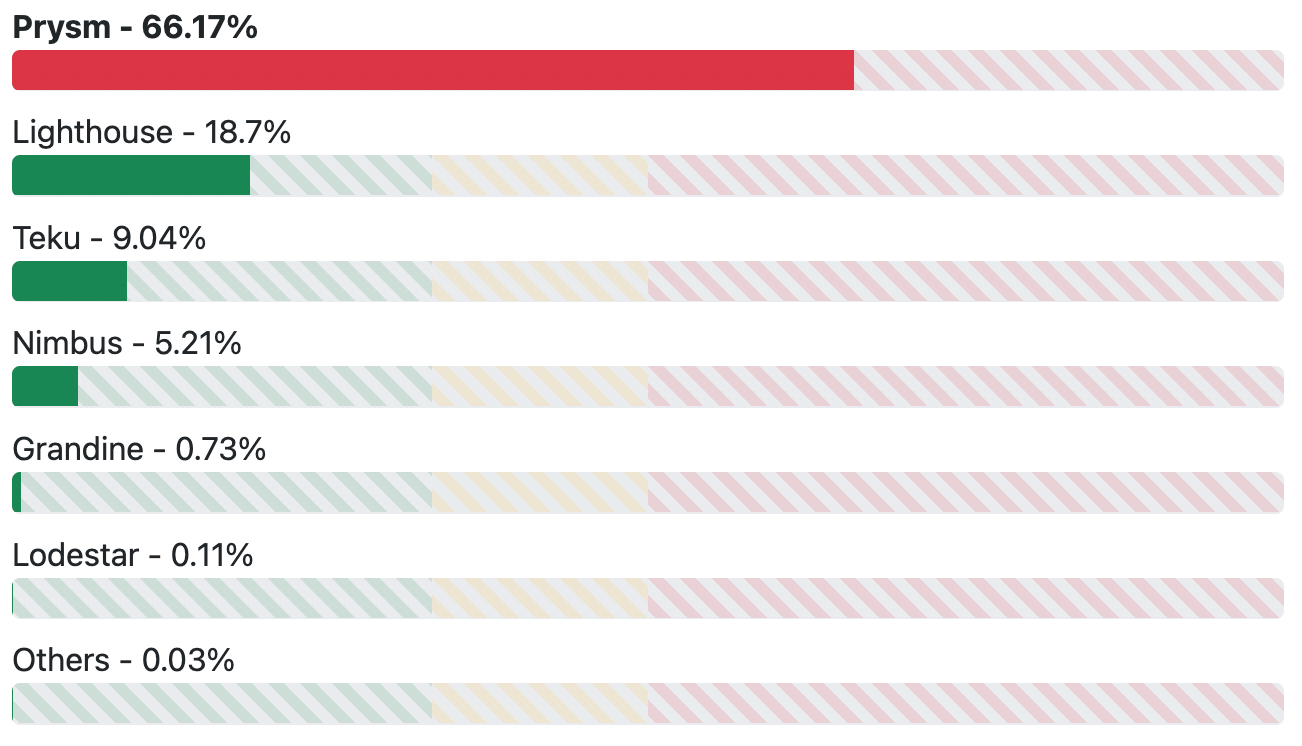
As of early 2022, a significant portion of the Ethereum network’s staking power is concentrated on a single client: Prysm. Developed by Prysmatic Labs, this client has emerged as the dominant implementation, a situation that has raised concerns within the community. While the exact percentage fluctuates, Prysm has consistently held a substantial lead, hovering around the critical 66% mark, and at times exceeding it. This dominance, while not ideal, is currently just below the absolute "game over" threshold of 66%.
The implications of this concentration are clear: if a critical vulnerability were to be discovered and exploited in the Prysm client, it could pose a significant threat to the stability and security of the entire Ethereum network. While the Prysm team is highly regarded, and the likelihood of such a catastrophic event is considered low, the risk is non-zero and warrants careful attention.
Other notable client implementations actively being developed and deployed include Lighthouse, Teku, and Nimbus. Two clients, Grandine and Loadstar, have minimal market share, both well under 1%. Notably, Grandine is the only one currently published under a closed-source license, a characteristic that can sometimes raise transparency concerns in open-source driven ecosystems.
The distribution of consensus clients on the beacon chain, as tracked by resources like clientdiversity.org, highlights Prysm’s commanding presence. While it has not consistently breached the 66% mark, its dominance is far from the desired decentralized ideal.
The Genesis of Prysm’s Dominance: A First-Mover Advantage
The question naturally arises: why has Prysm achieved such a leading position? According to Marius van der Wijden, an Ethereum core developer working on the Geth (Golang Ethereum) Proof-of-Work client, several factors contribute to Prysm’s success. A primary driver is its "first-mover advantage." As one of the earliest prototype implementations of a beacon chain client, Prysm had an extended period to optimize its code, develop supplementary tooling (such as a user-friendly Web UI), and build comprehensive documentation.
Another significant advantage lies in the programming language used: Go (Golang). Van der Wijden notes that Go is both performant and relatively easy to read and develop in. Given that Go-ethereum, a widely used execution client, is also written in Go, developers familiar with Geth could more readily understand and audit Prysm’s codebase. This familiarity and ease of development can accelerate adoption and community support.
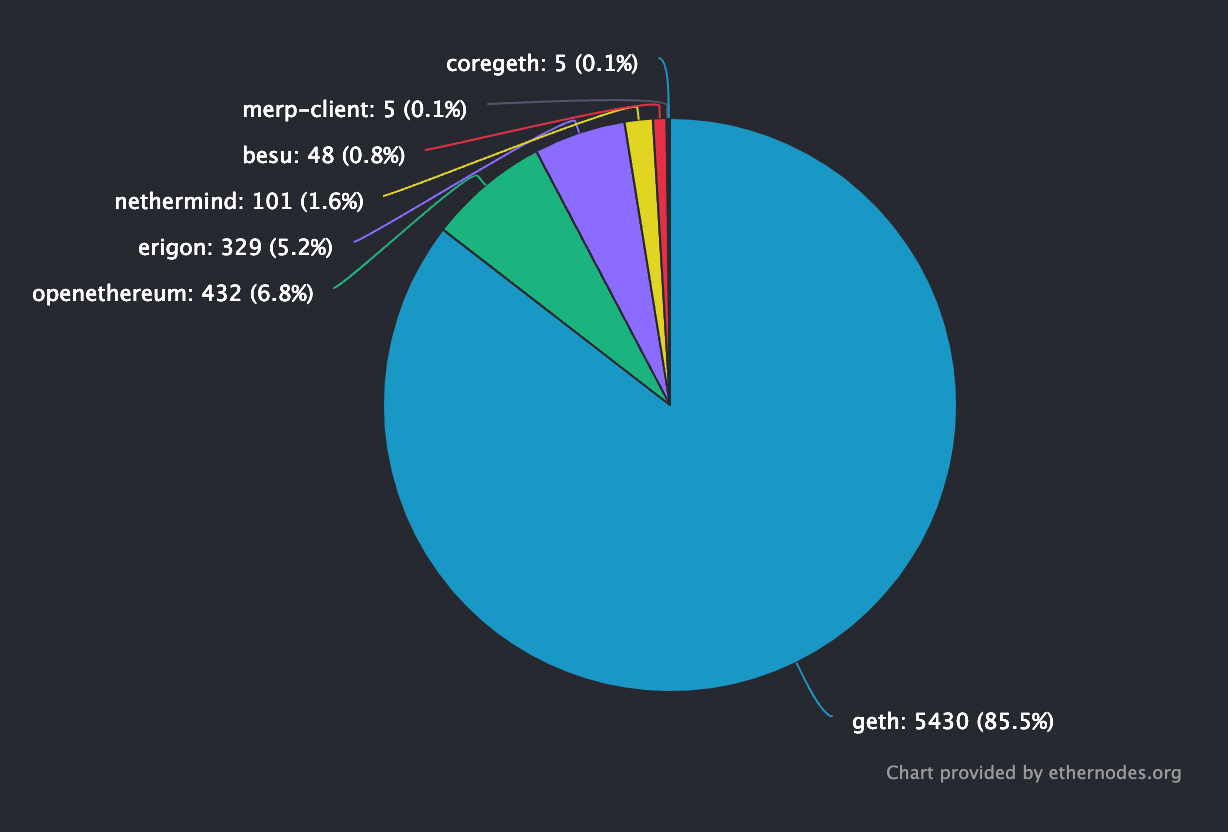
It’s important to distinguish between the security implications of execution clients and consensus clients. While the distribution of Proof-of-Work execution clients, like Geth, has historically shown an even more pronounced concentration (Geth alone commanding over 85% market share), this is less of a concern post-Merge. Execution nodes primarily handle transaction processing, whereas consensus clients are directly responsible for network security and validation. Therefore, the diversity of consensus clients is paramount.
The Role of Major Exchanges in Client Distribution
The concentration of staking power on Prysm is significantly influenced by the practices of large staking services and exchanges. These entities operate a vast number of validator nodes, often pooling smaller amounts of Ether from users who cannot meet the 32 ETH requirement for solo staking. These major players include Coinbase, Kraken, and Binance, along with staking pool Lido.
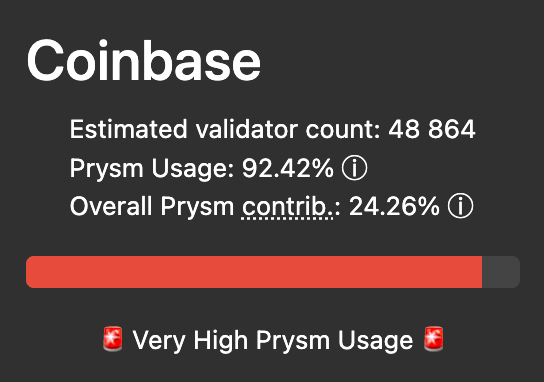
Coinbase, with a substantial validator count, is a significant contributor to Prysm’s dominance. Data indicates that a very high percentage of Coinbase’s validators run the Prysm client, directly contributing a considerable portion to the overall Prysm usage. When queried about their client diversity strategy, Coinbase has pointed to security as a primary driver for their initial choice of Prysm. They cited Prysm’s early support for "remote signers," a feature crucial for securing validator keys in isolated environments, thereby enhancing overall security against potential key compromises. Coinbase also noted their ongoing efforts to support other clients, such as Lighthouse, and their work to integrate remote signer capabilities into them.
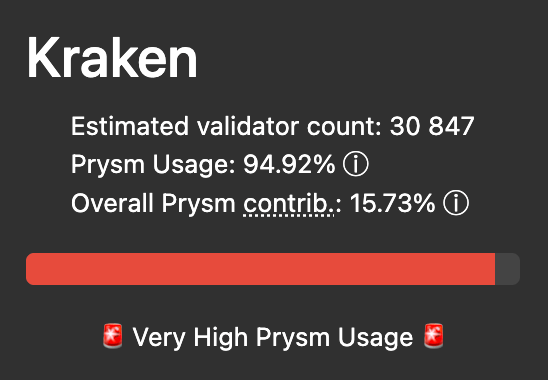
Kraken, another major exchange, also acknowledged Prysm’s initial maturity and stability as key factors in their adoption. However, Kraken has also indicated a proactive move towards diversifying their validator clients, including implementing validators on Teku and migrating existing ones. This indicates a recognition of the importance of client diversity and a commitment to addressing the current imbalance.
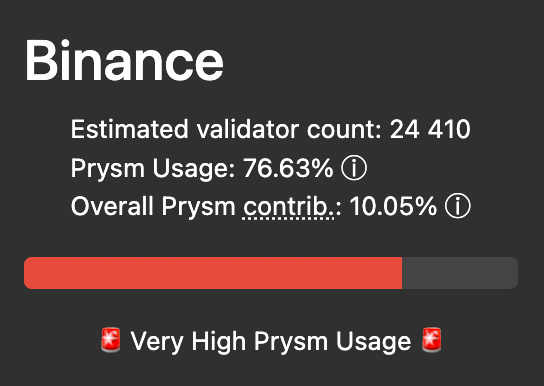
Binance, the world’s largest cryptocurrency exchange, has also been a substantial contributor to Prysm’s adoption, though they did not respond to requests for comment regarding their client strategy.
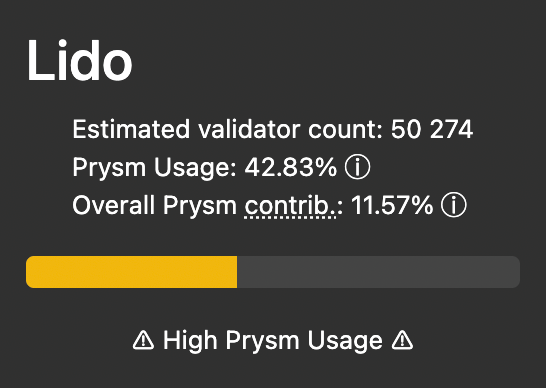
Lido, a prominent liquid staking solution, while operating a large number of validators, exhibits a lower percentage of Prysm usage compared to some of the centralized exchanges. Nevertheless, its overall contribution to Prysm’s dominance remains significant due to its large validator base.
Decentralized Alternatives and the Path Forward
In contrast to the centralized exchanges, decentralized staking pools like Rocket Pool demonstrate a more favorable client distribution. Rocket Pool’s validator set shows a significantly lower reliance on Prysm, contributing minimally to the overall concentration risk.
The current situation highlights that the four major staking services and pools collectively hold the power to significantly influence client diversity. Discussions are reportedly ongoing between these services and the Ethereum Foundation regarding strategies to mitigate this concentration risk. According to Marius van der Wijden, these discussions are progressing positively.
Van der Wijden reassures that switching client software for node operators is neither inherently risky nor overly difficult, especially for individual stakers. Major client implementations are well-tested and maintained. For larger stakers, the transition might involve more complex API integrations, but the fundamental process is manageable.
Navigating the Final Stretch to The Merge
With The Merge approaching, the Ethereum community is likely to accept a client distribution that is less than ideal, particularly concerning Prysm’s continued dominance. The probability of Prysm’s market share falling below the critical 33% threshold before the upgrade is considered very low. However, this does not deter the core developers from proceeding with The Merge.
The prevailing sentiment among core developers is one of cautious optimism. They emphasize the robust testing and fuzzing infrastructure in place, which continuously scrutinizes client implementations for discrepancies. Even in the unlikely event of a consensus failure, the community is confident in its ability to rapidly deploy new releases and resolve any resulting forks. Furthermore, there is a strong consensus that stakers running a majority client will not be bailed out if their chosen client misbehaves, underscoring the importance of decentralized choices and risk management. The success of The Merge hinges not only on technical execution but also on the collective commitment of the ecosystem to maintain a robust and decentralized network.