Nila Kartika Wati
Stablecoins, initially conceptualized as a more efficient conduit for cross-border dollar transfers, are increasingly serving a fundamental role in countries like Bolivia: providing access to the U.S. dollar itself. The recent proposal by the Bolivian government to officially recognize Tether’s USDt (USDT) as a legitimate payment currency highlights a growing trend in emerging markets where economic instability is accelerating the adoption of digital assets. Concurrently, within the broader digital asset ecosystem, Bitcoin miners are discovering that a strategic pivot towards artificial intelligence (AI) infrastructure, while promising new revenue streams, is also drawing intensified scrutiny from investors regarding corporate governance and insider trading practices. This dichotomy underscores the diverse and rapidly evolving landscape of cryptocurrency integration into global finance and industry.
Bolivia’s Economic Headwinds and the Official Embrace of USDT
Bolivia is on the precipice of a significant financial paradigm shift, with its government actively considering a regulatory framework that would formally integrate Tether’s USDT into its national financial system. This move represents a pivotal moment in the nation’s ongoing efforts to grapple with severe economic challenges, particularly a persistent shortage of U.S. dollars. Economy and Public Finance Minister Jose Gabriel Espinoza confirmed that the proposed framework aims to allow USDT to circulate freely alongside the national currency, the boliviano, and the physical U.S. dollar, facilitating both payments and savings for its citizens.
The decision is a direct response to a prolonged and deepening dollar liquidity crisis that has gripped the Andean nation. For years, Bolivia maintained a relatively stable currency peg of approximately 6.96 bolivianos to one U.S. dollar, a policy that helped to control inflation and provide a semblance of economic predictability. However, dwindling foreign exchange reserves, exacerbated by a decline in natural gas production (historically a major export earner), trade deficits, and increased government spending, placed immense pressure on the central bank. Earlier this year, this pressure became unsustainable, forcing the government to effectively abandon its long-standing currency peg. The immediate consequence was a widening chasm between the official exchange rate and the parallel, or black-market, rate, with the latter often commanding significantly more bolivianos for a single dollar. This disparity has fueled a burgeoning demand for dollar-denominated alternatives that can maintain their value, with USDT emerging as a popular and accessible solution.
The proposed framework is not without its complexities and challenges. Minister Espinoza emphasized that robust anti-money laundering (AML) safeguards would be integral to the new regulations. This is a crucial consideration given Bolivia’s current status on the Financial Action Task Force’s (FATF) gray list. Inclusion on this list signifies that a country has strategic deficiencies in its AML/CFT (combating the financing of terrorism) regimes and is actively working with the FATF to address them. Implementing comprehensive safeguards for a decentralized digital asset like USDT will be critical for Bolivia to demonstrate its commitment to international financial transparency standards and avoid further penalties or isolation.
This initiative also marks a significant reversal of previous policies. As recently as 2024, Bolivia had an outright ban on cryptocurrencies, a measure initially implemented in 2014 citing concerns about the lack of regulation and potential for illicit activities. The lifting of this ban, coupled with pledges from the new administration to expand access to digital asset services, signals a pragmatic shift in policy, driven by economic necessity rather than ideological opposition. The timeline reflects a rapid evolution: from a strict prohibition to active consideration of integrating a major stablecoin within a decade. This move aligns Bolivia with other Latin American nations like Argentina and Venezuela, which have seen varying degrees of crypto adoption spurred by hyperinflation, currency devaluation, and capital controls. For ordinary Bolivians, the ability to transact and save in USDT could offer a vital hedge against the erosion of the boliviano’s purchasing power, potentially easing daily commerce and cross-border remittances. However, risks remain, including consumer protection issues, the potential for increased illicit financial flows if AML measures are insufficient, and the inherent, albeit low, risk of a stablecoin de-pegging from its underlying asset.

Bitcoin Miners’ Strategic Pivot to AI Draws Investor Scrutiny
The narrative shifts from national economic policy to corporate strategy within the digital asset sector, where Bitcoin miners are increasingly looking beyond their traditional operations. The post-halving landscape, characterized by significantly reduced block rewards and increased mining difficulty, has placed immense pressure on profitability. In response, many publicly traded Bitcoin mining companies have sought diversification by pivoting towards high-performance computing (HPC) and artificial intelligence (AI) infrastructure, leveraging their existing data center capabilities and access to large power capacities. While this strategy initially generated considerable investor enthusiasm, a cooler sentiment has begun to set in, accompanied by heightened scrutiny over corporate governance, particularly regarding insider stock sales.
According to Blocksbridge Consulting, a firm specializing in the digital asset mining sector, executives at several prominent Bitcoin mining companies — including TeraWulf, Cipher Digital, Riot Platforms, and Core Scientific — have disclosed significant stock sales in recent months. Many of these transactions were executed under Rule 10b5-1 trading plans, which allow company insiders to set up prearranged stock sales at a future date. While designed to prevent insider trading by establishing trades when the insider is not in possession of material non-public information, these plans have sometimes drawn criticism for potentially allowing executives to capitalize on favorable market conditions even if the underlying rationale for the trade was set months prior.
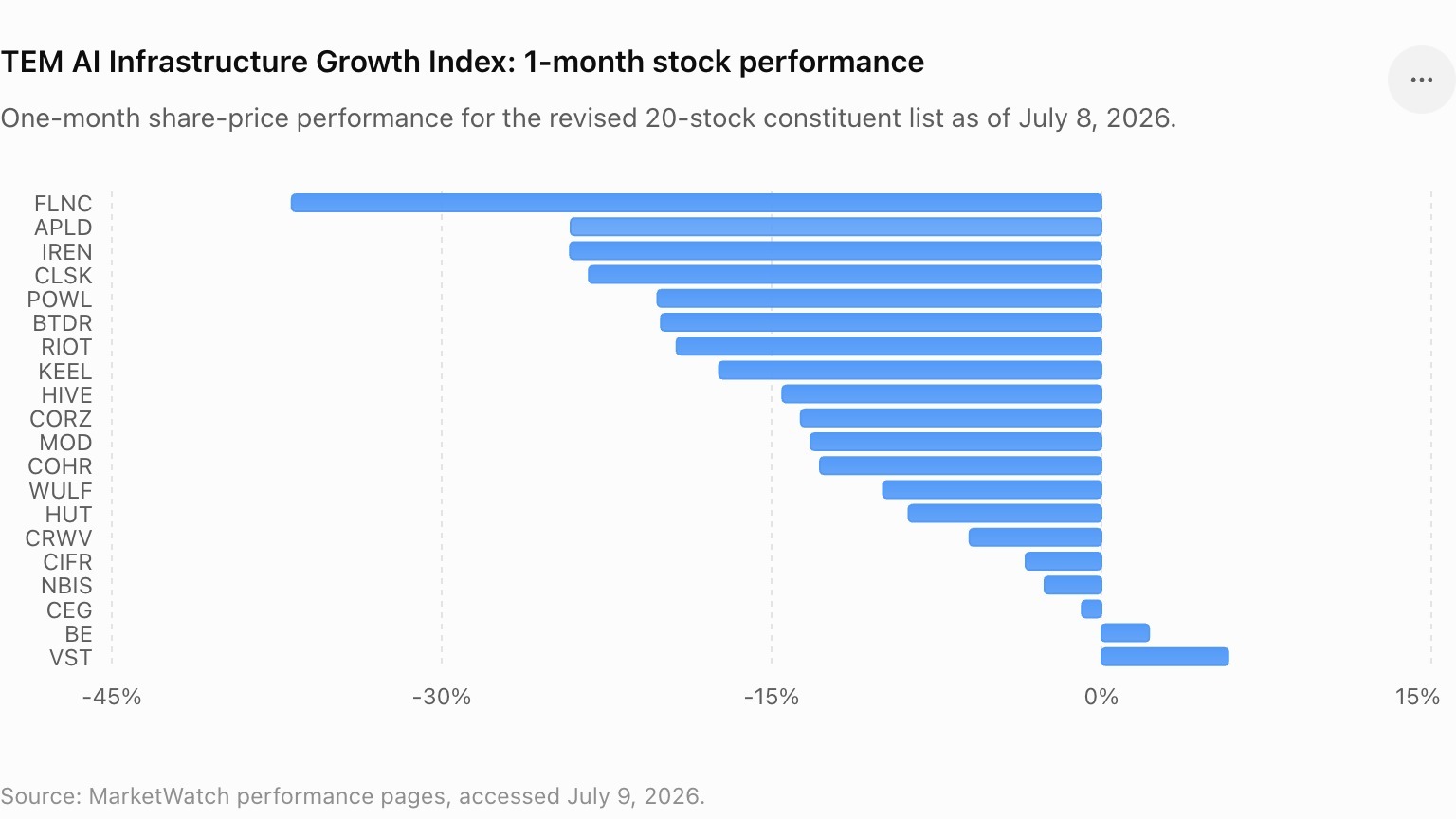
The scrutiny extends beyond executive sales. Strategic investors, including Tether, a major player in the stablecoin market and a significant investor in various crypto ventures, have also trimmed their holdings in some of these pivoting companies. For instance, Tether reportedly reduced its stake in Bitdeer following a period of strong AI-driven rally for the company’s stock. This collective action from both insiders and strategic investors has coincided with a noticeable cooling in market sentiment towards the sector; the TEM AI Infrastructure Growth Index, which tracks companies engaged in this pivot, has fallen by a notable 16% over the past month.
Blocksbridge Consulting highlighted that investors are now increasingly looking beyond the "AI growth story" to critically assess whether the promised benefits of these strategic pivots will genuinely flow to public shareholders. Concerns include potential dilution from new share offerings, the true cost and timeline of transitioning infrastructure, the competitive landscape of the AI/HPC market, and whether the sales by insiders signal a lack of confidence in the long-term prospects of these diversified strategies. This shift underscores a maturing investment landscape where speculative enthusiasm is being tempered by demands for clear, demonstrable value creation and robust corporate governance. The challenge for these miners now lies in effectively communicating their value proposition and demonstrating tangible returns from their AI ventures, all while navigating a skeptical market.
CleanSpark’s Landmark AI Lease Signals Confidence in Diversification
Amidst the broader investor scrutiny facing Bitcoin miners pivoting to AI, CleanSpark, a prominent Bitcoin mining company, recently experienced a significant boost to its share price, rallying as much as 22%. This surge followed the announcement of a landmark 20-year data center lease agreement in Georgia, projected to generate up to $6.6 billion in contracted revenue. The deal unequivocally underscores CleanSpark’s accelerated push into AI and high-performance computing (HPC) infrastructure, positioning it distinctly within the evolving mining landscape.
The agreement pertains to a substantial 175-megawatt data center located at CleanSpark’s Sandersville, Georgia, campus. The tenant, an undisclosed investment-grade global technology company, will install its computing equipment at the site, with phased deliveries anticipated to commence in the fourth quarter of 2027. The long-term nature of the contract is further emphasized by the inclusion of two five-year extension options, which, if exercised, could elevate the total value of the agreement to an impressive $11.6 billion. This deal provides CleanSpark with a stable, long-term revenue stream that significantly diversifies its business model beyond the cyclical volatility of Bitcoin mining.

This strategic move by CleanSpark reflects a broader, yet differentiated, trend among Bitcoin miners seeking new avenues for revenue generation, especially as the economics of mining continue to face pressure in the post-halving era. Unlike many publicly traded miners who have resorted to reducing their Bitcoin holdings to shore up liquidity and fund operational expenses or expansion into AI, CleanSpark has largely maintained its strategy as a net accumulator of Bitcoin. While the company did sell some BTC earlier this year to finance operations and strategic initiatives, its overall stance has been to hold onto its mined Bitcoin, demonstrating a unique balance between capital preservation, strategic diversification, and belief in Bitcoin’s long-term value.
The Sandersville facility’s location in Georgia is strategically advantageous, leveraging the state’s competitive energy costs and existing infrastructure. The scale of the 175-megawatt capacity highlights the significant demand for dedicated data center space from major tech companies requiring substantial power for their AI and HPC operations. For CleanSpark, this agreement not only validates its strategic pivot but also provides a clear pathway to substantial, predictable revenue, potentially insulating it from some of the investor skepticism currently impacting other miners who are less advanced in their AI diversification efforts or whose transitions are less clearly defined. This deal positions CleanSpark as a frontrunner in successfully translating its mining infrastructure into a robust platform for the booming AI industry.
Bitmine Immersion Technologies: A Dominant Force in Ethereum Staking
Shifting focus from Bitcoin mining and AI pivots, Bitmine Immersion Technologies has demonstrated a highly successful diversification strategy centered on Ethereum staking. The company reported an impressive $45.7 million in revenue generated from Ethereum staking and validation during the last quarter, which concluded on May 31. This remarkable performance underscores the inherent strength and profitability of its business model, even during a period when Ether (ETH) prices experienced considerable market pressure.
The quarterly financial results reveal a significant strategic focus: Ethereum staking accounted for a dominant 98% of Bitmine’s total revenue for the three-month period. In stark contrast, self-mining Bitcoin contributed a comparatively modest $624,000, while consulting services added $168,000. This breakdown clearly illustrates Bitmine’s successful transition and specialization in the Ethereum ecosystem, diverging sharply from the Bitcoin-centric strategies of many other digital asset companies.
This success follows the strategic launch of MAVAN, Bitmine’s dedicated institutional Ethereum staking platform, in March. The development of MAVAN was significantly bolstered by the prior acquisition of Pier Two Holdings, a recognized validator operator. This acquisition provided Bitmine with critical expertise and infrastructure, enabling it to rapidly scale its staking operations. The company has announced that it has staked approximately 85% of its substantial Ether holdings, amounting to roughly 4.9 million ETH. This figure is particularly noteworthy as it represents a massive amount of Ether, placing Bitmine among the largest, if not the largest, single entities engaged in Ethereum staking globally. To put this into perspective, 4.9 million ETH represents a significant portion of the total Ether currently staked on the Ethereum network, underscoring Bitmine’s commanding presence.
Chairman Tom Lee confidently stated that Bitmine now stakes more Ether than any other single entity. Furthermore, he projected annualized staking rewards of $284 million once the company’s entire Ether holdings are fully staked through MAVAN and its network of partners. This projection highlights the immense potential for stable, recurring revenue streams that Ethereum staking can provide, offering a compelling alternative to the capital-intensive and often volatile business of Bitcoin mining. Bitmine’s strategic foresight in focusing on Ethereum’s Proof-of-Stake mechanism post-Merge has clearly paid dividends, positioning it as a leading player in the evolving landscape of decentralized finance and infrastructure services.
Conclusion: Adaptation and Diversification Define the Digital Asset Frontier
The latest developments across the digital asset space paint a vivid picture of a sector in constant flux, driven by both macroeconomic forces and technological innovation. From Bolivia’s pragmatic embrace of stablecoins to mitigate a severe dollar shortage, to Bitcoin miners’ urgent pivot towards AI infrastructure, and Bitmine’s specialized dominance in Ethereum staking, the overarching theme is one of adaptation and diversification.
Bolivia’s consideration of USDT as an official payment currency is a powerful testament to the utility of stablecoins in addressing real-world economic crises. It underscores how digital assets are moving beyond speculative investments to become critical tools for financial stability and accessibility in challenging economic environments, setting a potential precedent for other nations facing similar predicaments. The success of this integration will depend heavily on robust regulatory frameworks that balance innovation with essential safeguards against illicit activities, especially for countries on international watchlists like the FATF’s gray list.
Meanwhile, the Bitcoin mining industry is undergoing a profound transformation. The pressures of reduced block rewards post-halving are forcing companies to innovate or risk obsolescence. The pivot to AI infrastructure, while strategically sound in principle, is not a guaranteed path to success and is subject to intense investor scrutiny. The market is demanding transparency and clear evidence that these new ventures will genuinely benefit public shareholders, as evidenced by the reactions to insider stock sales and the performance of dedicated AI infrastructure indices. CleanSpark’s significant data center lease stands out as a strong validation of this diversification strategy when executed effectively, demonstrating the potential for substantial, long-term revenue.
Finally, Bitmine Immersion Technologies exemplifies the potential for highly specialized and profitable business models within the digital asset ecosystem, particularly around Ethereum’s Proof-of-Stake network. Its commanding position in Ethereum staking highlights a robust alternative revenue stream that leverages the underlying technology of decentralized networks rather than solely relying on the mining of new blocks.
Collectively, these narratives illustrate a dynamic and maturing industry. Digital assets are no longer just about cryptocurrencies; they are about leveraging blockchain technology, stable value propositions, and high-performance computing to solve diverse problems—from national economic stability to corporate sustainability. The journey ahead will undoubtedly be characterized by continued innovation, evolving regulatory landscapes, and the relentless pursuit of viable business models that can withstand market fluctuations and deliver enduring value.