admin
admin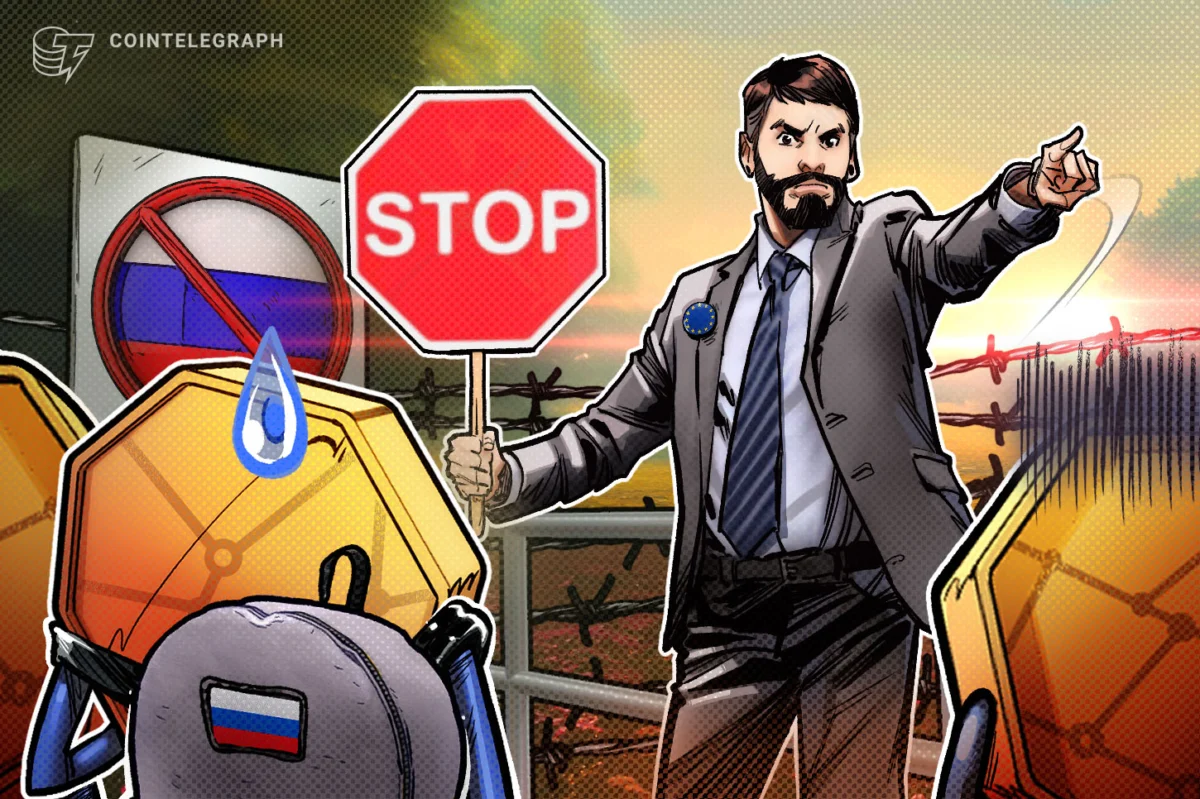
The European Union has formally designated the cryptocurrency exchange HTX, formerly known as Huobi Global, as a sanctioned entity within a comprehensive package of restrictive measures aimed at degrading Russia’s ability to sustain its ongoing military operations in Ukraine. In a decision published on Thursday, the European Council amended its existing framework—originally established to address actions destabilizing the sovereignty of Ukraine—to include HTX on a list of 18 specific entities accused of providing crypto-asset or payment services that significantly frustrate the purpose of EU prohibitions. This move aligns the EU with the United Kingdom, which took similar action earlier this year, and signals a tightening of the regulatory net around digital asset service providers operating outside the Union’s direct jurisdiction.
The inclusion of HTX in the EU’s sanctions regime follows a prolonged investigation into how the Russian Federation has utilized decentralized and centralized digital asset platforms to bypass traditional financial hurdles. Since the full-scale invasion of Ukraine in February 2022, the Russian financial sector has been largely severed from the SWIFT international payment system, forcing Moscow to seek alternative conduits for capital flight, military procurement, and cross-border settlements. EU officials noted that the newly listed entities, including HTX, have facilitated a "continued financial lifeline" for Russia’s war efforts, either by connecting to the Russian Central Bank’s financial message transfer system or by enabling transactions that circumvent restrictive measures imposed by the 27-member bloc.
The Chronology of Sanctions and Regulatory Pressure
The decision to sanction HTX is the culmination of a multi-year effort by Western allies to close loopholes in the digital asset space. The timeline of these escalations reflects a shift from targeting traditional banking to focusing on the burgeoning crypto-economy:
- February 2022: Russia launches a full-scale invasion of Ukraine. The EU and US respond with immediate sanctions on major Russian banks and high-ranking officials.
- October 2022: The EU implements its eighth package of sanctions, which includes a total ban on the provision of crypto-asset wallet, account, or custody services to Russian persons and residents, regardless of the value of the assets.
- May 2024: The United Kingdom’s Office of Financial Sanctions Implementation (OFSI) imposes sanctions on HTX. The UK government stated there were "reasonable grounds to suspect" that the exchange was involved in providing financial services or making funds available that could contribute to the destabilization of Ukraine.
- June 2024: The EU moves to ban Belarusian nationals and residents from managing or controlling crypto exchanges as part of a broader alignment of sanctions between Russia and Belarus.
- July 2024: The European Council officially adds HTX and 17 other entities to its restricted list, citing their role in frustrating the purpose of the Union’s prohibitions.
This progression demonstrates a coordinated strategy among the "G7+" nations to ensure that digital assets do not become a "backdoor" for the Russian state or its oligarchs to move wealth across borders.
Background on HTX: From Huobi to a Global Sanction Target
HTX, which rebranded from Huobi Global in late 2023 to coincide with its 10th anniversary, has long been one of the world’s largest cryptocurrency exchanges by trading volume. Founded in China in 2013 by Leon Li, the exchange eventually relocated its headquarters to the Seychelles following China’s domestic crackdown on crypto-trading. In 2022, the exchange was acquired by About Capital Management, a fund linked to crypto entrepreneur Justin Sun, though Sun has frequently described his role as that of a "Global Advisor."
The rebranding to HTX—where "H" stands for Huobi, "T" for the TRON blockchain ecosystem, and "X" for the exchange—was intended to signal a new era of global expansion and regulatory compliance. However, the exchange has faced persistent scrutiny regarding its "Know Your Customer" (KYC) and "Anti-Money Laundering" (AML) protocols. Critics and regulators have frequently pointed to the platform’s high volume of peer-to-peer (P2P) trading, which often allows users in sanctioned jurisdictions to exchange local fiat currency for stablecoins like Tether (USDT) without interfacing with traditional banks.
Supporting Data: Crypto as a Tool for Sanction Evasion
The EU’s decision is supported by a growing body of data suggesting that Russia has become increasingly reliant on crypto-assets to manage its wartime economy. According to reports from blockchain analytics firms like Chainalysis, Russia-linked entities have frequently utilized "nested" exchanges and high-risk jurisdictions to obfuscate the origin of funds.
Key data points highlighting the risk profile include:
- Over-the-Counter (OTC) Desk Activity: Russian-language OTC desks have seen a surge in volume since 2022. These desks often operate through major exchanges like HTX, allowing high-net-worth individuals to move millions in assets with minimal oversight.
- Stablecoin Dominance: Tether (USDT) has become the de facto currency for Russian importers and exporters seeking to settle international trades. Because USDT can be transferred instantly and globally, it serves as a high-liquidity alternative to the US dollar.
- Peer-to-Peer (P2P) Vulnerabilities: HTX’s P2P marketplace has historically been a popular venue for Russian users. By allowing individuals to trade directly with one another, the platform can inadvertently facilitate transactions involving sanctioned Russian banks (such as Sberbank or Tinkoff) if monitoring systems are not sufficiently robust.
The European Council’s Thursday decision explicitly mentions that these entities are "significantly frustrating the purpose of the prohibitions," implying that the sheer volume of Russian-related activity on these platforms was too large for regulators to ignore.
Official Responses and the Compliance Stance
In response to previous regulatory inquiries, HTX has maintained a public stance of total cooperation with international law. A spokesperson for the exchange previously told media outlets that "regulatory compliance remains [its] absolute top priority" and that the firm would "proactively monitor and strictly adhere to regulatory frameworks in all jurisdictions."
Despite these assurances, the EU’s move suggests that the Union’s investigators found a disconnect between the exchange’s stated policies and its operational reality. EU officials emphasized that the Union has "repeatedly taken measures to identify financial institutions… that facilitate a continued financial lifeline for Russia’s war of aggression." The prohibition now extends to any transaction between these 18 entities and Union operators, effectively blacklisting HTX from the European financial ecosystem.
The UK’s May decision served as a precursor to this action. British officials argued that HTX provided a platform where funds facilitated by sanctioned entities could be "used or diverted" to support the Russian government. The synchronization between London and Brussels underscores a unified front in the Western approach to crypto-regulation in the context of geopolitical conflict.
Broader Impact and Implications for the Crypto Industry
The sanctioning of a major exchange like HTX has profound implications for the global digital asset industry. Firstly, it marks the end of the "regulatory arbitrage" era, where exchanges could hope to avoid Western sanctions by basing themselves in offshore jurisdictions like the Seychelles or the Bahamas. The EU’s reach, combined with the upcoming Markets in Crypto-Assets (MiCA) framework, means that any entity wishing to interact with European liquidity must adhere to the bloc’s stringent geopolitical and AML standards.
Secondly, the move signals a "de-risking" trend among European financial institutions. Banks and payment processors within the EU are now legally obligated to cease all dealings with HTX. This will likely result in the freezing of any HTX-affiliated accounts within the Union and could lead to a significant drop in liquidity for the exchange as European traders migrate to fully compliant, regulated platforms.
Furthermore, the concurrent announcement regarding Belarusian nationals highlights the EU’s intent to close regional loopholes. By prohibiting Belarusians from owning or managing crypto-asset service providers, the EU is preventing Russia from using its neighboring ally as a proxy for digital asset management. This move is particularly significant given the close military and economic ties between Minsk and Moscow.
Brief Fact-Based Analysis
The designation of HTX is not merely a symbolic gesture; it is a tactical strike against the infrastructure of the "shadow" financial system. For the EU, the primary goal is to increase the cost of the war for Russia by making it increasingly difficult and expensive for Russian entities to move money. When a major exchange is sanctioned, the "spread" or fee for moving money through remaining, riskier channels typically increases, further straining the Russian treasury.
For the crypto industry at large, this event serves as a warning. The era of neutrality is rapidly vanishing. Platforms that once prided themselves on being "borderless" are being forced to choose between the global Western financial system and the business of sanctioned states. As MiCA begins to take full effect across Europe, the pressure on exchanges to implement real-time, blockchain-based monitoring for sanction hits will only intensify.
In conclusion, the EU’s decision to sanction HTX reflects a maturing understanding of how digital assets intersect with national security. By cutting off HTX from the Union’s markets, the European Council is attempting to ensure that the "financial lifeline" supporting the invasion of Ukraine is severed, one digital node at a time. The exchange now faces a difficult path forward as it navigates a world where its global footprint is increasingly restricted by the heavy hand of international law.