James Watt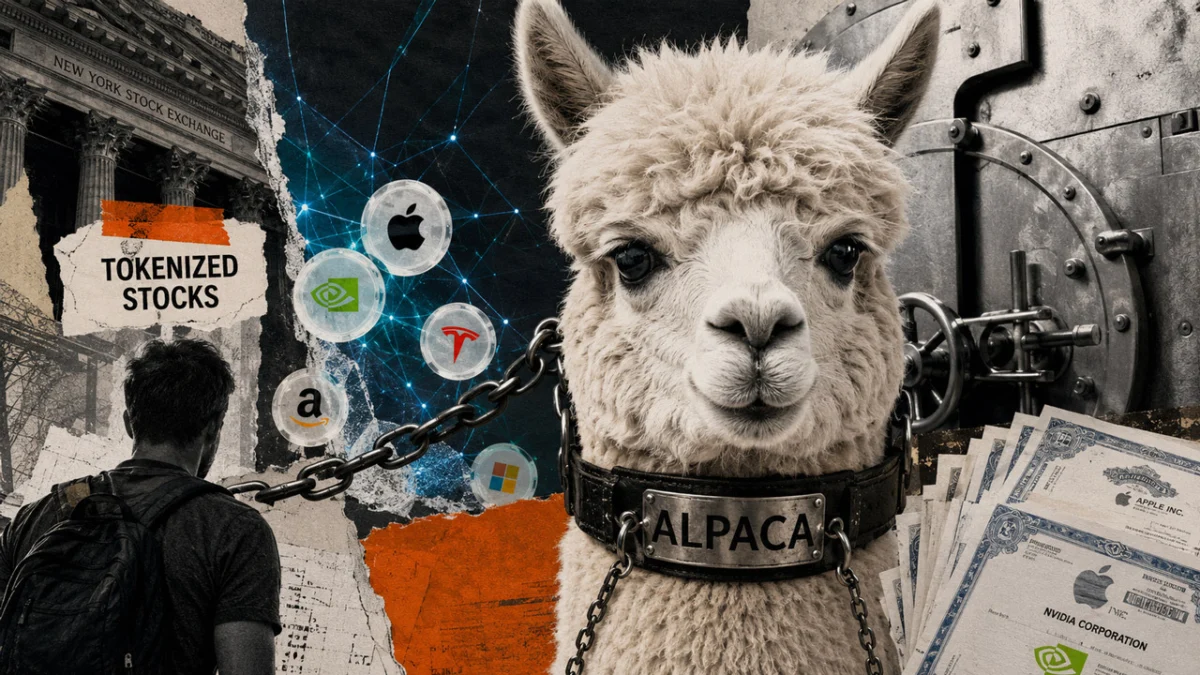
The burgeoning market for tokenized equities, once envisioned as a frontier for financial decentralization, has revealed a surprisingly concentrated core. Alpaca, a Silicon Valley-based broker-dealer, recently disclosed that it custodies more than $1.5 billion in shares backing tokenized assets. This figure, when measured against public trackers, suggests that a single intermediary now oversees the vast majority of the global tokenized U.S. stock market. As the Depository Trust and Clearing Corporation (DTCC) prepares to launch its own institutional-grade tokenization service in October, the industry finds itself at a pivotal juncture where the promise of blockchain-based efficiency meets the reality of traditional brokerage dependencies.
The Mechanics of Tokenization and the Quest for Accessibility
Tokenization is the process of converting rights to an asset into a digital token on a blockchain. In the context of equities, this involves creating a digital representation of shares in companies like Apple, Nvidia, or Tesla. These tokens reside in cryptocurrency wallets, trade on digital asset exchanges, and can be transferred globally in minutes. The primary appeal for investors is the ability to bypass the constraints of the traditional financial system, which typically operates on a 9:30 AM to 4:00 PM EST schedule and requires localized brokerage accounts.
For a retail investor in an emerging market, tokenized stocks offer a gateway to U.S. capital markets that might otherwise be inaccessible. These assets allow for fractional ownership, meaning an investor can buy $5 worth of a high-priced stock, and they trade 24/7, mirroring the "always-on" nature of the cryptocurrency market. The ecosystem has expanded rapidly, with hundreds of tokenized assets now live across blockchains such as Solana and Ethereum, issued by platforms like Ondo, Dinari, and Kraken’s xStocks.
However, the "disintermediation" often cited by blockchain proponents is increasingly viewed as a misnomer. While the front-end experience—holding a token in a private wallet—feels decentralized, the back-end infrastructure remains tethered to a highly regulated and centralized layer of broker-dealers.
The Rise of Alpaca: The Infrastructure Behind the Tokens
Founded in 2015 as a self-clearing broker-dealer, Alpaca has positioned itself as the essential "plumbing" for the tokenized stock industry. While established Wall Street firms remained cautious due to regulatory ambiguity, Alpaca embraced the role of the common counterparty for crypto-native platforms. The company recently announced that it clears or custodies approximately 94% of tokenized U.S. stocks and ETFs.
To support this dominance, Alpaca recently secured a massive capital infusion. In July 2026, the company raised $135 million in a round led by Peak XV. When combined with debt financing from BMO and Payward (the parent company of Kraken), the total package reached $435 million. This capital is intended to scale what Alpaca calls its "agent-first brokerage infrastructure," which integrates artificial intelligence and blockchain-native financial services.
Alpaca’s role extends far beyond simple custody. Through its Instant Tokenization Network (ITN), the firm provides a full-stack solution that includes:
- One-to-One Backing: Ensuring every digital token is supported by a physical share held under U.S. custody rules.
- Real-Time Minting and Redemption: Converting brokerage positions into on-chain tokens and vice versa.
- Corporate Actions Management: Processing dividends, stock splits, and proxy voting for token holders.
- Liquidity Support: Providing stock lending, short locates, and insured cash sweeps to market makers.
By serving as the backbone for major players like Binance, Kraken, and Ondo, Alpaca has created a centralized nexus within a market designed to eliminate middlemen.
Discrepancies in Market Data and Valuation
The scale of Alpaca’s $1.5 billion custody claim has highlighted significant inconsistencies in how the tokenized asset market is measured. Public dashboards often provide conflicting data based on their specific methodologies. For instance, in early July, RWA.xyz—a leading tracker for real-world assets—estimated the distributed tokenized stock value at approximately $1.85 billion. Conversely, CoinGecko reported a much lower figure of $487 million at the end of the first quarter.
Alpaca clarified that its $1.5 billion figure specifically counts stocks backing tokens that are currently live and in circulation, excluding assets held for traditional brokerage clients. This suggests that Alpaca accounts for roughly 80% to 94% of the market, depending on which third-party denominator is used. The lack of a unified reporting standard remains a challenge for the industry, as institutional investors require audited, transparent data before committing significant capital to the space.
Regulatory Warnings and the Question of Ownership
The concentration of the market under a single broker-dealer has caught the attention of the Securities and Exchange Commission (SEC). In a statement released in early 2026, the SEC drew a sharp distinction between different types of tokenized securities.
According to the Commission, tokens issued directly by the underlying company (issuer-sponsored tokens) are more likely to carry full legal rights, such as voting and direct dividend entitlements. However, "third-party tokens"—the kind currently dominating the retail market—often only provide "economic exposure." This means the token holder has a contractual claim against the issuer, but they do not legally own the underlying share.
This structure introduces "intermediary risk." If the broker-dealer or the token issuer were to fail, the token holder’s claim could be jeopardized. Current Alpaca-backed products generally do not offer direct voting rights or shareholder governance, though the firm is reportedly working with Broadridge to bridge this gap. Until these protections are codified into the smart contracts themselves, a token remains a promise of inventory rather than a deed of ownership.
Chronology of a Market Stress Test: The SpaceX Incident
The vulnerabilities of the current "chain of intermediaries" were laid bare in June 2026 during the highly anticipated SpaceX pre-IPO offering. Several major exchanges, including Binance, Bybit, and Bitget, sold over $1 billion in tokenized access to SpaceX shares through the xStocks platform.
The timeline of the failure illustrates the complexity of the market:
- Early June: Global exchanges launch marketing campaigns for tokenized SpaceX pre-IPO shares.
- Mid-June: Investor demand surges, with Binance alone processing $557 million in orders.
- Listing Day: The expected shares fail to arrive at the allocation layer.
- Resolution: The campaigns are abruptly canceled, and buyers are issued refunds.
While the breakdown occurred upstream of Alpaca’s custody desk—at the level where shares are sourced—it served as a stark reminder that the "decentralized" token is only as reliable as the traditional financial entities providing the inventory. If the shares do not exist in the physical vault, the digital token is effectively worthless.
The October Shift: DTCC Enters the Fray
The most significant threat—or opportunity—for Alpaca’s dominance arrives in October with the launch of the DTCC Tokenization Service. The DTCC is the definitive backbone of the U.S. financial system, holding more than $114 trillion in securities in custody and settling nearly $5 quadrillion in transactions annually.
Unlike the third-party tokens currently in circulation, the DTCC’s service will allow securities held at the Depository Trust Company (DTC) to be issued directly as tokens. Because these tokens originate within the primary settlement system, they will carry the same legal weight, voting rights, and dividend entitlements as traditional shares.
In July 2026, the DTCC successfully completed production trials with 30 major firms, including BlackRock, Goldman Sachs, and JPMorgan. The commercial launch in October will initially focus on the Russell 1000 index, major ETFs, and U.S. Treasuries. This move is expected to attract institutional players who have previously avoided the "economic exposure" model of third-party tokens.
Future Implications and Market Trajectory
As the industry moves toward the October launch, three primary scenarios are likely to unfold:
First, the Integration Model suggests that Alpaca could entrench its position by serving as the primary gateway for issuers to access the DTCC’s infrastructure. Alpaca’s spokesperson confirmed the company has been self-clearing at DTCC since 2024 and was a participant in the July trials. In this view, DTCC provides the settlement layer while Alpaca provides the "last-mile" connectivity, margin lending, and liquidity services.
Second, the Competitive Erosion Model posits that as the DTCC service becomes available to all 50+ members of its working group, legacy brokers will build their own connectivity. This would decentralize the brokerage layer, reducing Alpaca’s market share as competition increases from traditional giants.
Third, the Parallel Market Model envisions a bifurcated ecosystem. Regulated, rights-carrying tokens issued via DTCC would serve institutional investors in the U.S. and Europe, while third-party "exposure tokens" would continue to serve retail investors in offshore jurisdictions where direct access to U.S. custody is restricted.
Ultimately, the rise of Alpaca demonstrates that while blockchain technology can revolutionize the distribution of assets, the underlying requirements for custody, clearing, and regulatory compliance remain inherently centralized. The "decentralization" of tokenized stocks currently exists only at the point of trade; beneath the surface, the market relies on a narrow set of intermediaries that have grown larger and more influential than ever before. Whether the DTCC’s entry will democratize this infrastructure or simply replace one dominant player with another remains the central question for the future of on-chain finance.