Lina Irawan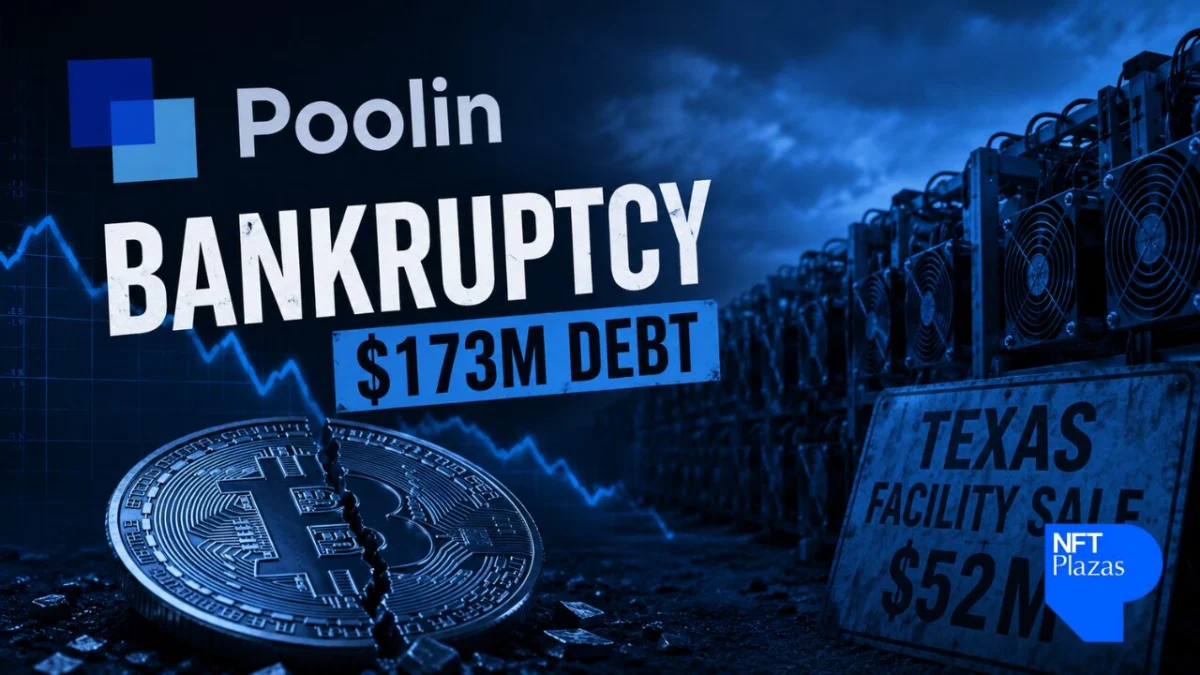
Poolin, a company that once stood as the undisputed global leader in Bitcoin mining pools, has officially filed for Chapter 11 bankruptcy protection in the United States. This significant development follows a protracted period of financial distress, largely precipitated by the devastating cryptocurrency market crash that began in 2022. The Singapore-based entity disclosed liabilities amounting to approximately $173.1 million and has outlined plans to divest its remaining mining assets located in Texas. This move signifies the latest high-profile casualty in the ongoing, industry-wide consolidation and shakeout that has characterized the digital asset sector in recent years.
The bankruptcy petition was formally lodged on July 22nd with the U.S. Bankruptcy Court for the District of New Jersey. The filing encompasses Poolin Technology along with its U.S.-based subsidiaries, Lonestar Dream and Lonestar Taproot. According to the submitted court documents, the company’s assets are conservatively estimated to fall within the range of $1 million to $10 million. In stark contrast, liabilities are reported to be between $100 million and $500 million, with the actual, quantifiable debt standing at roughly $173.1 million. This substantial disparity between assets and liabilities underscores the severity of Poolin’s financial predicament.
The Genesis of the Debt Crisis: Frozen Wallet Funds
A significant portion of Poolin’s substantial debt burden can be directly attributed to its controversial decision to freeze withdrawals from its Poolin Wallet service in September 2022. This action was taken in the immediate aftermath of the broader cryptocurrency market collapse, a period marked by unprecedented volatility and the failure of several major industry players.
Court filings reveal that approximately $163.7 million of the total debt comprises unsecured promissory notes, or IOUs, issued to wallet users following the suspension of withdrawal services. This represents a critical failure in liquidity management, leaving an estimated 11,700 customers, each holding balances exceeding $100, unable to access their funds. Instead, these users were presented with promissory notes, essentially representing claims for future repayment that are now subject to the bankruptcy proceedings.
The liquidity crisis that engulfed Poolin was not an isolated incident but rather a ripple effect of a broader market contagion. The collapses of prominent entities such as Terra-LUNA, Three Arrows Capital, Voyager Digital, and the sensational implosion of FTX sent shockwaves throughout the industry. As the prices of digital assets plummeted, mining operations, which often operate on thin margins and rely on forward revenue projections, found themselves unable to meet escalating withdrawal demands from their users and clients. This inability to facilitate withdrawals locked thousands of individuals out of their accounts, fueling widespread distrust and prompting legal actions in both the United States and Singapore by aggrieved customers seeking the recovery of their assets.
Strategic Asset Divestment: Texas Mining Facilities on the Block
As a central component of its Chapter 11 reorganization strategy, Poolin is actively seeking court approval to auction off two of its Bitcoin mining facilities situated in West Texas. The company aims to secure a minimum sale price of $52 million for these valuable assets.
The proposed initial buyer for these facilities is Thor CALAP LLC, which has already entered into preliminary "stalking-horse" agreements covering the company’s operations in Pyote and Tarbush. This sale process will be conducted under Section 363 of the U.S. Bankruptcy Code, a provision designed to facilitate the sale of assets free and clear of certain liens and encumbrances. Crucially, this mechanism allows for higher competing bids to emerge during an auction, potentially driving up the final sale price. The proceeds generated from this sale are earmarked to satisfy creditor claims as part of the overarching bankruptcy process.
In a significant operational shift, Poolin officially ceased all mining and hosting operations on July 10th. The company has retained a minimal workforce, primarily tasked with securing existing equipment and providing essential support for the court-supervised asset sale. This marks a definitive end to its direct involvement in Bitcoin mining.
A Meteoric Rise and a Precipitous Fall: From Market Dominance to Insolvency
Founded in China in 2017, Poolin experienced an exceptionally rapid ascent within the competitive Bitcoin mining landscape. By 2019, the company had outmaneuvered and surpassed major competitors such as F2Pool and BTC.com, establishing itself as the world’s largest Bitcoin mining pool by hash rate. This period of dominance was fueled by aggressive growth strategies and an expanding global footprint.

However, the company’s trajectory took a dramatic turn in 2021 when China implemented a sweeping ban on cryptocurrency mining activities. This regulatory crackdown forced Poolin to undertake a significant relocation of its operations, with a substantial portion of its business migrating overseas. The company subsequently made considerable investments in establishing new mining infrastructure, notably in Texas, seeking a more hospitable regulatory environment and access to affordable energy.
Court filings have revealed that Poolin secured approximately $213 million in financing. This debt was collateralized by customer digital assets, which at their peak valuation, were worth nearly $356 million. The injected capital was intended to fuel the construction of new mining facilities, facilitate equipment procurement, cover customer withdrawals, and manage ongoing operational expenses.
The subsequent market downturn in 2022 saw cryptocurrency prices enter a prolonged decline. As the value of the collateralized digital assets rapidly depreciated, lenders began to liquidate a significant portion of the pledged crypto holdings. This action intensified Poolin’s existing liquidity crisis, exacerbating its financial woes and pushing it towards insolvency.
The Double-Edged Sword of Expansion: Costly Strategic Decisions
Beyond the broader cryptocurrency market downturn, Poolin’s own aggressive expansion strategy appears to have been a significant contributing factor to its eventual collapse. The company embarked on ambitious plans to secure substantial electricity capacity for its Texas operations, aiming for up to 600 megawatts. In anticipation of this, Poolin placed large orders for mining equipment.
However, the company initially secured only a fraction of its projected power capacity, receiving approximately 100 megawatts. This mismatch between power availability and installed infrastructure created a surplus of mining rigs. To mitigate losses, Poolin was compelled to sell this excess equipment at heavily discounted prices. Between 2023 and 2025, these equipment disposals resulted in recorded losses of approximately $8.8 million, further straining the company’s financial resources.
Interestingly, court documents have highlighted a potential new avenue for the company’s physical assets. It is noted that the power infrastructure developed for Poolin’s mining operations may now hold greater strategic value for operators in the burgeoning artificial intelligence (AI) and high-performance computing (HPC) sectors. This could potentially attract a wider range of interested buyers during the bankruptcy auction, as these industries require significant and stable power resources.
A Bellwether for Industry Consolidation and Shifting Dynamics
The bankruptcy of Poolin serves as a stark reminder that the repercussions of the 2022 crypto crisis continue to reverberate through the digital asset mining sector, even as Bitcoin’s price has shown signs of recovery. Mining companies are currently navigating a complex landscape characterized by escalating operating costs, diminished block rewards following the latest Bitcoin halving event, and intensifying competition from both established and emerging players.
In response to these pressures, many mining firms are actively exploring diversification strategies. A notable trend is the repurposing of substantial power infrastructure for AI data centers. This strategic pivot is driven by the search for more stable and predictable revenue streams, which the volatile cryptocurrency market has often failed to provide. The demand for computing power for AI and machine learning applications presents a compelling alternative for entities with significant energy infrastructure.
For Poolin’s numerous creditors, the path to recovery remains uncertain and will largely depend on the final valuation achieved through the sale of the Texas assets and the overall outcome of the Chapter 11 proceedings. The distribution of any recovered funds will be subject to the complex legal framework governing bankruptcy.
The precipitous decline of Poolin, once the undisputed leader in Bitcoin mining pools, underscores the inherent risks associated with aggressive expansion in a highly volatile market. It highlights how rapidly even dominant players can falter when ambitious growth strategies collide with prolonged market downturns and overwhelming liquidity pressures, serving as a cautionary tale for the entire cryptocurrency industry. The ongoing consolidation within the sector suggests a future where operational efficiency, financial prudence, and strategic diversification will be paramount for long-term survival and success.