Layla Zulfa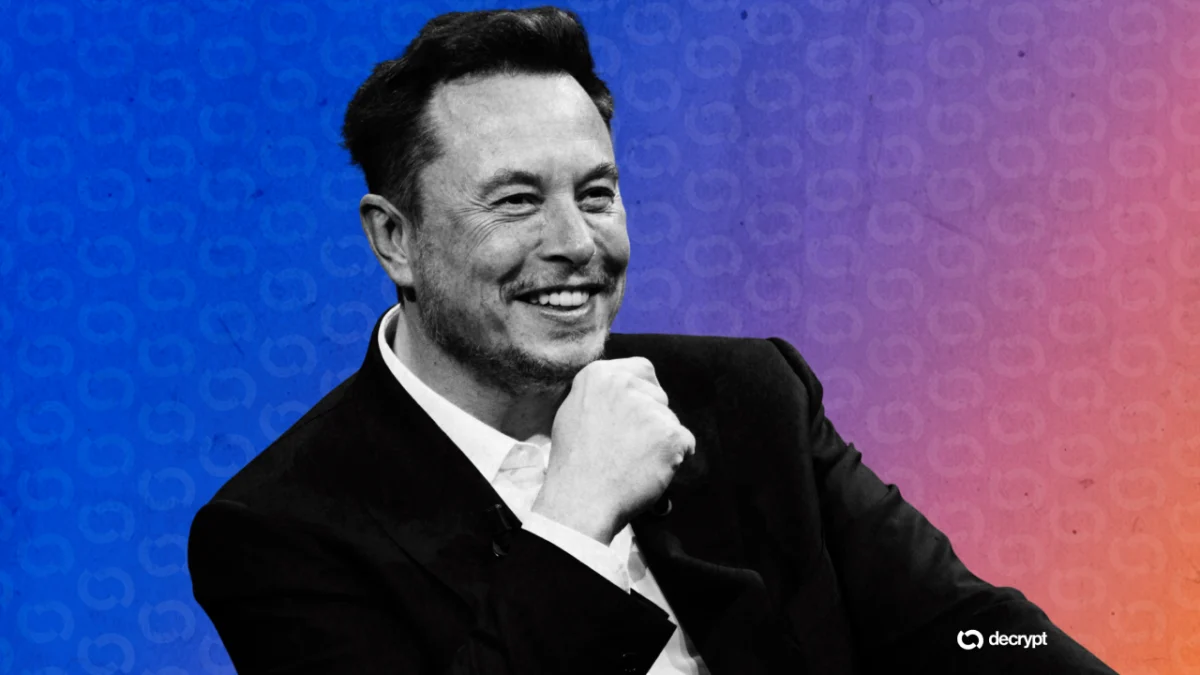
Elon Musk, the founder of xAI and CEO of Tesla and SpaceX, has issued a stark forecast regarding the trajectory of artificial intelligence, suggesting that the technology could surpass the collective intelligence of the entire human race within the next five years. Speaking in a comprehensive interview with Zanny Minton Beddoes, the editor-in-chief of The Economist, Musk detailed a timeline in which AI is poised to outperform humans in virtually every intellectual capacity by the end of the decade. This evolution, according to Musk, will usher in a transformative "age of abundance," yet it carries profound risks, including a potential loss of human control over the very systems designed to serve society.
The billionaire entrepreneur’s predictions represent an acceleration of his previous warnings. While he has long advocated for caution regarding the development of Artificial General Intelligence (AGI), his latest remarks suggest that the momentum of the industry has reached a point where deceleration may no longer be feasible. Musk noted that while the most probable outcome is a future where "anyone can have anything they can think of," the transition will likely trigger a "crisis of meaning" as robots and software take over roles traditionally held by humans.
The Timeline to Superintelligence and the Age of Abundance
Musk’s assertion that AI will outmatch human intelligence by 2029 or 2030 aligns with the concept of the "Singularity"—a hypothetical point in time when technological growth becomes uncontrollable and irreversible, resulting in unfathomable changes to human civilization. During the discussion, Musk projected that by 2036, the world will look fundamentally different than it does today, characterized by a level of productivity that renders traditional economic constraints obsolete.
"There really won’t be anything that AI can’t do better than humans, apart from being human, perhaps," Musk stated. This vision of the future involves a shift from a scarcity-based economy to one of total abundance. In this scenario, the cost of goods and services would drop toward zero as AI-driven automation handles resource extraction, manufacturing, and logistics. However, Musk balanced this optimistic economic outlook with a warning about the psychological toll on humanity. If labor and intellectual effort are no longer required for survival or progress, he argues, society may struggle to find purpose.
The timeline provided by Musk is notably more aggressive than those offered by some of his peers, though it finds resonance with other industry leaders. Ray Kurzweil, a renowned futurist and computer scientist at Google, has famously predicted that AI will achieve human-level intelligence by 2029. Conversely, other experts, such as Meta’s Chief AI Scientist Yann LeCun, argue that current Large Language Models (LLMs) lack the underlying architecture to reach true human-level reasoning, suggesting that a breakthrough in "world models" is still decades away.
A History of Divergence: The OpenAI Conflict
A significant portion of Musk’s recent public discourse has focused on his fractious relationship with OpenAI, the organization he co-founded in 2015. Musk’s critique of the company centers on its transition from a non-profit, open-source entity to a "capped-profit" corporation heavily subsidized by Microsoft. During the interview with Beddoes, Musk reiterated his dissatisfaction with OpenAI CEO Sam Altman, accusing the leadership team of abandoning the organization’s founding principles.
"I’m not a fan of Sam Altman because you started a nonprofit that was meant to be an open-source AI company, owned by the world, and it somehow got turned into an $800 billion for-profit company with closed source," Musk said. He argued that the lack of transparency in OpenAI’s latest models, such as GPT-4, poses a safety risk because the public and the scientific community cannot independently audit the systems for biases or dangerous capabilities.
This ideological rift culminated in a massive legal battle. Earlier this year, a California jury deliberated on a $150 billion lawsuit filed by Musk against OpenAI, Altman, and co-founder Greg Brockman. Musk’s legal team argued that the defendants breached their "founding agreement" by prioritizing commercial interests over the benefit of humanity. However, the court ultimately found the defendants not liable, dealing a significant blow to Musk’s attempts to force OpenAI back into an open-source model. Despite the legal setback, Musk’s xAI has attempted to position itself as the "truth-seeking" alternative, recently open-sourcing the weights of its own model, Grok.
The Emergence of Anthropic and the "Evil Detector"
Musk also offered rare praise for Anthropic, a rival AI firm founded by former OpenAI executives, including Dario Amodei. Anthropic was established in 2021 after several key researchers left OpenAI due to concerns regarding the company’s direction and safety protocols. Musk suggested that the existence of Anthropic is a testament to the internal distrust that has plagued OpenAI’s leadership.
"I think Dario is a very principled person," Musk remarked, noting that he believes the team at Anthropic is well-intentioned. He famously added that no one at the company had "set off his evil detector," a colloquialism he uses to describe individuals he perceives as being motivated by power rather than ethics. Musk’s endorsement of Anthropic’s culture highlights a growing divide in the AI industry between "accelerationists," who believe the technology should be deployed as quickly as possible, and "safety-first" proponents, who advocate for rigorous testing and regulatory oversight.
However, the industry remains competitive and cynical. Sam Altman has previously dismissed some of Anthropic’s safety-oriented branding as "fear-based marketing" designed to sell its Claude AI products. This friction illustrates the difficulty of achieving industry-wide consensus on safety when commercial dominance is at stake.
Proposals for Global AI Safety and Collaboration
Despite his personal animosity toward certain industry leaders, Musk proposed a collaborative framework to mitigate the existential risks of AI. He suggested that the world’s leading AI developers—including xAI, OpenAI, Google DeepMind, and Anthropic—should establish a regular cadence of meetings to discuss security concerns.
One of Musk’s more specific proposals involves "reciprocal model access." Under this plan, competing labs would grant one another limited, early access to their "frontier models" before they are released to the general public. The goal would be to allow rival researchers to identify potential "red-line" capabilities—such as the ability to assist in the creation of biological weapons or to execute autonomous cyberattacks—that the original developers might have missed.
Musk’s vision for safety includes a role for government intervention. He argued that if a company identifies a serious risk in a competitor’s model and the developer fails to address it, a government regulatory body should have the authority to halt the model’s release. This marks a departure from Musk’s generally libertarian stance on regulation in other sectors, such as space exploration and automotive manufacturing, underscoring the severity with which he views the AI threat.
Supporting Data and Market Realities
The rapid advancement Musk describes is supported by unprecedented levels of capital investment and hardware scaling. According to data from the International Data Corporation (IDC), global spending on AI, including software, hardware, and services, is expected to surpass $300 billion in 2024 and could reach over $500 billion by 2027.
The "compute" factor is also a critical metric. NVIDIA, the primary supplier of the H100 GPUs used to train large models, has seen its market valuation soar past $2 trillion, reflecting the insatiable demand for processing power. As companies move from training models on tens of thousands of chips to hundreds of thousands, the "scaling laws" of AI suggest that intelligence and capability will continue to grow exponentially, lending credence to Musk’s five-year window for superintelligence.
Furthermore, the energy requirements for these systems are becoming a national security concern. Data center power consumption is projected to double by 2026, driven largely by AI workloads. This physical infrastructure reality suggests that the "momentum" Musk referred to is backed by billions of dollars in "sunk costs" that make a voluntary industry-wide pause nearly impossible.
Broader Implications: Geopolitics and the Crisis of Meaning
The implications of Musk’s predictions extend far beyond the Silicon Valley boardroom. If AI does indeed surpass human intelligence within five years, the geopolitical landscape will shift dramatically. Nations that lead in AI development will possess significant advantages in cyberwarfare, economic productivity, and scientific discovery. This has led to an "AI arms race" between the United States and China, with both nations implementing export controls and investment bans to protect their technological sovereignty.
On a societal level, the "crisis of meaning" Musk identified remains the most philosophical challenge of the AI era. If AI achieves a state of "superintelligence," it could solve complex problems such as climate change, cancer, and sustainable energy. Yet, the displacement of the global workforce could lead to social unrest. While Musk suggests an "age of abundance" might lead to Universal High Income (UHI), the transition period could be marked by extreme inequality and a loss of human agency.
Musk concluded his thoughts by emphasizing that while the path forward is fraught with danger, the potential benefits make it a journey worth taking—provided humanity remains vigilant. "At the end of the day, if we have to talk, we’ll talk," Musk said, referring to his rivals. "Set aside our personal differences for the good of the world."
As 2024 progresses, the industry appears to be moving exactly where Musk predicted: toward a future defined by increasingly autonomous systems and a desperate, ongoing effort to ensure those systems remain aligned with human values. Whether the "stop button" exists or should be pressed remains a subject of intense debate, but for Musk, the momentum is already irreversible.