admin
admin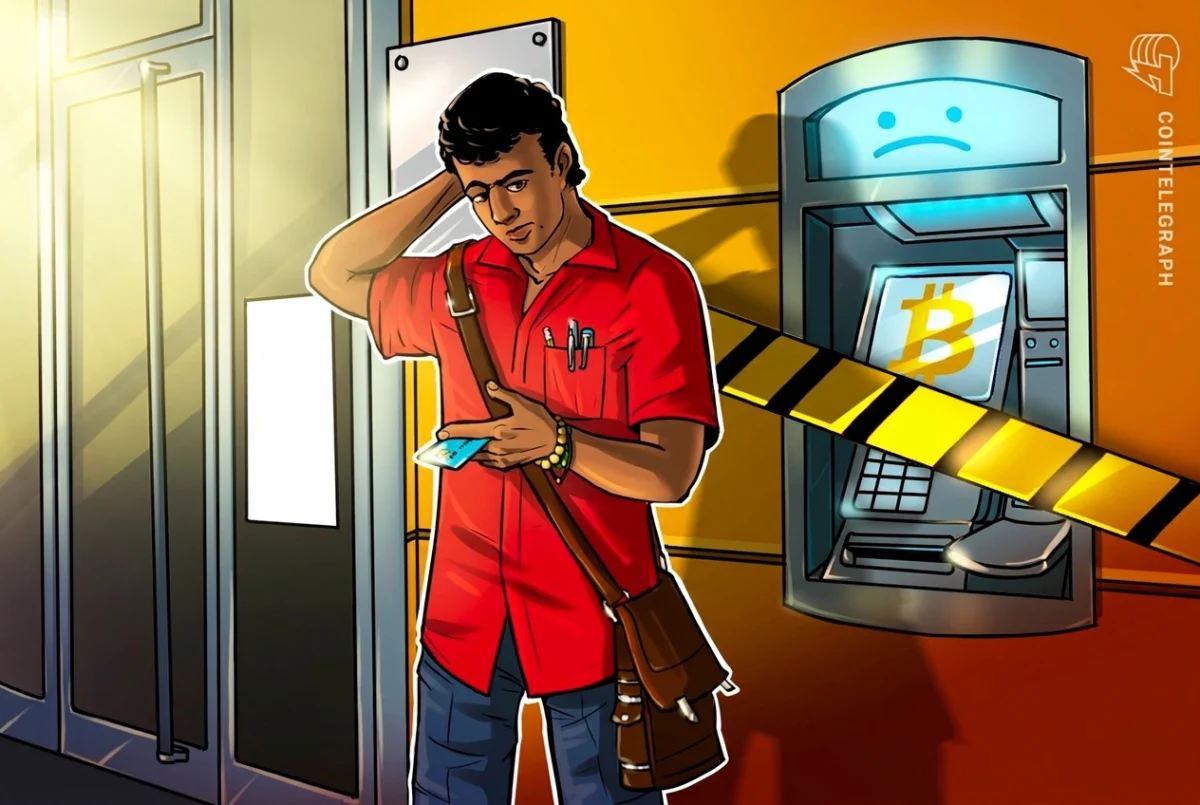
In a decisive move to curb the rising tide of financial exploitation and digital asset fraud, the state of Minnesota has officially enacted a comprehensive ban on the operation of virtual currency kiosks, commonly known as Bitcoin ATMs. The prohibition, which officially took effect on Saturday, marks one of the most stringent regulatory actions taken by a U.S. state against the physical infrastructure of the cryptocurrency market. The legislation follows a series of alarming reports from state and federal agencies detailing millions of dollars in losses, predominantly suffered by senior citizens who were targeted by sophisticated predatory schemes.
Governor Tim Walz signed the bill, designated as SF 3868, into law on May 5, 2024, after it received significant bipartisan support in the state legislature. The law explicitly forbids virtual currency kiosk operators from "installing, operating, maintaining, or making available" these machines within the borders of Minnesota. While the deactivation of all machines was required by the August 1 deadline, the state has granted operators a grace period until December 31, 2024, to physically remove the hardware from any locations that are visible or accessible to the general public.
The Legislative Framework and Compliance Timeline
The enactment of SF 3868 represents a fundamental shift in how Minnesota regulates the intersection of physical retail and digital finance. The law was drafted in direct response to the Minnesota Commerce Department’s findings regarding the vulnerabilities inherent in the kiosk model. Unlike centralized cryptocurrency exchanges that require rigorous "Know Your Customer" (KYC) and Anti-Money Laundering (AML) protocols, physical kiosks have historically provided a lower barrier to entry, which scammers have exploited to move illicit funds rapidly.
The timeline for implementation was designed to give business owners and kiosk operators a transition period, though the mandate for deactivation was immediate upon the law’s effective date. According to the statutory language, any company found to be in violation of the ban after August 1 could face significant administrative penalties and legal action from the state’s regulatory bodies. The December 31 deadline for physical removal is intended to ensure that the machines do not remain as "ghost kiosks" in convenience stores, gas stations, or malls, where they might still serve as visual lures for potential fraud victims.
Before the ban, data provided by CoinATMRadar indicated that there were approximately 201 crypto ATMs and kiosks operating across the state. These machines were often located in high-traffic, low-supervision areas, making them ideal tools for criminals who required their victims to convert physical cash into digital assets that could be transferred to anonymous wallets within minutes.
Quantifying the Financial Toll: Losses and Victimology
The impetus for such a drastic legislative measure lies in the stark financial data released by both state and federal investigators. The Minnesota Department of Commerce reported that between 2023 and early 2025, residents lost an estimated $1 million specifically through scams tied directly to cryptocurrency kiosks. While this figure represents a significant sum, it is only a fraction of the broader crisis involving digital asset fraud in the state.
According to the FBI’s Internet Crime Complaint Center (IC3), Minnesota saw a staggering $151 million in total losses related to digital assets and cryptocurrency wallets in 2025 alone. State officials noted that while kiosks accounted for a specific subset of these losses, they were disproportionately involved in "high-friction" scams where victims were physically directed to a location to deposit cash.
The profile of the victims reveals a troubling trend of elder abuse. State investigators found that the schemes "disproportionately target seniors," leveraging psychological manipulation to bypass traditional banking safeguards. In many cases, victims were contacted by scammers posing as law enforcement officers, IRS agents, or distraught family members. These perpetrators would create a sense of extreme urgency—often citing a "fake emergency" such as a grandchild in jail or an impending tax seizure—and instruct the victim to withdraw cash and deposit it into a specific cryptocurrency kiosk. Once the cash was converted to Bitcoin or another digital asset and sent to the scammer’s wallet, the transaction became irreversible, leaving victims with no recourse through the traditional financial system.
The Anatomy of Kiosk-Based Scams
To understand why Minnesota chose a total ban over simple regulation, it is necessary to examine the mechanics of these frauds. Cryptocurrency kiosks operate by allowing a user to insert fiat currency (cash) and receive an equivalent value in digital tokens, which are then sent to a digital wallet address.
In a typical scam scenario, the perpetrator provides the victim with a QR code representing the scammer’s wallet. The victim, often under duress or believing they are following official instructions, scans the code at the machine and feeds in thousands of dollars in cash. Because the blockchain functions on a decentralized and immutable ledger, these transactions cannot be "charged back" or cancelled like a credit card payment or a bank wire.
State officials argued that the physical presence of these machines in local neighborhoods provided a "last-mile" solution for international criminal syndicates. By removing the kiosks, the state effectively severs a critical link in the money-laundering chain, forcing scammers to rely on more traceable methods or more complex digital hurdles that might give victims more time to realize they are being defrauded.
A Growing National Trend: State-Level Restrictions
Minnesota is not alone in its aggressive stance against crypto kiosks. The state joins a growing list of jurisdictions that are re-evaluating the risks posed by these machines.
- Tennessee: On July 1, Tennessee began enforcing a total ban on cryptocurrency kiosks, citing similar concerns regarding consumer protection and the inability of local law enforcement to recover funds once they are moved through these machines.
- Georgia: Also effective July 1, Georgia implemented new laws that, while not a total ban, require stringent transaction limits and enhanced identity verification for every kiosk transaction.
- Delaware and New Jersey: Lawmakers in both states have recently advanced bills that propose either a moratorium on new machines or strict licensing requirements that would make the current business model for many operators unsustainable.
This wave of legislation suggests a shift in the regulatory climate. While the early 2020s saw a rapid expansion of crypto ATMs as a symbol of "financial inclusion" and the mainstreaming of digital assets, the mid-2020s have been defined by a "regulatory reckoning" as the human cost of unregulated kiosks becomes clearer to policymakers.
Reactions from Stakeholders and the Crypto Industry
The reaction to Minnesota’s ban has been polarized. Consumer advocacy groups and organizations representing senior citizens have hailed the move as a necessary protection for vulnerable populations. "This is a win for common sense and consumer safety," said one advocate involved in the legislative process. "The convenience of a Bitcoin ATM does not outweigh the life-altering financial ruin these machines have facilitated for our seniors."
Conversely, some proponents of the cryptocurrency industry and kiosk operators have expressed concerns that a total ban is an overreach that stifles innovation and limits access for legitimate users. Critics of the law argue that instead of a ban, the state should have implemented better education programs and mandated "warning screens" on the machines to alert users of potential scams. They suggest that for some unbanked or underbanked individuals, these kiosks provided a legitimate way to enter the digital economy.
However, the Minnesota Commerce Department countered these arguments by pointing out that the vast majority of kiosk transactions were not for small-scale retail use, but were either high-value transfers linked to suspicious activity or clear-cut cases of fraud.
Analysis of Economic and Regulatory Implications
The ban on crypto kiosks in Minnesota will likely have several long-term implications for the state’s financial landscape and the broader crypto industry.
First, the removal of 201 machines represents a total loss of the physical footprint for many operators in the state. These companies must now navigate the logistics of deinstalling hardware and ending lease agreements with host locations, such as convenience stores. For the store owners, this means the loss of a small but steady stream of rental income and foot traffic.
Second, the ban may drive legitimate crypto users toward more regulated, online platforms. While this increases the "digital trail" for transactions—which is a positive from a law enforcement perspective—it may also create a barrier for those who prefer cash-based transactions.
Third, the success or failure of Minnesota’s ban in reducing fraud statistics will be closely watched by other states. If the FBI’s 2026 report shows a significant drop in "cash-to-crypto" fraud in Minnesota, it could provide the empirical evidence needed for a federal-level crackdown or a nationwide trend of similar bans.
Finally, the $151 million loss figure reported by the FBI highlights that kiosks are only one part of a much larger problem. Even with the kiosks gone, residents remain vulnerable to "pig butchering" scams, fake investment platforms, and phishing attacks that occur entirely online. The ban is a significant "hardening" of the state’s financial defenses, but it is not a silver bullet.
Conclusion: A New Era of Consumer Protection
As the December 31 deadline for the physical removal of kiosks approaches, Minnesota stands as a test case for state-level intervention in the cryptocurrency market. By prioritizing the safety of its most vulnerable citizens over the convenience of a niche financial service, the state has sent a clear message: the era of unregulated, high-risk financial kiosks is coming to an end.
The move by Governor Walz and the Minnesota legislature reflects a broader realization among policymakers that the "move fast and break things" ethos of the early crypto era has had real-world consequences for families and retirees. As the machines are powered down and moved out, the focus will now shift to enforcement and the ongoing battle against the evolving tactics of digital age fraudsters. For now, the streets of Minnesota will be a little quieter for the crypto ATM industry, and, as state officials hope, a lot safer for the life savings of its residents.