Nila Kartika Wati
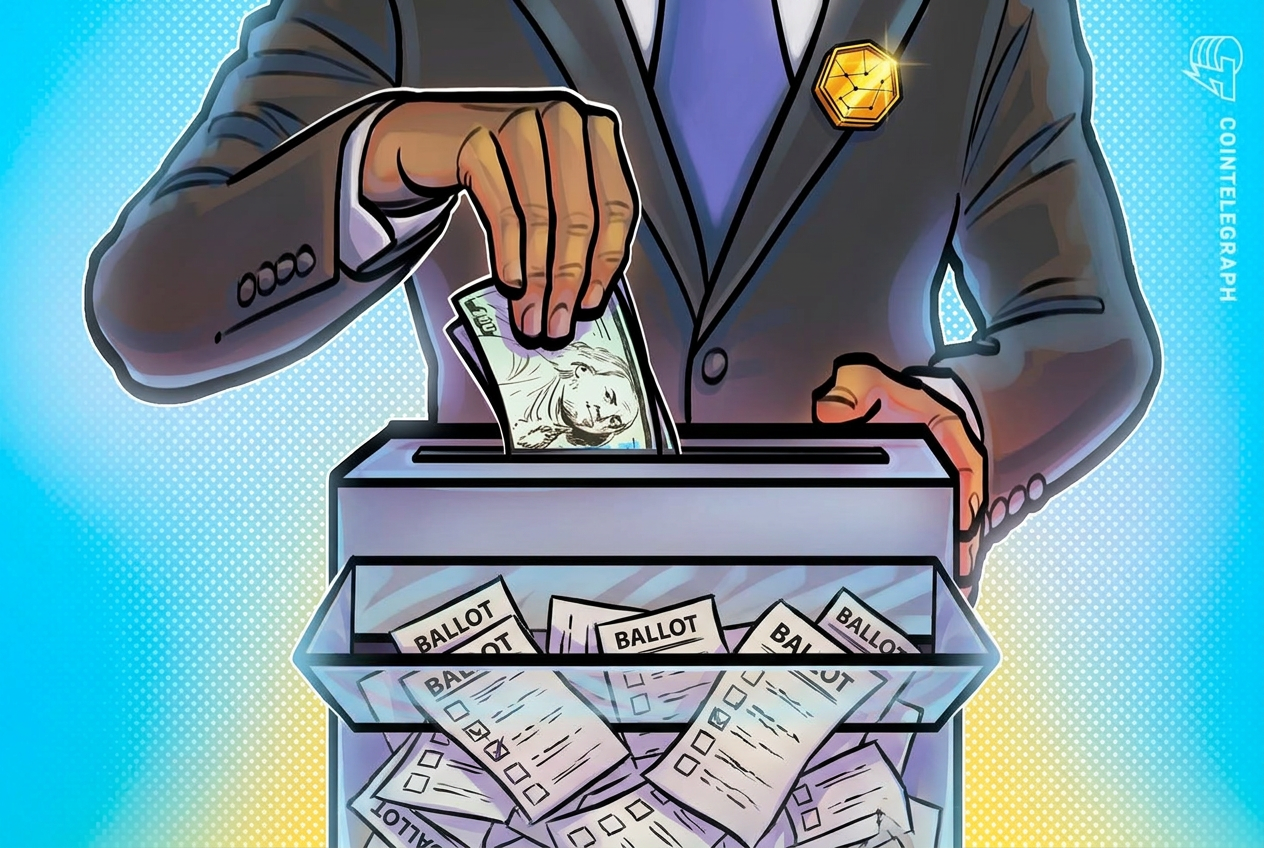
An affiliate of a prominent political action committee (PAC) largely financed by significant contributions from cryptocurrency industry giants Ripple Labs and Coinbase has dramatically escalated its financial outlay, injecting substantial additional cash into advertising efforts ahead of next week’s pivotal primary race in Michigan’s 13th Congressional District. This surge in spending underscores a broader, nationwide strategy by crypto-aligned PACs to shape the electoral landscape and influence legislative outcomes, particularly concerning digital asset regulation.
According to the latest Federal Election Commission (FEC) filings, updated as of Thursday, the Protect Progress PAC has now committed more than a combined $2 million towards media campaigns. These funds are strategically deployed to bolster the candidacy of incumbent Michigan Representative Shri Thanedar in the state’s 13th district while simultaneously working to oppose his Democratic challenger, Donavan McKinney. This financial commitment represents a significant intensification of efforts, effectively doubling the PAC’s previously reported spending from just a week prior. The most recent disclosures reveal an additional $884,240 dedicated to advertisements supporting Thanedar and over $150,000 allocated to advertisements opposing McKinney, showcasing a clear and aggressive intervention in a critical intra-party contest.
The Battle for Michigan’s 13th: A Microcosm of Crypto Influence
The Michigan 13th Congressional District primary has emerged as a key battleground for the burgeoning crypto lobby. The district, encompassing parts of Detroit and surrounding areas, is a historically Democratic stronghold, making the primary election often the decisive contest. The sheer volume of external spending from Protect Progress PAC highlights the strategic importance the cryptocurrency industry places on this race and, by extension, on individual lawmakers who demonstrate a favorable stance towards their policy objectives.
Representative Shri Thanedar’s legislative record during his tenure in the U.S. House of Representatives clearly aligns with the policy priorities of the cryptocurrency industry. He has notably cast votes in favor of the stablecoin-focused GENIUS Act legislation, a bill designed to establish a comprehensive regulatory framework for stablecoins, a critical component of the digital asset ecosystem. Furthermore, Thanedar supported the Digital Asset Market Clarity (CLARITY) Act, a significant crypto market structure bill currently undergoing consideration in the Senate, which aims to provide clearer definitions and regulatory oversight for digital assets. His proactive engagement extends to co-sponsoring the Promoting Innovation in Blockchain Development Act, an initiative intended to safeguard developers and foster growth within the blockchain sector. These legislative actions paint a picture of a lawmaker seen as an ally by an industry eager for regulatory certainty and supportive frameworks.
In stark contrast, Thanedar’s Democratic challenger, Donavan McKinney, has vocally criticized the influx of crypto PAC money into the race. In a statement issued on July 21 regarding the PAC spending, McKinney asserted that "the crypto lobby is paying my opponent back for helping Trump make over $1 billion since taking office." This pointed accusation likely refers to disclosures indicating that the former U.S. President earned more than $1.4 billion from crypto investments in 2025, including profits from his memecoin, Official Trump (TRUMP), and through his family’s business, World Liberty Financial. McKinney’s comments tap into a broader narrative among many Democrats who have accused Trump of leveraging his position for personal financial gain, often through legislative actions such as those embodied by bills like the GENIUS Act. This accusation, while indirect, attempts to link Thanedar’s support for crypto legislation to a wider perception of political self-enrichment, a potent charge in any political campaign.
The Architecture of Influence: Fairshake and Its Affiliates
Protect Progress PAC is not an isolated entity but operates as an affiliate of the much larger and more influential Fairshake PAC. Fairshake has rapidly emerged as a dominant force in the 2024 U.S. election cycle, responsible for an astonishing expenditure exceeding $170 million through various media channels. Its primary objective is to support candidates perceived as favoring policies aligned with the cryptocurrency industry’s interests. The Michigan primary, while significant, is merely one front in a broader, multi-state strategy. Fairshake and its network of affiliates have already channeled millions of dollars into 2026 races across diverse states, including Texas, Illinois, and others, signaling a long-term commitment to shaping legislative outcomes at all levels.
The financial muscle behind Fairshake is considerable. The U.S. consumer advocacy group Public Citizen reported in June that Fairshake and its affiliates accounted for over $82 million of the approximately $189 million that crypto companies had collectively spent in the ongoing 2026 election cycle. This makes Fairshake a behemoth in political fundraising and spending, with the PAC reporting a formidable "war chest" of $193 million as of January. This level of financial firepower rivals that of established industry lobbies and underscores the crypto sector’s determination to secure a favorable regulatory environment.
The motivations behind such extensive spending are clear: the cryptocurrency industry, still relatively nascent in its political engagement compared to traditional sectors, is actively seeking regulatory clarity, legal certainty, and policies that foster innovation rather than stifle it. Companies like Ripple Labs and Coinbase, major contributors to Fairshake, have faced significant regulatory challenges and legal battles. For them, investing in political campaigns is a strategic imperative to ensure that future legislation creates a supportive ecosystem for digital assets, preventing what they perceive as over burdensome or ill-informed regulations. The industry seeks to define itself as a driver of economic growth and technological advancement, pushing back against narratives that emphasize risks such such as illicit finance or consumer protection gaps.
Beyond Michigan: A National Push in Key Primaries
The influence of crypto-aligned PACs extends far beyond the Michigan 13th. As primaries loom across the nation, these groups are actively engaging in various contests. In addition to Michigan’s upcoming primary, another Fairshake affiliate, the Defend American Jobs PAC, has reportedly spent more than $65,000 on media to support a Republican candidate running in Washington’s 4th congressional district. Washington is scheduled to hold its primaries on the same day as Michigan, indicating a coordinated effort to influence multiple races simultaneously.
Alabama, with its primaries slated for August 11, has also drawn significant attention from Fairshake. FEC filings reveal that the Defend American Jobs PAC injected over $511,000 into media campaigns to support Jerry Carl Jr., a Republican who previously represented the state’s 1st congressional district from 2021 to 2025. Carl’s candidacy is particularly notable given his financial background; the former Alabama lawmaker was among the wealthiest in the state’s House delegation, with a reported net worth of up to $15 million in 2023. The support for affluent candidates, regardless of party affiliation, suggests a pragmatic approach by crypto PACs to back individuals with established political standing and perceived influence.
These diverse geographical and partisan investments highlight a calculated strategy by the crypto lobby to build a broad base of support across Congress. By investing in both Democratic and Republican primaries, these PACs aim to ensure that, regardless of which party controls the House or Senate, there will be a significant number of lawmakers sympathetic to the industry’s legislative agenda.
The Broader Implications: Money in Politics and Regulatory Futures
The escalating involvement of cryptocurrency PACs in U.S. elections raises significant questions about the role of money in politics and the future of digital asset regulation. The sheer volume of spending, particularly from Super PACs like Fairshake and its affiliates, allows for virtually unlimited independent expenditures to influence elections, often without direct coordination with campaigns. While legally distinct from direct campaign contributions, these expenditures can have a profound impact on voter perception and election outcomes, particularly in lower-turnout primary races where a well-funded advertising blitz can be decisive.
Critics, including consumer advocacy groups like Public Citizen, frequently voice concerns about the potential for such large-scale corporate spending to distort democratic processes. They argue that it can give undue influence to wealthy special interests, drowning out the voices of ordinary citizens and grassroots movements. The opaque nature of some political spending, even if legally compliant, can also erode public trust in the electoral system.
For the cryptocurrency industry, the investment is a calculated risk aimed at achieving specific legislative goals. The GENIUS Act, for instance, seeks to define stablecoins as payment instruments and establish federal oversight, potentially preempting a patchwork of state-level regulations. The CLARITY Act aims to provide a clear legal framework for what constitutes a "digital asset" and which federal agencies (e.g., SEC vs. CFTC) have jurisdiction over different aspects of the crypto market. Without such clarity, firms face an uncertain regulatory environment, hindering innovation and investment. The Promoting Innovation in Blockchain Development Act, by protecting developers, aims to ensure the foundational technology for crypto can flourish without excessive legal liabilities.
The industry’s strong push for these bills reflects a desire to move beyond a period of regulatory ambiguity and enforcement actions, which have sometimes been perceived as inconsistent or overly aggressive. By supporting candidates who understand and advocate for these legislative priorities, crypto companies hope to secure a more predictable and supportive regulatory landscape that can facilitate mainstream adoption and growth.
However, the aggressive spending also invites scrutiny. The connection drawn by challenger Donavan McKinney between Thanedar’s votes and the alleged profiteering of a former President through crypto investments highlights how these issues can become politically charged. It raises ethical questions about the alignment of private financial interests with public policy decisions, a perennial concern in American politics.
Looking Ahead: The Evolving Landscape of Crypto and Politics
The trajectory of crypto PAC spending suggests that the industry’s political engagement is not a fleeting phenomenon but a growing force that will continue to shape election cycles and legislative debates for years to come. As digital assets become more integrated into the global financial system, the stakes for regulatory outcomes will only increase.
The 2024 and 2026 election cycles are proving to be pivotal moments for the crypto industry to establish its political footprint. The millions poured into primary races in Michigan, Washington, and Alabama are just early indicators of a much larger, coordinated effort to cultivate a political environment conducive to their interests. The ongoing debate in Congress over comprehensive crypto regulation, which includes discussions on market structure, stablecoins, and consumer protection, will undoubtedly be influenced by the financial support and lobbying efforts of these powerful PACs.
Ultimately, the unprecedented financial investment by the cryptocurrency industry into U.S. elections represents a critical juncture in the interplay between technological innovation, financial markets, and political power. Its long-term impact on the democratic process, the legislative agenda, and the future of digital asset regulation will be closely watched by policymakers, industry stakeholders, and the public alike. The commitment to transparent journalism in reporting these developments remains paramount, encouraging readers to independently verify information and critically assess the evolving landscape of campaign finance and its influence.