admin
admin
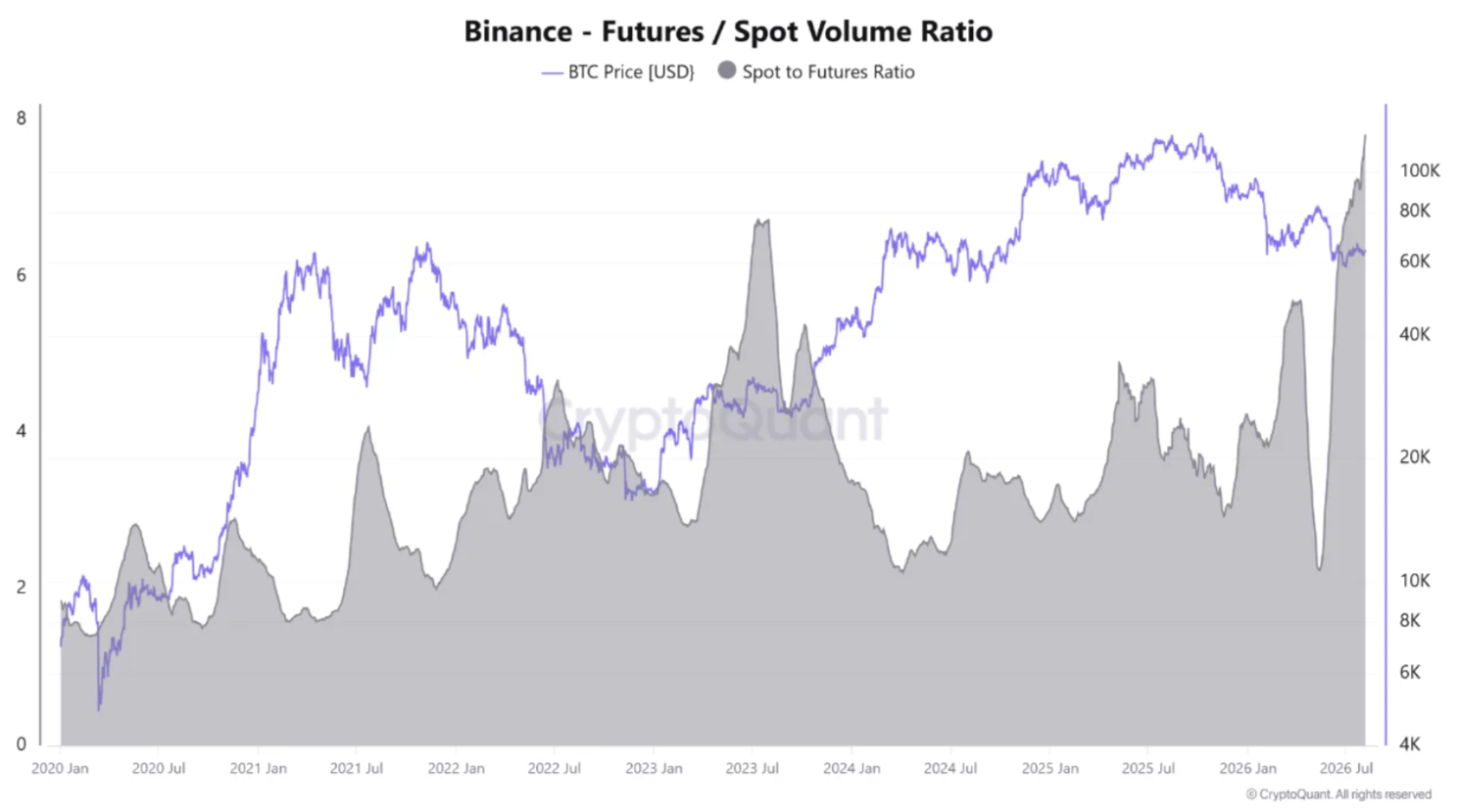
The digital asset landscape is witnessing a profound structural transformation as the ratio of Bitcoin (BTC) futures-to-spot trading volume on Binance, the world’s largest cryptocurrency exchange by volume, has climbed to an all-time high. Data released by the on-chain analytics platform CryptoQuant on Friday indicates that derivatives trading is now nearly eight times more prevalent than spot trading on the platform. Specifically, the futures-to-spot ratio has reached a record 7.82, signaling a decisive shift in how market participants are interacting with the leading cryptocurrency.
During the most recent trading week, Binance recorded a staggering $57.82 billion in daily futures volume. In stark contrast, the spot market lagged significantly, generating just $6.08 billion in daily activity. This divergence highlights a cooling of "buy-and-hold" sentiment among retail and institutional investors alike, replaced by a preference for complex financial instruments that allow for high leverage, sophisticated risk management, and speculative short-term positioning.
The Structural Pivot Toward Derivatives
The current market environment, characterized by Bitcoin trading in a consolidated range near the $64,000 mark, has provided the backdrop for this surge in derivatives dominance. According to Arab Chain, a contributing analyst at CryptoQuant, the growth of futures volume is outpacing spot volume at an accelerating rate. This trend suggests that the primary driver of price action is no longer the simple accumulation of the underlying asset, but rather the positioning of traders within the perpetual and fixed-maturity futures markets.
"This trend reflects a shift in market activity, with more investors and traders preferring to use futures for leverage, risk management, and short-term trading strategies," Arab Chain noted. In a spot market, an investor must put up the full value of the Bitcoin they wish to purchase. In the futures market, however, traders can use leverage to control large positions with relatively small amounts of capital. In a period of price uncertainty or rangebound movement, this capital efficiency becomes highly attractive to those looking to capitalize on minor price fluctuations.
Furthermore, the rise in derivatives suggests that "hedging" has become a priority. Institutional players who may have accumulated Bitcoin earlier in the year via Spot Exchange-Traded Funds (ETFs) or direct purchases may now be using futures to protect their portfolios against potential downside risks as the market enters a historically volatile period.

A Chronology of Declining Spot Demand
To understand the current record-breaking ratio, it is necessary to examine the trajectory of Bitcoin demand over the first three quarters of 2024. The early months of the year were defined by "ETF mania," as the launch of spot Bitcoin ETFs in the United States drove massive inflows and propelled the asset to a new all-time high above $73,000 in March. During this period, spot demand was the primary engine of the market.
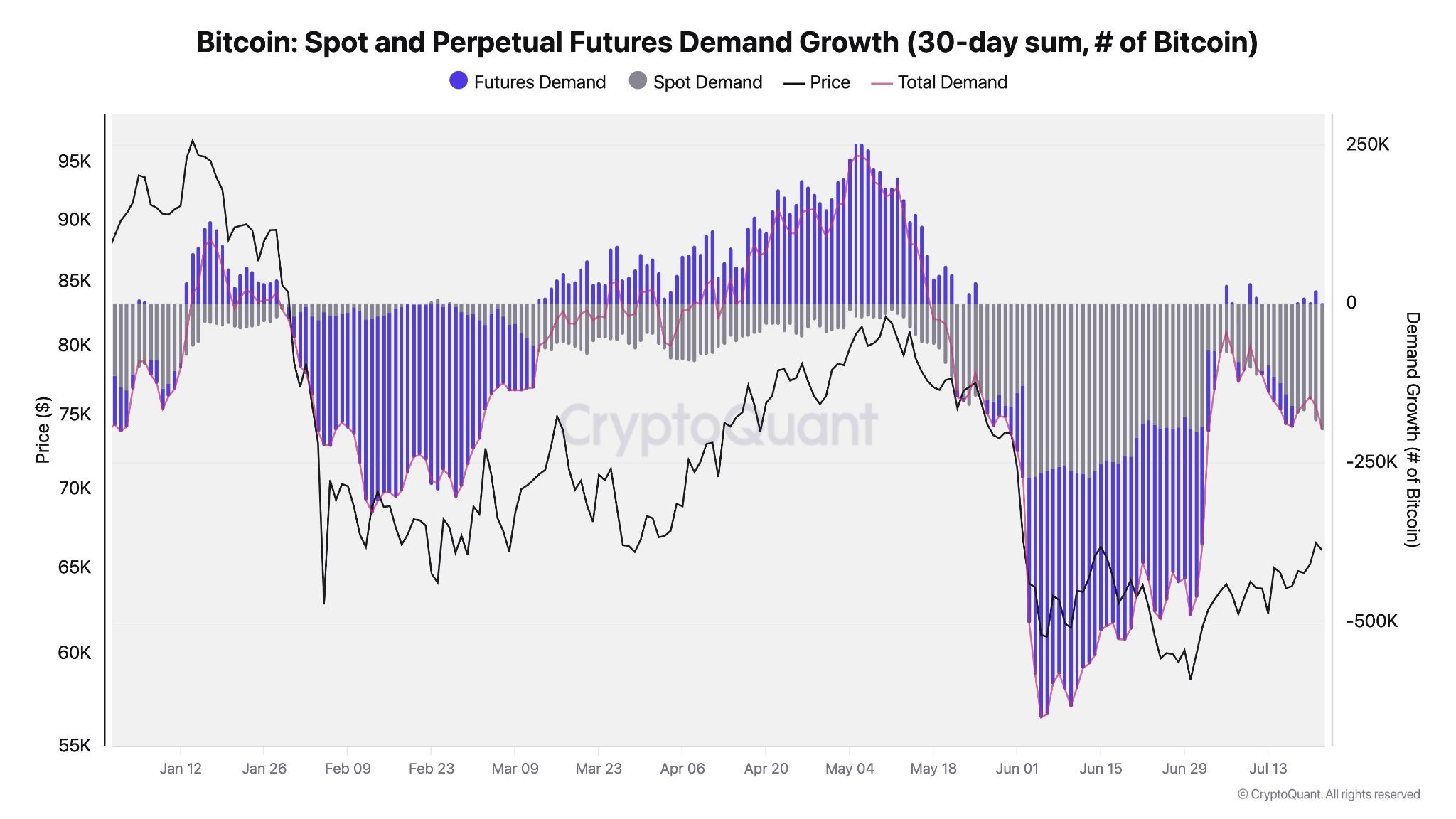
However, since the second quarter, that momentum has waned. CryptoQuant’s 30-day rolling data shows a consistent deterioration in both spot and derivatives demand since June, but the decline in spot activity has been far more pronounced and sustained. This "spot exhaustion" became evident when Bitcoin first retreated to the $60,000 level in February and March. While that initial drop triggered a massive spike in on-chain realized losses—as "weak hand" retail investors exited their positions—subsequent retests of the $60,000 support level have seen diminishing volume.
Ki Young Ju, the CEO of CryptoQuant, highlighted this trend late last month, noting that while futures demand remains net positive, it is significantly lower than the levels seen during the market rebound three months ago. The lack of fresh "new money" entering the spot market has left Bitcoin in a state of stagnation, trapped in a narrow range for much of the last two months.
The Retail Exodus and the AI Competition
One of the most significant factors contributing to the thinning of spot order books is the migration of retail capital. Historically, retail investors have been the lifeblood of the spot market, often buying during periods of "FOMO" (fear of missing out). However, recent market reports indicate that retail interest in cryptocurrencies has cooled significantly compared to previous bull cycles.
A primary destination for this displaced capital has been the traditional equity market, specifically stocks associated with Artificial Intelligence (AI). High-performing assets like Nvidia and other semiconductor manufacturers have captured the speculative imagination of the retail public, offering high volatility and massive returns that were previously the exclusive domain of the crypto markets. This "capital flight" to AI stocks has left the Bitcoin spot market with fewer participants, further widening the gap between the underlying asset’s liquidity and the high-speed turnover of the derivatives market.
On-Chain Data and Investor Exhaustion
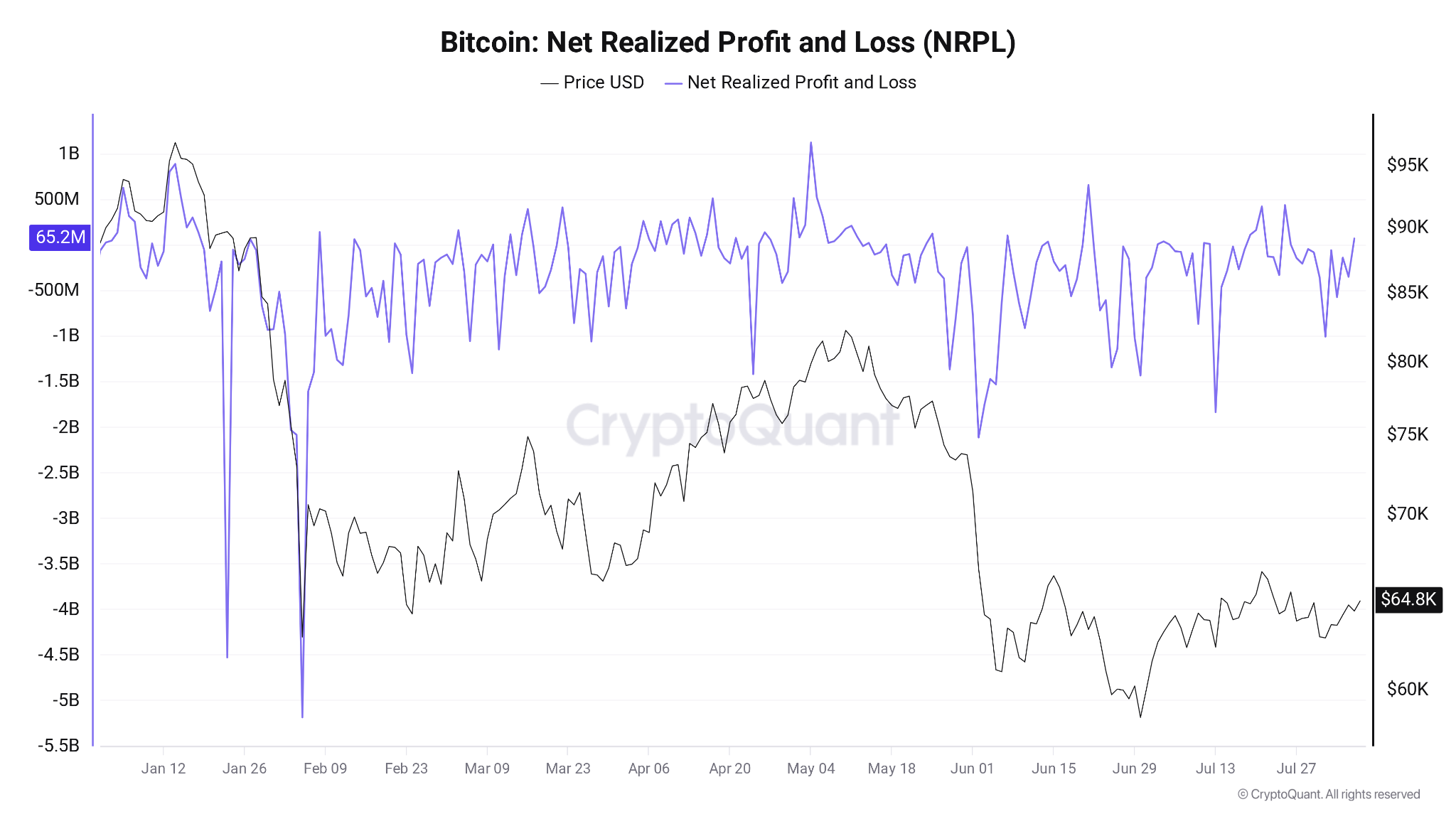
The decline in spot activity is also reflected in the net realized profit and loss data. When Bitcoin trades within a tight range for an extended period, the "realized" movement of coins—meaning coins moving between wallets at a price different from their last movement—slows down.
The data suggests that both buyers and sellers are reaching a state of exhaustion. Long-term holders are unwilling to sell at current levels, believing in the long-term value proposition of the asset, while potential new buyers are hesitant to enter the market without a clear breakout signal. This stalemate has resulted in "taker volume"—the volume generated by traders who execute market orders—becoming exceptionally thin near the extremes of Bitcoin’s current price range.
Bitfinex Research, the analytics arm of the Bitfinex exchange, observed that volumes are currently clustered in the middle of the trading range. "Taker volume especially is a sign that neither side is pushing hard to break the range in either direction," the researchers stated in a recent market update. This lack of conviction in the spot market is exactly what allows the derivatives market to take the lead in price discovery.
Implications for Market Volatility and Liquidations
A market dominated by derivatives is inherently different from one dominated by spot trading. When the futures-to-spot ratio is high, the market becomes more susceptible to "liquidation cascades." Because futures positions are often leveraged, a sudden move in price can trigger a chain reaction of forced liquidations.
If Bitcoin makes a sharp move upward or downward, the high concentration of leveraged positions on Binance and other platforms could lead to rapid, volatile price swings as "short" or "long" positions are involuntarily closed. This creates a "feedback loop" where the derivatives market drives the spot price, rather than the other way around. For investors, this means that even if the fundamental outlook for Bitcoin remains unchanged, the short-term price action may be dictated by the "pain points" of leveraged traders.
The current ratio of 7.82 suggests that the "coiled spring" of the market is tighter than usual. Any significant news event or macroeconomic shift could act as a catalyst for a massive volatility event, as the lopsided nature of the volume means there is less spot liquidity to absorb the impact of large derivatives-driven moves.
The September Outlook: Hedging for a Downside Resolution
As the market looks toward the end of the third quarter, professional traders are beginning to position themselves for a potential break in the current range. Analysis of the options market provides a glimpse into the collective expectations of sophisticated investors.
While Bitcoin posted a respectable 7.4% gain in July, Bitfinex reported that options traders are largely pricing in a continuation of rangebound conditions for August. However, the outlook for September is notably more cautious. Historical data shows that September is frequently a "red" month for Bitcoin, often characterized by seasonal weakness and a lack of institutional buying.
"Options traders are effectively pricing in a continuation of the range and, on aggregate, hedging for a downside resolution of it several weeks from now," Bitfinex analysts noted, citing data from Glassnode. This hedging activity is another form of derivatives demand that contributes to the high futures-to-spot ratio. By purchasing "put" options or entering short futures positions, traders are preparing for a scenario where Bitcoin breaks below the $60,000 support level.
Broader Economic Context and Institutional Influence
The shift toward derivatives must also be viewed through the lens of the broader global economy. With the U.S. Federal Reserve signaling potential shifts in interest rate policy and ongoing concerns regarding global inflation, many institutional investors are opting for the flexibility of derivatives.
Unlike spot Bitcoin, which is an "unproductive" asset in the sense that it does not yield interest, derivatives allow for "basis trading" and other yield-generating strategies that are more aligned with traditional finance (TradFi) mandates. The "treasury trade"—whereby investors exploit the difference between the spot price and the futures price—has become a staple of the current market, though recent reports suggest even this trade is seeing a "break" in its usual patterns as fund holdings have dropped.
Furthermore, the initial excitement surrounding the Spot BTC ETFs has transitioned into a "maintenance phase." While the ETFs provided a massive bridge for institutional capital, the daily inflow numbers have stabilized, and the "velocity" of that capital is lower than the high-frequency trading seen on Binance’s futures desk.
Conclusion: A New Era of Price Discovery
The record 7.82 futures-to-spot ratio on Binance marks a milestone in the evolution of the cryptocurrency market. It signals that Bitcoin has matured into a sophisticated financial asset where the "paper" market carries significantly more weight than the "physical" market.
For the average observer, this shift means that monitoring the $60,000 to $64,000 spot price is only half the story. The real battle for Bitcoin’s next direction is being fought in the derivatives order books, where billions of dollars in leverage are waiting for a catalyst. As the market approaches the historically difficult month of September, the high concentration of futures activity suggests that when a breakout finally occurs, it is likely to be swift, volatile, and driven by the liquidation of the very traders who have made the derivatives market their current home.
In this environment, the "exhaustion" of spot traders serves as a warning: the market is currently a playground for speculators and hedgers, and until spot demand returns with conviction, the high-leverage environment of Binance’s futures market will continue to dictate the rhythm of the world’s largest digital asset.