James Watt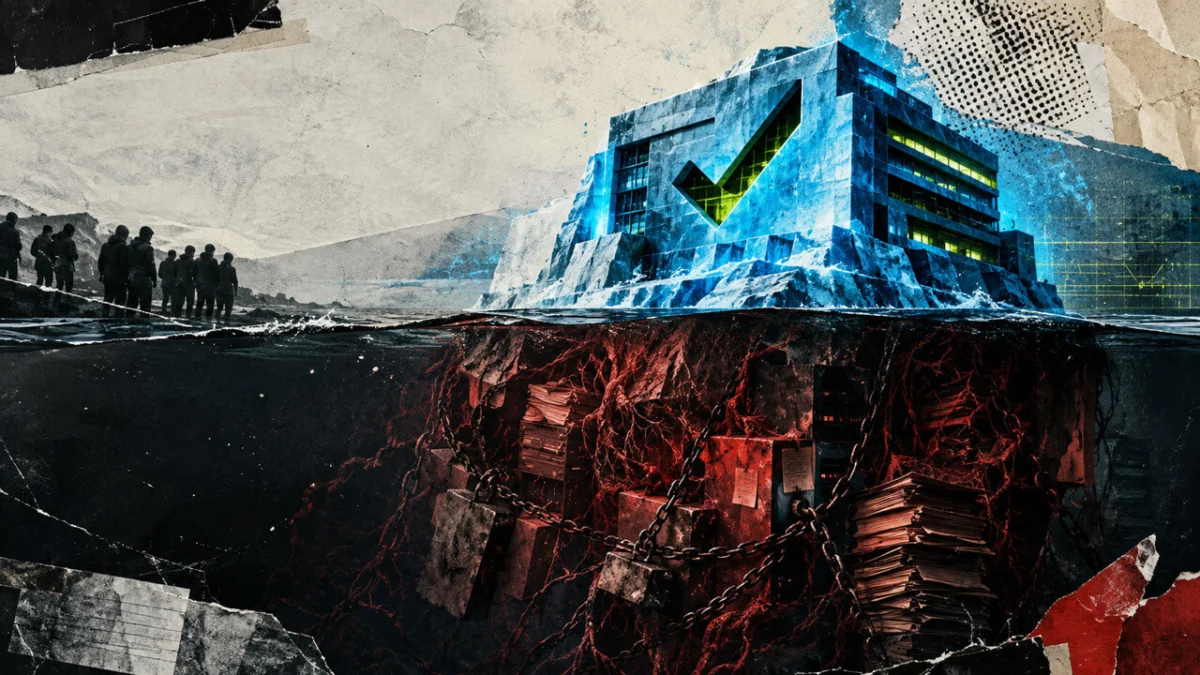
A customer opens a digital currency exchange account, copies a complex string of alphanumeric characters, and follows a digital path through a Merkle tree. The interface processes the request and returns a reassuring confirmation: the customer’s specific balance was successfully included in the exchange’s most recent proof of reserves. This process, while technically sophisticated, represents the frontline of a massive industry-wide effort to restore confidence in centralized crypto platforms. However, while the verification is almost certainly technically sound—establishing that the account appeared in a specific dataset and that the exchange controls wallets containing enough assets to cover the balances in that dataset—it is fundamentally a limited snapshot of a much larger financial picture.
The current implementation of proof of reserves (PoR) often leaves out critical variables that determine a company’s actual health. It does not necessarily confirm if every single customer was included in the dataset, the extent of the exchange’s liabilities to external lenders, whether the displayed assets have been pledged as collateral for other loans, or whether the legal entity controlling the wallet is the same entity legally obligated to repay the customer. Because human psychology tends to grant more authority to cryptographic evidence than to corporate promises, the interface on most major exchanges makes this process feel comprehensive and final. Yet, a determination of true solvency requires a much wider view of a company’s obligations, ownership structure, and real-time access to liquid funds.
The Genesis of Proof of Reserves: A Chronology of Trust
The industry-wide pivot toward cryptographic transparency was not a proactive choice but a reactive necessity born from the catastrophic collapse of FTX in November 2022. Prior to this event, the internal mechanics of centralized exchanges (CEXs) were largely opaque, operating on a "trust us" model similar to traditional private shadow banks.
The timeline of the PoR movement is marked by several key milestones:
- November 6–8, 2022: As rumors of FTX’s insolvency began to circulate, Binance founder Changpeng "CZ" Zhao publicly urged all crypto exchanges to provide "Merkle-tree proof of reserves" to ensure full transparency.
- November 9–15, 2022: In the immediate wake of the FTX bankruptcy filing, a "crisis of trust" swept the industry. Major platforms including Binance, OKX, KuCoin, and Crypto.com rushed to publish their cold wallet addresses to prove they still held customer assets.
- December 2022 – Early 2023: Exchanges began formalizing these disclosures into interactive dashboards. The focus shifted from mere wallet addresses to Merkle-tree structures, which allowed individual users to verify their own balances without compromising the privacy of other users.
- February 2023: Binance upgraded its system to include zk-SNARKs (Zero-Knowledge Succinct Non-Interactive Arguments of Knowledge), a form of zero-knowledge cryptography that proves the total net balance of all users is non-negative and that the exchange has sufficient reserves without revealing individual account details.
This initial rush was designed to contain a bank run. By showing that the assets "existed" on-chain, exchanges hoped to prove they were not operating as fractional reserve entities. While successful in calming the immediate panic, the movement highlighted the gap between "having assets" and "being solvent."
The Mechanics of Cryptographic Verification
To understand the limitations of Proof of Reserves, one must first understand what the technology actually does. An exchange typically uses two primary methods to prove its holdings: wallet ownership and Merkle-tree structures.
To prove wallet ownership, an exchange identifies its public wallet addresses and signs a specific message using the associated private keys. This demonstrates control over the funds without the need to move them, which would incur transaction fees and security risks. Simultaneously, the exchange uses a Merkle tree to organize customer liabilities. In this structure, every customer’s balance is converted into a cryptographic hash. These hashes are paired and hashed again, moving up the tree until a single "Merkle Root" is produced.
This root represents the sum of all customer balances included in that specific snapshot. A user can use their unique hash to trace their path up to the root, confirming their balance was part of the calculation. Newer systems utilizing zk-SNARKs improve this by allowing the exchange to prove that the sum of all "leaves" (customer balances) does not exceed the total assets held in the exchange’s proven wallets, all while keeping the specific numbers private.
The Solvency Gap: Assets vs. Liabilities
The primary criticism from auditors and financial analysts is that Proof of Reserves is only one half of a balance sheet. In traditional accounting, solvency is defined as assets minus liabilities. PoR focuses heavily on the asset side (the wallets) and only a selected portion of the liability side (customer deposits).
There are several "hidden" liabilities that a Merkle tree cannot capture:
- Off-Chain Debts: An exchange may owe billions to venture capital firms, banks, or other creditors. These debts are recorded in private contracts and internal ledgers, not on the blockchain.
- Lien and Collateralization: The $10 billion in Bitcoin shown on a dashboard might be "controlled" by the exchange, but those coins could be pledged as collateral for a loan. If the exchange defaults on that loan, the "reserve" assets belong to the creditor, not the customers.
- Excluded Accounts: While a user can check their own account, they have no way of knowing if the exchange excluded 20% of its largest institutional accounts from the Merkle tree to make the reserve ratio look healthier than it actually is.
- Operational Costs: Taxes, legal judgments, and employee salaries are ongoing liabilities that can drain reserves if the exchange’s revenue from trading fees drops significantly.
The Public Company Accounting Oversight Board (PCAOB) issued a stern warning to investors in early 2023, noting that PoR reports are not the same as financial statement audits. They warned that these reports "may provide an inadequate basis for deciding whether a company has enough assets to meet its obligations" because they fall outside the rigorous standards of traditional audit oversight.
Comparative Disclosure Models: A Fragmented Landscape
Currently, there is no unified standard for how an exchange should report its financial health. This has led to a fragmented landscape where different platforms offer varying levels of transparency.
Binance and OKX: These platforms have opted for high-frequency, technologically advanced PoR. Binance’s dashboard and OKX’s downloadable proof files allow for granular verification. However, neither platform provides a consolidated, audited financial statement of its global business operations. Their transparency is "crypto-native," focusing on the chain rather than the corporate entity.
Kraken and Crypto.com: These exchanges have historically engaged third-party accounting or security firms to oversee their PoR process. For example, Kraken’s verification is often supported by an external review that validates the snapshot. While this adds a layer of professional oversight, the scope is still limited to "specified products" rather than the company’s total financial obligations.
Coinbase: As a publicly traded company in the United States, Coinbase follows a completely different model. It does not offer a Merkle-tree verification tool for individual retail users. Instead, it publishes audited consolidated financial statements reviewed by Deloitte. These filings cover debt, collateral, derivatives, and related-party transactions. While this provides the most comprehensive view of the company as an "economic whole," it offers less direct cryptographic evidence to the individual user that their specific satoshis are where they should be.
The Snapshot Problem and "Window Dressing"
A significant technical limitation of most PoR reports is that they are "snapshots" taken at a specific point in time. In the world of traditional finance, this is known as "window dressing." A company might borrow assets for 24 hours to bolster its balance sheet for an audit, only to return them immediately after the snapshot is taken.
In the crypto context, assets can be moved between wallets or borrowed from other exchanges just long enough to be recorded in a PoR report. To combat this, some industry analysts argue for "Proof of Solvency" rather than "Proof of Reserves." This would require frequent, unannounced snapshots or, ideally, a real-time dashboard that updates with every block. While some exchanges like OKX have moved toward monthly reporting, the gap between reports still leaves room for significant asset movement.
Regulatory and Legal Implications
The legal structure of global exchanges adds another layer of complexity. A single brand often consists of dozens of subsidiaries across multiple jurisdictions (e.g., Seychelles, British Virgin Islands, USA, European Union). A PoR page might show the total assets held by the "Global Group," but a customer’s legal agreement might be with a specific subsidiary that has no legal claim to the assets held by the parent company.
In the event of insolvency, these distinctions become paramount. Bankruptcy courts will look at legal entity ownership, not Merkle roots. If the wallets are owned by "Entity A" but the customer is owed by "Entity B," the customer may find themselves as an unsecured creditor with no access to the "proven" reserves.
SEC Chief Accountant Paul Munter has expressed skepticism regarding the way exchanges market these reports. He noted that reviews and "agreed-upon-procedures" (AUP) are often mistaken by the public for full audits. An AUP is a very narrow engagement where an accountant only checks exactly what the client tells them to check. If an exchange tells an accountant to "verify these 10 wallets against this list of 1,000 customers," the accountant will do exactly that—ignoring the 500 other wallets and 10,000 other customers the exchange didn’t mention.
The Path Forward: Full Financial Accountability
For the crypto industry to reach a state of true accountability, the current PoR model must evolve into a comprehensive solvency framework. This would require the integration of blockchain verification with conventional financial reporting.
A "Solvency 2.0" standard would likely include:
- On-Chain Asset Proof: Continuous, real-time cryptographic proof of wallet control.
- Total Liability Reconciliation: Reconciling every customer balance with the company’s general ledger, verified by a third party.
- Entity Transparency: Clearly disclosing which legal entities own which assets and which entities are responsible for which liabilities.
- Encumbrance Disclosure: Publicly stating if any "reserve" assets are being used as collateral for other corporate activities.
- Audited Financials: Moving beyond snapshots to full, consolidated audits that include cash flow, debt obligations, and internal controls.
The collapse of FTX made visible reserves a basic expectation. The next phase of the industry’s evolution will be defined by the transition from "proving we have the money" to "proving we are financially sound." Until cryptographic proofs are joined with rigorous financial and legal disclosures, the Merkle tree will remain a useful but incomplete tool in the quest for exchange transparency. Customers must understand that a "verified" badge on a dashboard is an confirmation of data inclusion, not a guarantee of corporate survival.