James Watt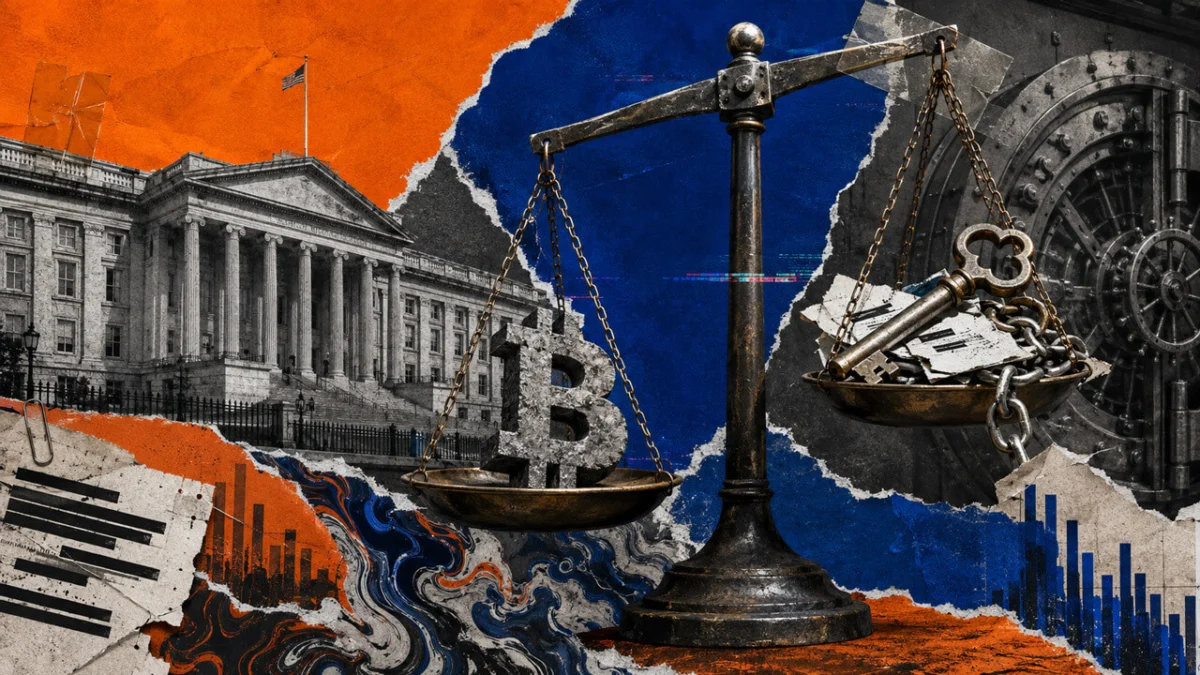
On March 6, 2025, President Donald Trump signed Executive Order 14233, an administrative directive that formally established the Strategic Bitcoin Reserve. The announcement was met with immediate global attention, framed by the administration as the creation of a "digital Fort Knox." The central promise was bold: the United States government would cease the liquidation of its seized Bitcoin holdings and instead pivot toward building a permanent sovereign stockpile. By treating Bitcoin as a strategic asset rather than mere contraband to be auctioned off, the administration signaled a fundamental shift in American fiscal and monetary policy. However, beneath the high-level rhetoric of a "Bitcoin superpower" lay a complex web of administrative requirements, legal hurdles, and accounting discrepancies that, more than a year later, continue to obscure the true scale of America’s digital wealth.
The operative language of the executive order was designed to bring order to the chaotic landscape of federal crypto holdings. It mandated that every federal agency provide the Department of the Treasury with a comprehensive accounting of their digital assets within 30 days. This included identifying every custodial account, the specific quantities of Bitcoin held, and a legal review to determine which assets were eligible for transfer into the reserve. Treasury was then given a 60-day window to evaluate the optimal locations for these accounts and to determine if additional congressional authorization was required for long-term management. While the order generally prohibited the sale of reserve Bitcoin, it carved out critical exceptions for court-ordered restitution, law enforcement requirements, and other statutory obligations. Despite these clear directives, the transition from a collection of seized assets to a unified sovereign reserve has proven to be an arduous process of legal and technical reconciliation.
The Chronology of a Digital Stockpile
The path toward the Strategic Bitcoin Reserve did not begin in a vacuum. It was the culmination of a series of policy shifts that began early in the second Trump administration. On January 23, 2025, a directive established the President’s Working Group on Digital Asset Markets. This body was tasked with drafting a broader regulatory framework for cryptocurrency, within which the concept of a national stockpile was a primary pillar. Following the March executive order, the administration released a massive 166-page digital assets report in July 2025. This document confirmed that the Treasury would serve as the primary administrator of the reserve and that forfeited assets would serve as the primary funding source.
The timeline of implementation has been marked by several key milestones:
- January 2025: Formation of the Digital Asset Working Group.
- March 2025: Signing of Executive Order 14233, establishing the Strategic Bitcoin Reserve.
- April 2025: Deadline for federal agencies to report all digital asset holdings to the Treasury.
- July 2025: Publication of the White House Digital Assets Report, detailing the reserve’s custodial framework.
- October 2025: The Justice Department’s record-breaking forfeiture action involving 127,271 BTC.
- July 2026: Significant movements of government-held Bitcoin and Ethereum to Coinbase Prime, sparking market speculation regarding the reserve’s stability.
Throughout this period, the administration maintained that the reserve was being built on a foundation of transparency. However, as the months passed, the inability of the government to produce a definitive opening balance for the reserve began to draw criticism from both market analysts and legislative watchdogs.
The Eight-Billion-Dollar Discrepancy
At the heart of the debate over the Strategic Bitcoin Reserve is a massive discrepancy in estimated holdings. When the reserve was first announced, White House crypto adviser David Sacks estimated that the federal government owned approximately 200,000 BTC. Public blockchain trackers at the time supported a similar figure, generally hovering around 198,109 BTC. By July 2026, however, external estimates began to diverge wildly. Arkham Intelligence estimated that the government controlled roughly 324,000 BTC, while Bitcoin Treasuries reported a figure as high as 328,372 BTC.
Using a reference price of $62,761 per Bitcoin, these estimates represent vastly different financial realities. The lower estimate places the value of the reserve at approximately $12.43 billion, while the higher estimate nears $20.61 billion. This $8.18 billion gap—representing over 130,000 BTC—is not necessarily the result of "missing" funds, but rather a reflection of the different ways outsiders and the government categorize digital property. While blockchain data provides a transparent view of where coins are located, it provides no information regarding their legal status. For an asset to qualify for the Strategic Bitcoin Reserve, it must be "finally forfeited"—a legal distinction that separates a temporary seizure from permanent government ownership.
Legal Custody vs. Beneficial Ownership
The transparency of the blockchain is often mistaken for the certainty of legal title. Every Satoshi can be tracked from one wallet to another, and the "waking up" of a government-tagged wallet often sends shockwaves through the crypto markets. Yet, the law moves much slower than the ledger. When federal agents seize Bitcoin during an investigation, they take physical control (custody) of the private keys, but the government does not yet own the asset. The coins may remain in legal limbo for years as evidence, or while third-party claimants, victims, and defendants litigate the forfeiture.
A prime example of this legal complexity is the 2016 Bitfinex hack. Federal agents successfully recovered more than 94,000 BTC linked to the incident. While these coins often appear in public trackers of "U.S. Government Bitcoin," they remain the subject of intense litigation regarding victim restitution. If a court rules that these coins must be returned to the victims of the hack, the headline balance of the U.S. government’s holdings would drop by nearly 30% overnight without a single coin being sold on the open market.
The massive seizure involving Chen Zhi, the chairman of Cambodia’s Prince Group, further illustrates this point. In October 2025, the Justice Department announced the custody of approximately 127,271 BTC linked to forced labor scams. While this seizure accounts for the bulk of the increase in government-held Bitcoin over the past year, the funds are currently tied to a civil forfeiture complaint. Until a final judgment is rendered, these coins are technically not part of the Strategic Bitcoin Reserve; they are merely assets in federal custody. The distinction is critical: a tracker can add them to a tally in seconds, but the Treasury may not be able to treat them as sovereign wealth for years.
Market Noise and Administrative Opacity
The lack of a public, reconciled account from the Treasury has turned routine administrative movements into significant market events. On July 15, 2026, government-tagged wallets transferred 3,941 BTC and 30,007 ETH to Coinbase Prime. The total value of the move was estimated at $288 million. Because the government does not disclose the nature of its transactions with Coinbase—which provides both custody and trading services for the U.S. Marshals Service—the market was left to guess whether the transfer represented a sale, a consolidation of assets, or a move into more secure storage.
This ambiguity creates unnecessary volatility. Traders and analysts are forced to play a "guessing game" with every large movement on the blockchain. Without a clear framework that identifies which agency is sending the coins and whether beneficial ownership has changed, the public cannot distinguish between a policy-driven sale and a routine administrative shuffle. Proponents of the reserve argue that the Treasury could easily solve this by publishing a recurring statement that reconciles total forfeited coins against those still in litigation, similar to how it reports other national assets.
The Legislative Push for Modernization
Recognizing the limitations of an executive order that lacks statutory permanence, members of Congress have introduced the American Reserve Modernization Act of 2026. This proposed legislation seeks to codify the Strategic Bitcoin Reserve into federal law, providing a more robust framework than the 2025 executive order. Key provisions of the act include:
- Consolidation under Treasury: Moving all federal digital assets into a unified account structure managed by the Department of the Treasury.
- Mandatory Audits: Requiring quarterly proof-of-reserve reports and independent third-party audits to ensure the accuracy of the holdings.
- Holding Periods: Imposing a minimum 20-year holding period for any Bitcoin designated as part of the Strategic Reserve to prevent political fluctuations from affecting the stockpile.
- Congressional Oversight: Establishing a dedicated committee to oversee the acquisition and management of the assets.
The act’s supporters argue that while the Trump administration successfully established the concept of the reserve, only Congress can provide the transparency and permanence required for it to be treated with the same gravity as the nation’s gold or oil reserves.
Lessons from Traditional Asset Management
The United States already manages several strategic reserves, all of which operate with a level of transparency that the Bitcoin reserve has yet to achieve. The Treasury publishes the "United States International Reserve Position" on a weekly basis. These reports detail foreign currency holdings, Special Drawing Rights (SDRs), and the nation’s 261.5 million fine troy ounces of gold. Each category is clearly valued, and changes from the previous reporting period are explicitly noted.
Adopting a similar discipline for Bitcoin would not require the government to compromise its operational security. There is no need to publish private keys or the specific locations of hardware wallets. Instead, the government could provide an aggregate ownership total, separating assets by legal status. This would allow the public to measure the reserve’s performance, enable Congress to evaluate the nation’s financial exposure, and ensure that victims’ claims are not ignored in favor of inflating national wealth statistics.
Conclusion: Verification as a Pillar of Credibility
The establishment of the Strategic Bitcoin Reserve was a historic moment in the evolution of digital finance, marking the first time a major global power officially integrated Bitcoin into its sovereign balance sheet. However, for the reserve to fulfill its promise as a "digital Fort Knox," the administration must bridge the gap between possession and ownership. The current "trust us" model of accounting is at odds with the "don’t trust, verify" ethos that defines the Bitcoin ecosystem.
The path forward requires a transition from administrative opacity to standardized accounting. By producing a regular, reconciled audit that accounts for legal status, the Treasury can transform the Strategic Bitcoin Reserve from a source of market speculation into a credible pillar of American financial strength. Until that reconciliation occurs, the true size of the nation’s digital stockpile will remain a matter of debate, obscured by the very blockchain transparency that was supposed to make it certain.