Nila Kartika Wati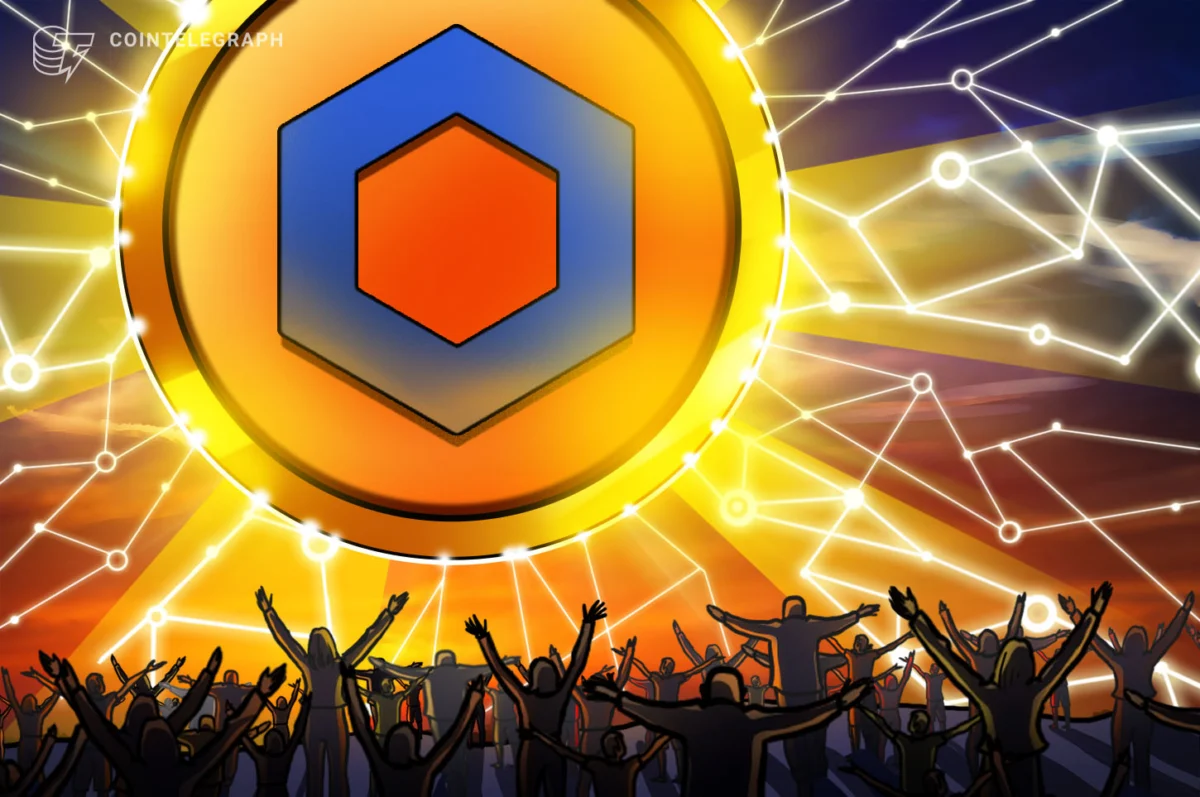
The Chainlink (LINK) token, a cornerstone of the decentralized oracle network, is projected to experience an extraordinary surge, potentially increasing more than 25-fold to reach $200 by the close of 2030. This optimistic forecast, emanating from Standard Chartered’s global head of digital asset research, Geoff Kendrick, underscores the burgeoning demand for real world asset (RWA) tokenization and Chainlink’s unparalleled position as the industry’s leading provider of secure, external data for blockchain applications. The prediction highlights a pivotal shift in financial markets, where the integration of traditional assets with blockchain technology is set to redefine liquidity, transparency, and accessibility.
Standard Chartered’s Bold Prediction and Underlying Rationale
In a comprehensive report shared with Cointelegraph on Monday, August 10, 2026, Kendrick articulated a vision where tokenized real world assets could swell to a staggering $4 trillion by the end of 2028. This exponential growth in on-chain assets, he argues, will necessitate an unprecedented volume of external data securely delivered to blockchain networks, thereby significantly boosting Chainlink’s fee generation capabilities and propelling the LINK token from its current trading price of approximately $8 to the $200 mark within the next four years.
The report extends its bullish outlook beyond tokenized RWAs, also forecasting a 37-fold rise in crypto-native assets deployed within decentralized finance (DeFi), pushing these assets to $2.7 trillion by the end of 2030. Kendrick meticulously detailed the complex requirements for this integration and growth: trusted data feeds, seamless interoperability between diverse blockchain networks, privacy-preserving compliance mechanisms, and robust integrations with existing traditional financial systems. His analysis emphatically concludes that "only Chainlink is currently equipped to provide" this comprehensive suite of critical infrastructure services, cementing its indispensable role in the evolving digital economy.
This forecast from a reputable global financial institution like Standard Chartered carries significant weight, signaling growing institutional confidence in the long-term viability and transformative potential of blockchain technology, particularly in the realm of asset tokenization and the essential services provided by decentralized oracles. The bank’s research methodology typically involves deep market analysis, evaluation of technological fundamentals, and assessment of macroeconomic trends, lending credibility to its projections.
The Rise of Real World Asset (RWA) Tokenization: Bridging TradFi and DeFi
The concept of real world asset tokenization involves representing tangible or intangible assets on a blockchain as digital tokens. These assets can range from real estate, government bonds, equities, and commodities to intellectual property and art. The process offers numerous advantages, including increased liquidity through fractional ownership, enhanced transparency, faster settlement times, reduced intermediaries and associated costs, and global accessibility to investment opportunities previously restricted by geographical or regulatory barriers.
The market for tokenized RWAs has witnessed a remarkable acceleration in recent years, drawing significant attention from both traditional financial giants and nascent decentralized finance protocols. This trend is not merely speculative but is driven by concrete developments and increasing institutional participation. Data provider CryptoRank reported a new all-time high in tokenized RWA trading on decentralized exchanges (DEXs), reaching $141 billion in July 2026. This represented a substantial 19.5% monthly increase, primarily fueled by the tokenization and trading of public equities. Such metrics underscore a tangible and rapidly expanding market that is actively seeking robust, secure, and scalable infrastructure.
Major financial institutions worldwide are actively exploring or implementing RWA tokenization. Firms like BlackRock, the world’s largest asset manager, have expressed interest in the space, launching tokenized funds. Franklin Templeton, another asset management giant, has already launched a U.S. government money market fund on a blockchain. The New York Stock Exchange (NYSE) has publicly acknowledged its exploration of on-chain systems, hinting at a future where traditional equities might be traded natively on blockchain rails. These initiatives are not isolated experiments but rather part of a broader industry-wide movement towards digitizing and decentralizing asset ownership and trading. The implications for capital markets are profound, promising a future with greater efficiency and broader participation.
Chainlink’s Unrivaled Dominance in the Oracle Landscape
At the heart of the RWA tokenization movement and the broader integration of traditional finance with blockchain lies the critical need for reliable and secure data feeds – a service predominantly provided by decentralized oracle networks. Blockchains, by their design, are isolated environments and cannot natively access information from the outside world. Oracles act as secure middleware, connecting smart contracts to off-chain data sources, real-world events, and existing enterprise systems. Without dependable oracles, the utility of smart contracts, especially those interacting with real-world conditions or assets, would be severely limited.
Chainlink stands as the undisputed leader in this vital sector. According to data aggregator DefiLlama, Chainlink secures an impressive $34.4 billion in total value across various blockchain networks, significantly dwarfing its closest competitor, Chronicle, which ranks second with $7.36 billion. This vast discrepancy in Total Value Secured (TVS) highlights Chainlink’s established market dominance and the deep trust placed in its network by a multitude of decentralized applications, protocols, and enterprises.
Chainlink’s technological superiority is multifaceted, encompassing a suite of services designed to meet the rigorous demands of institutional finance and enterprise-grade applications:
- Decentralized Oracle Networks (DONs): Chainlink utilizes a network of independent, security-reviewed oracle nodes to fetch, aggregate, and deliver data. This decentralization mitigates single points of failure and enhances the integrity and availability of data.
- Cross-Chain Interoperability Protocol (CCIP): A groundbreaking innovation, CCIP enables secure and reliable cross-chain communication, allowing assets and data to be transferred seamlessly between different blockchain networks. This is crucial for a future where RWAs might exist on one chain but be utilized or traded on another, unlocking unprecedented liquidity and composability. Standard Chartered’s emphasis on "interoperability between networks" directly points to CCIP’s importance.
- Proof of Reserve (PoR): Essential for stablecoins and tokenized assets backed by off-chain reserves, PoR allows users to cryptographically verify the real-time collateralization of these assets. This transparency builds trust and is critical for regulatory compliance and auditability in the RWA space.
- Chainlink Functions: This service empowers developers to connect smart contracts to any Web2 API, facilitating complex data interactions and expanding the capabilities of on-chain applications.
- Chainlink Automation: Decentralized and highly reliable smart contract automation that triggers actions based on predefined conditions, eliminating manual intervention and enhancing efficiency.
- Chainlink VRF (Verifiable Random Function): Provides a provably fair and tamper-proof source of randomness for applications requiring unpredictable outcomes, such as gaming, NFTs, and lottery systems.
The sheer breadth and depth of Chainlink’s offerings, coupled with its robust security model and proven track record, have created a powerful network effect. As more projects and institutions integrate Chainlink, its data quality improves, its network becomes more secure, and its value proposition strengthens, making it increasingly difficult for competitors to dislodge its leading position. This technological moat is a key factor underpinning Standard Chartered’s optimistic outlook.
Broader Market Context and Institutional Adoption Timeline
The institutional interest in RWA tokenization is not a sudden phenomenon but the culmination of several years of technological development and evolving regulatory clarity. The initial wave of blockchain innovation focused primarily on cryptocurrencies and decentralized applications within the crypto ecosystem. However, around 2022-2023, there was a noticeable shift as traditional financial institutions began to seriously explore the potential of blockchain technology beyond speculative assets. This period saw increased research, pilot programs, and strategic partnerships aimed at leveraging distributed ledger technology (DLT) for real-world use cases.
The motivation for traditional finance (TradFi) to engage with blockchain stems from the promise of increased efficiency, reduced costs, and the ability to tap into new pools of liquidity. As regulatory frameworks slowly begin to solidify in major jurisdictions, the pathway for institutional adoption becomes clearer. The NYSE’s public statements regarding on-chain systems are a powerful indicator of this maturation process, suggesting that even the most entrenched financial exchanges are evaluating a future built on blockchain infrastructure. This broader institutional embrace of DLT directly translates into heightened demand for reliable oracle services, positioning Chainlink as a critical enabler of this transformation.
While the LINK token has experienced various price fluctuations consistent with the volatile cryptocurrency market, its long-term trajectory has been marked by significant growth driven by fundamental utility. The current price of $8, relative to the $200 forecast, represents a monumental leap, reflecting the anticipated exponential expansion of Chainlink’s addressable market and its integral role in the emerging tokenized economy.
Navigating the Potential Risks and Challenges
Despite the compelling bullish case, Standard Chartered’s report prudently acknowledges several potential risks that could temper its optimistic forecast for Chainlink. These risks are inherent in any nascent, rapidly evolving technological paradigm and warrant careful consideration:
- Slower-than-Expected Institutional Tokenization Initiatives: The adoption curve for new technologies in traditional finance can often be protracted due to regulatory complexities, legacy system integration challenges, and internal organizational inertia. A slower pace of RWA tokenization than anticipated could delay the realization of Chainlink’s full revenue potential. Furthermore, a lack of standardized legal and technical frameworks across jurisdictions could impede cross-border RWA initiatives.
- Competition from Specialist Oracle Providers: While Chainlink currently holds a dominant position, the oracle space is dynamic. New competitors, including specialist oracle providers focusing on niche markets or offering innovative solutions, could emerge. Additionally, large financial institutions might opt to build proprietary oracle solutions in-house, reducing their reliance on external providers. Maintaining its technological edge and expanding its ecosystem will be crucial for Chainlink to fend off potential rivals.
- Potential Technical Setbacks: As with any complex technology, Chainlink’s network is susceptible to technical challenges. These could include smart contract vulnerabilities, network outages, scalability issues under extreme load, or security breaches that could erode trust in the platform. Continuous investment in security audits, robust infrastructure, and protocol upgrades is essential to mitigate these risks.
- General Cryptocurrency Market Volatility: While Chainlink’s value is tied to its utility, it remains an asset within the broader cryptocurrency market, which is known for its extreme volatility. Macroeconomic headwinds, regulatory crackdowns, or significant market downturns could exert downward pressure on the LINK token, regardless of its fundamental strength.
These risks highlight the inherent uncertainties in long-term predictions within the rapidly evolving blockchain space. However, Standard Chartered’s analysis suggests that Chainlink’s robust infrastructure and strategic positioning sufficiently outweigh these challenges to justify their ambitious price target.
Implications for the Decentralized Finance Ecosystem and Beyond
Chainlink’s continued growth, fueled by the RWA tokenization boom, carries profound implications for the entire decentralized finance ecosystem and, by extension, the global financial landscape. As more real-world assets become accessible on-chain, DeFi protocols will gain access to a vastly expanded pool of capital and a wider array of collateral options. This could lead to:
- Increased Liquidity and Capital Efficiency: Tokenized assets, being divisible and easily transferable, can unlock liquidity from traditionally illiquid assets, making capital more efficient.
- New Financial Products: The integration of RWAs with DeFi primitives will enable the creation of innovative financial products, such as collateralized loans against tokenized real estate, yield-bearing stablecoins backed by tokenized government bonds, and decentralized derivatives markets for traditional commodities.
- Enhanced Trust and Transparency: Chainlink’s secure oracle services, particularly Proof of Reserve, will bolster trust in the collateralization of these new DeFi products, providing transparency that often surpasses traditional finance.
- Broader Participation: The increased accessibility of tokenized assets could democratize investment opportunities, allowing a wider range of participants to engage with previously exclusive asset classes.
The vision painted by Standard Chartered points towards a future where the lines between traditional finance and decentralized finance increasingly blur, creating a hybrid financial system that leverages the strengths of both. Chainlink, by acting as the secure, reliable bridge for data and value transfer, is positioned to be a pivotal architect of this new financial paradigm.
In conclusion, Standard Chartered’s forecast for Chainlink (LINK) to reach $200 by 2030 is a powerful testament to the accelerating trend of real world asset tokenization and Chainlink’s critical, almost indispensable, role in enabling this transformation. While potential risks exist, the fundamental drivers – the explosive growth of on-chain assets, Chainlink’s technological dominance, and the increasing institutional embrace of blockchain – suggest a trajectory that could indeed redefine the value and utility of decentralized oracle networks in the coming decade. The journey towards a tokenized global economy is well underway, and Chainlink appears poised to be at its forefront.