James Watt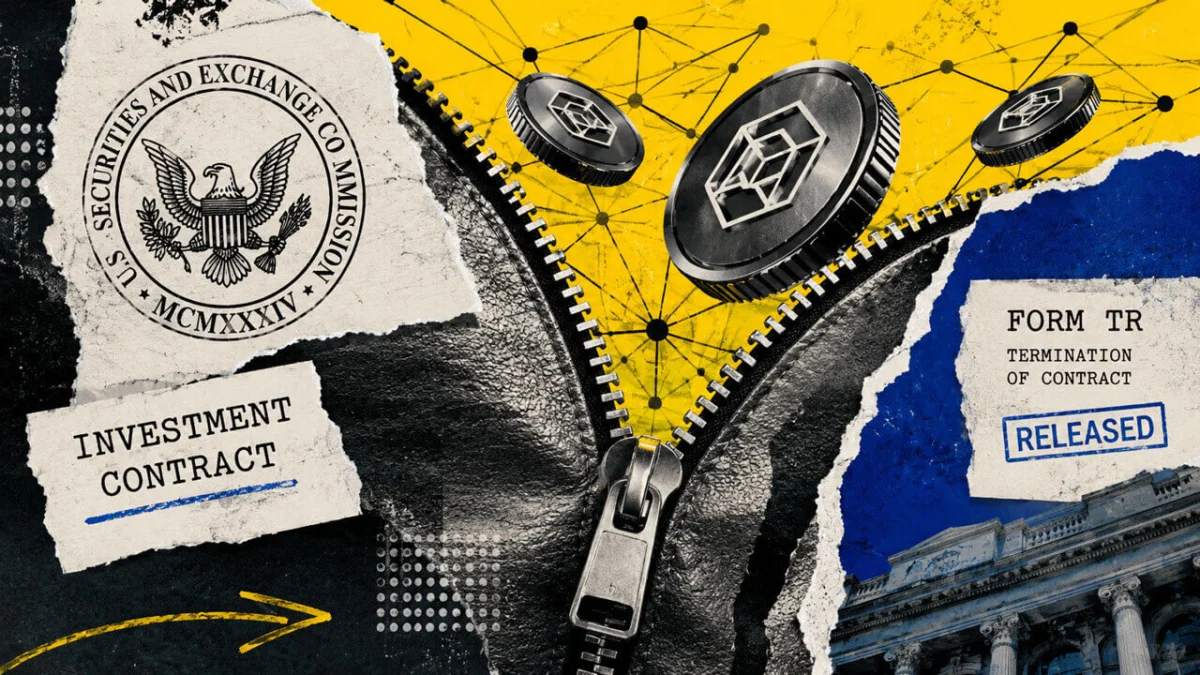
The United States Securities and Exchange Commission (SEC) has officially moved to codify the regulatory lifecycle of digital assets through a sweeping new proposal titled Regulation Crypto Assets. This regulatory package, which entered the Federal Register on August 21, 2026, represents the most significant shift in the commission’s approach to blockchain technology since the inception of the industry. Rather than focusing solely on the digital token itself, the proposal seeks to regulate the "bargain" between developers and investors—the underlying investment contract that funds the creation of a network before its utility is fully realized. By providing three distinct fundraising tiers and a formal "off-ramp" for tokens to exit securities status, the SEC aims to replace years of litigation and "regulation by enforcement" with a predictable, standardized framework.
The move comes as other parts of the digital asset market have already found a permanent home within the U.S. financial system. While the Commodity Futures Trading Commission (CFTC) has established oversight for Bitcoin perpetuals and other established commodity-based derivatives, the SEC is now turning its attention to the primary market: the initial phase where a project raises capital to build software. The proposed rules would allow projects to raise up to $75 million under crypto-specific exemptions, while establishing a mechanism for these projects to eventually operate outside the scope of federal securities laws once their developmental goals are met.
The Evolution of the Covered Investment Contract
The cornerstone of the SEC’s proposal is the distinction between a "crypto asset" and a "covered investment contract." This conceptual framework builds upon the SEC’s March 2026 interpretation of federal securities law, which clarified that while a digital asset may be the subject of a securities transaction, the asset itself is not inherently a security. Instead, the "security" is the set of promises and expectations—the bargain—that connects a buyer’s capital to the issuer’s "essential managerial work."
Under this view, securities law governs the financing relationship during the period when buyers are dependent on a founding team to write code, secure the network, and create utility for the token. Once those promises are fulfilled, or the team permanently ceases its efforts, the investment contract is considered to have ended. This distinction is vital for the secondary market, as it allows for the possibility that later transfers of a token may not be treated as securities transactions once the initial developmental "bargain" has been satisfied.
A Three-Tiered Architecture for Token Fundraising
To accommodate projects at various stages of development, Regulation Crypto Assets introduces three specific "lanes" for capital formation. These tiers are modeled after existing exemptions like Regulation Crowdfunding and Regulation A, but they have been meticulously redesigned to address the unique technical and operational realities of blockchain projects.
The Startup Exemption: A Regulated Path for Early Concepts
The first lane, the Startup Exemption, is designed for early-stage projects, potentially even those operated by informal groups or individuals who have not yet incorporated. This tier allows for a maximum raise of $5 million over a single four-year period.
To utilize this exemption, issuers must file a "Notice of Reliance" (Form NOR) and maintain a public website featuring free disclosures about the project’s goals and progress. Unlike traditional corporate offerings, this tier does not require audited financial statements, acknowledging that many early-stage crypto projects are more focused on code development than balance sheet management. However, the issuer is required to provide annual updates and must file a final report (Form TR) at the end of the four-year term to declare whether the project has been completed or if the investment contract remains in effect.
Tier 1 and Tier 2: The Path to Scale
For larger projects, the SEC has proposed two "Fundraising" tiers that more closely resemble public securities offerings. These tiers are limited to U.S.-based entities that meet specific domestic control and operations tests, ensuring that the SEC retains jurisdictional oversight over the primary actors.
- Fundraising Tier 1: Allows for raises up to $20 million in a 12-month period. It requires the filing of a Form 1-CRYPTO, which must be "qualified" by the SEC before sales can begin. While financial statements are required, they do not necessarily need to be audited, lowering the barrier to entry for mid-sized ventures.
- Fundraising Tier 2: Permits raises up to $75 million in a 12-month period. This is the most robust tier, requiring fully audited financial statements and more intensive ongoing reporting.
A significant feature of both Fundraising tiers is the inclusion of retail investors. Non-accredited buyers are permitted to participate, though their investment is capped at 10% of their annual income or net worth (whichever is greater). Notably, the proposal suggests that contracts issued under these tiers would not carry the same rule-based resale lockups common in private placements, potentially allowing for faster liquidity under specific conditions.
Disclosure Requirements: From White Papers to Form 1-CRYPTO
One of the most frequent criticisms of the initial coin offering (ICO) era was the lack of standardized information. "White papers" were often vague, technical, or purely promotional. Regulation Crypto Assets seeks to rectify this by mandating the use of Form 1-CRYPTO for larger offerings.
This new filing requirement forces issuers to move beyond marketing jargon and provide concrete details on several critical areas:
- Governance and Allocation: Precise details on the total token supply, how tokens are distributed among the team and investors, and how the network is governed.
- Technical Security: Disclosures regarding source-code audits and the security protocols of the underlying blockchain.
- Operational Runway: A financial breakdown of the issuer’s capital, current spending rates, and an estimate of how long the project can operate before requiring further funding.
- Conflicts of Interest: Transparency regarding any relationships between the founding team, major investors, and service providers.
By establishing this baseline, the SEC provides investors with a fixed account of what the team has promised to deliver. This creates a legal "yardstick" that can be used to determine if and when the team has fulfilled its obligations.
Rule 400 and the Safe Harbor for Decentralization
Perhaps the most innovative aspect of the proposal is Rule 400, which provides a "safe harbor" for ending the investment contract. For years, the crypto industry has struggled with the "Hotel California" problem—the idea that once a token is deemed a security, it can never lose that status. Rule 400 provides the exit.
To qualify for this safe harbor, an issuer must file Form TR (Termination of Reliance). In this filing, the issuer must certify that it has completed—or permanently stopped—all essential managerial efforts it promised to undertake. The filing must include a detailed analysis explaining why the team’s ongoing role is no longer central to the token’s value.
If the SEC does not dispute the filing, the "covered investment contract" ceases to exist. At this point, the token can circulate independently, and secondary market transactions would no longer be treated as securities trades under this specific framework. This mechanism effectively codifies the concept of "sufficient decentralization" that has been debated in legal circles since 2018.
Chronology and Next Steps for the Proposal
The release of Regulation Crypto Assets follows a multi-year period of intense scrutiny and legal battles between the SEC and major industry players.
- March 2026: The SEC issues an interpretive release regarding the nature of crypto assets and investment contracts, laying the groundwork for the current proposal.
- August 21, 2026: The proposal is officially published in the Federal Register, initiating the formal rulemaking process.
- October 20, 2026: The public comment period is scheduled to close. During this time, industry groups, legal experts, and individual investors are expected to submit thousands of pages of feedback.
- Late 2026 / Early 2027: The Commission will review the comments, potentially revise the rules, and hold a final vote.
If approved, the regulation will mark a transition from the "Wild West" era of token launches to a structured, institutionalized environment.
Analysis: Preemption of State Laws and Market Impact
A major, though often overlooked, benefit of the proposal is the preemption of state "Blue Sky" laws. Currently, a project looking to sell tokens across the U.S. must navigate a patchwork of 50 different state registration requirements. Regulation Crypto Assets would preempt these state requirements for eligible sales and certain secondary trades, provided the issuer remains current with its federal filings. This could save projects millions of dollars in legal fees and months of administrative delays, making a national launch significantly more viable for smaller teams.
However, the $75 million cap has already drawn scrutiny. Some industry advocates argue that high-performance Layer 1 blockchains require significantly more capital to launch safely. They suggest that the cap may force the largest and most ambitious projects to remain offshore or rely on traditional private equity routes that exclude the general public.
Furthermore, the requirement for "domestic control" for the larger tiers suggests a protectionist tilt. By requiring a majority of directors and executives to be U.S. citizens or residents, the SEC is incentivizing the "onshoring" of crypto talent. While this provides more direct oversight for the SEC, it may create hurdles for the inherently global and pseudonymous nature of many decentralized finance (DeFi) teams.
Implications for the Future of Crypto Regulation
Regulation Crypto Assets does not resolve all the jurisdictional disputes between the SEC and the CFTC. Issues regarding tokens that function as debt instruments, stocks, or stablecoins will still require separate legal analyses. However, by providing a repeatable, legal route from the first sale to independent circulation, the SEC is offering the industry something it has long demanded: clarity.
The proposal suggests that the SEC is willing to accept a world where tokens eventually trade freely, provided the initial "bargain" is transparent and the transition to independence is documented. For the first time, developers have a roadmap that leads from a white paper to a decentralized network without the constant threat of a surprise enforcement action. As the October comment deadline approaches, the industry’s response will likely determine whether this framework becomes the new standard for the digital economy or remains a point of contention in the ongoing debate over the future of finance.