Lina Irawan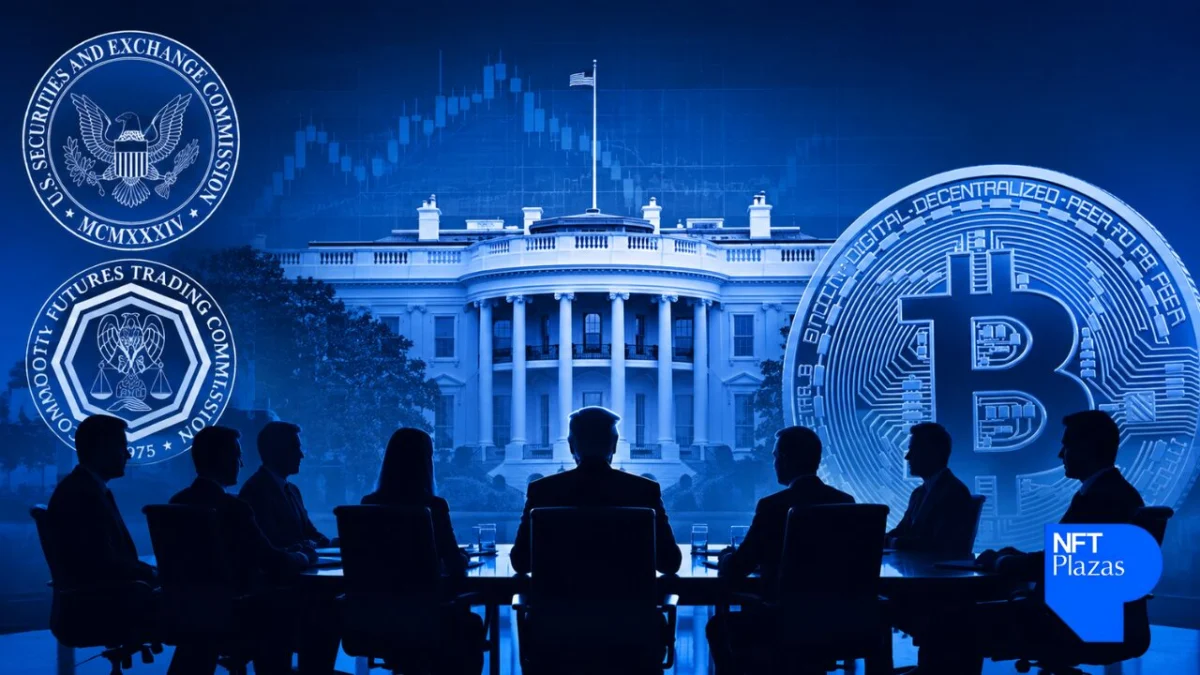
The White House is set to host a pivotal gathering on Wednesday, August 19th, bringing together key figures from the cryptocurrency, prediction market, and traditional finance sectors, alongside top U.S. regulators. This high-stakes meeting, expected to include President Donald Trump, Securities and Exchange Commission (SEC) Chairman Paul Atkins, and Commodity Futures Trading Commission (CFTC) Chairman Michael Selig, signals a critical juncture in Washington’s ongoing deliberation over the future of digital asset regulation. Industry titans such as Coinbase, Ripple, Gemini, Robinhood, Polymarket, and Kalshi are among the prominent companies reportedly invited or expected to attend, according to sources familiar with the planning.
This summit arrives at a moment of significant flux for the U.S. digital asset landscape. Despite the industry’s persistent calls for legislative clarity, Congress has yet to advance crucial market-structure legislation, leaving a void that the SEC and CFTC are increasingly seeking to fill through their own regulatory initiatives. The convergence of these stakeholders at the highest executive level underscores the growing recognition of digital assets’ integration into the broader financial ecosystem, moving beyond a niche technological discussion to one involving established financial infrastructure and federal oversight.
A Deliberate Convergence: Bridging Digital Assets and Traditional Finance
The meeting, slated to be held at the historic Eisenhower Executive Office Building, is strategically positioned as a prelude to a more extensive regulatory discussion planned by the CFTC for the following day. This scheduling suggests a deliberate effort to foster a foundational dialogue that can inform subsequent, more granular policy development. The invitation list further broadens this scope, with potential attendees from venture capital firms like a16z, blockchain infrastructure providers such as Chainlink, investment groups like Paradigm, and advocacy organizations including the Digital Chamber. The inclusion of representatives from traditional financial market institutions, such as Nasdaq and the New York Stock Exchange, is particularly noteworthy. This deliberate inclusion of both nascent digital asset players and established financial giants, alongside high-ranking Treasury officials like Secretary Scott Bessent and Commerce Secretary Howard Lutnick, highlights a White House initiative to foster a more holistic understanding and approach to digital asset policy.
The composition of this gathering is significant. It represents an unprecedented convergence of cryptocurrency exchanges, blockchain innovators, and prediction market operators with long-standing financial institutions and federal regulators. This reflects a maturing perspective within Washington, where digital assets are no longer solely viewed as an emerging technology sector but as an increasingly integral component of the U.S. financial system, necessitating dialogue and integration with traditional market infrastructure and financial institutions. The image of Eleanor Terrett’s dispatch, indicating the New York Stock Exchange and Nasdaq’s inclusion alongside exchanges like Kraken, further illustrates this expansive approach.
Preceding Regulatory Momentum: The CFTC’s Innovation Committee
The White House summit’s timing is further amplified by its proximity to the first major session of the CFTC’s Innovation Advisory Committee, scheduled for the day after the presidential meeting. This committee, tasked with advising the CFTC on technological advancements impacting financial markets and the economy, is itself composed of a diverse group, including representatives from the very crypto and prediction market platforms present at the White House, as well as traditional financial institutions. CFTC Chairman Michael Selig will oversee this committee, underscoring the agency’s proactive stance.
The White House event can therefore be seen as an initial, high-level dialogue that may set the stage for the more detailed discussions within the CFTC committee. This could provide an early indication of the administration’s priorities and perspectives as the CFTC and SEC continue to navigate the complex regulatory terrain of cryptocurrencies, blockchain infrastructure, and prediction markets. Prediction markets, in particular, have become a focal point of regulatory scrutiny. Platforms like Kalshi and Polymarket have experienced rapid growth, prompting ongoing debates within Washington about the appropriate regulatory framework for event contracts and the demarcation of federal oversight. The CFTC’s active role in defining these boundaries makes the participation of executives from Kalshi and Polymarket particularly relevant to the broader regulatory discourse.

The Shadow of Legislative Uncertainty: The CLARITY Act’s Rocky Path
Adding a layer of urgency to these discussions is the increasingly uncertain future of the Digital Asset Market CLARITY Act. This bipartisan legislation aims to establish clear guidelines for classifying digital assets, distinguishing between those subject to SEC securities regulations and those falling under CFTC commodity oversight. The crypto industry has largely championed this bill, viewing it as a crucial step towards achieving long-term regulatory certainty.
However, the legislative path has proven challenging. The Senate adjourned for its August recess without advancing the bill. While Senate Majority Leader John Thune has scheduled a procedural vote for September 15th, upon their return, the delay has significantly diminished expectations for its passage this year. Industry analysts, such as Alex Thorn, head of research at Galaxy Digital, have substantially lowered their probability estimates for the CLARITY Act’s enactment in 2026 to a mere 10%, reflecting the formidable political hurdles. Despite these setbacks, support for the bill has not waned entirely. Citigroup CEO Jane Fraser has publicly expressed her desire to see the CLARITY Act become law, though she has also voiced concerns regarding specific provisions, particularly those related to stablecoin rewards and their potential impact on traditional bank deposits.
Regulatory Agency Initiatives Amidst Legislative Stasis
The weakening prospects for the CLARITY Act have consequently elevated the importance of independent regulatory action by the SEC and CFTC. Under Chairman Paul Atkins, the SEC has adopted a noticeably more accommodating stance towards cryptocurrencies compared to previous administrations. The agency has been developing a comprehensive regulatory framework, colloquially referred to as "Regulation Crypto," which includes provisions for an innovation exemption designed to offer greater flexibility for companies exploring blockchain-based financial products.
However, the regulatory timeline has encountered unexpected delays. An SEC meeting scheduled for August 14th, intended to consider new cryptocurrency-related regulatory proposals, was abruptly canceled. While this cancellation does not definitively signal a shift in the SEC’s direction, it has introduced an element of uncertainty regarding the agency’s timetable for releasing key aspects of its crypto framework. Industry participants remain optimistic that the SEC will eventually unveil components of this framework in the coming weeks or months, potentially offering some measure of regulatory clarity even in the absence of comprehensive congressional legislation.
Implications of the White House Summit
For the cryptocurrency industry, the White House meeting on August 19th is poised to provide a crucial indication of the Trump administration’s priorities and strategic approach to digital asset regulation. The presence of major players like Coinbase and Ripple, representing significant segments of the digital asset economy, alongside prediction market leaders like Kalshi and Polymarket, underscores the administration’s recognition of these sectors’ growing influence. Their engagement alongside federal regulators and traditional financial institutions suggests a White House perspective that views digital assets not as an isolated phenomenon but as an intrinsic element of the future U.S. financial market architecture.
While the summit is unlikely to immediately resolve the legislative impasse surrounding the CLARITY Act, it could offer valuable insights into the administration’s contingency plans should Congress fail to enact comprehensive market-structure legislation. For investors and market participants, a key takeaway will be whether the gathering signals a more coordinated approach between the White House, the SEC, and the CFTC.
In a year where Bitcoin and the broader cryptocurrency market have faced significant momentum challenges, regulatory clarity remains one of the sector’s most anticipated catalysts. The White House meeting could serve as an early indicator of whether this much-needed clarity will emerge from legislative action or, increasingly, from the proactive regulatory efforts of agencies like the SEC and CFTC. The dialogue initiated at this high-level summit will undoubtedly shape the ongoing evolution of digital asset regulation in the United States.