James Watt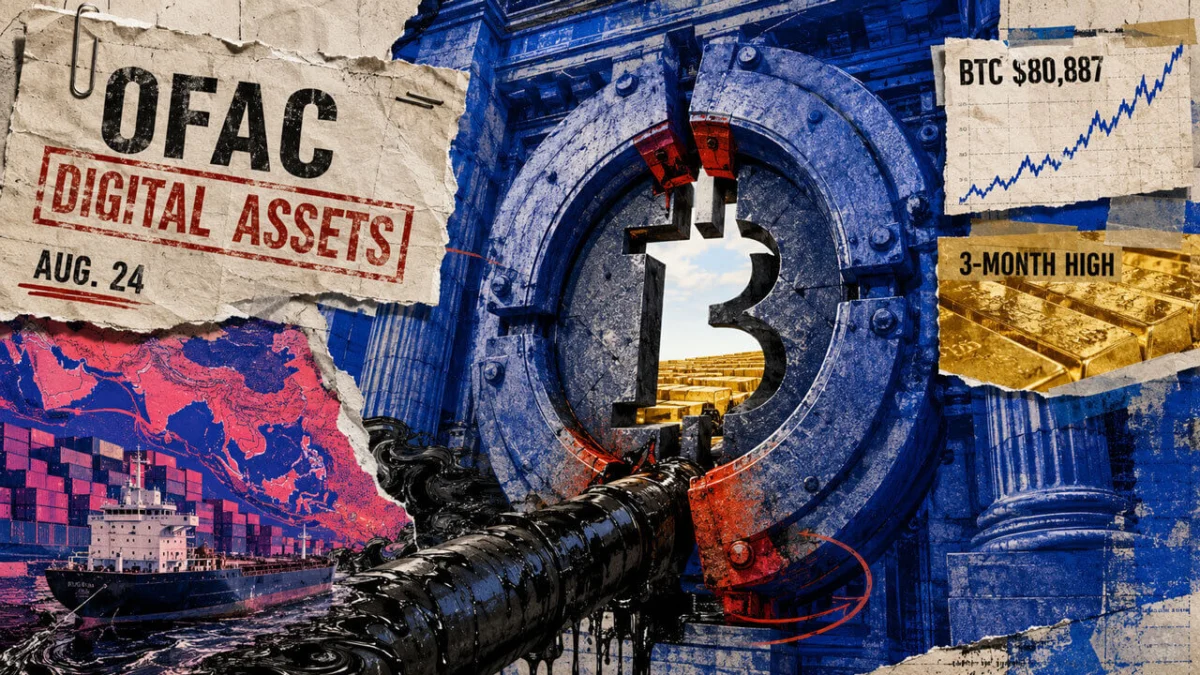
The United States government has significantly intensified its financial pressure on the Islamic Republic of Iran, launching a comprehensive campaign titled “Operation Economic Outcast” designed to sever Tehran’s remaining ties to the global financial system. Led by Treasury Secretary Scott Bessent, the initiative seeks to leverage the dominance of the U.S. dollar to force international trading partners to choose between conducting business with Iran or maintaining access to the American banking infrastructure. This escalation arrives at a pivotal moment for global markets, as Bitcoin surpasses the $80,000 threshold and gold reaches multi-month highs, fueling an intense debate over whether the aggressive "weaponization" of the dollar is inadvertently driving demand for decentralized and alternative assets.
On August 24, Secretary Bessent formalized the campaign by imposing sanctions on nearly 60 individuals, entities, and vessels. More significantly, the Treasury Department expanded its reach by opening five critical Iranian sectors to broader secondary sanctions: digital assets, technology, gold, aviation, and shipping. By designating these sectors, the U.S. Office of Foreign Assets Control (OFAC) now possesses the legal authority to target any foreign entity operating within these spaces, regardless of whether a direct link to a previously sanctioned person can be established.
In a statement drawing parallels to military history, Secretary Bessent framed the operation as a decisive turning point in economic statecraft. “In the Second World War, D-Day marked the historic beginning of a campaign with our allies to target and drive the enemy from its positions, including those in third countries,” Bessent stated. “Today, in that same spirit, we are launching an economic onslaught against Iran’s financial connections around the globe. Our objective is to sever every economic lifeline that sustains this tyrannical regime until Tehran stands alone.”
The Expansion of OFAC Authority and Executive Order 13902
The legal cornerstone of this new offensive is Executive Order 13902, which grants the Treasury Department the power to identify and sanction sectors of the Iranian economy. Previously, the U.S. focused heavily on the energy, petrochemical, and financial sectors. The addition of digital assets and technology represents a strategic pivot toward the modern methods Iran has utilized to circumvent traditional trade barriers.
Under the new sectoral determinations, OFAC can pursue overseas companies with greater agility. Previously, investigators often had to prove a specific transaction was linked to a designated terrorist organization or a sanctioned bank. Now, simply "operating in the digital-asset sector" of Iran is sufficient grounds for being blacklisted. This expansion effectively treats the entire Iranian cryptocurrency ecosystem as a prohibited zone for any entity that wishes to remain in the good graces of the U.S. Treasury.
The move also tightens the noose around Iranian crypto exchanges like Nobitex. While these platforms have long been under the microscope, the new rules increase the risks for foreign financial institutions that provide liquidity or "off-ramp" services to these exchanges. If a foreign bank is found to be facilitating significant transactions for an Iranian crypto-related entity, it risks being cut off from U.S. correspondent banking—a move that would effectively end its ability to process dollar-denominated payments globally.
Crypto as a Tool for Sanctions Evasion
The Treasury’s focus on digital assets is not merely theoretical. Recent enforcement actions have revealed a sophisticated "crypto pipeline" used by the Iranian state to fund its regional proxies and military operations. According to Treasury data, Tehran has increasingly relied on stablecoins and Bitcoin to facilitate the activities of the Islamic Revolutionary Guard Corps (IRGC) and the Quds Force.
A primary example cited in the recent designations is Ivan Obukhov, a Ukrainian national based in the United Arab Emirates. Obukhov allegedly acted as a high-level broker for Iran’s "shadow fleet" of oil tankers. Treasury investigators found that Obukhov processed more than $100 million in cryptocurrency payments since 2023 to facilitate oil sales for the IRGC-Quds Force. By using digital assets, Obukhov and his company, Foscom FZE, were able to bypass the traditional maritime insurance and banking checks that usually catch illicit oil transfers.
Furthermore, the Treasury targeted Iranian cyber actors involved in ransomware and infrastructure attacks. One individual, Arman Kahzadian, was identified as having gained control of wallets containing significant Bitcoin holdings derived from cyber theft. The integration of crypto into Iran’s oil and security networks suggests that the regime no longer views digital currency as a niche tool, but as a central pillar of its survival strategy.
The China Dilemma and the Dollar System
The most significant test for Operation Economic Outcast lies in the East. China remains Iran’s largest oil customer and its most vital economic partner. For years, Chinese "teapot" refineries have purchased discounted Iranian crude, often using small, local banks that have minimal exposure to the U.S. financial system to settle payments.
Secretary Bessent has made the threat explicit: entities facilitating Iranian money laundering or trade will be "removed from the U.S. dollar system." However, the administration has signaled a degree of caution regarding major Chinese financial institutions. When asked why the U.S. has not yet moved to block China’s largest banks—a move that would send shockwaves through the global economy—Bessent was pragmatic. “Why would I want to blow up the global financial system?” he asked, while quickly adding that “no one is above the reach of U.S. sanctions.”
This highlights the delicate balance Washington must strike. The U.S. dollar’s status as the global reserve currency gives the Treasury immense power, but overusing that power against a systemic rival like China could accelerate the development of alternative payment systems. China has already been promoting its Cross-Border Interbank Payment System (CIPS) and the digital yuan (e-CNY) as alternatives to the dollar-based SWIFT network.
In response to the U.S. announcement, Chinese Foreign Ministry spokesman Lin Jian stated that Beijing’s cooperation with Tehran is conducted within the bounds of international law and should not be disrupted by "unilateral" U.S. actions. Lin warned that China would take "necessary measures" to protect its domestic companies, signaling that the threat of secondary sanctions might lead to further diplomatic and economic friction between Washington and Beijing.
Economic Strain and Political Defiance in Tehran
Inside Iran, the cumulative weight of years of sanctions is becoming increasingly visible. President Masoud Pezeshkian recently acknowledged on state television that the Iranian public is facing "many problems" as a result of the economic blockade and the costs associated with regional conflicts. The Iranian Rial has suffered chronic devaluation, and inflation remains a persistent threat to social stability.
Despite this, the Iranian leadership remains outwardly defiant. Parliament Speaker Mohammad Bagher Ghalibaf dismissed the new U.S. measures, claiming that Washington is "not in an economic position" to further isolate Iran. Ghalibaf suggested that Iran’s trading partners have privately indicated they will continue to disregard U.S. threats, betting that the global demand for energy and the shift toward a multipolar world will provide Iran with a safety net.
Market Reactions: Bitcoin, Gold, and the "Debasement Trade"
The timing of Operation Economic Outcast has coincided with a massive rally in alternative assets. Bitcoin’s climb to $80,887—a 27% gain in August alone—and gold’s steady ascent have raised questions about the long-term viability of dollar-based diplomacy.
Financial analysts, including Bitwise Chief Investment Officer Matthew Hougan, have noted that the "weaponization" of the financial system often serves as a marketing campaign for assets like Bitcoin and gold. The precedent set in 2022, when the U.S. and its allies froze approximately $280 billion in Russian sovereign assets, served as a wake-up call for central banks around the world. Since then, central bank demand for gold has reached record levels, with over 1,100 metric tons purchased in 2022 and more than 1,000 tons in 2023.
While the current Bitcoin rally is also driven by domestic U.S. factors—such as the Treasury’s debt buyback programs and a weakening dollar index—the geopolitical narrative cannot be ignored. Investors are increasingly viewing Bitcoin as "digital gold," a neutral reserve asset that cannot be frozen or seized by any single government. If the U.S. continues to use the dollar as a primary tool of warfare, the incentive for nations to diversify into non-sovereign assets only grows.
Chronology of Escalation: A Timeline of U.S.-Iran Financial Warfare
To understand the gravity of "Operation Economic Outcast," one must view it within the broader timeline of the U.S.-Iran relationship:
- 1979: The U.S. imposes the first sanctions following the seizure of the American Embassy in Tehran.
- 2015: The Joint Comprehensive Plan of Action (JCPOA) is signed, providing Iran with sanctions relief in exchange for nuclear limits.
- 2018: The Trump administration withdraws from the JCPOA and initiates the "Maximum Pressure" campaign.
- 2020: Executive Order 13902 is signed, establishing the framework for sectoral sanctions.
- 2022: The freezing of Russian assets post-Ukraine invasion sets a new precedent for the use of the dollar system as a geopolitical weapon.
- August 2024: Secretary Bessent launches Operation Economic Outcast, specifically targeting the digital asset sector and threatening to eject trading partners from the dollar system.
Implications for the Global Financial Order
The immediate impact of the Treasury’s campaign is likely to be a tightening of compliance standards across the globe. Exchanges, stablecoin issuers like Tether, and international banks will likely implement more rigorous screening to avoid any association with the newly sanctioned Iranian sectors. For Iran, this means the cost of doing business will rise, as it must pay higher premiums to the middlemen and brokers who navigate the "shadow" economy.
However, the broader implication is the potential erosion of the "exorbitant privilege" enjoyed by the U.S. dollar. Every time the U.S. cuts a country out of the dollar system, it reduces the total network effect of that system. While no current currency can match the dollar’s liquidity and depth, the combination of gold, digital assets, and regional settlement systems is creating a fragmented financial landscape.
In the short term, Operation Economic Outcast may succeed in further isolating the Iranian regime. In the long term, it may be remembered as the catalyst that pushed the world’s largest economies to build a financial future that no longer relies on a single Western capital. As Bitcoin tests new highs and the U.S. Treasury doubles down on its enforcement powers, the struggle for control over the world’s "economic lifelines" has entered a new and unpredictable chapter.