James Watt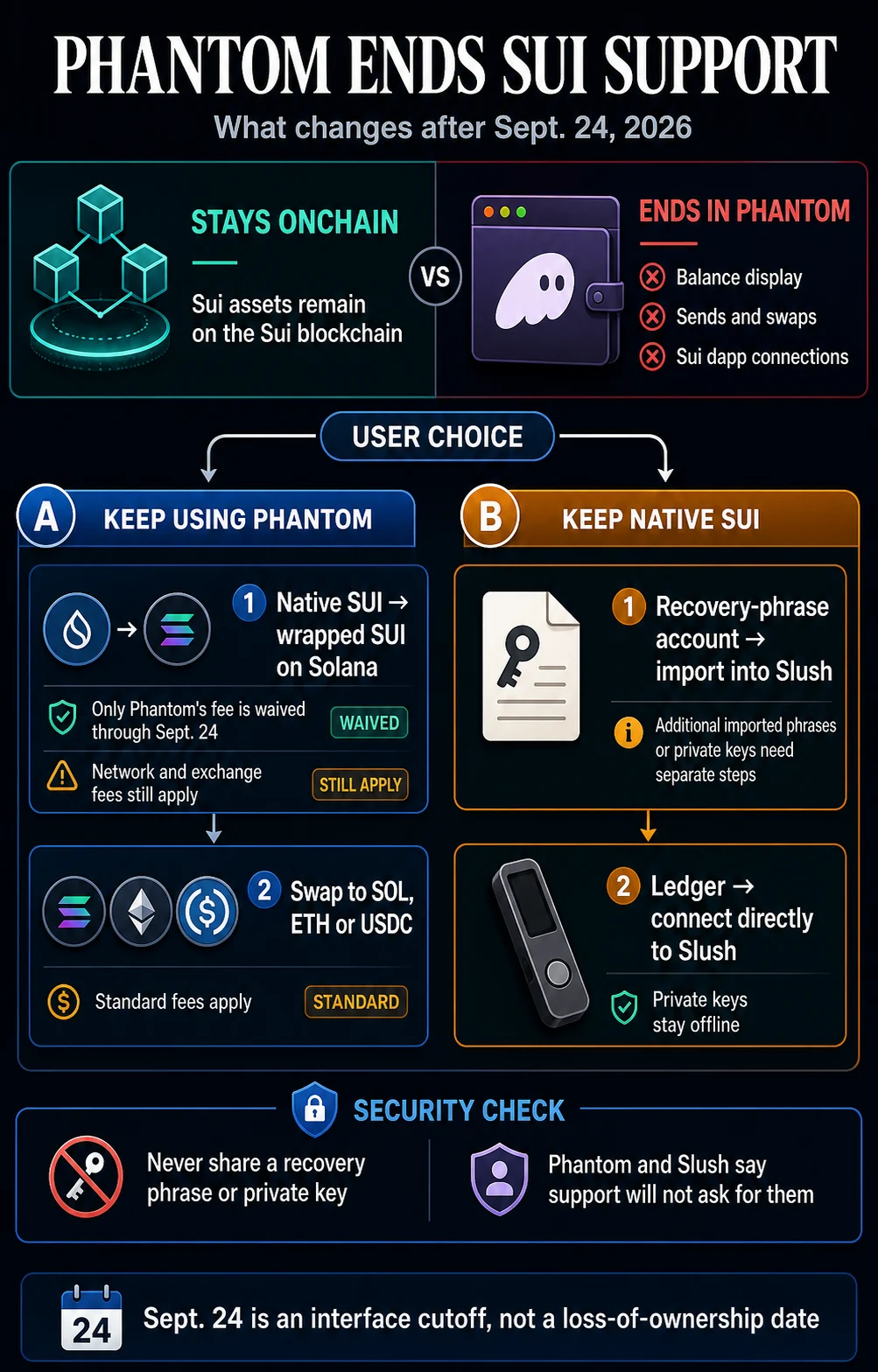
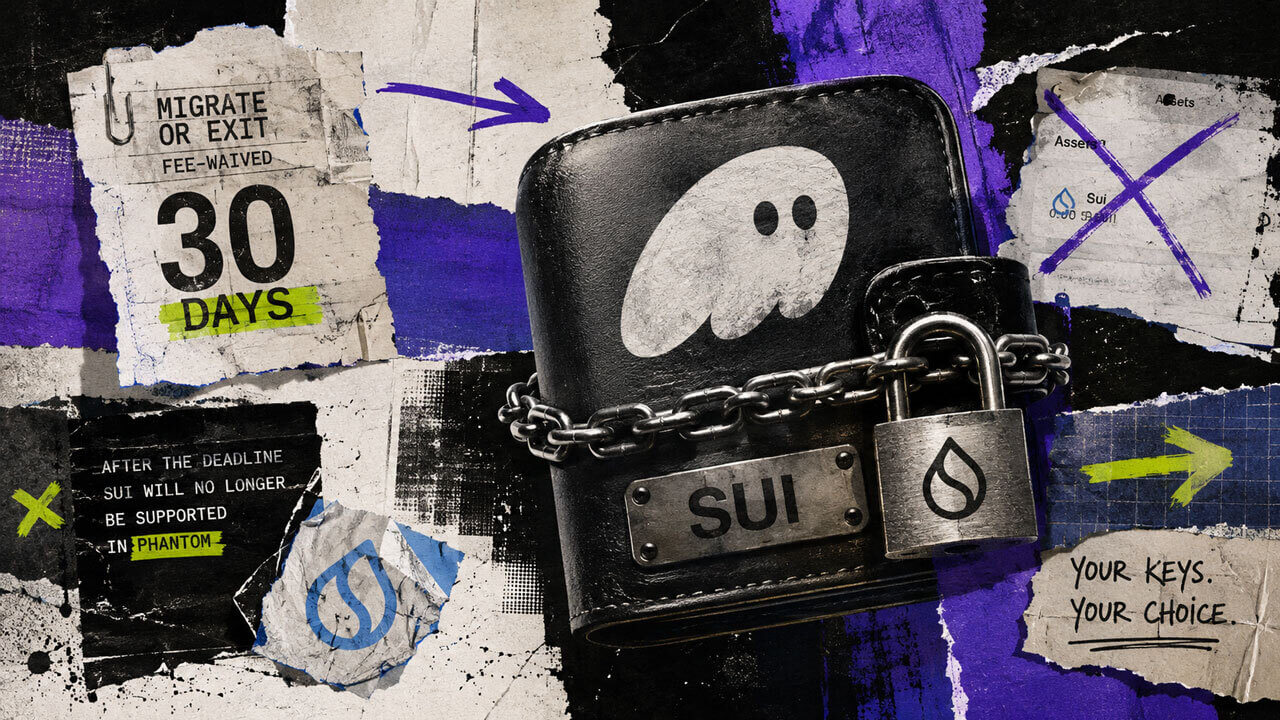
The digital asset landscape is preparing for a significant shift in interface accessibility as Phantom, one of the most prominent self-custodial wallet providers, moves to finalize its departure from the Sui blockchain ecosystem. On September 24, Phantom will officially remove Sui from its wallet interface, marking the end of a high-profile integration that began earlier this year. This transition follows a joint announcement made on August 24, where both Phantom and the Sui Foundation revealed their decision to terminate the current integration, though the specific motivations behind the split remain undisclosed to the public.
Following the September 24 cutoff, Phantom users will experience a complete cessation of Sui-related services within the application. The wallet will no longer display SUI balances, facilitate the sending or receiving of Sui-native assets, or support in-app swaps involving the network. Furthermore, the ability to connect to decentralized applications (dApps) built on the Sui blockchain—including popular platforms such as Suilend, Navi, Aftermath, and Bluefin—will be revoked. This move represents a rare instance of a major multi-chain wallet delisting a prominent Layer 1 blockchain, highlighting the complexities of maintaining cross-chain infrastructure in a rapidly evolving market.
The Distinction Between Interface Access and On-Chain Ownership
A critical distinction in this transition lies in the nature of self-custody. While Phantom is withdrawing the tools required to interact with the Sui blockchain, the assets themselves remain securely recorded on the decentralized ledger. The underlying cryptographic credentials, typically in the form of a 12 or 24-word recovery phrase or a private key, continue to authorize ownership of the funds. Phantom’s transition documentation emphasizes that the sunsetting of the product does not equate to a loss of funds. Instead, it is a removal of the "window" through which users view those funds.
This event serves as a practical case study in the distribution power of wallet providers. In the decentralized finance (DeFi) ecosystem, a wallet acts as the primary user interface (UI) and user experience (UX) layer. By removing a specific chain, a wallet provider effectively diminishes the "distribution surface" of that blockchain. Even if a network remains functional and permissionless, the removal of support from a wallet with millions of active users can significantly impact the ease of use and daily transaction volume for that specific chain’s retail participants.
Chronology of the Phantom-Sui Integration
The timeline of the relationship between Phantom and Sui has been relatively brief but impactful. The integration was first signaled in late 2024, with a formal announcement of the partnership occurring in December. At that time, the Sui Foundation highlighted the potential for Phantom’s massive user base to bring liquidity and engagement to the burgeoning Sui ecosystem.
Support officially went live on January 29, 2025, allowing users to manage Sui assets alongside their Solana, Ethereum, and Polygon holdings. During the launch phase, Phantom was positioned as a key gateway for the "Move" programming language ecosystem, which Sui utilizes. However, the partnership lasted less than a year before the August 24, 2024, announcement of the impending sunset. (Note: Discrepancies in public dates suggest an accelerated integration cycle or a strategic pivot by Phantom to refocus on its core Solana and EVM offerings).
Throughout this period, Phantom’s user base saw explosive growth. In December 2024, the wallet reported approximately seven million monthly active users. By the time the Sui integration was fully operational and later slated for removal, that figure had surged to over 15 million. While it remains unclear how many of these users specifically utilized the Sui integration, the scale of Phantom’s reach underscores why the removal is viewed as a significant event for the Sui community.
Technical Implications for Users and DApp Connectivity
The immediate impact on September 24 will be felt most acutely by users who rely on Phantom for daily DeFi activities on Sui. Because Phantom will stop supporting Sui dApp connections, any active sessions with protocols like Navi or Bluefin will be terminated. Users will find themselves unable to sign transactions or interact with their staked positions or liquidity pools through the Phantom interface.
To maintain continuity, users must migrate their credentials to a compatible Sui-native wallet. This process involves the manual export and import of recovery phrases, a task that carries inherent security risks. For those who prefer to remain within the Phantom ecosystem, the wallet provider has offered a "wrapped SUI" alternative on the Solana network. This allows users to maintain exposure to the price of SUI without needing to manage a separate blockchain interface, though it introduces bridge-related risks and requires the conversion of native assets into a synthetic format.
Analysis of Migration Paths and Associated Risks
Phantom has outlined three primary routes for users to secure their assets before the deadline, each presenting a different balance of convenience, cost, and security.
-
The Swap to Wrapped SUI on Solana:
Users can choose to swap their native SUI for a wrapped version of the token on the Solana blockchain. To incentivize this migration, Phantom has announced a waiver of its internal swap fees for this specific pair until the September 24 deadline. However, users should be aware that network gas fees on the Sui and Solana blockchains, as well as liquidity provider fees on underlying exchanges, still apply. This path is ideal for users who prioritize staying within the Phantom UI and do not require native Sui functionality. -
Full Asset Exit:
Users may opt to exit the Sui ecosystem entirely by swapping SUI into more liquid or stable assets supported by Phantom, such as SOL, ETH, or USDC. This route follows standard fee structures and does not benefit from the fee waiver. It represents a permanent departure from the Sui network for the user. -
Interface Migration to Slush or Other Compatible Wallets:
For users who wish to continue using the Sui network natively, the only option is to import their credentials into another wallet, such as Slush. This process requires the user to access their 12 or 24-word recovery phrase within Phantom’s settings, record it, and input it into the new wallet software. While this preserves the user’s address and all associated on-chain history, it exposes the "master key" of the wallet to the user’s local environment, increasing the risk of interception by malware or phishing attempts.
Security Warning: The Vulnerability of Migration Windows
The crypto industry has historically seen a rise in cyberattacks during major platform transitions. Security analysts warn that the September 24 deadline creates a "high-signal" period for scammers. Bad actors often use such events to deploy phishing campaigns, impersonating Phantom or Sui support staff to "assist" with the migration.
Phantom has been proactive in stating that its team will never contact users directly, nor will they ever ask for a recovery phrase or private key. The security tension is palpable: while the portability of recovery phrases is a cornerstone of self-custody, the act of moving those phrases between software applications is one of the most dangerous actions a user can take. Prominent industry voices, such as Ivan on Tech, have pointed out that forcing users to export keys can be detrimental to overall ecosystem security, as it breaks the "cold" or "contained" nature of the credentials.
Fact-Based Analysis of Interface Power and Distribution
The decision to delist Sui highlights a growing realization in the blockchain industry: the wallet layer is a powerful gatekeeper. While blockchains are decentralized, the way users access them is often centralized through a few dominant applications. This "interface power" allows wallet providers to act as curators of the decentralized web.
The removal of Sui from Phantom illustrates several key market dynamics:
- Resource Allocation: Maintaining high-quality integration for a non-EVM (Ethereum Virtual Machine) chain like Sui requires significant engineering resources. Wallet providers must decide if the user activity on a specific chain justifies the ongoing maintenance costs of its unique cryptography and node infrastructure.
- Ecosystem Consolidation: As Phantom doubles down on its Solana roots while expanding into the massive Ethereum ecosystem, niche or competing Layer 1 chains may find it harder to maintain presence in "universal" wallets.
- The Rise of Native Wallets: The departure may drive users toward specialized, "chain-aligned" wallets that offer deeper feature sets for a specific network than a general-purpose wallet can provide.
Conclusion and Future Outlook
As the September 24 deadline approaches, the focus remains on user education and safe migration. The assets on the Sui blockchain are not at risk of disappearing, but the convenience of managing them through a single, multi-chain interface is being curtailed for millions of Phantom users.
This event serves as a reminder that in the world of Web3, ownership is absolute, but access is often mediated by third-party software. The separation of Phantom and Sui marks a pivotal moment where the industry must confront the reality of distribution power at the interface layer. Whether this move leads to a consolidation of users within a few dominant chains or a fragmented migration to specialized wallets will be a key trend to watch in the final quarter of the year. For now, users are advised to finalize their migration plans well before the cutoff to avoid any last-minute technical hurdles or security lapses.