Nila Kartika Wati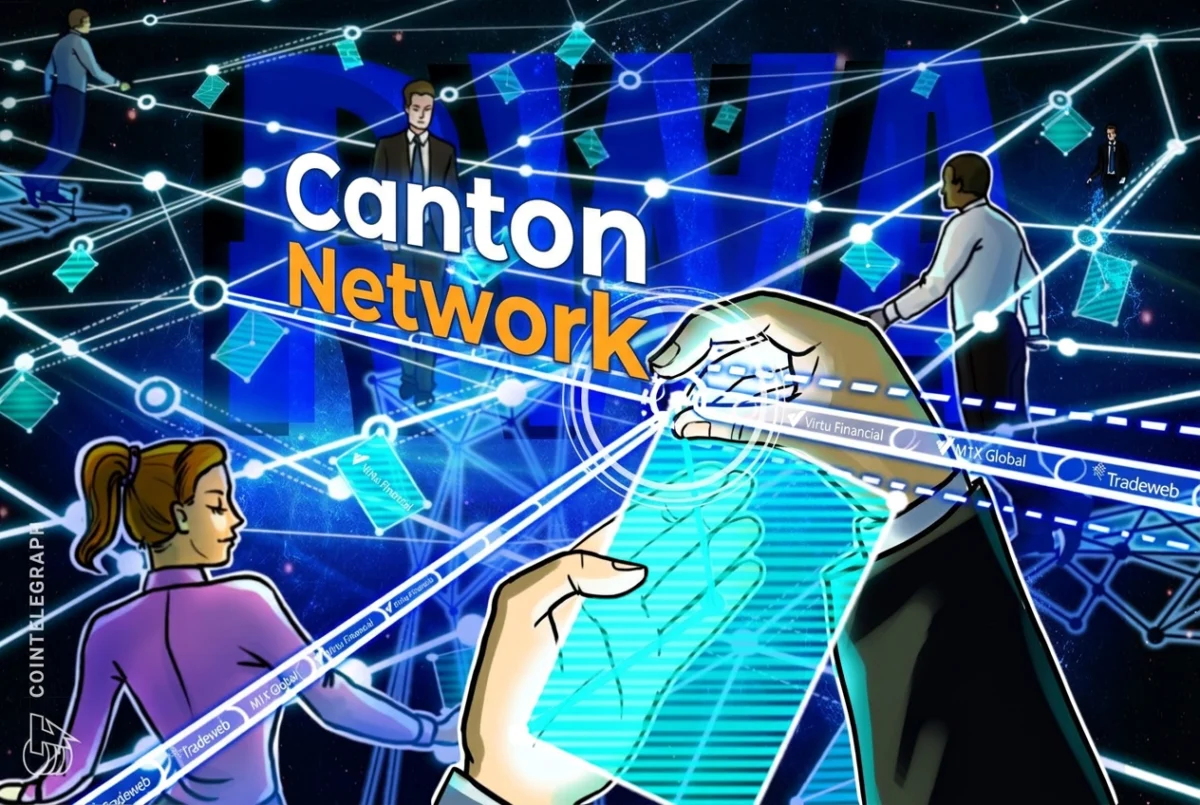
In a landmark advancement for institutional digital finance, Virtu Financial, M1X Global, and Tradeweb have successfully executed an onchain repurchase agreement (repo) transaction, leveraging a sovereign digital bond as collateral, with the entire lifecycle of the transaction settling on the Canton Network. This pioneering move represents a significant step forward in integrating blockchain technology into core financial market functions, specifically by demonstrating the practical application of tokenized sovereign debt within a regulated institutional financing framework.
The transaction, which utilized USDM1, a US dollar-denominated sovereign bond issued natively onchain by the Republic of the Marshall Islands, stands out for several critical innovations. USDM1 is distinctively backed 1:1 by short-term US Treasurys, providing a robust and familiar asset underpinning. Crucially, the bond is structured under New York law as a fully collateralized sovereign obligation and is designed to pay a coupon even while being actively employed as collateral in financing arrangements. Both Virtu Financial and M1X Global, along with the trading platform Tradeweb, have highlighted this as the first repo to seamlessly combine natively issued sovereign collateral with fully onchain atomic settlement, executed between regulated counterparties. The efficiency of the new model was underscored by the completion of the full repo and repurchase cycle in under ten minutes, a dramatic acceleration compared to traditional settlement processes.
Deconstructing the Innovation: The Onchain Repo Transaction
To fully appreciate the significance of this development, it is essential to understand the mechanics of a repurchase agreement and how its onchain execution represents a paradigm shift. A repo transaction is a form of short-term borrowing for dealers in government securities. The dealer sells government securities to investors, usually on an overnight basis, and buys them back the following day at a slightly higher price. For the party selling the security (and effectively borrowing money), the repo is a collateralized loan. For the party buying the security (and effectively lending money), it is a collateralized investment. The global repo market is a cornerstone of the financial system, facilitating trillions of dollars in liquidity daily, with the U.S. market alone often exceeding $5 trillion in daily volumes. It plays a vital role in money market operations, central bank liquidity management, and overall financial stability.
Traditional repo transactions involve a multi-step process that can be resource-intensive and carry various forms of risk, including operational risk, counterparty risk, and settlement risk. These transactions typically rely on a network of intermediaries for trading, clearing, and settlement, often involving batch processing and a settlement cycle of T+1 (trade date plus one business day) or T+2. The onchain repo, by contrast, leverages blockchain technology to introduce atomic settlement. This means that the transfer of the collateral (USDM1) and the cash (or stablecoin equivalent, though not explicitly detailed for the cash leg here, the settlement of the repo and repurchase cycle on Canton implies instant finality) occur simultaneously and irrevocably. This eliminates the principal-risk exposure associated with sequential settlement processes, where one party might deliver its side of the transaction without receiving the other. The instantaneous and atomic nature of the settlement significantly reduces counterparty risk and operational friction, promising substantial efficiency gains and cost reductions for participants.
USDM1: The Sovereign Digital Bond as Collateral
The choice of USDM1 as collateral is central to the innovative nature of this transaction. While the concept of tokenizing assets, particularly real-world assets (RWAs), has gained considerable traction in recent years, its application as active collateral in institutional financing transactions marks a critical evolution. Prior efforts often focused on the issuance and trading of tokenized securities. This transaction, however, moves beyond mere representation to demonstrate utility.
USDM1, issued by the Republic of the Marshall Islands, represents a novel approach to sovereign debt. By issuing a bond directly onchain, the Marshall Islands are exploring new avenues for capital formation and financial innovation. The 1:1 backing by short-term US Treasurys provides a strong credit foundation, linking the digital asset to one of the most liquid and secure asset classes globally. This backing, combined with the bond’s structure under New York law as a fully collateralized sovereign obligation, aims to address traditional finance’s requirements for legal certainty and asset quality. The ability for USDM1 to pay a coupon even while being pledged as collateral is another key feature, optimizing capital utilization for the bondholder.
The accessibility of USDM1 through Tradeweb, a prominent electronic trading platform for fixed income, derivatives, and ETFs, ensures its integration into familiar institutional workflows. Furthermore, the provision of institutional custody by established digital asset custodians like Anchorage Digital, BitGo, and tZERO addresses critical concerns around security and regulatory compliance for holding digital assets. This ecosystem of issuance, trading, and custody providers is crucial for building confidence and facilitating broader institutional adoption of tokenized securities. The broader market for tokenized real-world assets is projected to grow substantially, with some estimates, such as those from Boston Consulting Group and ADDX, suggesting it could reach $16 trillion by 2030. This transaction provides a tangible example of how such projections might materialize, particularly in the realm of high-quality collateral.
The Canton Network: An Emerging Hub for Institutional Digital Finance
The successful execution and settlement of this pioneering repo transaction underscore the growing importance of the Canton Network as a dedicated infrastructure for institutional digital finance. Designed specifically to meet the stringent requirements of regulated financial institutions, Canton distinguishes itself through its focus on privacy and permissioning features. These attributes are non-negotiable for institutions operating within highly regulated environments, where confidentiality of transactions and control over participant access are paramount.
The repo transaction is not an isolated event but rather the latest in a series of significant activities that highlight Canton’s accelerating momentum. The network has seen a flurry of institutional engagement in recent months, building a compelling timeline of capabilities and use cases:
- July 2023: Tradeweb facilitated the real-time transfer of a tokenized US Treasury from Franklin Templeton to Virtu Financial on the Canton Network. This transaction settled against USDCx, a tokenized representation of USDC stablecoin, demonstrating the network’s capacity for real-time asset transfers and stablecoin-based settlement. This earlier event laid crucial groundwork for the subsequent repo transaction by validating the movement of high-quality tokenized assets.
- August 2023: FalconX and Interstice launched a cross-chain swap engine connecting Canton with other major blockchain networks, including Ethereum, Solana, and Robinhood Chain. This development is critical for enhancing interoperability, allowing assets and liquidity to flow more freely between different blockchain ecosystems and broadening Canton’s reach.
- August 2023: World Liberty Financial launched its USD1 stablecoin natively on the Canton Network. The introduction of institutional-grade stablecoins directly on Canton further strengthens its utility as a settlement layer and a platform for digital asset issuance.
- August 2023: Digital Asset, a key developer behind the Canton Network, in collaboration with the American Idea Foundation, founded by former US House Speaker Paul Ryan, announced plans for a 2027 pilot program. This initiative aims to use Canton to distribute state-administered benefits across three US states, showcasing the network’s potential for public sector applications beyond traditional finance. This broadens the scope of Canton’s utility, demonstrating its robustness for secure, auditable, and efficient distribution of value.
These developments collectively paint a picture of a rapidly maturing ecosystem on the Canton Network, attracting diverse institutional participants and showcasing a range of applications from capital markets to public administration. The recent $355 million funding round secured by Digital Asset, with significant backing from a16z, further underscores investor confidence in the company’s vision for building blockchain rails for Wall Street and traditional financial institutions. This investment provides the resources necessary to continue developing and expanding the Canton Network’s capabilities and fostering its adoption.
Broader Implications and Future Outlook
The successful onchain repo transaction carries profound implications for the future of institutional finance, potentially reshaping market structures, operational efficiencies, and risk management practices.
Enhanced Efficiency and Risk Reduction: The most immediate and tangible benefit is the promise of vastly improved efficiency and reduced risk. Atomic, T+0 settlement significantly mitigates settlement risk, operational risk, and counterparty risk inherent in traditional systems. This can lead to lower capital requirements for financial institutions, as less capital needs to be set aside to cover potential settlement failures. Furthermore, the automation afforded by smart contracts on a blockchain can streamline post-trade processes, reducing manual intervention, errors, and associated operational costs. Industry analysts suggest that widespread adoption of atomic settlement could unlock billions in operational savings across global financial markets.
Liquidity Transformation and Capital Optimization: By enabling tokenized sovereign debt to be used dynamically as collateral, the transaction points towards a future where assets are more liquid and capital is utilized more efficiently. Collateral on a blockchain can be easily tracked, transferred, and re-hypothecated in real-time, potentially unlocking new pools of liquidity and facilitating more dynamic collateral management strategies. The ability for USDM1 to continue paying a coupon while pledged as collateral further enhances capital efficiency for the bondholder, optimizing returns even on assets temporarily used for financing. This could lead to a more interconnected and resilient global financial ecosystem.
The Future of Tokenized Assets: This transaction serves as a powerful proof-of-concept for the utility of tokenized real-world assets, particularly in high-value, regulated environments. It demonstrates that tokenized sovereign debt can move beyond mere speculative trading to become a foundational component of institutional financing. If successful and scalable, this model could pave the way for a broader tokenization of various asset classes, from corporate bonds and equities to real estate and commodities, fundamentally altering how assets are owned, transferred, and leveraged.
Regulatory and Legal Frameworks: The structuring of USDM1 under New York law and the participation of regulated entities like Virtu Financial and Tradeweb are crucial. This approach emphasizes the importance of embedding digital asset innovations within existing, robust legal and regulatory frameworks. It signals a move away from unregulated experimentation towards a more compliant and integrated approach, which is vital for attracting mainstream institutional adoption. The ongoing dialogue between innovators and regulators will be critical in developing clear guidelines and standards for tokenized securities and onchain transactions.
Challenges and Hurdles to Broader Adoption: While groundbreaking, this remains an early-stage example, and it is not yet clear whether the model will see broader adoption across institutional repo markets. Several challenges persist. Scalability of blockchain networks to handle the immense daily volumes of global repo markets is a primary concern, although dedicated institutional networks like Canton are designed with this in mind. Interoperability between different blockchain platforms and with legacy financial systems is another hurdle. Overcoming the inherent inertia within traditional finance, which is often resistant to radical change, will require sustained education, demonstrable benefits, and collaborative efforts between technology providers and financial institutions. Furthermore, achieving global regulatory harmonization for digital assets remains a complex task.
Conclusion
The onchain repo transaction involving Virtu Financial, M1X Global, Tradeweb, and USDM1 on the Canton Network represents a significant milestone in the convergence of traditional finance and blockchain technology. It provides a tangible glimpse into a future where institutional financing is more efficient, less risky, and more dynamic, driven by tokenized assets and atomic settlement. While challenges remain, the successful execution of this complex transaction underscores the immense potential of distributed ledger technology to modernize and transform global capital markets, setting a new benchmark for innovation in the digital asset space. This event firmly establishes the Canton Network as a pivotal infrastructure for driving this evolution, signaling that the future of finance is increasingly onchain.