Layla Zulfa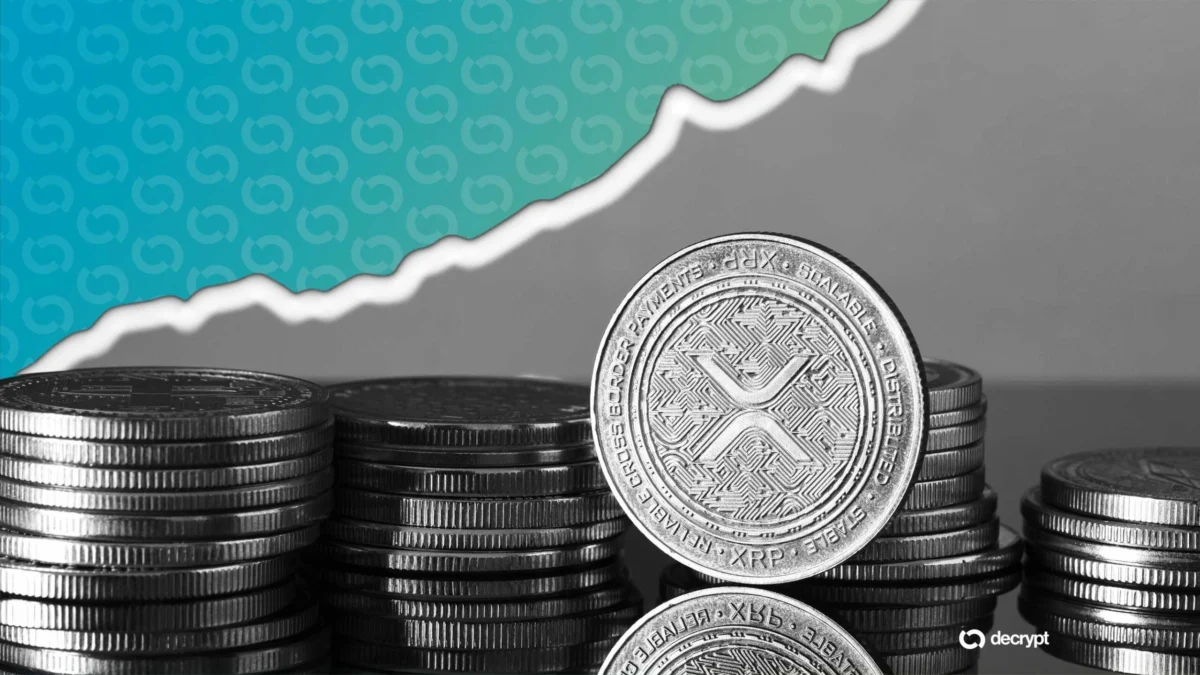
The United States Securities and Exchange Commission (SEC) has officially cleared the way for Evernorth Holdings, a specialized digital asset firm focused on the XRP ecosystem, to pursue a public listing on the Nasdaq Stock Market. In a significant regulatory development for the cryptocurrency sector, the SEC declared the company’s Form S-4 registration statement effective, marking a critical hurdle cleared in the firm’s quest to become the world’s largest publicly traded XRP treasury. This regulatory green light allows Evernorth to move forward with its proposed merger with Armada Acquisition Corp. I, a Nasdaq-listed special purpose acquisition company (SPAC). The finalization of this business combination now rests in the hands of Armada’s shareholders, who are scheduled to cast their votes on the deal during a special meeting set for September 30.
Should the merger receive shareholder approval and satisfy remaining closing conditions, the combined entity is expected to debut on the Nasdaq under the ticker symbol "XRPN." The parties involved have targeted a closing date in late the third quarter or early the fourth quarter of the current year. While the SEC’s declaration of effectiveness is a procedural milestone, the agency has clarified that this does not constitute an endorsement of the merger, Evernorth’s underlying business model, or the investment merits of XRP itself. Rather, it signifies that the registration statement meets the necessary disclosure requirements to allow the shareholder vote and subsequent listing process to proceed.
The Strategic Vision of the Digital Asset Treasury Model
Evernorth Holdings represents a new breed of financial institution known as a Digital Asset Treasury (DAT). Unlike an Exchange-Traded Fund (ETF), which is designed to track the price of an underlying asset with minimal deviation, a DAT operates as an active business entity that holds cryptocurrency on its balance sheet. The model, pioneered by MicroStrategy with its aggressive Bitcoin acquisition strategy, involves using the company’s equity and debt capacity to raise fresh capital for the sole purpose of accumulating more of the target digital asset.
Asheesh Birla, the founder and CEO of Evernorth and a former executive at Ripple, emphasized that the transition to the public markets is a move toward greater transparency and institutional-grade governance. "Today marks an important milestone toward completing our proposed business combination," Birla stated following the SEC announcement. He framed Evernorth as an actively managed treasury that intends to go beyond simple "HODLing." The company’s roadmap includes deploying its XRP stash through decentralized finance (DeFi) yield strategies, operating validator nodes on the XRP Ledger, and making strategic investments within the broader XRP ecosystem to foster utility and growth.
Chronology of the Evernorth-Armada Merger
The path to this Nasdaq listing began in earnest in October of the previous year, when Evernorth first announced its ambitious plans to build a massive XRP reserve. At that time, the company revealed it had secured more than $1 billion in commitments to purchase XRP, signaling strong institutional interest despite the regulatory uncertainty that has historically clouded the token.
In March, the company filed its initial S-4 registration statement, providing a detailed look at its financial structure and goals. The filing disclosed a target of launching the public company with a minimum stash of 473 million XRP tokens. A significant portion of this treasury is slated to come from Ripple, the enterprise blockchain firm whose co-founders created XRP. However, this contribution is contingent upon the successful closing of the merger, serving as a backstop to ensure the firm launches with significant scale.
The timeline leading up to the September 30 vote has been marked by rigorous regulatory review. The SEC’s scrutiny of crypto-related SPAC deals has intensified in recent years, making the effectiveness of the S-4 a notable achievement for the Evernorth and Armada teams. Shareholders now have until September 28 to decide whether to remain invested in the combined entity or exercise their redemption rights—a standard feature of SPACs that allows investors to exit at the initial pro-rata value of the trust account.
Financial Performance and Market Realities
Despite the regulatory progress, Evernorth’s financial journey has faced the headwinds of a volatile cryptocurrency market. According to company disclosures, Evernorth spent approximately $947 million to acquire XRP in late October. By February, the value of that stash had declined significantly, leaving the firm with an unrealized loss of roughly $446 million relative to its purchase price.
The price of XRP has remained under pressure throughout much of the current year. On the day of the SEC announcement, the token was trading near $1.37, reflecting a daily decline of over 5%. This price point remains substantially below the token’s July 2025 all-time high of $3.65. For a company like Evernorth, these fluctuations are more than just paper losses; they impact the "premium" at which the stock trades.

The success of the DAT model relies heavily on the stock trading at a premium to the Net Asset Value (NAV) of the underlying crypto holdings. When a company like "XRPN" trades at a premium, it can issue new shares to raise capital at a cost that is effectively lower than the value of the XRP it buys with that capital. This creates a "flywheel effect" where the company can accretively increase its XRP per share. However, if the underlying token price slumps and the stock moves toward a discount to NAV, this funding loop can stall, making it difficult for the company to expand its treasury without diluting existing shareholders significantly.
Institutional Backing and Ecosystem Support
Evernorth’s entry into the public markets is bolstered by a roster of high-profile backers from both the traditional and crypto-financial sectors. Investors include Ripple, Arrington Capital, SBI Group, Pantera Capital, Kraken, and GSR. The involvement of SBI Group is particularly noteworthy, given the Japanese financial giant’s long-standing partnership with Ripple and its commitment to utilizing XRP for cross-border payments in the Asian markets.
The support from Ripple is foundational. Beyond the promised token contribution upon the merger’s closing, Evernorth’s leadership team possesses deep roots within the Ripple ecosystem. This proximity suggests a strategic alignment where Evernorth acts as a liquidity and utility engine for the XRP Ledger, complementing Ripple’s enterprise software business.
Broader Implications for the Crypto Industry
The potential listing of XRPN on the Nasdaq carries several implications for the broader digital asset industry. First, it provides a regulated vehicle for institutional and retail investors to gain exposure to XRP without the complexities of managing private keys or navigating unregulated exchanges. While several XRP ETPs (Exchange Traded Products) exist in Europe, a Nasdaq-listed treasury company offers a different risk-reward profile, characterized by corporate leverage and active management.
Second, the SEC’s decision to allow the registration to become effective suggests a maturing framework for how crypto-heavy businesses can access public capital markets. While the SEC remains locked in various legal battles with crypto firms—including a long-running suit against Ripple regarding the classification of XRP—the clearance of the XRPN registration indicates that disclosure-based compliance can still provide a pathway to listing, provided the risks are clearly articulated to investors.
Analysis of Risks and Opportunities
Investors eyeing the September 30 vote must weigh the innovative potential of the DAT model against the inherent risks of the XRP market. The opportunity lies in the "active" nature of the treasury. If Evernorth can successfully generate yield through DeFi and validator operations, it could theoretically outperform a simple buy-and-hold strategy. Furthermore, if the XRP ecosystem sees a resurgence in utility—driven by the adoption of the XRP Ledger for tokenization or stablecoin issuance—Evernorth stands to benefit as a primary liquidity provider.
Conversely, the risks are tied to the high concentration of a single, volatile asset. Unlike diversified technology companies, Evernorth’s balance sheet is almost entirely dependent on the market sentiment surrounding XRP. Additionally, the SPAC structure itself has faced criticism in recent years for underperforming relative to traditional IPOs, adding another layer of market skepticism that the management team must overcome.
Conclusion and Next Steps
As the September 30 deadline approaches, the focus shifts to Armada’s shareholder base. The outcome of this vote will determine whether the market is ready for a dedicated XRP treasury of this magnitude. If successful, Evernorth Holdings will not only secure its place on the Nasdaq but will also set a precedent for other digital asset-specific treasuries looking to bridge the gap between blockchain ecosystems and Wall Street.
For now, the effectiveness of the S-4 registration serves as a vital bridge, moving the conversation from regulatory possibility to market reality. With the ticker "XRPN" waiting in the wings, the final quarter of the year could mark a transformative era for XRP’s role in the global financial system.