Nila Kartika Wati
The global cryptocurrency market experienced a dynamic week marked by significant advancements in blockchain security, shifts in tokenomics, and ongoing political scrutiny, all set against a backdrop of renewed optimism for Bitcoin’s price trajectory. Researchers made notable strides in preparing Bitcoin for a potential quantum computing threat, while Solana validators voted to accelerate the network’s disinflation schedule. Concurrently, a new report alleged billions in investor losses from crypto ventures linked to former U.S. President Donald Trump, fueling debates over political figures and digital assets. This blend of technological progress, market-shaping decisions, and regulatory challenges underscored the multifaceted evolution of the digital asset landscape.
Bitcoin Fortifies Defenses Against Emerging Quantum Threat
Despite lingering skepticism within the Bitcoin community regarding the immediate proximity of a quantum computing threat, recent developments highlight a proactive approach toward safeguarding the blockchain’s future. Two distinct initiatives this week underscored the industry’s commitment to upgrading Bitcoin’s cryptographic resilience and protecting transactions from advanced attacks.
StarkWare’s Experimental Quantum-Resistant Transaction:
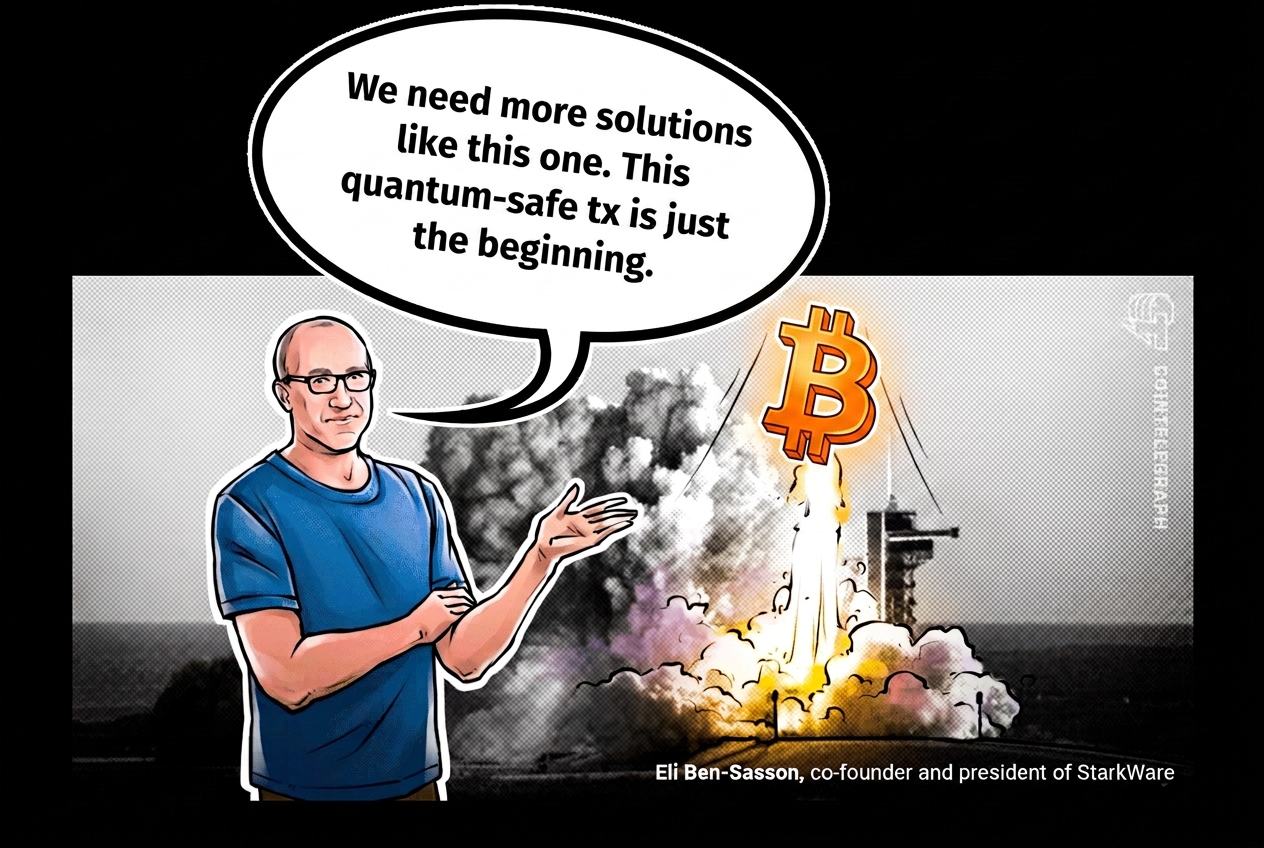
In a significant technical demonstration, StarkWare researcher Avihu Levy successfully executed an experimental quantum-resistant transaction on the Bitcoin mainnet. This pioneering effort aimed to secure transaction outputs during the critical, albeit brief, period when public keys are exposed in the mempool – a window of vulnerability that future quantum algorithms could potentially exploit.
On-chain data confirmed that StarkWare spent a 10,000-satoshi output, approximately equivalent to $7.84 at current Bitcoin prices, protected by Levy’s innovative Quantum Safe Bitcoin (QSB) scheme. The QSB protocol ingeniously combines hash-based one-time signatures with computational searches, creating a robust mechanism that binds an authorization to a specific transaction. While functionally effective, this method is currently envisioned as a last-resort measure rather than a practical, widespread solution. The inherent complexity and computational intensity mean each transaction processed via QSB takes several hours to complete and incurs substantial costs, estimated between $150 to $200. This proof-of-concept, while demonstrating feasibility, underscores the significant challenges in integrating such advanced cryptographic primitives into a highly scalable and cost-effective network like Bitcoin.
Blockstream’s SHRINCS Proposal for Long-Term Security:
Parallel to StarkWare’s experimental work, Blockstream researchers unveiled a more comprehensive, long-term upgrade path for Bitcoin’s quantum security. On August 27, they published a Bitcoin Improvement Proposal (BIP) detailing the SHRINCS (Slim Hash-based Really Interesting New Compact Signatures) signature scheme. This proposal represents a significant leap towards protecting every transaction on the network from quantum-based attacks.

The core challenge in implementing post-quantum cryptography has been the notoriously large size of quantum-resistant signatures, which can bloat transaction data and impact network efficiency. Blockstream’s team achieved an impressive feat by slimming down a previously enormous hash-based post-quantum signature by approximately 13.23 times. Despite this optimization, the SHRINCS signature remains at least nine times larger than Bitcoin’s existing elliptic curve digital signatures (ECDSA). This size difference introduces a suite of trade-offs, including increased transaction fees, higher data storage requirements, and potentially slower network propagation times due to larger block sizes.
Jonas Nick, a prominent Blockstream Research member, characterized SHRINCS as “the first concrete proposal for a post-quantum signature scheme designed specifically for Bitcoin.” While acknowledging that it is “not optimal along every axis,” Nick emphasized its current viability, stating, “I do think it is a very good trade-off among the options we have now.” The publication of this BIP initiates a crucial discussion within the Bitcoin developer community about the implementation timeline, the required consensus mechanisms (soft fork or hard fork), and the optimal balance between security, scalability, and usability. The ongoing efforts underscore a critical inflection point where the long-term integrity of the world’s leading cryptocurrency is being meticulously prepared for future technological paradigms.
Solana Validators Approve Accelerated Disinflation Schedule
In a move aimed at enhancing token scarcity and potentially long-term value, Solana validators overwhelmingly approved a proposal to double the network’s annual disinflation rate. This decision, formalized through the approval of Solana Governance Proposal (SGP-0002), also known as "Double Disinflation," is set to significantly reduce the issuance of new SOL tokens.
The proposal saw robust participation from the validator community, with 60.7% of eligible stake casting votes. A substantial 67% of the participating stake voted in favor of the measure, while 25.16% voted against it, and 7.84% abstained. This clear majority signals a strong consensus among network participants to modify Solana’s tokenomics.
Under the new schedule, Solana’s annual disinflation rate will increase from 15% to 30%. This acceleration is projected to reduce the total issuance of SOL by an estimated 18.9 million tokens over the next six years. Crucially, the network is now expected to reach its terminal inflation rate of 1.5% in approximately 2.8 years, a significant acceleration compared to the previous schedule which projected this milestone in roughly 5.7 years.
This strategic adjustment to Solana’s tokenomics comes at a time of remarkable network growth and activity. On-chain data presented by The Kobeissi Letter highlighted that Solana processed a record 4.2 billion transactions during July, marking a 13.5% increase from the previous month. This surge in activity is part of a broader trend, with transaction counts having risen by approximately 2 billion since December, representing a staggering 91% increase. The confluence of accelerated disinflation and surging network usage suggests a mature and self-sustaining ecosystem. The move could bolster investor confidence by creating a more predictable and scarce supply model, potentially influencing SOL’s market valuation in the long run by making it a more attractive asset for holding and staking.
Public Citizen Report Alleges $4.7 Billion Investor Losses in Trump-Linked Crypto Ventures
A new report from the non-profit consumer advocacy organization Public Citizen has ignited controversy, claiming that digital asset ventures associated with former U.S. President Donald Trump and his family have resulted in an estimated $4.7 billion in losses for investors since 2022. The report, published by the Washington D.C.-based watchdog group, meticulously detailed the financial impact across several Trump-affiliated crypto projects, raising questions about accountability and investor protection in the nascent industry.
According to Public Citizen’s findings, the most significant losses stemmed from the Official Trump (TRUMP) memecoin, which reportedly cost investors $3.2 billion. The World Liberty Financial governance token accounted for at least $1 billion in losses, while Trump Media’s digital asset treasury saw an estimated $450 million in investor capital vanish. Furthermore, the president’s non-fungible token (NFT) trading cards, launched in 2022, were cited for at least $9.3 million in losses. The report, however, noted an exception: holders of the USD1 stablecoin incurred no losses.
The timing and content of this report have significant political implications, particularly for the stalled CLARITY Act. Democrats in Congress have reportedly intensified their push for stronger regulatory protections to prevent elected officials from issuing cryptocurrencies, citing the potential for conflicts of interest and investor exploitation. The Public Citizen report is likely to provide additional ammunition for these legislative efforts, highlighting the perceived risks associated with public figures endorsing or launching digital assets without robust oversight.
Adding to the complexity, the "Real Trump Coins" entity recently issued a public denial regarding the launch of a "Trump Digital GOLD" token, which briefly appeared on its online presence before collapsing. The entity blamed "third-party bad actors" for the promotion, stating it was working with authorities to investigate the matter. This incident, occurring just as the Public Citizen report surfaced, underscores the chaotic and often unregulated nature of the memecoin market, where brand association can be exploited for illicit gains, further fueling calls for greater transparency and consumer safeguards.
Bitcoin Rally Ignites Optimism, Outpacing AI Stocks
Bitcoin experienced a significant resurgence this week, with its price rallying by 23% over the past seven days, a performance that notably outpaced many artificial intelligence (AI)-linked infrastructure stocks. This renewed momentum has fueled predictions of a sustained bull market, with analysts pointing to strong institutional inflows and a positive shift in market sentiment.
The rally saw a corresponding surge in the shares of Bitcoin mining companies. Three prominent, previously beaten-down miners—Canaan, American Bitcoin, and Cango—registered impressive gains of between 41% and 67%. In contrast, key AI infrastructure players like CoreWeave rose approximately 21%, Nebius gained 17%, and IREN advanced 15%, demonstrating Bitcoin’s superior short-term performance in this particular market comparison. This outperformance by mining stocks often signals investor confidence in Bitcoin’s future price trajectory, as these companies’ profitability is directly tied to the value of the cryptocurrency they mine.

Further bolstering the bullish narrative, Bitcoin exchange-traded funds (ETFs) recorded robust inflows, minting over $3.3 billion in August. This marks the strongest monthly performance since October 2025’s all-time high for these investment vehicles. Although outflows on Friday briefly interrupted a nine-day hot streak, the overall trend of institutional capital entering the Bitcoin market remains overwhelmingly positive.
Wall Street analysts from Bernstein have weighed in with an optimistic forecast, predicting that the market is at the inception of a new four-year cycle for Bitcoin. Bernstein’s projections suggest Bitcoin will reclaim the $125,000 mark under both its base case and bullish scenarios. Looking further ahead, the firm predicts a peak of $300,000 in 2029 under its base case, with an even more ambitious bullish scenario topping $500,000 in the same year. These forecasts are typically underpinned by analyses of historical halving cycles, increasing institutional adoption, and the macro-economic environment.
Adding to the wave of positive sentiment, CryptoQuant CEO Ki Young Ju flagged the first positive reading on CryptoQuant’s proprietary Bull/Bear Market Cycle Indicator since early October. “The Bitcoin bear cycle is over,” he declared. This indicator, which measures on-chain profitability metrics against a 365-day moving average—including the market value to realized value (MVRV) ratio, net unrealized profit/loss (NUPL), and the spent output profit ratio (SOPR)—provides crucial insights into market phases. Values above zero for the Bull/Bear indicator typically signal bullish phases as overall profitability improves across the network. The indicator registered a positive reading of 0.042 on August 26, moving out of the "extreme bear" conditions observed on February 5 when BTC/USD fell to $60,000, corresponding to a reading of -1.244. This confluence of technical indicators, institutional investment, and expert predictions paints a compelling picture of a market entering a new phase of growth and investor confidence.
Revolut Launches Euro-Pegged Stablecoin (EURR) in European Markets
Fintech giant Revolut has commenced the phased rollout of its inaugural stablecoin, a euro-pegged token named EURR, to approximately 2 million customers across Denmark, Poland, and Portugal. This strategic launch signifies Revolut’s deepening commitment to integrating digital assets into mainstream financial services and expanding its reach within the European cryptocurrency market.
The initial rollout targets key European Economic Area (EEA) markets, with plans for broader expansion to other EEA countries later this year. This gradual approach allows Revolut to fine-tune its infrastructure and address any market-specific regulatory nuances before a wider deployment.
EURR is issued by Bridge Building S.A., a Luxembourg-based entity under the ownership of Stripe, a prominent payment processing company that has also been making inroads into the crypto space. The association with Stripe’s infrastructure company lends significant credibility and operational robustness to the EURR stablecoin. Revolut has confirmed that EURR will be seamlessly integrated into its widely used retail application, enabling its vast customer base to easily access and utilize the euro-denominated digital asset. Initially, EURR will launch on the Ethereum network, leveraging its established infrastructure and liquidity. Future plans include supporting multiple blockchain networks and facilitating transfers to external wallets, enhancing the stablecoin’s interoperability and utility across the broader decentralized finance (DeFi) ecosystem.

This move by Revolut is poised to increase the accessibility and utility of euro-denominated digital currencies, offering a stable alternative for users engaging in crypto transactions or seeking a digital representation of the euro. It also positions Revolut as a significant player in the burgeoning stablecoin market, potentially fostering competition and innovation among financial institutions offering similar services in Europe, especially under the evolving regulatory framework of MiCA (Markets in Crypto-Assets) which is set to standardize stablecoin regulations across the EU.
Weekly Market Performance: Winners and Losers
As the week concluded, Bitcoin (BTC) demonstrated resilience, trading up 1.1% at $78,420. Ethereum (ETH) also registered a modest gain of 0.6%, reaching $2,469. In contrast, XRP (XRP) experienced a notable downturn, falling 8.7% to $1.38, reflecting specific market pressures or profit-taking. The total cryptocurrency market capitalization stood at $2.64 trillion, according to CoinMarketCap data.
Among the top 100 cryptocurrencies by market capitalization, several altcoins posted significant gains. VeChain (VET) led the winners with an 18.5% increase, followed by SPX6900 (SPX) with a 17.3% gain, and Uniswap (UNI) which advanced by 15.2%.
Conversely, some altcoins faced downward pressure. Aptos (APT) was among the week’s biggest losers, declining by 16.4%. Stable (STABLE) saw a 14.7% drop, and Morpho (MORPHO) rounded out the top three losers with a 13.6% decrease. These movements highlight the diverse performance within the altcoin market, often influenced by project-specific developments, broader market trends, and investor sentiment.
FUD of the Week: Navigating Crypto’s Challenges
Public Skepticism Towards Crypto in Retirement Plans:
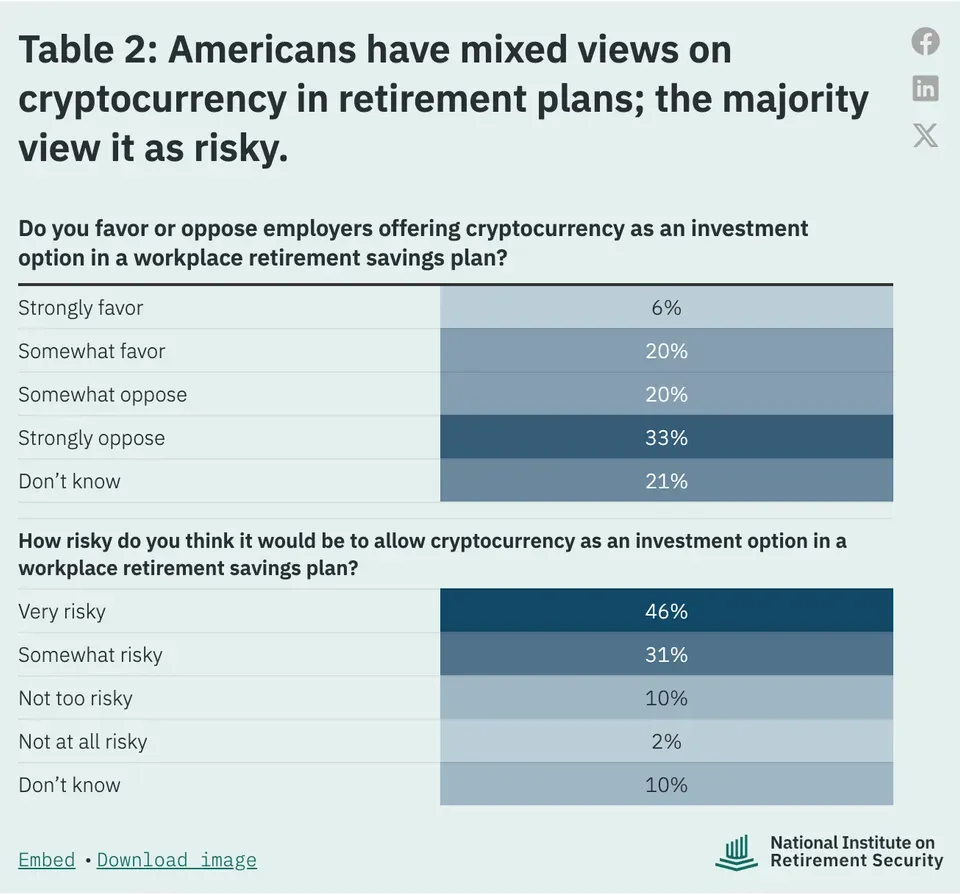
A recent survey from The National Institute on Retirement Security (NIRS) revealed significant public apprehension regarding the inclusion of cryptocurrency in workplace retirement plans. The findings indicated that more than three-quarters (77%) of Americans perceive cryptocurrency in such plans as risky, with a substantial 46% classifying it as "very risky." Furthermore, 53% of respondents expressed opposition to employers offering crypto as an investment option within retirement schemes. Conducted by Greenwald Research between October 24 and November 14, 2025, the survey polled 1,203 Americans aged 25 and older, with results weighted by age, gender, and income to ensure representativeness. This data underscores the ongoing challenge of integrating novel and volatile asset classes like crypto into traditional, long-term investment vehicles, particularly given regulatory bodies like the Department of Labor have expressed caution regarding such offerings. The public’s sentiment reflects a need for greater education, clearer regulatory guidelines, and perhaps more stable investment products within the crypto space before widespread adoption in retirement portfolios can be achieved.
"Real Trump Coins" Denies GOLD Token Launch, Blames "Bad Actors":
In a move that further complicates the narrative around political figures and digital assets, the entity behind "Real Trump Coins" publicly denied launching, promoting, or authorizing the "Trump Digital GOLD" token. This Solana-based token briefly appeared across its online presence before experiencing a swift collapse. The entity attributed the promotion to "third-party bad actors," asserting that it was working with authorities to investigate the matter. The denial followed reports of the "Real Trump Coins X" (formerly Twitter) account promoting the GOLD token on Saturday and directing users to a specific website. These posts were subsequently deleted, and the account now links to a different domain. This incident highlights the prevalent issue of scams and unauthorized promotions within the memecoin ecosystem, particularly when leveraging high-profile names. It also adds another layer of scrutiny to the broader discussion on the transparency and integrity of political-themed digital assets, aligning with the concerns raised by Public Citizen regarding investor losses in Trump-linked ventures.
Polygon Discloses and Fixes Critical Security Flaws:
Polygon, a leading Ethereum scaling solution, responsibly disclosed several previously private security vulnerabilities that, if exploited, could have significantly disrupted its proof-of-stake network. The vulnerabilities, which affected Polygon’s Bor and Heimdall clients, included potential denial-of-service risks, validator resource exhaustion, and critical flaws impacting checkpoint and milestone processing. These types of vulnerabilities could compromise network stability, integrity, and operational efficiency, posing a severe threat to users and applications built on Polygon.
The disclosure, made via a Thursday post from Polygon Labs’ Validators Support Team, confirmed that these critical flaws were addressed and fixed through two recent hard forks: the Austin and Kyoto hard forks. In line with best security practices, these fixes were deployed privately and rigorously tested before being activated on the mainnet and subsequently disclosed to the public. This proactive approach by Polygon Labs demonstrates a mature and responsible handling of security incidents, prioritizing network stability and user safety. It reinforces the importance of continuous security audits, robust development practices, and transparent communication within the blockchain ecosystem, ensuring the long-term resilience and trustworthiness of decentralized networks.