Lina Irawan
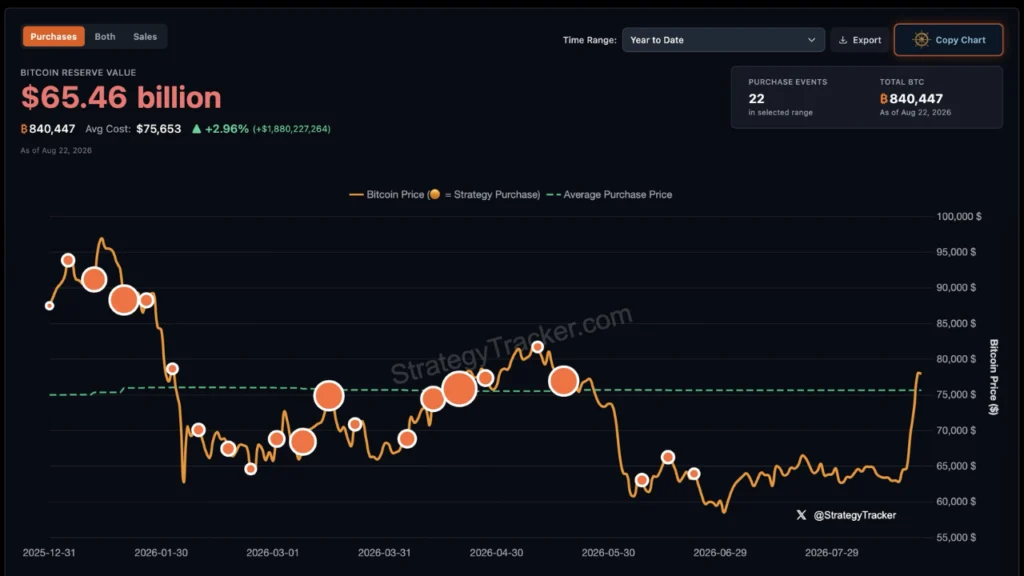
Bitcoin has staged a remarkable recovery, surging towards the $80,000 mark and prompting Standard Chartered to acknowledge that its previously issued $100,000 year-end forecast for the cryptocurrency might now be too conservative. The digital asset experienced a significant uptick, gaining approximately 24% over the preceding week and briefly touching a high of about $79,500 on August 21st before a minor pullback. This robust performance represents a dramatic reversal from the price action observed in June, when Bitcoin dipped to around $58,000 and subsequently languished in a trading range between $60,000 and $65,000 for a considerable portion of the summer.
Geoff Kendrick, Standard Chartered’s global head of digital asset research, has revised his outlook, suggesting that Bitcoin could potentially retest its previous all-time high of approximately $126,000 before the conclusion of 2026, provided the current momentum is sustained. It is crucial to note that the bank has not yet officially revised its $100,000 year-end target to $126,000. Instead, Kendrick framed the prior record high as a potential upside level that could be achieved if the prevailing market sentiment and buying pressure continue. He further articulated that there is now a discernible risk that his initial $100,000 year-end prediction may prove to be an underestimate of Bitcoin’s potential trajectory.
Bitcoin Breaks Free from Summer Consolidation
The recent surge in Bitcoin’s valuation is particularly noteworthy as it signifies a definitive break from the trading range that had constrained its price for much of the summer months. Following a notable sell-off in June, Bitcoin had repeatedly struggled to maintain its position above the $65,000 resistance level. However, the cryptocurrency has since decisively breached this barrier, subsequently advancing past the $70,000 threshold and accelerating its ascent towards the $80,000 level within a compressed timeframe of just a few days.
According to Kendrick’s analysis, Bitcoin has appreciated by over $17,000 from its June low. This significant price movement has effectively shifted market attention away from previous support levels and has begun to foster discussions about the possibility of a broader and more sustained recovery in the cryptocurrency market.
Standard Chartered’s updated perspective carries particular weight given the bank’s more cautious stance earlier in the year. In February, the institution had revised its Bitcoin price target for 2026 downward from $150,000 to $100,000. This downward revision was attributed to several factors, including weaker-than-anticipated inflows into Bitcoin Exchange-Traded Funds (ETFs), a more challenging macroeconomic environment, diminished expectations for Federal Reserve interest rate cuts, and shifts in investor positioning within the market. Despite these headwinds, Bitcoin ultimately navigated these pressures without experiencing the more severe decline that the bank had initially cautioned about, and has since demonstrated a powerful rebound.
Short Liquidations as a Catalyst for the Rally
The rapid pace of Bitcoin’s recent ascent has been significantly amplified by traders who were positioned for further price declines. Kendrick highlighted that short liquidations played a pivotal role in driving Bitcoin’s advance. As the price of Bitcoin began to climb, traders who had bet on lower prices were compelled to close their losing positions. This forced closure necessitated the purchase of Bitcoin, thereby increasing demand and pushing prices even higher, which in turn triggered further liquidations.

Reports indicate that over $4 billion worth of cryptocurrency short positions were liquidated during this recent surge, underscoring the extent to which the market had been anticipating a downturn. This scenario created a classic short squeeze effect, where the forced buying action by short-sellers inexorably drives the price upward. However, it is important to recognize that forced buying alone is typically insufficient to sustain a rally indefinitely. Once these short positions have been unwound, Bitcoin will require fresh and organic demand to maintain its upward trajectory.
The Critical Role of ETF Inflows
This dynamic places U.S. spot Bitcoin ETFs in a crucial position for the next phase of the rally. Kendrick posited that a resurgence in ETF inflows could provide another significant source of demand for Bitcoin. Institutional interest had waned earlier in the year, contributing to the downward pressure on Bitcoin’s price, but these flows have shown signs of improvement in recent times. The distinction between short liquidations and ETF inflows is significant. While short liquidations generate temporary buying pressure, ETF inflows have the potential to provide a more sustained and consistent source of demand.
If institutional investors continue to increase their allocations to Bitcoin even after the short squeeze subsides, it would lend greater credence to the argument that Bitcoin’s breakout reflects a fundamental shift in market sentiment rather than merely a temporary phenomenon driven by forced closures of bearish positions. Furthermore, Kendrick pointed to the relatively low open interest in the broader cryptocurrency market. A lower open interest suggests that there is ample room for investors to rebuild their positions as confidence returns, without immediately creating the kind of concentrated leverage that can render rallies susceptible to sharp and cascading liquidation events.
Prospects of Reaching the $126,000 All-Time High
Bitcoin’s previous all-time high, recorded at approximately $126,000, was achieved in October 2025. Following this peak, the cryptocurrency experienced a substantial decline of 54% from its highest point to its lowest trough, eventually bottoming out around $58,000 in June of the current year. Kendrick’s revised outlook suggests that the ongoing recovery could potentially propel Bitcoin back towards this record valuation, with the possibility of acceleration occurring around October 6th, which marks the anniversary of last year’s peak.
It is important to clarify that this date is not being presented as a definitive catalyst for a price surge. Rather, Kendrick views the period following this anniversary as a potential inflection point where investors may begin to look beyond the previous cycle’s peak and reassess Bitcoin’s longer-term directional trends. From its current trading price of roughly $79,500, Bitcoin would need to appreciate by approximately 58% to reach the $126,000 mark. This represents a significant gain, especially following a weekly increase that already exceeded 20%.
The Immediate Challenge: Sustaining the Breakout
For the immediate future, Bitcoin’s primary challenge lies in demonstrating its ability to sustain its recent gains. A sustained move above the $70,000 level would significantly strengthen the argument that this former resistance point has successfully transitioned into a support level. A subsequent break and hold above the $80,000 mark could then firmly reintroduce the $100,000 target into mainstream market focus.

However, the inherent risks within the cryptocurrency market persist. Bitcoin remains sensitive to a multitude of factors, including fluctuations in ETF flows, prevailing interest rate environments, overall market liquidity, and broader risk appetite among investors. A reversal in institutional demand or a deterioration of global financial conditions could rapidly reintroduce downward pressure on prices.
For Standard Chartered, however, the outlook has demonstrably improved. While the bank’s official year-end forecast remains at $100,000, Kendrick’s latest assessment strongly suggests that this target may no longer fully encompass Bitcoin’s potential upside. Should ETF demand continue its recovery, leverage within the market remain manageable, and Bitcoin successfully hold its newly reclaimed price levels, the prospect of retesting the $126,000 all-time high could become increasingly realistic. After a protracted period of trading below the $70,000 threshold, Bitcoin is once again approaching its previous zenith, leading the market to seriously contemplate the possibility of a new record high before the year concludes.
Broader Market Implications and Investor Sentiment
The recent price action in Bitcoin has significant implications for the broader cryptocurrency market and investor sentiment. The dramatic short squeeze highlights the speculative nature of some market participants and the potential for rapid price swings when these positions are unwound. The reliance on ETF inflows for sustained growth underscores the increasing institutionalization of the crypto market and the impact of regulated financial products on price discovery.
The shift in sentiment, if sustained, could encourage a broader return of retail and institutional investors who may have been sidelined due to the prolonged period of consolidation. This renewed interest could lead to increased trading volumes and a more robust ecosystem for decentralized finance (DeFi) and non-fungible tokens (NFTs), which often correlate with Bitcoin’s market performance.
Furthermore, the narrative surrounding Bitcoin’s resilience in the face of macroeconomic challenges and previous regulatory uncertainties is being reinforced. The ability of Bitcoin to recover from significant drawdowns and break through established resistance levels bolsters confidence in its long-term viability as a store of value and a potential hedge against inflation, a narrative that has been a cornerstone of its appeal to many investors. The evolving dynamics of institutional adoption, regulatory clarity, and technological advancements within the blockchain space will continue to shape Bitcoin’s trajectory in the coming months and years. The current rally, while driven by a confluence of factors, sets the stage for a critical period of observation, where the market will assess the sustainability of these gains and the potential for Bitcoin to forge new all-time highs.