James Watt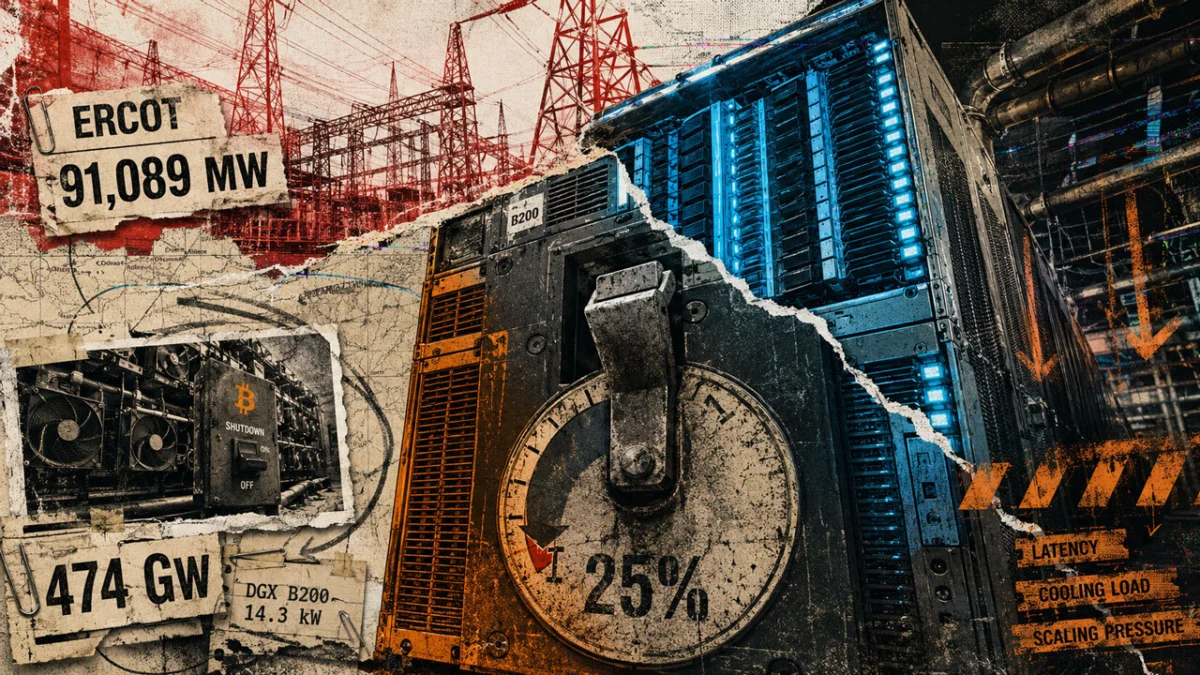
The rapid proliferation of artificial intelligence is transforming the digital landscape, but its most profound impact is increasingly being felt in the physical world of power plants, high-voltage transmission lines, and electrical grids. While the interface of a chatbot appears seamless and weightless to the end-user, every generated response is the result of an energy-intensive process occurring in massive, climate-controlled data centers. These facilities, packed with sophisticated semiconductors, draw immense amounts of electricity, move vast quantities of data, and generate significant thermal output that requires heavy-duty cooling infrastructure. As millions of prompts and complex business tasks are processed simultaneously, the aggregate demand is placing an unprecedented strain on global utility providers.
The challenge facing the energy sector is one of scale and speed. Large-scale data center campuses now consume as much electricity as small- to medium-sized cities. However, the timeline for constructing these digital hubs is significantly shorter than the time required for utilities to upgrade the grid or build new generation capacity. This temporal mismatch has created a bottleneck where data centers require power far sooner than traditional infrastructure can provide. While the construction of new power plants remains a multibillion-dollar, multi-year endeavor, a new frontier of "flexible compute" is emerging as a potential solution. Recent experiments suggest that by treating AI workloads as adjustable rather than fixed, the industry may be able to harmonize the digital revolution with the physical limitations of the power grid.
The Luxor-Bentaus Experiment: A Proof of Concept in Texas
A significant milestone in this effort was recently achieved through a collaborative experiment in Texas, involving Luxor Energy and Bentaus. Luxor Energy, a firm with extensive experience in the Bitcoin mining sector—a field known for its high energy sensitivity—partnered with Bentaus, a developer of specialized software designed to modulate the power consumption of computer chips. The test focused on a single Nvidia B200 GPU, one of the most advanced and power-hungry chips currently utilized for AI workloads.
During the demonstration, the chip was engaged in "inference," the process where a pre-trained AI model generates a specific output in response to a query. Using their proprietary software, the companies issued a command to the chip to reduce its electricity draw. The results were immediate: within half a second, the B200’s power consumption dropped to approximately 25% of its normal operating level. While the chip processed fewer requests during this period, it did not fail. Ethan Vera, Chief Operating Officer of Luxor, confirmed that no active jobs were lost and no data corruption occurred. Once the restriction was lifted, the chip returned to full operational speed.
This experiment, while small in scope, addresses a critical question in the AI industry: can high-performance computing behave like a "demand-response" asset? In the context of the energy market, demand response refers to the ability of large consumers to reduce their usage during periods of peak demand or grid stress. Historically, data centers have been viewed as "firm loads," meaning their power requirements are non-negotiable and must be met 24/7. The Luxor-Bentaus test suggests that AI inference workloads may possess the inherent flexibility to yield to the grid when necessary.
The Texas Power Crisis: A Microcosm of Global Demand
The urgency of this research is most apparent in Texas, where the Electric Reliability Council of Texas (ERCOT) manages a grid that has become the epicenter of the data center boom. On July 22, 2024, ERCOT recorded a preliminary all-time peak demand of 91,089 megawatts. To put this in perspective, one megawatt can power approximately 250 residential homes during peak hours; the record-breaking demand was equivalent to the needs of 22 million households.
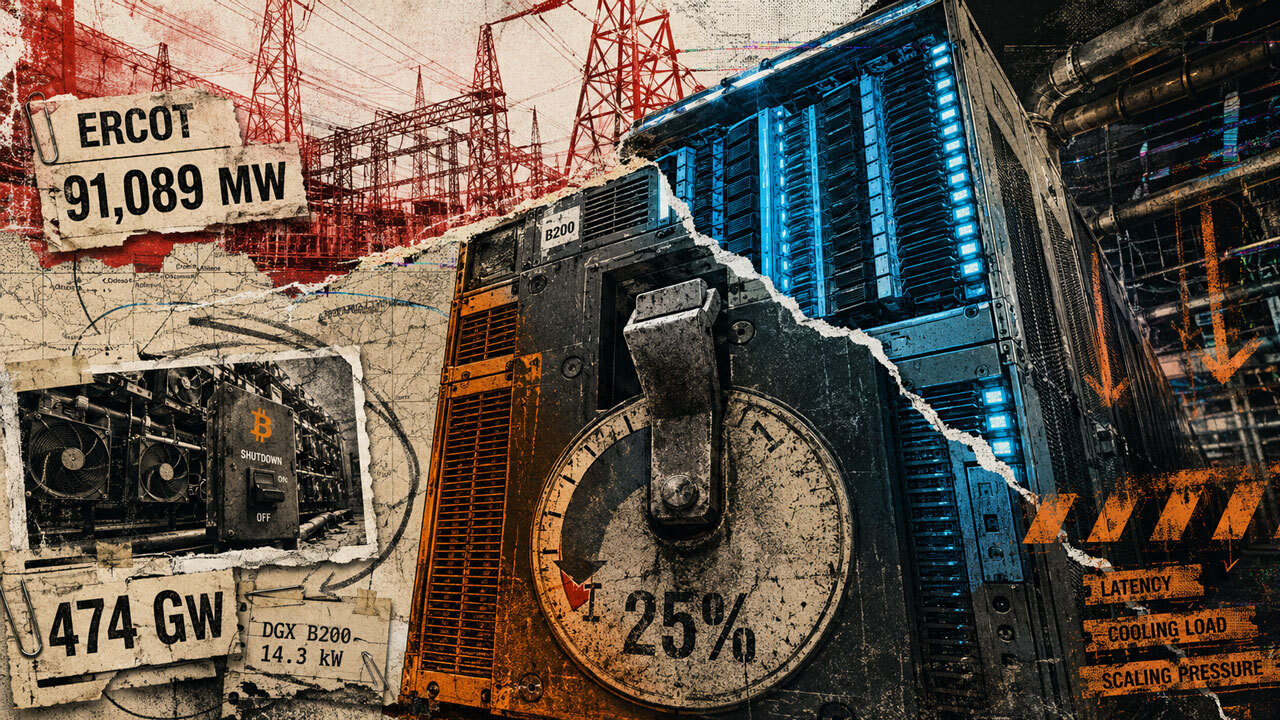
The future outlook is even more daunting. In August 2024, Governor Greg Abbott revealed that ERCOT is currently reviewing requests to connect more than 474 gigawatts of new electricity demand to the grid. Notably, roughly 90% of these requests originate from data center developers. This figure is more than five times the current record for peak demand in the state. While many of these proposals may never reach completion due to financing or logistical hurdles, the sheer volume of the queue has forced state regulators to implement a comprehensive audit of all pending projects.
The disconnect between digital demand and physical infrastructure is further complicated by the lead times for transmission equipment. According to the International Energy Agency (IEA), the wait times for critical components like high-voltage transformers and specialized cabling have doubled over the last three years. In advanced economies, new transmission lines can take between four and eight years to complete. As a result, the "flexible load" model demonstrated by Luxor and Bentaus is not merely a technical curiosity but a potential economic necessity for the continued growth of the AI sector.
From Bitcoin Mining to AI: The Evolution of Grid Participation
The conceptual framework for flexible AI compute is largely inherited from the Bitcoin mining industry. In Texas, Bitcoin miners have long served as a vital "emergency brake" for the grid. Because Bitcoin mining involves repetitive calculations that can be paused and resumed almost instantaneously without affecting a third-party customer, miners are ideally suited for demand-response programs. When electricity prices spike or the grid nears capacity, miners shut down their machines, often receiving financial incentives for doing so.
However, the transition from Bitcoin mining to AI data centers introduces significant complexity. Unlike a Bitcoin miner, an AI data center often serves external clients who expect low latency and high availability. If a GPU slows down, a user might experience a delay in receiving a translation, a generated image, or a search result. Furthermore, large-scale AI training runs involve thousands of GPUs working in tight synchronization. If one group of chips is throttled, it can create a "ripple effect" that delays the entire project.
To address this, researchers and operators are focusing on the distinction between "inference" and "training." Training is a months-long process of teaching a model using massive datasets, while inference is the real-time application of that model. While training runs are difficult to interrupt, inference requests can be queued or routed. Google, a pioneer in this space, reported in 2023 that it had successfully implemented a system to delay non-urgent tasks—such as YouTube video processing—during periods of grid strain while maintaining the performance of critical services like Search and Maps. By March 2026, Google aims to have one gigawatt of data center demand-response capacity under contract.
The Economics of the "Four Coincident Peaks"
The financial motivation for achieving sub-second power control is rooted in the unique structure of the Texas electricity market. Large industrial consumers in Texas are subject to "Four Coincident Peak" (4CP) charges. These charges are based on a customer’s electricity usage during the four 15-minute windows of highest system-wide demand during the months of June, July, August, and September.
Because these 4CP windows determine a significant portion of a facility’s transmission costs for the entire following year, the incentive to reduce power during these moments is immense. Current estimates suggest that 4CP charges can amount to approximately $74.89 per kilowatt per year. For a 100-megawatt data center, failing to curtail power during a single 15-minute peak could result in an additional $7.49 million in annual costs.

This economic reality has turned grid-watching into a high-stakes game. Companies now utilize sophisticated forecasting software to predict when a 4CP event might occur. The Luxor experiment was specifically designed to respond to these private market signals rather than an official directive from ERCOT. By throttling a GPU in response to a predicted peak, data center operators can significantly improve their bottom line while simultaneously relieving pressure on the grid.
Regulatory Responses and Future Implications
Recognizing both the risks and opportunities presented by data centers, Texas legislators have begun codifying requirements for grid participation. Senate Bill 6, passed in 2025, mandates that certain large power users connecting to the grid after 2026 must demonstrate the ability to curtail consumption during severe emergencies. The bill also establishes a framework for paying facilities that use more than 75 megawatts to remain on standby for demand-reduction requests.
Simultaneously, researchers are quantifying the potential impact of widespread flexible compute. A working paper from the University of Chicago, which analyzed nearly 50 million real-world inference requests, estimated that an inference-focused facility could reliably commit to cutting 40% of its demand during peak hours without violating customer Service Level Agreements (SLAs). Another study from the University of Alberta modeled a scenario where AI flexibility could reduce the total amount of new power-plant capacity needed by a regional grid by more than 21%.
The success of the "flexible AI" model will ultimately depend on the sophistication of "schedulers"—the software layers that determine which jobs run on which chips and at what speed. Companies like Emerald AI, which recently secured $150 million in Series A funding, are already commercializing these schedulers. Their software allows data centers to protect "priority" jobs while absorbing power cuts through "forgiving" workloads, such as internal data indexing or non-time-sensitive batch processing.
As the AI industry matures, the metric of success is shifting from pure computational power to "energy-aware" computation. The Luxor and Bentaus demonstration proves that even the most advanced hardware can be made to yield. While scaling this from a single GPU to a facility housing 100,000 chips remains a formidable engineering challenge, it offers a viable path forward. If data centers can transform from "firm loads" into "dynamic assets," the next phase of the AI buildout may be defined not by how much power the industry consumes, but by how intelligently it manages that consumption in harmony with the world’s aging electrical grids.