Lina Irawan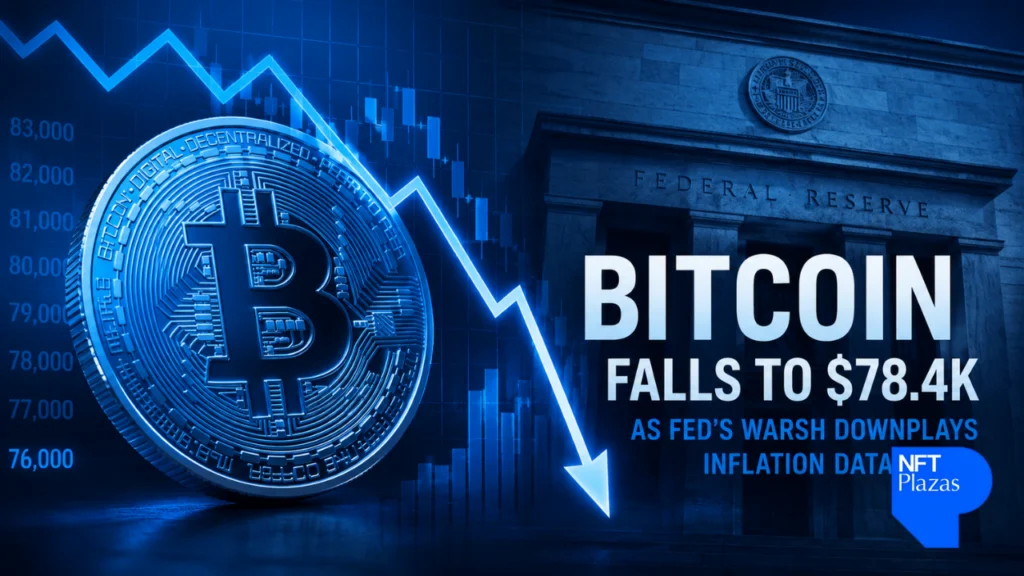
Bitcoin experienced a significant downturn, dipping to approximately $78,400, following remarks by Federal Reserve Chair Kevin Warsh at the highly anticipated Jackson Hole economic symposium. Warsh’s cautionary tone regarding recent, seemingly softer inflation data has prompted investors to recalibrate their expectations for U.S. monetary policy, injecting renewed uncertainty into the cryptocurrency market. The digital asset was trading around $77,765 on August 31st, marking a roughly 0.6% decline over the preceding week. This retreat follows a recent peak of $81,455, underscoring the immediate impact of the Federal Reserve’s perceived hawkish posture on investor sentiment.
Warsh’s address at Jackson Hole, a forum typically setting the stage for global economic discourse, placed a spotlight back on the persistent nature of inflation and the potential for a more restrictive monetary policy from the Federal Reserve. He emphatically reaffirmed the central bank’s unwavering commitment to its 2% inflation target, asserting that recent decelerations in the Consumer Price Index (CPI) and Personal Consumption Expenditures (PCE) inflation gauges do not yet signal a meaningful abatement of underlying price pressures. Official Federal Reserve data corroborated this concern, indicating that annual PCE inflation stood at 3.7%, while the six-month annualized rate registered at 4.1%. Both figures remain substantially above the Federal Reserve’s stated objective, suggesting that the inflationary battle is far from over. This message was sufficient to jolt markets that had begun to anticipate a more dovish stance from the Fed, predicated on the assumption that cooling inflation would grant policymakers greater latitude to ease monetary conditions.
Rate Hike Projections Surge Amidst Fed Uncertainty
The immediate market reaction to Warsh’s pronouncements was a palpable increase in expectations for an interest rate hike at the Federal Reserve’s upcoming September meeting. Data from CME’s FedWatch tool illustrated this shift dramatically, with the probability of a rate increase in September climbing from 35.4% to a commanding 57% in the wake of Warsh’s speech. The Federal Open Market Committee (FOMC) is scheduled to convene for its next policy meeting on September 15th and 16th.
Notably, Warsh did not issue explicit guidance on the Federal Reserve’s likely course of action at the September meeting. Instead, he subtly questioned the efficacy of regular forward guidance, suggesting that excessive signaling from the central bank could foster an undesirable feedback loop between policymakers and financial markets. This approach implies that investors may need to place greater reliance on incoming economic data to decipher the Fed’s future moves. Consequently, inflation reports, employment figures, and individual statements from Federal Reserve officials are poised to carry amplified weight as market participants endeavor to predict the next policy decision.

For Bitcoin and the broader cryptocurrency market, this creates a more challenging macroeconomic environment. Higher interest rates generally enhance the attractiveness of yield-generating assets, such as government bonds, in comparison to Bitcoin, which does not produce regular cash flows. Elevated Treasury yields can also dampen investor appetite for riskier assets, while a strengthening U.S. dollar typically exerts downward pressure on dollar-denominated cryptocurrencies.
The recent market decline also precipitated significant liquidations within the cryptocurrency derivatives market. Over the preceding 24 hours, more than $384 million in crypto positions were liquidated, with approximately $310 million of that total representing long positions, indicating a substantial shift in market sentiment towards bearishness. Ethereum, the second-largest cryptocurrency by market capitalization, saw a decline of around 2.1%, trading at $2,400, with several other major digital assets also experiencing downward price movements.
Institutional Demand for Bitcoin ETFs Remains Robust
Despite the short-term price correction, evidence of sustained institutional demand for Bitcoin remains robust. U.S. spot Bitcoin Exchange-Traded Funds (ETFs) collectively attracted approximately $2.8 billion across eight consecutive trading sessions leading up to August 26th, according to available figures. BlackRock’s iShares Bitcoin Trust (IBIT) emerged as a dominant force, accounting for roughly $2.02 billion of this substantial inflow. These inflows are particularly noteworthy as they suggest that long-term investor conviction in Bitcoin remains intact, even as short-term traders react to shifts in monetary policy expectations.
Bitcoin had experienced a significant rally throughout August, climbing from approximately $62,000 to around $80,000. This upward momentum was fueled not only by ETF demand but also by a more favorable backdrop in the U.S. Treasury markets. In a separate development that could indirectly influence market liquidity and asset prices, the U.S. Treasury announced plans to at least double the maximum size of certain long-term Treasury buybacks. Effective from September 9th, the maximum size of an individual operation involving securities maturing between 10 and 30 years will be increased from $2 billion to at least $4 billion. The Treasury department stated that this measure is intended to bolster liquidity within the long-term government debt market. Falling Treasury yields and a weaker dollar that followed this announcement had previously provided support for risk assets, including Bitcoin. However, Warsh’s comments have now redirected market attention squarely back towards the persistent inflation concerns.
Deepening Interplay Between Digital Assets and Traditional Finance
The Jackson Hole symposium also served to highlight the increasingly intertwined relationship between the digital asset ecosystem and the broader traditional financial system. Discussions among central bankers, International Monetary Fund (IMF) officials, the Bank for International Settlements (BIS), and financial researchers touched upon topics such as stablecoins and tokenized assets. Dollar-backed stablecoins, in particular, are being viewed with growing interest as a potential avenue to expand global access to dollar-denominated assets, which could, in turn, contribute to demand for U.S. Treasury securities.

However, this burgeoning growth also presents new financial risks. The BIS has issued warnings that stablecoins could potentially siphon deposits away from traditional banking institutions, thereby increasing banks’ funding costs. Furthermore, large-scale redemption events from stablecoins could compel issuers to divest Treasury securities or withdraw bank deposits, potentially transmitting stress throughout wider financial markets. Blockchain technology itself is also garnering increased attention for its applications in tokenized securities, settlement processes, collateral management, and cross-border payments. Nevertheless, the wider adoption of blockchain infrastructure does not automatically portend a dominance of public cryptocurrencies in these specific applications.
For Bitcoin investors, the immediate challenge remains navigating the Federal Reserve’s policy trajectory. The cryptocurrency is now positioned between the continued influx of institutional capital and a potentially less supportive macroeconomic landscape. Strong ETF inflows may serve as a price floor, but a sustained rise in Treasury yields or a strengthening dollar could impede further upward price momentum.
Key Economic Data on the Horizon
The next critical determinant for the cryptocurrency market will be the release of upcoming U.S. economic data and any further pronouncements from Federal Reserve officials leading up to the September FOMC meeting. Should inflation data continue to demonstrate a convincing cooling trend, markets may once again pivot towards anticipating a more accommodative monetary policy, which could provide a tailwind for Bitcoin. Conversely, if price pressures remain elevated, expectations for higher interest rates are likely to persist, exerting continued downward pressure on the cryptocurrency.
Bitcoin’s recent dip towards the $78,000 mark, therefore, signifies more than just a technical correction. It reflects a broader market reassessment of the pace at which the Federal Reserve might transition away from its current restrictive monetary policy. Following a strong performance in August, Bitcoin now faces a crucial test: can sustained institutional demand overcome renewed headwinds from rising interest rates, Treasury yields, and a strengthening dollar? The $78,000 level will be closely monitored as investors gauge whether this latest decline represents a temporary pause or the onset of a more significant adjustment within the cryptocurrency market. The interplay between institutional adoption, driven by products like ETFs, and the broader macroeconomic environment, dictated by central bank policy, will be paramount in shaping Bitcoin’s trajectory in the coming weeks and months. The evolution of stablecoins and tokenized assets, as discussed at forums like Jackson Hole, also signifies a growing integration of digital finance into the global economic architecture, presenting both opportunities and systemic risks that will require careful management by regulators and market participants alike.