admin
admin
Ondo Finance, a leading player in the tokenized real-world asset (RWA) sector, has formally petitioned United States regulators to permit the onshoring of perpetual futures tied to individual stocks. In a series of three comprehensive comment letters dated August 24, the company argued that these innovative financial products can be integrated into the domestic market under the existing "security futures" framework without the necessity for sweeping new legislative or regulatory overhauls. The letters, addressed to both the Securities and Exchange Commission (SEC) and the Commodity Futures Trading Commission (CFTC), suggest that the current legal architecture is already equipped to handle the nuances of on-chain perpetual contracts, provided that modern margining practices and real-time blockchain data are properly utilized.
The core of Ondo’s argument rests on the premise that the traditional definition of a security futures product (SFP) is broad enough to encompass perpetual contracts. Unlike traditional futures, which have a fixed expiration date, perpetual futures—or "perps"—continue indefinitely. Ondo contends that the funding rate mechanism, a standard feature in crypto-native perpetuals that aligns the contract price with the spot price of the underlying asset through periodic payments, serves a functional equivalent to the expiration and settlement process in traditional futures markets. By demonstrating that its Panama-based affiliate has already seen significant success with these products, Ondo is positioning itself as a bridge between the decentralized finance (DeFi) ecosystem and the regulated US capital markets.
The Push for Regulatory Integration and Onshoring
Ondo Finance’s proposal comes at a time when the digital asset industry is increasingly seeking ways to bring offshore activity back into the United States. The company revealed that its offshore affiliate, which offers stablecoin-settled perpetual futures on US-listed stocks to non-US persons, recorded approximately $8 billion in cumulative trading volume as of August 14. This milestone was achieved within a remarkably short window of roughly six weeks following the platform’s launch. This high volume serves as a data point for Ondo’s argument that there is substantial global demand for synthetic exposure to US equities, and that this activity should ideally take place within the US regulatory perimeter.
In its product-classification letter, Ondo emphasized that the statutory definition of a security futures product does not explicitly mandate a fixed expiration date. "Nothing in the statutory definition of a security futures product requires a fixed expiration date," the company stated, challenging the long-held assumption that futures must eventually settle and close. By removing the hurdle of expiration, perpetual futures offer traders a more seamless way to maintain long-term positions without the "rolling" costs and administrative burdens associated with traditional monthly or quarterly contracts.
Ondo also highlighted a significant irony in the current market structure: many of the stocks underlying these offshore perpetual contracts are primarily traded on American exchanges like the NYSE and Nasdaq. The company argued that allowing these derivatives to be traded onshore would enhance market transparency, provide better protection for investors through US oversight, and prevent the "capital flight" of liquidity to jurisdictions with less stringent supervision. "Bringing that activity back to the U.S. should not be an open question; it’s something both agencies should actively pursue," the firm noted in its correspondence.
Understanding the Security Futures Framework
The "security futures" framework that Ondo references was largely established by the Commodity Futures Modernization Act of 2000 (CFMA). This legislation created a shared jurisdiction between the SEC and the CFTC for products that are both securities and futures. Historically, this has been a complex regulatory area, as it requires "joint" oversight. Security futures products include futures on individual stocks and narrow-based security indices.
Ondo’s legal strategy involves convincing regulators that the technological shift to blockchain-based execution does not change the fundamental nature of the derivative. In the proposed model, on-chain market data would provide a transparent record of all transactions, while modern margining practices—potentially automated via smart contracts—could offer more robust risk management than the legacy systems used in traditional finance. By utilizing stablecoins for settlement, the system could operate 24/7, matching the "always-on" nature of global digital asset markets while still tracking the price of US-listed equities.

The company’s proposal suggests that the funding payment system is the key to regulatory compliance. In a perpetual contract, if the contract price is higher than the spot price, "long" position holders pay "short" position holders. If the contract price is lower, the reverse occurs. Ondo argues this mechanism ensures the contract never deviates too far from the underlying asset’s value, fulfilling the same economic purpose as the convergence of futures and spot prices at the time of expiration in a standard contract.
Ondo Finance and the RWA Landscape
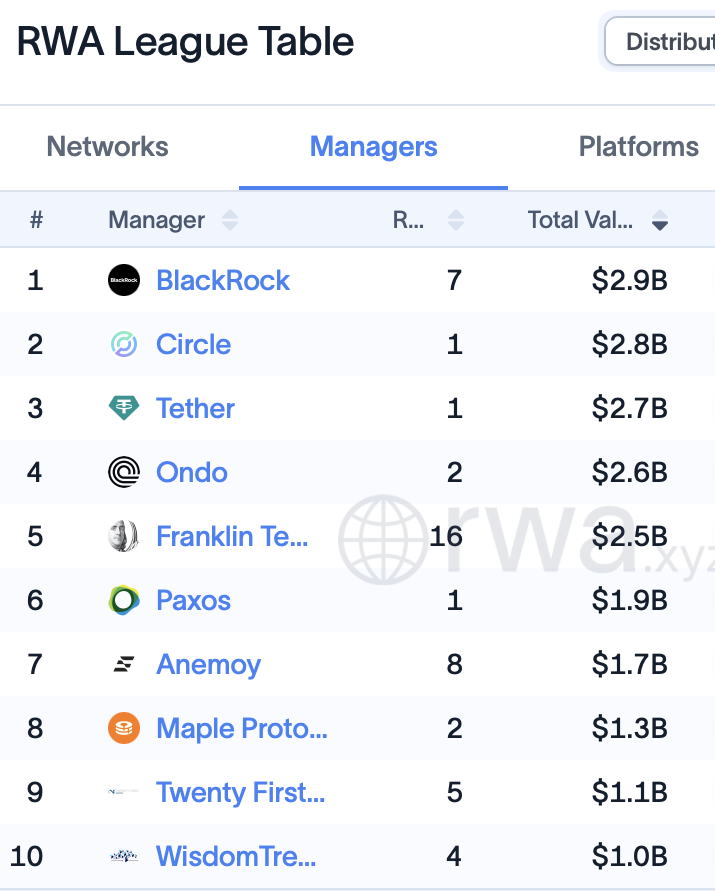
Ondo Finance has rapidly ascended the ranks of the RWA sector, currently sitting as the fourth-largest manager of tokenized real-world assets. According to data from RWA.xyz, the firm manages approximately $2.6 billion in distributed value. This portfolio primarily consists of tokenized versions of US Treasuries and other highly liquid, low-risk instruments. The move toward perpetual stock futures represents a significant expansion of Ondo’s product suite, moving from basic yield-bearing tokens to more complex derivative instruments.
The broader RWA market has seen an explosion of interest in 2024, with institutional giants like BlackRock and Franklin Templeton launching their own tokenized funds. These products aim to bring the efficiency of blockchain technology to traditional financial assets, offering benefits such as T+0 settlement, reduced intermediary costs, and increased accessibility. Ondo’s attempt to onshore perpetual futures is a natural progression of this trend, seeking to apply the "tokenization" ethos to the massive global derivatives market.
The success of Ondo’s offshore platform suggests that institutional and professional traders are comfortable with the "perp" format for traditional equities. However, bringing this to the US market requires navigating the SEC’s historically cautious approach to crypto-adjacent products. The SEC has frequently expressed concerns regarding market manipulation, custody, and investor protection in the digital asset space. Ondo’s letters attempt to preempt these concerns by emphasizing that the underlying assets—US stocks—are already traded in highly regulated environments.
Political and Regulatory Shifts in the United States
The timing of Ondo’s proposal is notable, coinciding with a broader shift in the political and regulatory climate surrounding digital assets in the US. In August, former President Donald Trump made headlines by suggesting that the US should become a global leader in the crypto space. Specifically, Trump mentioned that CFTC Chair Michael Selig was exploring ways to bring Hyperliquid, a prominent decentralized exchange known for its on-chain perpetual futures, into the US in a "fully compliant and legal fashion."
While the details of how a platform like Hyperliquid would operate under US law remain undisclosed, the mention of such a project at the highest levels of political discourse has buoyed the industry. Following these comments, Hyperliquid’s native token, HYPE, saw a significant price surge, gaining nearly 49% over a 30-day period. This market reaction underscores the high stakes involved in the "onshoring" of perpetual futures; investors clearly view US regulatory approval as a major catalyst for liquidity and adoption.
Simultaneously, the SEC and CFTC have been working to improve their cooperative efforts. In March 2024, the two agencies signed a memorandum of understanding (MoU) aimed at harmonizing oversight in areas where their jurisdictions overlap. This move was seen as a historic step toward ending the "turf wars" that have occasionally characterized US financial regulation. For Ondo Finance, this increased coordination could be beneficial, as any approval for security futures would require a unified front from both agencies.
Modernizing Market Infrastructure: The Transfer Agent Overhaul
Further evidence of a shifting regulatory mindset appeared recently when the SEC proposed a significant overhaul of its decades-old transfer agent framework. Transfer agents are the entities responsible for maintaining records of stock ownership. The SEC’s proposal explicitly cited the growing demand for blockchain-native recordkeeping and tokenized securities as a primary driver for the update.
The agency acknowledged that rules built for an era of paper certificates and centralized databases are no longer sufficient for an environment where securities move on-chain. By re-examining these foundational rules, the SEC is signaling a willingness to accommodate modern market infrastructure. Ondo Finance’s proposal for perpetual futures fits neatly into this broader narrative of modernization. If the SEC is willing to update how ownership is recorded, it may eventually be willing to update how derivatives are structured and settled.
Implications for the US Financial Market
The potential onshoring of tokenized perpetual stock futures could have far-reaching implications for the US financial system. First, it would provide a regulated alternative to the massive offshore "shadow" markets for synthetic equities. Currently, billions of dollars in volume occur on platforms that are out of reach for US regulators and do not provide the same level of transparency or legal recourse for participants.
Second, it would likely increase the utility of stablecoins within the US. Ondo’s offshore product is settled in stablecoins, and an onshore version would likely follow suit. This would integrate digital dollars more deeply into the core of the financial system, potentially speeding up settlement times and reducing the reliance on legacy banking rails.
Third, the success of such a proposal would validate the "regulation by adaptation" model. Rather than waiting for Congress to pass new, comprehensive crypto legislation—which has proven to be a slow and contentious process—firms like Ondo are showing that existing laws can be interpreted to cover new technologies. This approach, if successful, could provide a roadmap for other sectors of the digital asset industry, from decentralized lending to on-chain insurance.
However, challenges remain. Regulators will likely scrutinize the "funding rate" mechanism to ensure it cannot be easily manipulated. They will also need to be convinced that on-chain margining is as reliable as traditional collateral management, especially during periods of extreme market volatility. The SEC, in particular, will likely demand rigorous disclosures and strict adherence to anti-money laundering (AML) and know-your-customer (KYC) protocols, which may conflict with the permissionless nature of some blockchain protocols.
Chronology of Key Events
The push for on-chain perpetuals in the US has been a multi-step process involving several key dates:
- March 2024: The SEC and CFTC sign a memorandum of understanding to enhance coordination on oversight, particularly regarding products with overlapping jurisdictions.
- July 2024: Ondo Finance launches its offshore perpetual futures platform via a Panama-based affiliate, targeting non-US investors with synthetic exposure to US stocks.
- August 14, 2024: Ondo’s offshore platform reaches a milestone of $8 billion in cumulative trading volume, demonstrating high demand for the product.
- August 24, 2024: Ondo Finance submits three formal comment letters to the SEC and CFTC, arguing for the onshoring of perpetual stock futures under the existing security futures framework.
- August 2024: Donald Trump makes public statements regarding the potential for bringing on-chain perpetual markets like Hyperliquid into the US in a compliant manner.
- September 2024: The SEC proposes an overhaul of the transfer agent framework to accommodate blockchain-native securities and recordkeeping.
Conclusion and Market Outlook
Ondo Finance’s proactive stance represents a pivotal moment for the RWA and DeFi sectors. By framing perpetual stock futures as an evolution of existing security futures rather than an entirely new asset class, the company is attempting to lower the barrier for regulatory entry. The argument that the US should "actively pursue" the return of this offshore activity appeals to the national interest of maintaining financial dominance and oversight.
As the SEC and CFTC review Ondo’s proposals, the industry will be watching closely. The outcome could determine whether the United States becomes a hub for the next generation of derivative products or if it continues to see innovation—and the associated capital—flee to offshore jurisdictions. With institutional interest in tokenization at an all-time high and a shifting political landscape, the window for regulatory modernization appears more open than it has been in years. For now, Ondo Finance remains at the forefront of this transition, leveraging its position as a top RWA manager to push the boundaries of what is possible within the US regulatory framework.