
 admin
admin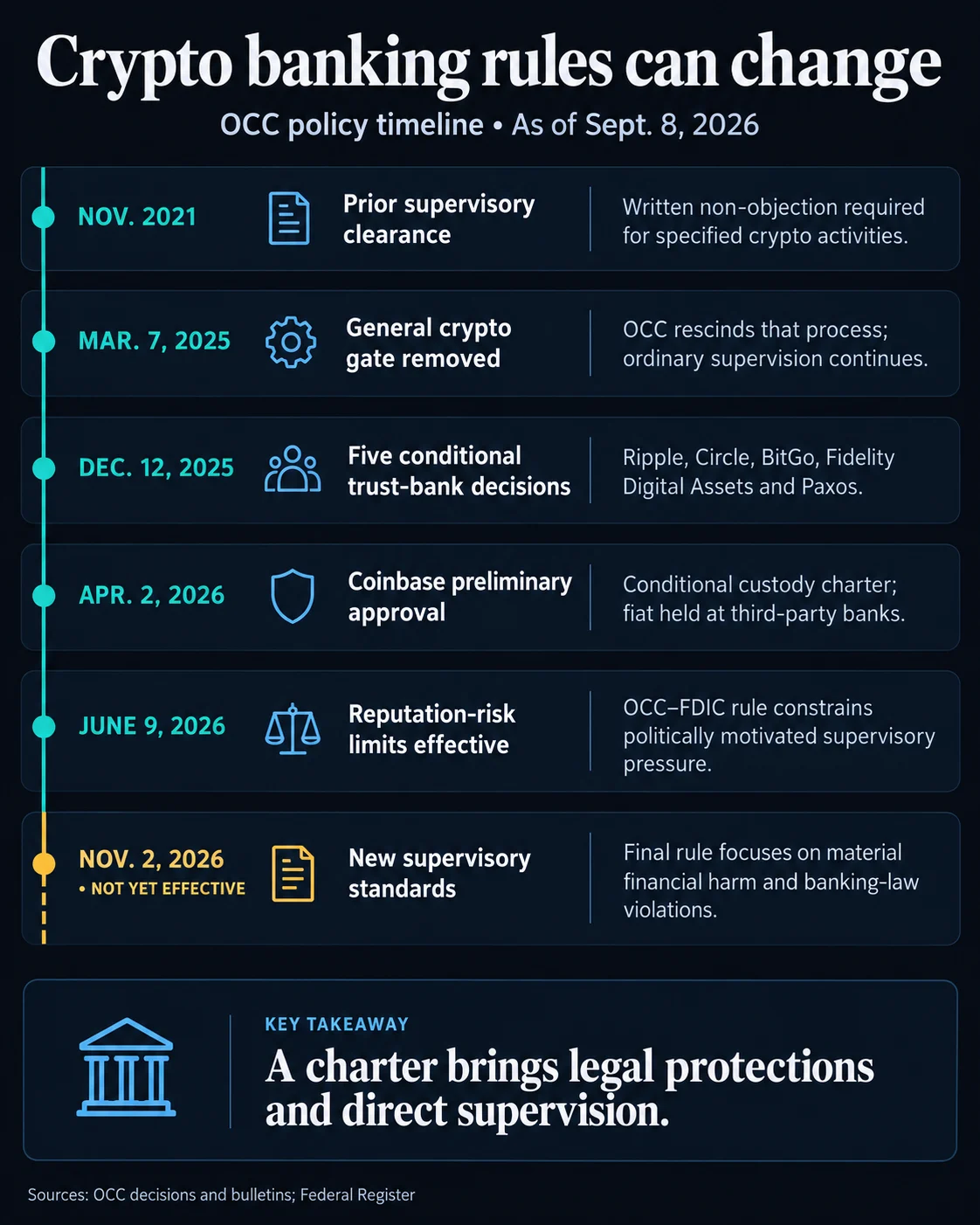
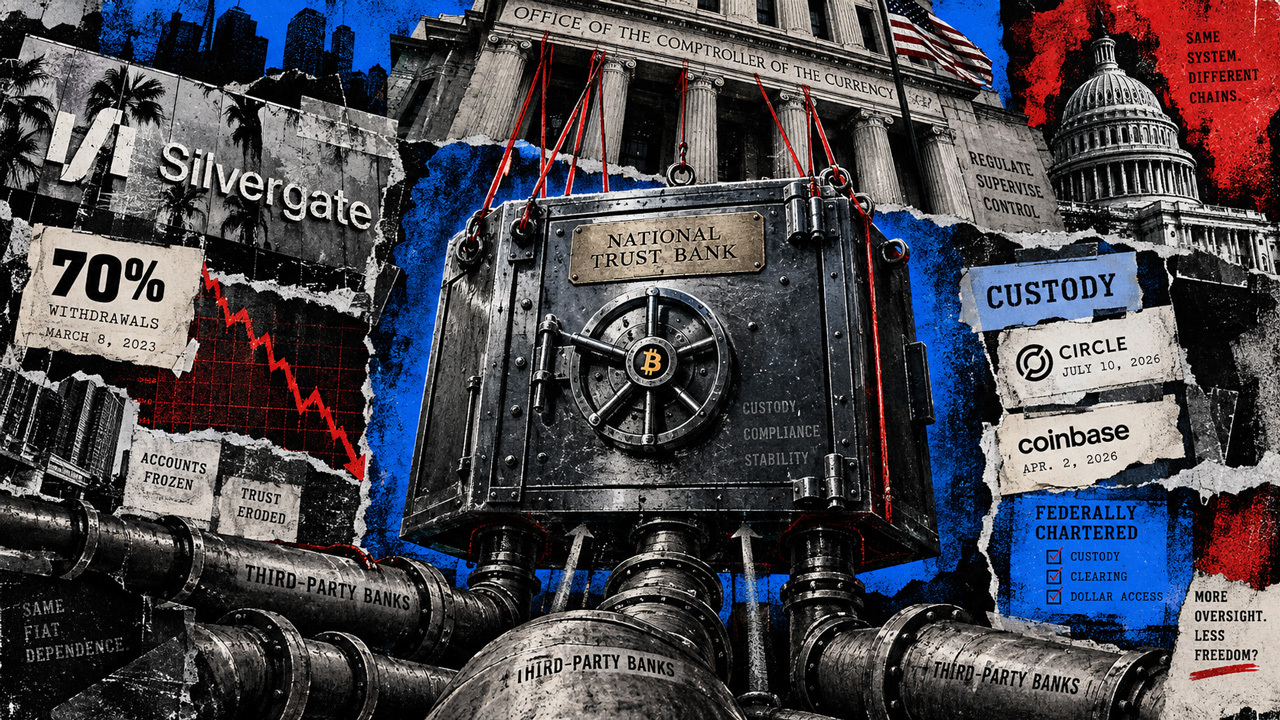
Silvergate’s former chief executive, Alan Lane, has offered a detailed account of the crypto-focused bank’s final days, asserting that it remained solvent and liquid despite experiencing withdrawals of approximately 70% of its demand deposits. Lane’s narrative, published in a September 8th statement, places the blame for the bank’s subsequent decision to pursue liquidation squarely on what he describes as "political pressure" from the Biden administration, which he contends made continued operations untenable. This assertion casts a critical light on the protections offered to crypto companies that have pursued federal bank charters, raising questions about the true extent of the security these charters provide in an evolving regulatory and political climate.
More than three years after Silvergate announced its voluntary wind-down, a new wave of crypto firms is actively seeking and obtaining federal trust-bank charters. These charters place their crucial custody businesses directly under the oversight of the Office of the Comptroller of the Currency (OCC). While these federal trust charters offer an established legal framework for safeguarding customer assets—a core function for digital asset custodians—they also forge a direct supervisory relationship with Washington regulators. Paradoxically, this newfound federal oversight can also leave these firms dependent on traditional banks for their essential cash management and liquidity needs, a point underscored by Silvergate’s own operational challenges.
Lane’s account directly challenges the official narrative surrounding Silvergate’s collapse. He maintains that the bank was financially sound after the significant deposit outflows in late 2022 and was capable of continuing to serve its clientele. The decision to announce liquidation on March 8, 2023, according to Lane, was a direct consequence of regulatory and political pressures, suggesting a deliberate move by authorities to force the bank’s closure rather than allow it to navigate the turbulent crypto market.
However, this perspective contrasts sharply with the findings of the Federal Reserve’s Inspector General. In a September 2023 review, the IG attributed Silvergate’s liquidation to a confluence of factors: extreme concentration in crypto-industry depositors, rapid growth that outpaced risk management capabilities, and significant weaknesses in governance and risk management practices. The Federal Reserve officially confirmed in July 2024 that Silvergate had completed its liquidation, successfully repaying all customer deposits and ceasing all banking operations. As a postscript to its operational demise, the Fed also imposed a $43 million fine on Silvergate for anti-money-laundering (AML) compliance failures, highlighting a critical operational deficiency.
The fate of Silvergate serves as a stark case study, prompting a re-evaluation of the strategic implications of obtaining federal bank charters for crypto companies. The following table offers a comparative analysis of Silvergate’s model versus the emerging OCC trust-bank model:
| Risk Dimension | Silvergate Model | OCC Trust-Bank Model | Forward-Looking Takeaway |
|---|---|---|---|
| Core Business | Deposit-funded crypto banking | Fiduciary custody/asset safeguarding | New charters reduce classic deposit-run exposure but shift focus to custody, compliance, and operational resilience. |
| Main Vulnerability | Concentrated crypto-industry deposits | Third-party bank dependence for fiat and business-plan limits | The choke point may move from the chartered entity to its banking partners. |
| Supervisory Channel | Federal Reserve / San Francisco Fed | OCC direct supervision | Federal oversight existed before; the question is whether a different supervisor and rule set changes durability. |
| Failure Mode | Liquidity stress, funding concentration, governance weakness | Activity restrictions, examiner conditions, partner-bank disruption | A charter can define permitted activity, but it does not eliminate supervisory pressure. |
| Reader Takeaway | "Bank status did not save Silvergate." | "Trust-bank status may narrow the risk perimeter." | The real test is whether crypto firms can operate predictably through future policy swings. |
It is important to note that Silvergate was already subject to federal oversight through the Federal Reserve and its San Francisco Reserve Bank. The newer firms pursuing OCC trust charters are opting for a different banking model and, consequently, a different primary federal supervisor. Silvergate’s core vulnerability stemmed from its identity as a deposit-funded institution deeply intertwined with a highly concentrated industry. In contrast, a trust bank, with its primary focus on safeguarding assets, operates under a fundamentally different business model and risk profile.
A Charter for Custody, With Banks Still Attached
The Office of the Comptroller of the Currency has been actively approving and processing applications for national trust bank charters, signaling a significant shift in how digital asset custodians operate within the U.S. regulatory framework. In December 2025, the OCC granted conditional approval to several key entities, including Ripple and Circle’s proposed First National Digital Currency Bank, as well as conversions for established players like BitGo, Fidelity Digital Assets, and Paxos.
Circle announced on July 10, 2026, that it had received final approval for its institution, to operate as Circle National Trust. Initially, this entity will focus on providing custody services for Circle and its affiliates, with plans to integrate reserve management capabilities in the future. This move signifies Circle’s strategic intent to bring its core stablecoin infrastructure and reserve functions under direct federal supervision, enhancing transparency and potentially reducing counterparty risk concerns.
The OCC’s pipeline for digital asset licensing applications remains robust. As of August 19, 2026, Zerohash’s application was pending, following earlier submissions in 2026 from Payward National Trust Company, Agora National Trust Bank, and EDX Trust. These ongoing applications indicate a broadening trend of crypto firms seeking federal charters beyond the initial wave of approvals.
Coinbase, a leading cryptocurrency exchange, received preliminary conditional approval on April 2, 2026, for fiduciary digital asset custody and related services. The proposed Coinbase National Trust Company, however, will not operate as an insured depository institution. Crucially, any fiat currency held in custody by this entity will be segregated in for-benefit-of accounts at third-party, federally insured banks. This structure allows Coinbase to bring its institutional custody operations under a federal umbrella while maintaining essential links to the traditional banking system for fiat liquidity.
The following table outlines the current status and strategic implications of key companies pursuing national trust bank charters:
| Company / Proposed Bank | OCC Status | Date Marker | Type of Move | Strategic Implication |
|---|---|---|---|---|
| Circle / Circle National Trust | Final approval announced | July 10, 2026 | National trust bank | Stablecoin infrastructure and reserve/custody functions move closer to federal supervision. |
| Coinbase National Trust Company | Preliminary conditional approval | April 2, 2026 | New national trust charter | Institutional custody gets a federal wrapper, but with conditions before launch. |
| Ripple National Trust Bank | Conditional approval | Dec. 12, 2025 | New national trust charter | Shows the trust-bank route is becoming a repeatable crypto regulatory path. |
| BitGo, Fidelity, Paxos | Conditional approvals | Dec. 12, 2025 | Conversions to national trust banks | Existing custody businesses are seeking federal alignment rather than only state regimes. |
| Zerohash, Payward, Agora, EDX | Pending applications | Mar.–Aug. 2026 | Pipeline applicants | The charter wave is broadening beyond the first approvals. |
This federal charter structure provides direct supervisory control for the OCC. Before granting final approval, the OCC reserves the right to modify, suspend, or rescind preliminary decisions if intervening developments warrant such action. Significant changes to a company’s business plan require advance notification and a written non-objection from the OCC during the organization phase and for the first three years of operation, in addition to meeting stringent capital and liquidity requirements. The charter effectively defines the scope of permissible activities under specific conditions, with any expansion subject to further regulatory approval.
Historically, the OCC has evolved its approach to digital assets. In November 2021, the agency established a "written non-objection" process for specific crypto-related activities, requiring banks to seek supervisory clearance before engaging in these endeavors. However, on March 7, 2025, the OCC rescinded this process and withdrew from two 2023 interagency crypto-risk statements as they applied to its supervised banks. This policy reversal altered the pathway for crypto engagement, though it did not eliminate the fundamental requirements for safe and sound operations, compliance with laws, and ongoing examinations. Coinbase’s charter conditions serve as a tangible example of how removing a general gatekeeping mechanism for crypto activities does not equate to an absence of specific approval requirements.
Further complicating the landscape, preliminary findings released by the OCC in December 2025 indicated that the nine largest national banks reviewed had maintained inappropriate restrictions or required enhanced approvals for certain lawful business sectors between 2020 and 2023, with digital assets being among the affected sectors. While these findings pertain to the internal policies of these banks rather than the causes of Silvergate’s liquidation, they suggest a historical reluctance within some traditional financial institutions to fully embrace digital asset services.
The future supervisory environment could see a more rigorous stance on financial risks and compliance within the existing legal framework. Crypto firms, even those with federal charters, may face tighter operational conditions or increased demands from examiners to demonstrate robust risk management and compliance, irrespective of broader debates about the existence of charters themselves. The 2025 policy reversal by the OCC underscores the potential for significant shifts in supervisory approaches, even within the same overarching legal structure.
Rules Constrain the Supervisor
Recent regulatory developments aim to place new limitations on how regulators can leverage "reputation risk" in their supervision of crypto firms. These evolving rules, coupled with the defined activities permitted under each bank’s charter, are crucial in determining the actual protection afforded by a federal charter.
An OCC and FDIC rule concerning reputation risk, effective June 9, 2026, explicitly bars these agencies from taking adverse supervisory actions based solely on reputation risk. Furthermore, it prohibits them from pressuring institutions to sever ties with customers engaged in lawful, albeit politically disfavored, activities. This rule effectively constrains agency conduct, while preserving the autonomy of private banks in their account decisions and the agencies’ authority to supervise financial and operational risks.
The agencies expanded upon these principles on August 27, 2026, introducing new standards for "unsafe or unsound practices" and "matters requiring attention." These supervisory findings are the triggers for requiring a bank’s response. The revised standards prioritize material financial harm or deposit-insurance risk, providing a solid basis for addressing violations of banking law. Crucially, they exclude reputational concerns that are not intrinsically linked to a bank’s financial condition. This final rule, published September 1, 2026, and effective November 2, 2026, aims to create a more objective and risk-based supervisory framework.
These developments are critical for crypto trust banks. The new rules aim to prevent arbitrary regulatory actions based on subjective concerns, offering a more predictable operating environment. However, they do not eliminate the fundamental responsibilities of banks to maintain financial stability, adhere to AML/KYC regulations, and manage third-party risks effectively.
The potential implications for crypto firms can be categorized into several scenarios:
- Base Case: If the reputation-risk limits hold firm and examinations remain stringent but fair, trust banks will operate. Expansion, however, will necessitate meticulous compliance efforts and robust capital and liquidity planning. This scenario suggests increased institutional custody capacity but no immediate removal of existing banking friction.
- Bull Case: If OCC approvals continue apace and banking partners become more comfortable, more crypto firms could migrate their custody and stablecoin infrastructure into federally supervised entities. This could lead to enhanced institutional confidence and a potential reduction in the custody risk premium.
- Bear Case: Should supervisors aggressively leverage safety, soundness, AML, or third-party-risk concerns, firms might retain their charters but face protracted approval processes, tighter operational conditions, and constrained product expansion. While regulatory clarity may exist on paper, execution bottlenecks could still pressure access to crypto banking services.
- Black Swan: A major custody failure, AML breach, or partner-bank collapse could trigger a significant regulatory backlash. While charters would likely remain legally protected, examinations and enforcement actions could escalate sharply. This would force the market to reprice counterparty risk across custodians, stablecoins, and exchanges.
Separate OCC policies, revised on August 27, 2026, emphasize escalation, tailoring, and corrective measures focused on specific deficiencies, while still preserving legally supportable enforcement actions when circumstances warrant. This means that while the regulatory framework is evolving to provide more clarity and protection against subjective actions, the potential for robust enforcement remains for demonstrable violations.
The path to forfeiture of a charter, such as under 12 U.S.C. § 93(a), typically requires specified violations and a court determination. Furthermore, the Administrative Procedure Act’s judicial-review standard provides a mechanism for challenging agency actions that are deemed unlawful or arbitrary. These legal protections serve to distinguish between a shift in political preference and a legally sound basis for restricting a bank’s operations. They also leave regulators with substantial authority over matters of custody, compliance, and financial resilience.
The new standards set to take effect in November 2026 will provide an early test of how these protections function in tandem with individual charter conditions. For crypto firms, the ultimate challenge will be their ability to conduct their authorized businesses under predictable rules while simultaneously maintaining the critical banking relationships that their operations still depend upon. Obtaining a national trust bank charter offers crypto companies greater control over custody and a more solidified legal standing. However, it also establishes a direct, and therefore more impactful, relationship with Washington, making the long-term durability of the rules governing that relationship a paramount concern.








