
 Lina Irawan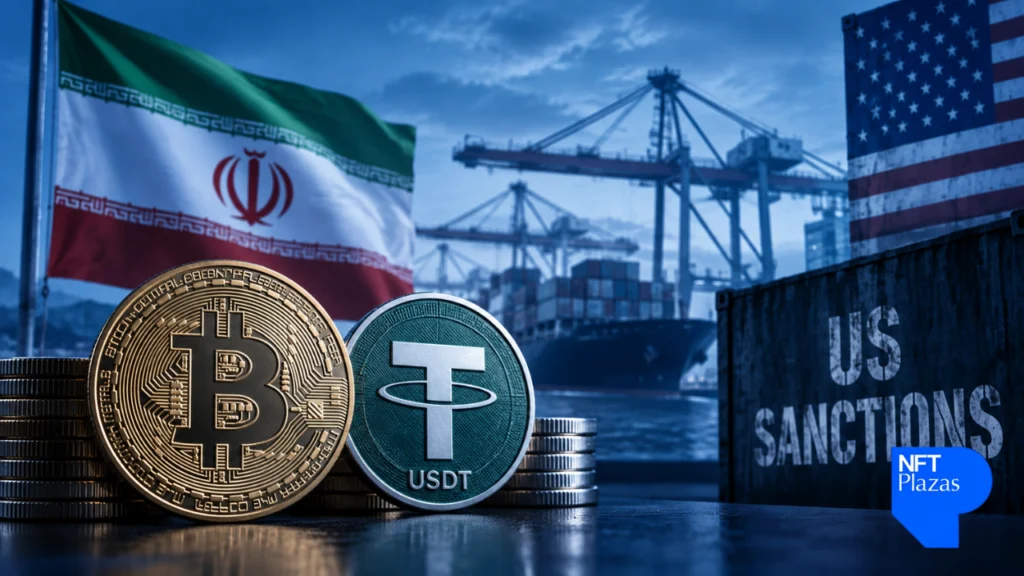
Iran is increasingly turning to cryptocurrencies, including Bitcoin and Tether’s USDT, to facilitate cross-border transactions as stringent U.S. sanctions continue to restrict the nation’s access to the global financial system. This pivot marks a significant evolution in Iran’s financial strategies, leveraging digital assets to maintain economic activity in the face of international financial isolation. The shift, first reported by the Financial Times, highlights the growing role of cryptocurrencies in Iran’s "shadow financial system," a network of alternative channels developed to circumvent traditional banking restrictions.
For years, Iranian businesses have navigated a complex landscape of informal networks and intermediaries to move foreign currency. However, sources familiar with the country’s trade and financial sectors indicate a recent relaxation of central bank controls. This policy adjustment has quietly encouraged traders to repatriate overseas earnings through a wider array of methods, including the settlement of cross-border transactions via Iranian cryptocurrency exchanges. Stablecoins like USDT, pegged to the U.S. dollar, and decentralized cryptocurrencies like Bitcoin have emerged as key tools in this strategy.
This development unfolds against a backdrop of escalating U.S. economic pressure on Tehran. Washington has systematically expanded sanctions targeting Iranian companies and their intermediaries, with U.S. Treasury officials increasingly vocal about the regime’s alleged use of digital assets to circumvent these financial restrictions. The U.S. Treasury Department’s Office of Foreign Assets Control (OFAC) has been particularly active, designating multiple Iranian cryptocurrency exchanges and individuals involved in sanctions evasion.
The Evolving Landscape of Iranian Finance Under Sanctions
Iran has operated under significant U.S. financial sanctions for decades, stemming from various geopolitical concerns, including its nuclear program and regional policies. These sanctions have severely hampered its ability to engage in conventional international trade and finance. Traditional payment mechanisms, such as SWIFT, have been largely inaccessible, forcing businesses to rely on a patchwork of alternative solutions. These include foreign-exchange houses, informal Hawala networks, and a complex system of intermediaries, often operating with opaque structures.
Historically, Iran’s foreign-currency system imposed strict requirements on exporters. A significant portion of their overseas earnings was mandated for repatriation and sale through a state-run platform at officially determined exchange rates. However, these official rates often lagged behind the more favorable rates available in Iran’s burgeoning open market. This discrepancy created a powerful incentive for companies to either keep earnings offshore or to repatriate them through unofficial, less regulated channels, fostering a parallel economy.
The recent reported flexibility by Iranian authorities signifies a pragmatic adaptation to these persistent challenges. Traders are now reportedly afforded greater latitude to exchange foreign currency through the open market. In some instances, export proceeds can be directly utilized to finance imports, bypassing the cumbersome official foreign-exchange system. This shift suggests a tacit acknowledgment by the regime that strict adherence to traditional financial protocols is unsustainable under the current sanctions regime.
One business executive, reportedly close to the regime, indicated to the Financial Times that authorities are now less focused on the specific methods of fund transfer, suggesting that the acceptance of cryptocurrency for export proceeds has become an established practice. This pragmatic approach underscores the urgency of maintaining trade flows, even if it means embracing technologies that are viewed with suspicion by sanctioning bodies.

The scale of the challenge facing Tehran is substantial. Iranian authorities have estimated that over $100 billion in undeclared earnings are held both domestically and abroad. The country’s General Inspection Organization has also reported that a significant number of individuals and companies have failed to meet their obligations to return substantial amounts of export proceeds, reportedly equivalent to approximately $94 billion. These figures illustrate the vast sums of money that have been operating outside the formal financial system, highlighting the underlying demand for alternative channels of value transfer.
While cryptocurrency is not replacing Iran’s formal financial system, it is demonstrably filling critical gaps where conventional banking routes are obstructed. It offers a digital pathway for value to move across borders, circumventing the direct oversight and control of traditional financial institutions that are subject to U.S. sanctions.
The Strategic Importance of USDT and Bitcoin
Among the cryptocurrencies gaining traction, USDT (Tether) plays a particularly crucial role in Iran’s cross-border trade. As a stablecoin designed to maintain a value closely pegged to the U.S. dollar, USDT offers a semblance of stability in an environment characterized by volatile exchange rates and restrictions on dollar transactions. For Iranian businesses engaged in international commerce, a dollar-linked digital asset provides a relatively accessible and predictable mechanism for transferring and holding value without direct reliance on the traditional U.S. dollar banking infrastructure.
Bitcoin, while more volatile, also serves important functions. Its decentralized nature and global accessibility make it a viable option for transactions where traditional financial channels are unavailable. Furthermore, Bitcoin mining has emerged as a significant source of crypto revenue for Iran. The country has become a notable hub for Bitcoin mining, capitalizing on relatively inexpensive domestic energy resources. Blockchain analytics firm Elliptic has estimated that Iran accounts for approximately 4.5% of global Bitcoin mining activity. The mined Bitcoin can then be used to purchase imports or facilitate value transfer outside conventional financial channels, offering Tehran a means to acquire digital assets without direct participation in international financial markets.
However, the utility of these cryptocurrencies is not absolute, and they remain within the purview of U.S. regulatory and enforcement actions. Tether, the issuer of USDT, has demonstrated its willingness to cooperate with authorities. The company has previously frozen cryptocurrency assets held in wallets identified as being connected to Iranian state actors or sanctioned entities. In instances where U.S. authorities have flagged specific wallets linked to Iran, Tether has frozen hundreds of millions of dollars in USDT.
U.S. Regulatory Actions and the Persistent Crypto Flows
The U.S. Treasury Department, through OFAC, has intensified its efforts to target the infrastructure supporting Iran’s cryptocurrency economy. In June of the previous year, OFAC designated four Iranian cryptocurrency exchanges: Nobitex, Bit Pin, Wallex, and Ramzinex. These exchanges were accused of facilitating sanctions evasion and other illicit financial activities. TRM Labs, a blockchain analytics firm, estimated that these four platforms collectively represented approximately 78% of Iran’s attributed crypto volume in 2025, valued at around $7.7 billion. This move signaled a clear intent by the U.S. to disrupt the digital channels Iran was using to circumvent sanctions.
In August, the Treasury further expanded its actions by sanctioning additional exchanges, which it alleged were being utilized by Tehran to move billions of dollars and to support the Islamic Revolutionary Guard Corps (IRGC), a designated foreign terrorist organization. These designations aim to cut off access to global financial networks and increase the cost of engaging in sanctioned activities.
Despite these intensified efforts, the pressure has not entirely eliminated Iran’s cryptocurrency activity. TRM Labs data suggests that approximately $10 billion in cryptocurrency moved through Iran in 2025, a slight decrease from the $11.4 billion recorded in 2024. The persistence of these substantial flows indicates a structural demand for cryptocurrencies within the Iranian economy, rather than merely speculative trading. This sustained activity points to the deep-seated necessity for alternative financial mechanisms driven by the ongoing sanctions.

The trend in attributed crypto volume for the four OFAC-designated Iranian exchanges in 2025, as reported by TRM Labs, illustrates the significant financial activity that was disrupted by U.S. sanctions. While a precise figure for the total volume transacted through these specific platforms post-designation is not readily available, the previous year’s data highlights their importance in Iran’s crypto ecosystem.
Balancing Innovation and Enforcement: A Tightrope Walk
The growing reliance on cryptocurrency has firmly placed digital assets within the scope of the U.S. sanctions campaign against Iran. OFAC has clarified that Iranian digital-asset exchanges can be considered Iranian financial institutions, potentially subjecting them to existing sanctions that prohibit U.S. persons and financial institutions from engaging in transactions with their assets. This broad interpretation aims to cast a wide net, encompassing entities that facilitate crypto transactions linked to Iran.
The U.S. administration has also signaled that further enforcement actions could be forthcoming. Treasury Secretary Scott Bessent has indicated that digital assets may become additional targets as Washington intensifies its strategy to pressure Iran’s economy. This suggests a continued focus on identifying and sanctioning entities that facilitate Iran’s use of cryptocurrencies.
This dynamic creates a complex challenge for Iranian authorities. While cryptocurrencies offer businesses an alternative route around restricted banking channels, each digital transaction generates an on-chain record. Blockchain analytics firms can potentially trace these transactions, providing U.S. authorities with intelligence for further enforcement actions. This inherent transparency of blockchain technology, while beneficial for tracking, also presents a vulnerability for those seeking to evade sanctions.
Iran’s experience with cryptocurrency under sanctions thus underscores both the potential strengths and inherent limitations of digital assets in such a context. Cryptocurrencies can indeed move across borders without direct reliance on correspondent banks or traditional payment networks, offering a degree of financial autonomy. However, exchanges, stablecoin issuers, wallet providers, and other intermediaries remain susceptible to sanctions, asset freezes, and enforcement actions.
For Tehran, the overarching objective appears to be less about fundamentally replacing the traditional financial system and more about preserving access to alternative channels. The goal is to prevent sanctions from completely isolating the economy from international trade and to maintain the flow of essential goods and services. As U.S. pressure intensifies, cryptocurrency is solidifying its position as one of these vital channels, operating alongside foreign-exchange houses, offshore intermediaries, and informal trading networks.
The result is an increasingly bifurcated financial system, with a growing segment pushed underground. In this environment, Bitcoin and USDT are evolving into indispensable tools for sustaining trade and facilitating monetary flows when conventional channels prove unreliable. As one Tehran-based economist aptly noted, the deeper Iran’s economy moves underground, the greater the necessity and reliance on cryptocurrency becomes. This intricate interplay between sanctions, evasion, and technological adaptation continues to shape Iran’s economic resilience in the face of unprecedented financial restrictions.









