
 Nila Kartika Wati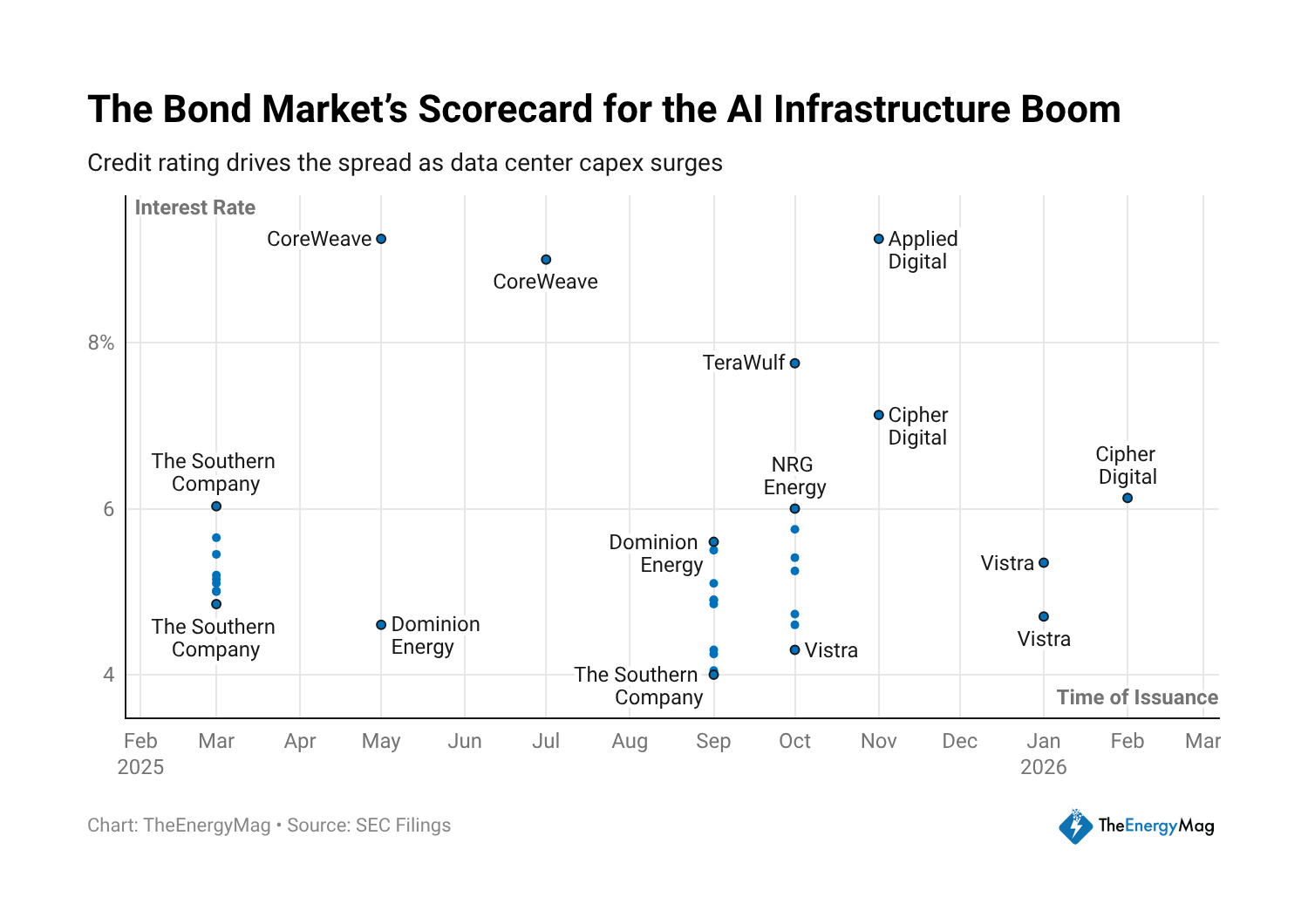
The burgeoning landscape of artificial intelligence (AI) and data center development, significantly influenced by the strategic pivot of Bitcoin mining operations, is increasingly reliant on high-yield bond issuance for financing. This trend vividly illustrates how financial markets are meticulously assessing both the substantial opportunities and inherent risks embedded within this rapidly expanding technological frontier. Lenders are drawing clear distinctions between nascent, high-growth sectors like AI and crypto infrastructure and more established, regulated utilities, reflecting this nuanced risk-reward calculus.
Over the past twelve months, companies deeply engaged in AI data center expansion have collectively raised an estimated $33 billion through long-term senior notes, excluding convertible debt instruments which carry distinct risk profiles and equity conversion options. This substantial capital injection underscores the intense demand for computational power required to train and deploy advanced AI models, as well as the significant infrastructure build-out necessary to support these operations. The scale of this financing highlights the market’s willingness to fund ventures at the forefront of the technological revolution, even if it entails navigating elevated risk premiums.
The Funding Landscape: A Deep Dive into High-Yield Bonds
A stark contrast in borrowing costs illuminates the market’s perception of risk across different industries. While conventional regulated utilities and mature energy companies typically secure financing at interest rates ranging from 4% to 5% on their debt issuances, entities operating in the AI and cryptocurrency-linked infrastructure space face considerably higher borrowing expenses, often paying between 7% and 9%. This significant spread is indicative of the perceived volatility, unproven business models, and nascent nature of the AI and crypto infrastructure sectors compared to their stable, regulated counterparts.
According to data compiled by Janus Henderson Investors, citing BofA Global Research, the average coupon on newly issued U.S. dollar high-yield debt hovered around 7.2% in late 2025. This figure marks a noticeable decrease from the 8% to 9% range observed in 2023, reflecting broader shifts in monetary policy and investor sentiment within the high-yield market. Nevertheless, companies at the upper end of this interest rate spectrum are predominantly current or former digital asset mining firms that have strategically transitioned into AI infrastructure development. This suggests that capital remains comparatively more expensive for these companies, despite their efforts to diversify and leverage existing assets.
TheEnergyMag, in its latest newsletter, detailed several recent high-profile bond issuances within this sector. CoreWeave, a prominent GPU cloud provider, secured financing at 9.25% and 9% in May and July of 2025, respectively. Applied Digital followed suit with a 9.2% issuance in November, while TeraWulf raised capital at 7.75%. Bitcoin mining firm Cipher Mining also tapped the bond market, securing funds at 7.125% and 6.125%. These figures are illustrative of the premium demanded by investors for financing ventures in an industry characterized by rapid technological change and evolving market dynamics. The higher yields compensate investors for the increased risk of default, the potential for rapid obsolescence of technology, and the inherent unpredictability of highly specialized markets.
The AI and Data Center Supercycle
Despite lingering concerns regarding potential overspending and the risk of overcapacity in the long term, the construction of AI data centers has emerged as one of the most visible and impactful economic trends. This build-out is a primary driver of demand across Wall Street, from chip manufacturers to power suppliers and construction firms. The underlying impetus is the explosive growth of generative AI, large language models, and the increasing enterprise adoption of AI technologies across virtually every industry vertical. These advanced applications require immense computational resources, leading to an unprecedented demand for high-performance data centers equipped with specialized hardware like Graphics Processing Units (GPUs).
The sheer momentum of this sector was unequivocally demonstrated by chipmaker Nvidia’s blockbuster fourth-quarter results. The company reported a staggering 94% surge in profit and a 73% increase in revenue year-over-year, reaching $43 billion in net income and $68.1 billion in revenue. A significant portion of this growth was attributed to its data center segment, which has become the company’s primary revenue driver, supplying the critical hardware for AI training and inference. Nvidia’s performance is often seen as a bellwether for the broader AI infrastructure market, signaling robust and sustained demand for high-end computing power.
The global race for AI dominance, spearheaded by tech giants and governments alike, further intensifies this infrastructure build-out. Countries and corporations are investing billions to secure their positions in the AI future, viewing robust data center capabilities as a national and competitive imperative. This strategic imperative fuels continuous investment, driving demand for specialized real estate, advanced cooling systems, and massive amounts of electrical power, creating a complex ecosystem of interdependencies.
Bitcoin Miners’ Strategic Pivot
A fascinating development within this supercycle is the strategic pivot undertaken by Bitcoin mining companies. Facing increasing pressures from Bitcoin halving events, which periodically reduce mining rewards, and fluctuations in "hashprice" (the revenue miners earn per unit of computing power), many have identified AI infrastructure as a natural and lucrative diversification opportunity. These companies often possess significant advantages, including access to large tracts of land, substantial power infrastructure, and expertise in managing high-density computing operations requiring efficient cooling systems.

Bitcoin miners are reportedly planning to develop approximately 30 gigawatts (GW) of new power capacity specifically earmarked for AI workloads. This figure represents nearly triple the capacity they currently operate for cryptocurrency mining, underscoring the scale of their ambition and commitment to this strategic shift. While much of this planned capacity remains in various stages of development pipelines or early-stage planning, the industry has unequivocally declared AI infrastructure as a core strategic priority. This pivot leverages their existing operational expertise in energy-intensive computing and their established relationships with power providers.
Companies like CoreWeave, Applied Digital, TeraWulf, and Cipher Mining, which have been active in the digital asset space, exemplify this trend by securing significant bond financing to bolster their AI infrastructure endeavors. Their transition involves reconfiguring existing mining facilities, acquiring new high-performance computing hardware (GPUs), and adapting their energy management strategies to meet the distinct demands of AI workloads, which differ in their computational patterns from cryptographic hashing. This evolution highlights a pragmatic response to market forces, seeking to capitalize on a new, high-growth sector while mitigating risks associated with a singular focus on cryptocurrency mining.
Lenders’ Perspective: Risk vs. Reward
The perspective of lenders in this rapidly evolving market is succinctly captured by TheEnergyMag: "The message from lenders is clear. Regulated load and contracted generation still get treated as infrastructure. AI and bitcoin, even when attached to long-term offtake agreements, are still treated as growth credit." This distinction is crucial. Traditional infrastructure projects, such as power plants or utility networks, benefit from long-term, predictable revenue streams, often backed by government regulation or established contractual agreements, making them low-risk investments.
In contrast, AI and Bitcoin infrastructure, despite having long-term offtake agreements (contracts to purchase power or services), are viewed through a "growth credit" lens. This implies a higher risk profile due to several factors:
- Technological Obsolescence: The rapid pace of innovation in AI means that current hardware or software solutions could become outdated quickly, impacting the value and profitability of data centers.
- Market Volatility: While AI demand is surging, the long-term stability and specific applications remain subject to market shifts, competitive pressures, and evolving enterprise needs. For Bitcoin, price volatility directly impacts miner profitability.
- Regulatory Uncertainty: The regulatory landscape for both AI and cryptocurrencies is still developing, potentially introducing unforeseen compliance costs or operational restrictions.
- Power Costs: These operations are extremely energy-intensive, making them vulnerable to fluctuations in energy prices and grid stability, which can directly impact their operational margins.
Investors willing to accept these higher risks are compensated with significantly higher yields. The appetite for these high-yield bonds stems from the potential for substantial returns in a low-interest-rate environment (historically) and the belief in the long-term transformative power of AI. Credit rating agencies, when assessing these bonds, would scrutinize the specific business models, the nature and duration of off-take agreements, the management team’s experience, and the company’s financial leverage and liquidity. The ability of these companies to secure favorable power purchasing agreements and manage their energy consumption efficiently is often a critical factor in their creditworthiness.
Market Dynamics and Future Outlook
The aggressive build-out of AI infrastructure raises pertinent questions about market dynamics and future sustainability. Concerns about potential overspending and the risk of overcapacity are valid, particularly if the growth trajectory of AI applications plateaus or if technological breakthroughs enable more efficient computing, reducing the need for sheer physical scale. However, current projections suggest that demand for AI compute will continue to outstrip supply for the foreseeable future.
The sustainability of this high-yield financing model hinges on several factors. The continued profitability of AI data center operations, the ability of these companies to manage their debt loads, and the broader economic environment will all play critical roles. A significant downturn in the global economy or a sharp increase in interest rates could make refinancing existing debt more challenging and expensive, potentially straining the financial health of highly leveraged companies.
Furthermore, the environmental implications of this energy-intensive expansion are drawing increasing scrutiny. The immense power demands of AI data centers and Bitcoin mining facilities place considerable stress on existing energy grids and contribute to carbon emissions, prompting calls for more sustainable energy solutions and operational efficiencies. The industry’s ability to integrate renewable energy sources and develop more energy-efficient hardware will be crucial for its long-term social and regulatory acceptance.
The influx of institutional investors into this high-yield segment signifies a growing acceptance of the sector, but also a demand for more sophisticated risk management and transparency. The market may see further consolidation as larger, better-capitalized players acquire smaller competitors, or as companies with less robust business models struggle under the weight of high-interest debt. Geopolitical factors, such as trade wars affecting chip supply chains or international regulations on data sovereignty, could also significantly impact the trajectory of AI infrastructure development and its financing.
In conclusion, the current surge in high-yield bond issuance for AI and data center development, propelled partly by the strategic diversification of Bitcoin miners, represents a fascinating nexus of technological innovation and financial engineering. It underscores the immense investor confidence in the AI supercycle, yet simultaneously highlights the inherent risks associated with funding a rapidly evolving, energy-intensive sector. The market’s clear distinction between "infrastructure" and "growth credit" reflects a cautious optimism, where the promise of transformative AI is balanced against the realities of technological uncertainty, market volatility, and elevated financial risk. The coming years will undoubtedly test the resilience of these financing models and the long-term viability of these ambitious infrastructure projects.