 admin
admin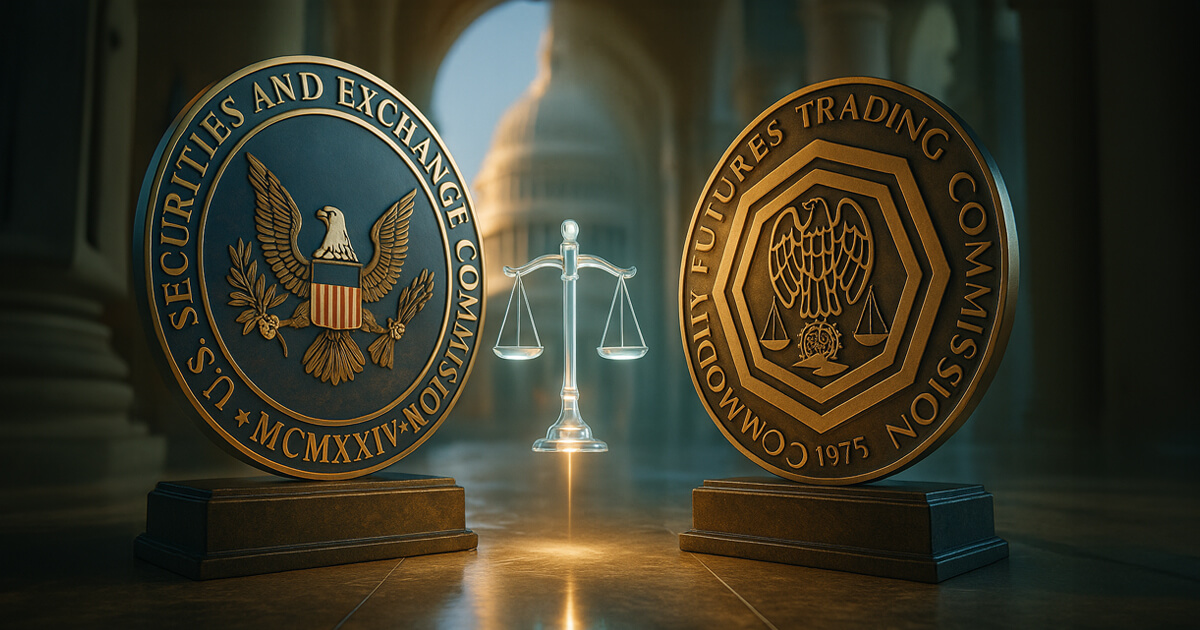
Washington is once again at a critical juncture in its protracted effort to establish clear regulatory oversight for the burgeoning digital asset market. Following the House of Representatives’ passage of the Digital Asset Market Clarity Act of 2025 this summer, which aimed to define jurisdictional boundaries, the Senate has unveiled two distinct legislative drafts, each proposing a different path forward for regulating cryptocurrencies. These competing proposals from the Senate Agriculture and Banking Committees are poised to fundamentally reshape the landscape of digital asset regulation in the United States, impacting everything from the trading of Bitcoin spot markets to the disclosure requirements for Ethereum and the operational frameworks for cryptocurrency exchanges.
The core of the debate centers on the division of authority between the Securities and Exchange Commission (SEC) and the Commodity Futures Trading Commission (CFTC). For years, the classification of digital assets as either securities or commodities has been a contentious issue, leading to regulatory uncertainty and numerous enforcement actions. The current legislative efforts represent a significant attempt to codify these distinctions and provide much-needed clarity for market participants, investors, and innovators alike. The outcome of this legislative tug-of-war will have profound implications for the future growth and stability of the U.S. cryptocurrency industry.
A Tale of Two Drafts: Divergent Paths to Regulatory Clarity
The Senate’s approach to digital asset regulation has bifurcated into two primary legislative proposals, each originating from a different influential committee. The first, emanating from the Senate Agriculture Committee, championed by Senators John Boozman and Cory Booker, leans towards expanding the purview of the CFTC. The second, put forth by the Senate Banking Committee, proposes a more nuanced framework that would grant the SEC enhanced authority over certain categories of digital assets while also establishing mechanisms for tokens to transition away from securities classification.
The Agriculture Committee Draft: Empowering the CFTC as the Primary Regulator for Digital Commodities
The draft from the Senate Agriculture Committee, a bipartisan discussion draft, seeks to bring a significant portion of the digital asset market under the direct supervision of the Commodity Futures Trading Commission (CFTC). This proposal, building upon the principles of the House’s Digital Asset Market Clarity Act, designates "digital commodities" and their associated spot markets as falling under CFTC jurisdiction. This would necessitate the registration of exchanges, brokers, and dealers operating within this space, mirroring the established regulatory architecture for traditional commodities.
Key provisions of this draft include mandates for intermediaries to utilize qualified custodians and to segregate customer assets. This aims to mitigate conflicts of interest that could arise from affiliations between trading platforms and other entities. The bill also contemplates joint rulemaking authority between the CFTC and the SEC for entities that may fall under overlapping regulatory concerns or require dual registration. However, complex areas like Decentralized Finance (DeFi) protocols are explicitly deferred for future deliberation, indicating that a comprehensive regulatory solution for all facets of the crypto ecosystem remains a work in progress.
Under this proposed framework, U.S.-based Bitcoin platforms, for instance, would be required to register as digital-commodity exchanges. This would entail adhering to new capital requirements, stringent custody rules, and enhanced protections for retail investors. A significant potential benefit highlighted by proponents of this approach is the standardization of data sharing across trading venues. This improved data transparency could bolster market surveillance capabilities, which are crucial for entities like Exchange Traded Fund (ETF) issuers seeking to demonstrate market integrity. It is important to note, however, that ETFs themselves, once approved and listed, would likely remain under the SEC’s regulatory purview.
The practical implications of shifting Bitcoin spot market oversight to the CFTC are substantial. Exchanges would be compelled to adopt a regulatory logic more aligned with commodity exchanges, emphasizing robust reporting mechanisms and sophisticated market surveillance over extensive investor disclosure requirements. This could lead to a more unified and understandable market environment for analysts and traders, providing them with greater insight into market quality and liquidity. While the CFTC’s role would be significantly expanded, the SEC would retain jurisdiction over instruments classified as securities and over cryptocurrency futures, suggesting a continued, albeit potentially redefined, dual oversight model.
The Banking Committee Draft: The "Ancillary Asset" Framework and a Path to Decentralization
In contrast, the Senate Banking Committee’s draft, titled the Responsible Financial Innovation Act, adopts a more intricate approach, focusing on digital assets that occupy a gray area between commodities and securities. This draft introduces the concept of an "ancillary asset," defined as a "fungible digital commodity" that is distributed through an arrangement that also constitutes an investment contract. This novel classification aims to provide a regulatory pathway for tokens that may initially exhibit characteristics of securities but are intended to evolve into decentralized digital commodities.
Under this proposal, the SEC would be explicitly empowered to oversee these "ancillary assets." Issuers would be subject to comprehensive disclosure requirements, covering aspects such as token distribution, governance structures, and associated risks. Furthermore, the bill mandates that the SEC finalize rules defining what constitutes an "investment contract" within approximately two years. A key innovation of this draft is the introduction of a decentralization certification process. This mechanism would allow a digital asset project to transition out of securities treatment once network control and decentralization reach predefined thresholds.
This framework offers a conditional "escape hatch" for tokens linked to "active projects," such as Ethereum. A token could commence its lifecycle under SEC oversight, benefiting from investor protections and disclosure requirements. However, as governance becomes sufficiently distributed and decentralized, the token could eventually "graduate" from securities classification. This structured approach addresses a long-standing ambiguity in the industry, which has been grappling with regulatory uncertainty since the early days of projects like The DAO. It also compels the SEC to articulate clear, written definitions of decentralization, moving away from reliance on ad hoc enforcement actions.
This model promises to create sharper practical distinctions. Bitcoin, with its established decentralization, would likely continue to be treated as a digital commodity under the CFTC. Tokens with strong ties to specific enterprises or development teams would remain within the SEC’s ancillary-asset regime until they demonstrate sufficient decentralization. Centralized exchanges would find themselves navigating both regulatory frameworks. They would need to register as CFTC digital-commodity exchanges for their spot cryptocurrency trading activities while simultaneously remaining subject to SEC oversight for any listed securities.
The combined effect of these dual regulatory frameworks could necessitate U.S. platforms adopting dual registration processes, adhering to more stringent capital requirements, and implementing greater transparency in their trading books.
Timeline, Coordination, and the Road Ahead
A significant unknown in both legislative proposals is the timeline for implementation and the intricate coordination required between different regulatory bodies. The Banking Committee’s draft imposes specific deadlines for rulemaking, providing a degree of predictability. However, the Agriculture Committee’s draft leaves key questions open for future resolution. Crucially, both proposals rely on subsequent coordination rules and public consultations before any of the proposed regulations can take effect.
The House version of the clarity legislation has already navigated its chamber, but the Senate proposals are still under active discussion, and opposition from various factions within both parties has surfaced. The current drafts serve as a vital working document for developers, traders, and legal professionals in the digital asset space. They offer a glimpse into how U.S. spot trading venues might evolve under a CFTC-led regime and illustrate potential pathways for token projects to transition away from securities classification. They also highlight the potential need for exchanges to re-evaluate and rebuild internal firewalls to manage dual regulatory obligations.
While the titles of these legislative efforts promise clarity, they currently function more as a map outlining the next phase of a complex regulatory tug-of-war. In a market where asset classification directly influences liquidity, custody arrangements, and compliance strategies, understanding which agency will ultimately draw the definitive lines could prove to be as strategically valuable as any on-chain data signal.
Background and Context: The Long Road to Regulatory Certainty
The current legislative push in the Senate is the culmination of years of debate and evolving regulatory approaches to digital assets in the United States. Since the emergence of Bitcoin in 2009, U.S. regulators have struggled to fit these novel financial instruments into existing legal frameworks. The SEC, under its mandate to protect investors and maintain fair and orderly markets, has largely viewed many cryptocurrencies as securities, leading to a series of high-profile enforcement actions against initial coin offerings (ICOs) and exchanges.
The CFTC, on the other hand, has historically regulated commodities and derivatives. It has asserted jurisdiction over certain cryptocurrencies, like Bitcoin, classifying them as commodities, particularly in the context of futures markets. This divergence in interpretation has created a regulatory gray area, characterized by uncertainty for businesses and investors.
The passage of the Financial Innovation and Technology for the 21st Century Act (FIT21) by the House of Representatives in May 2024 represented a significant bipartisan effort to address this regulatory gap. The FIT21 Act aimed to clarify the roles of both the SEC and CFTC in regulating digital assets. It proposed a framework where certain digital assets would be under the exclusive jurisdiction of the CFTC, while others, particularly those that remain or become "decentralized" within a specific timeframe, would be subject to SEC oversight. However, the FIT21 Act has faced significant opposition from the Biden administration and some members of Congress, raising questions about its future in the Senate.
The Senate Agriculture and Banking Committee drafts can be seen as parallel, albeit distinct, attempts to achieve similar goals of regulatory clarity. The Agriculture Committee’s draft aligns more closely with the CFTC-centric approach advocated by some in the industry, emphasizing commodity-like characteristics. The Banking Committee’s draft, with its "ancillary asset" concept, offers a more graduated approach, acknowledging the evolving nature of digital assets and providing a potential pathway for decentralization to alter regulatory classification.
Supporting Data and Industry Reactions (Inferred)
While specific public statements on these latest drafts are still emerging, industry stakeholders have consistently called for clear, bipartisan legislation. Companies operating in the digital asset space have often expressed frustration with the perceived lack of regulatory certainty, which they argue stifles innovation and drives businesses overseas.
Data from various market analysis firms indicates that regulatory uncertainty remains a significant concern for institutional investors considering entry into the crypto market. Reports have highlighted that a clear regulatory framework is seen as a prerequisite for the broader adoption of digital assets by traditional financial institutions. The proposed capital and custody requirements, as outlined in both Senate drafts, would likely have a substantial impact on the operational costs and business models of exchanges and intermediaries. For example, the implementation of strict segregation of customer assets, a common requirement in traditional finance, could necessitate significant technological and procedural overhauls for many crypto platforms.
The distinction between securities and commodities has profound implications for market participants. Commodities are generally subject to less stringent disclosure requirements than securities, and their trading often focuses on price discovery and risk management rather than the intricate investor protection measures associated with securities. If Bitcoin and other digital commodities are predominantly regulated by the CFTC, it could lead to a more streamlined and potentially less costly compliance environment for exchanges and traders, while still offering a degree of market oversight.
Conversely, the classification of certain digital assets as securities by the SEC subjects them to rigorous registration, disclosure, and anti-fraud provisions, aimed at protecting investors from speculative risks. The Banking Committee’s draft acknowledges this by providing a mechanism for assets to potentially transition out of this stricter regime, a move that has been a long-sought goal for many in the blockchain development community.
Broader Impact and Implications
The outcome of this legislative process will have far-reaching consequences for the U.S. economy and its position in the global digital asset landscape. A clear and well-defined regulatory framework could attract significant investment into the U.S. digital asset sector, fostering job creation and technological advancement. Conversely, continued regulatory ambiguity or the adoption of overly burdensome regulations could lead to a migration of innovation and capital to more crypto-friendly jurisdictions.
The proposed legislation also touches upon broader themes of financial innovation and the adaptation of existing regulatory structures to new technologies. The debate over whether to primarily classify digital assets as commodities or securities reflects a fundamental tension between promoting innovation and ensuring investor protection. The "ancillary asset" concept, in particular, represents an attempt to bridge this divide by acknowledging that the nature of digital assets can evolve over time.
The success of these legislative efforts will depend on their ability to strike a balance between these competing interests. A framework that is too restrictive could stifle innovation, while one that is too permissive could expose investors to undue risks. The ongoing dialogue between lawmakers, regulators, and industry participants will be crucial in shaping a regulatory environment that fosters responsible growth and stability in the digital asset market. The next few months will be critical in determining whether Washington can finally settle the long-standing SEC vs. CFTC turf war and provide the clarity the crypto industry has been seeking.