 James Watt
The November Lido Poolside community call, held on November [Insert specific date if available, otherwise omit] 2025, served as a crucial update for LDO tokenholders, detailing the Lido protocol’s performance, strategic direction, and financial health. Vasiliy Shapovalov, Executive Director at the Lido Labs Foundation, presented a comprehensive overview of Lido’s market position and financials, introduced a novel LDO buyback framework, and outlined the strategic outlook for 2026, which is slated for proposal to the DAO in the ongoing GOOSE cycle. This call highlighted Lido’s sustained leadership in liquid staking and its ambitious plans for diversification and expansion within the broader Web3 ecosystem.
Lido Protocol Fundamentals: A Pillar of Ethereum Staking
At its core, Lido stands as a pioneering liquid staking protocol on Ethereum, enabling users to stake their ETH securely and efficiently while maintaining liquidity through the issuance of stETH. This innovative mechanism has positioned Lido as a critical infrastructure provider within the decentralized finance (DeFi) landscape. The protocol operates under the governance of the Lido DAO (Decentralized Autonomous Organization), where LDO tokenholders collectively make key decisions. These decisions encompass setting protocol parameters, approving upgrades, managing the Lido DAO Treasury, defining strategic goals, and authorizing grants to its foundational entities: Lido Labs, Lido Ecosystem, and Lido Alliance Foundations.
The Lido Labs Foundation, a key operational arm, is directly accountable to DAO governance. It is responsible for the development and maintenance of the protocol’s codebase, implementing upgrades, and integrating new features. Under the leadership of Vasiliy Shapovalov as Executive Director, with Isidoros Passadis serving as Chief of Staking and Sam Kim as Chief Legal & Operating Officer, Lido Labs is driving the protocol’s technical and strategic advancements. The foundation’s ongoing product roadmap is anticipated to positively impact Lido’s market share, with notable effects expected to materialize in late Q4 2025 or early Q1 2026.
Market Dynamics and Competitive Landscape in Q3 2025
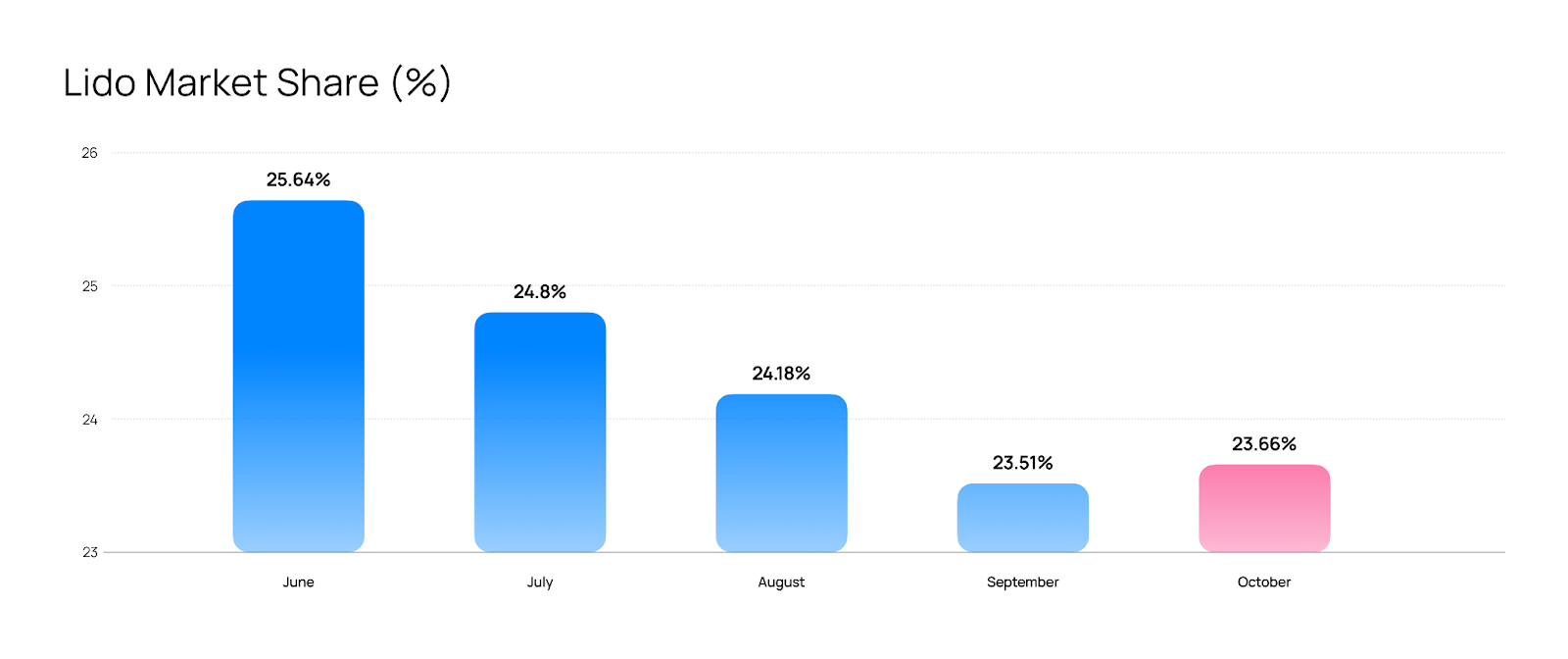
Despite an increasingly competitive environment, the Lido protocol maintained its leading position in the staked ETH market during Q3 2025, capturing a significant 23.7% share. This period saw heightened competition not only from established centralized exchanges (CEXs) like Coinbase, Binance, and Kraken but also from a growing number of staking providers catering to large institutional stakers. The broader Ethereum staking ecosystem experienced a contraction, primarily driven by deleveraging activities where funds employing delta-neutral strategies reduced their exposure to both liquid and illiquid staking assets, alongside stablecoin positions.
While Lido’s market share saw a modest decline of 1.0 percentage point compared to Q2 2025, the protocol demonstrated resilience, returning to a growth trajectory at the onset of Q4. This recovery underscores the robust demand for liquid staking solutions and Lido’s established market presence. The insights presented during the call, supported by detailed graphical data, illuminated these trends, providing tokenholders with a clear picture of Lido’s standing amidst evolving market conditions.
Deep Dive into Ethereum Staking Market Segments
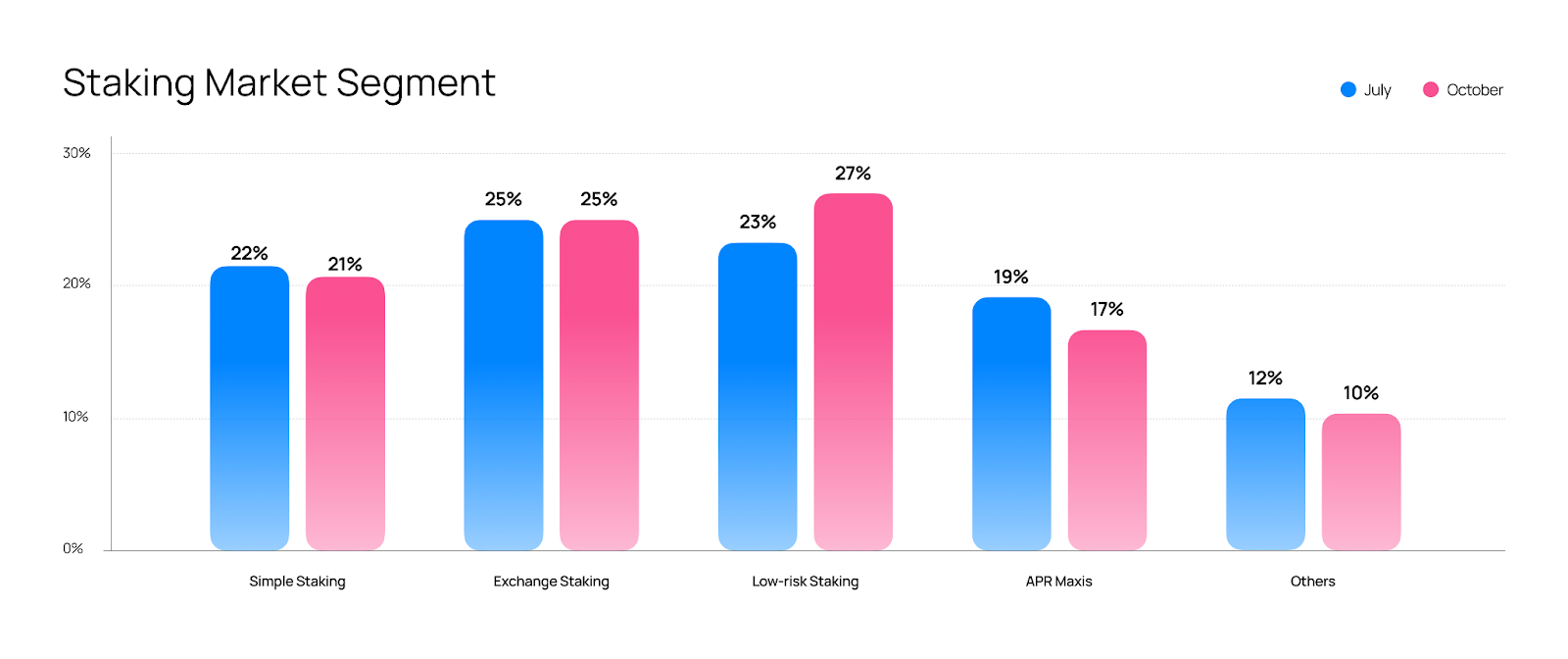
The Lido team provided a granular analysis of the Ethereum staking market, segmenting it into five key categories to better understand competitive dynamics and growth opportunities.
-
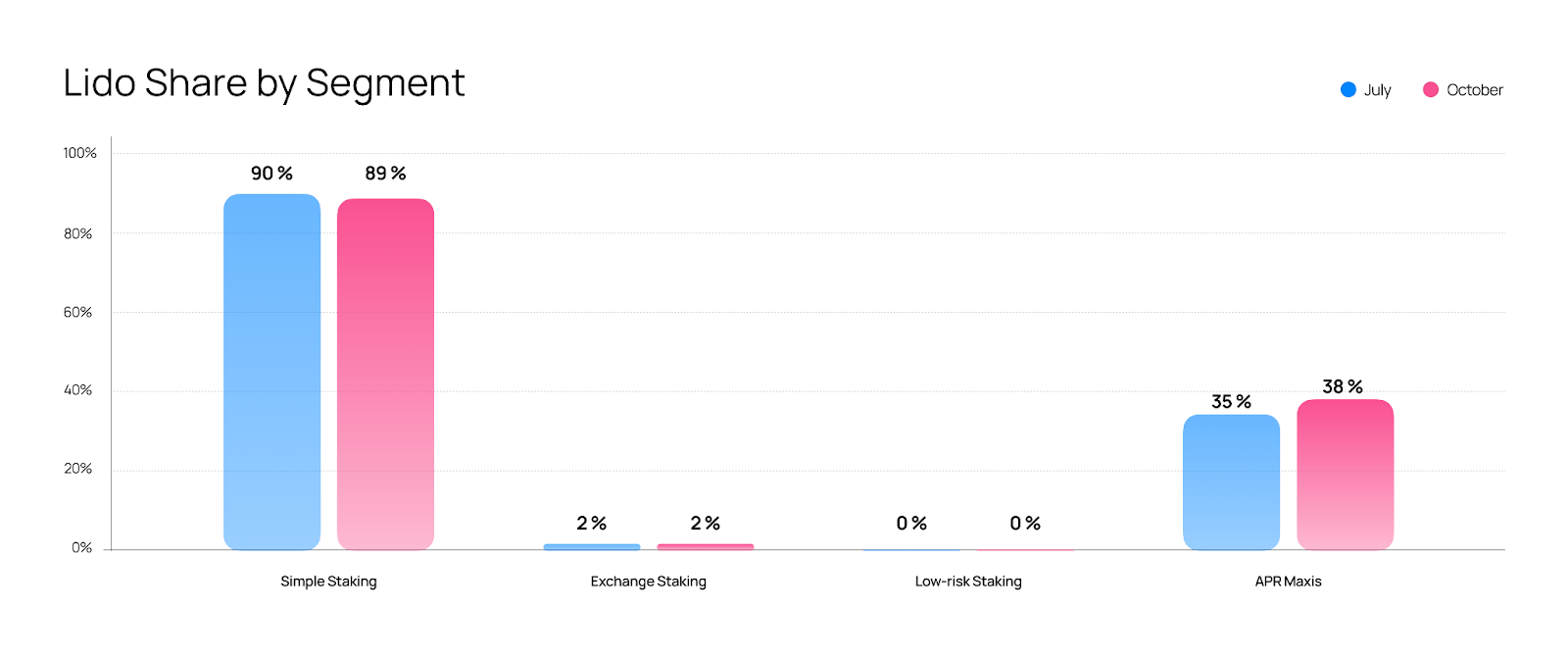
Simple Liquid Staking: This segment constitutes approximately 21% of the total Ethereum staking ecosystem. Lido protocol maintains a dominant 89% participation within this category, reflecting its strong and stable presence. The slight one-percentage-point reduction in Lido’s share was primarily attributed to user withdrawals rather than direct competitive pressure, indicating strong retention of its core user base. Projections for this segment anticipate continued stability with strategic enhancements aimed at reinforcing Lido’s leadership.
-
Exchange Staking: Accounting for roughly 25% of the market, exchange staking sees Lido protocol with a modest 2% participation. This segment remains challenging for decentralized protocols due to inherent custodial constraints and stringent regulatory barriers that limit seamless integration with third-party decentralized products. The pursuit of growth in this area would require innovative solutions to navigate these systemic hurdles.

-
Low-Risk Staking: Currently, Lido protocol has no direct participation in this segment, which typically involves highly secure, often institutional-grade staking solutions with minimal risk exposure. However, early traction is being observed through ongoing discussions with custodians, signaling a potential future entry point. A significant enabler for growth in this area is the anticipated launch of Lido V3. This upgrade is poised to revolutionize Lido’s entry into low-risk staking by offering instant liquidity on demand for delegated staking – a substantial enhancement over traditional delegated staking. This approach merges liquidity with optional access to DeFi applications and their rewards, alongside potential participation in traditional finance platforms via the utilization of staked ETH’s liquid component in borrowing mechanisms. Several leading node operators, including Solstice, Chorus One, Everstake, and P2P, are actively developing solutions utilizing stVaults’ design. Furthermore, Linea has integrated stVaults for Native Yield, a novel protocol mechanism designed to enable automatic, directly integrated Ethereum staking rewards. In a significant development, VanEck’s stETH ETF filing in the U.S. is currently under review, indicating growing institutional interest and a potential gateway for broader adoption of liquid staking products.
-
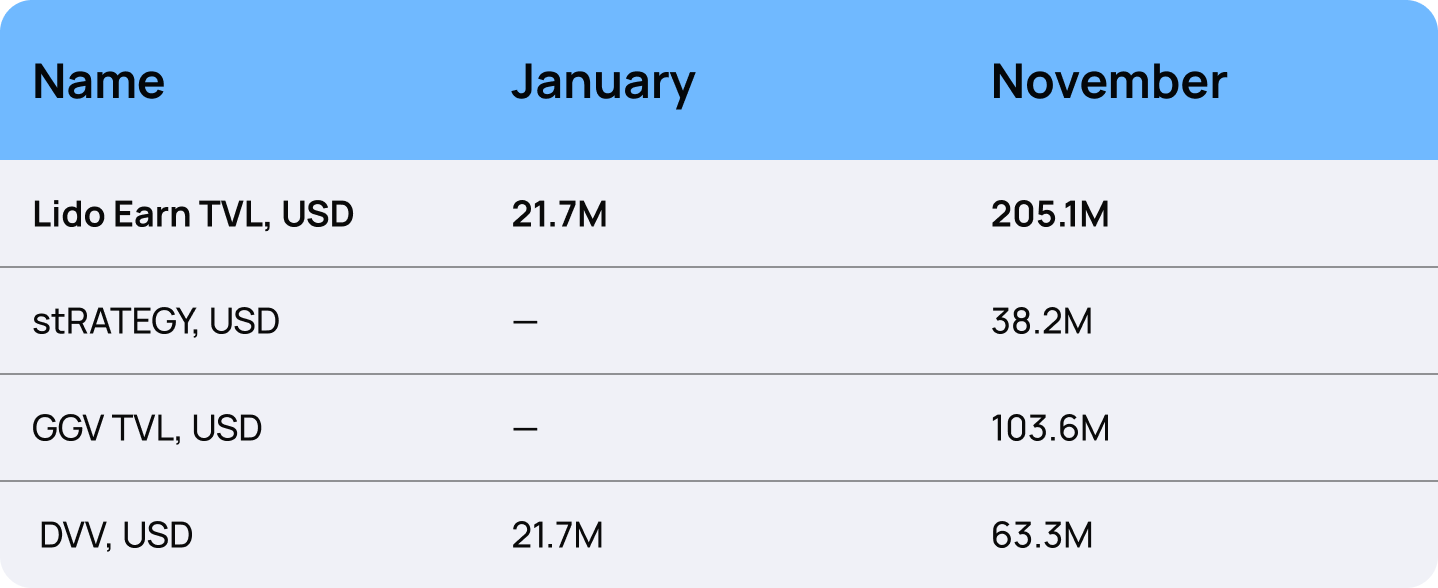
APR Maxis: This segment, representing approximately 17% of the total market, caters to users seeking maximized annual percentage rates (APR) through more complex strategies. Lido protocol holds about 38% participation here, broken down into roughly 22% leveraged staking, 15% restaking collateral, and 1% related to Lido Earn activity. Lido Earn has demonstrated remarkable growth, expanding from $21.7 million in January to $205.1 million in November 2025. This surge aligns with the successful launch of GGV and stRATEGY Vaults, reflecting strong user interest in higher-complexity integrations. Overall, Lido Earn’s burgeoning activity is estimated to have contributed a 3-5% increase to the DAO’s revenue, underscoring its strategic importance.
Robust Financial Health and Operational Model
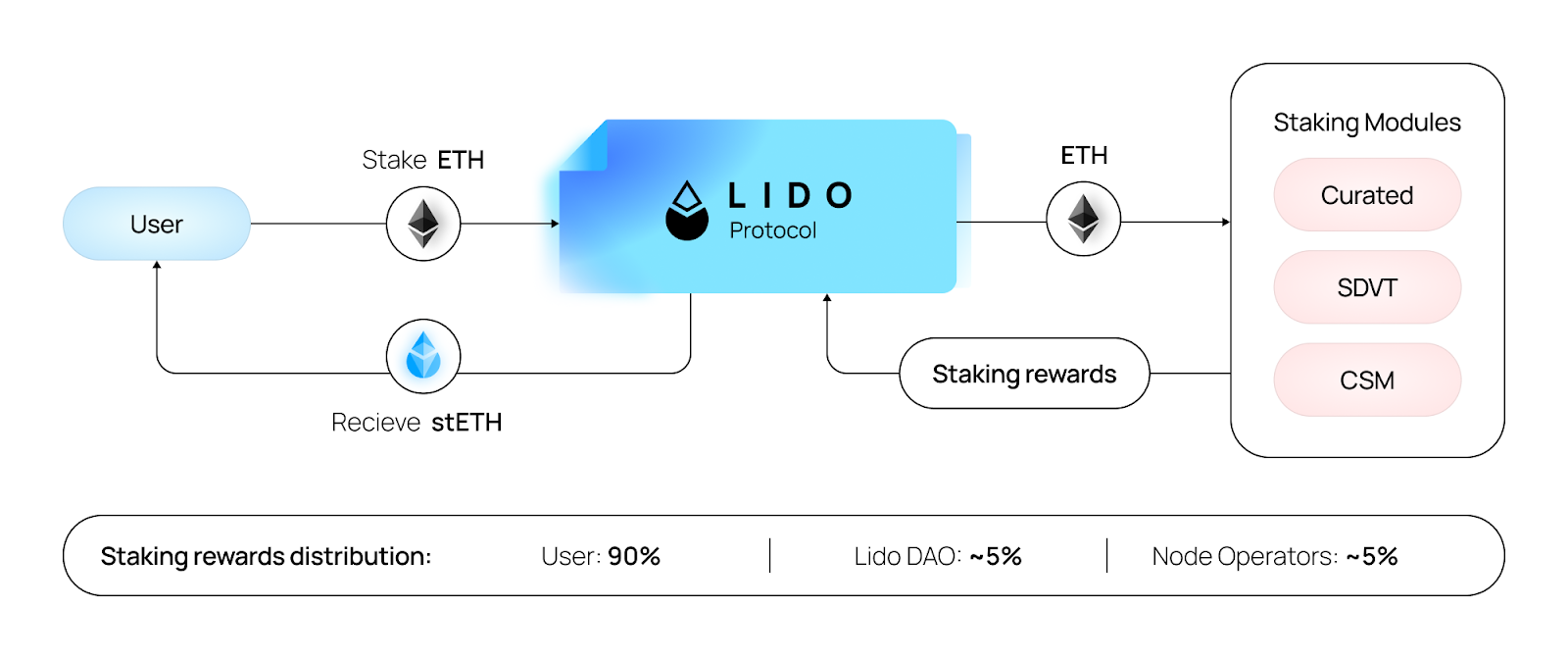
The Lido protocol’s operational model remains consistent and transparent. Users deposit ETH into the protocol and receive stETH, a liquid token fully backed by their staked ETH, which can then be freely utilized across the extensive DeFi ecosystem. The deposited ETH is strategically allocated through the Staking Router into various Staking Modules, ensuring diversified and secure staking operations. Ethereum staking rewards generated flow back to the Lido protocol, with a well-defined distribution mechanism: 90% is distributed directly to stakers, approximately 5% (varying by Staking Module) is allocated to Node Operators for their services, and the remaining portion is directed to the Lido DAO Treasury, fueling ongoing development and ecosystem initiatives.
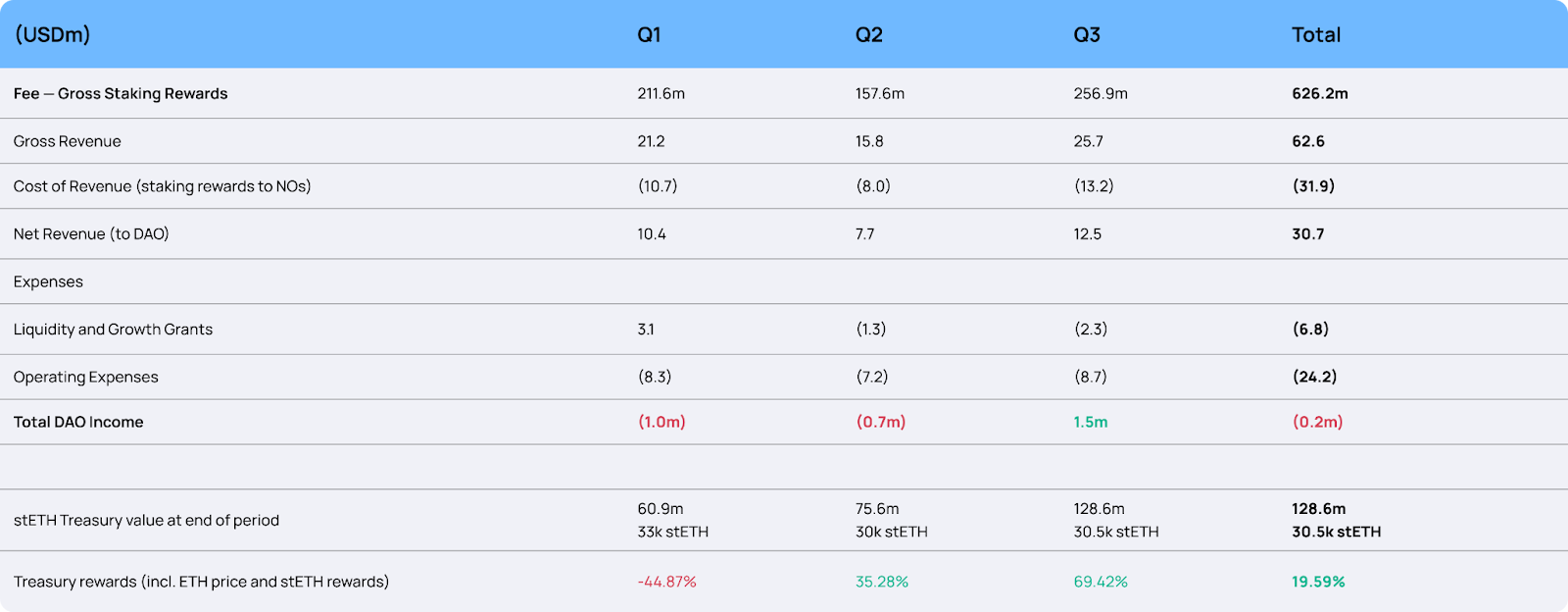
From a financial perspective, Q1-Q3 2025 saw the Lido DAO maintain a healthy and positive treasury position. The expenditures across Lido Labs, Ecosystem, and Alliance Foundations remained well within the approved annual target budget, demonstrating fiscal prudence and effective resource management. Detailed financial reports are publicly available through the Lido Protocol Economic Reports on Dune Analytics, ensuring full transparency for tokenholders and the wider community.
Introducing the LDO Buyback Framework
A significant announcement during the call was the proposal of a new LDO buyback framework on the Research Forum, designed to foster community discussion and feedback. This innovative framework outlines an automated mechanism for LDO buybacks, pairing LDO with wstETH in a liquidity position owned by the Aragon Agent. The strategic objectives of this framework are multifaceted: it aims to remove LDO from circulation, thereby reducing supply; deepen on-chain liquidity for LDO; and generate additional liquidity fees for the Lido DAO.
The proposed parameters for triggering the buyback mechanism are carefully designed to ensure it operates under favorable market and protocol conditions. These include specific thresholds related to the DAO’s revenue, the value of ETH, and the overall health of the ecosystem. Vasiliy Shapovalov confirmed that under current conditions (with ETH around $3,500 and an annualized DAO revenue of approximately $45 million), this mechanism would meet its activation criteria if deployed today. The framework emphasizes flexibility and transparency, ensuring that buybacks occur only when beneficial for Lido DAO’s sustainability and long-term LDO token value accrual. This proposal represents a proactive step by the DAO to strengthen its economic model and provide tangible benefits to its tokenholders.
Strategic Outlook for 2026: The GOOSE-3 Proposal
Looking ahead, the Lido team unveiled its strategic outlook for 2026, framed within the Guided Open Objective Setting Exercise (GOOSE) framework. GOOSE is a critical governance process that establishes one- and three-year goals aligned with the DAO’s overarching mission and vision. Proposals are submitted by community members, voted on by tokenholders, and executed under the DAO’s mandate.
The upcoming GOOSE-3 proposal, expected by the end of November 2025, will detail Lido DAO’s organizational and product priorities for the coming year. Its central focus will be on consolidating Lido protocol’s preeminent position within the Ethereum staking ecosystem while simultaneously expanding its product scope beyond conventional staking.
Leading with Staking: Evolution of the Core Product
Liquid ETH staking remains the foundational product for Lido. Significant milestones achieved in 2025, such as the implementation of Dual Governance and the Community Staking Module v2, have further advanced the community’s mission of making staking simple, secure, and decentralized. While continuous improvement of this core offering remains an evergreen priority, the emphasis for 2026 shifts towards broadening the Lido protocol’s reach across all staking segments and fostering an expansive ecosystem around liquid staking through adjacent products.
Key initiatives include:
- Institutional Integrations: Deepening ties with institutional clients and traditional finance platforms to onboard larger capital pools.
- L2 Native Yield: Expanding the integration of stETH and native staking yield across Layer 2 solutions, making liquid staking more accessible and capital-efficient.
- Restaking Ecosystem: Actively participating in and contributing to the emerging restaking landscape, exploring synergies with protocols like EigenLayer to offer enhanced yield opportunities and utility for stETH.
These initiatives are strategically designed to reinforce Lido’s leadership in liquid staking while effectively extending its influence into institutional and custodial integration spheres, catering to a broader spectrum of users and capital.
Expanding Beyond Staking: A Multi-Product Protocol
The 2026 strategy marks a pivotal evolution for Lido, transitioning from a single-product protocol primarily centered on stETH to a multi-product ecosystem. While stETH, supported by Lido V3 and stVaults, and the nascent Lido Earn activity, forms the current product suite, the future envisions a significant expansion. The protocol aims to develop new products and continuously innovate not only within staking but across the broader DeFi landscape and real-world integrations. This shift from "staking only" to a wider range of use cases reflects a forward-thinking approach to meet the evolving demands of the Web3 space.
This strategic pivot acknowledges that Web3 is entering a critical phase of crypto adoption, moving beyond early adopters to embrace the early majority. As countless businesses and individuals increasingly utilize blockchains, often for simple stablecoin transfers without engaging in complex technical details, the need for diversified and user-friendly decentralized intermediaries becomes paramount. Lido, by leveraging its robust stETH liquidity, strong market presence, and deep DeFi integrations, aims to move closer to a wider array of users and businesses, including professionals, institutions, and funds. The goal is to offer a comprehensive suite of products that extend beyond staking, addressing diverse financial needs and catalyzing mainstream adoption.
Key Takeaways from the Q&A Session
The community call concluded with an insightful Q&A session, addressing critical questions from tokenholders:
- stVaults Security: Addressing concerns regarding unbacked vaults on permissionless platforms, Vasiliy Shapovalov clarified that Lido V3’s stVaults are designed as delegated staking mechanisms, not as platforms issuing tokens against ETH collateral. The security is inherent in the delegation model, where stETH acts as the liquid representation of staked ETH, with strict controls over underlying collateral.
- Expansion to Other Chains: While the immediate focus remains on strengthening the Ethereum ecosystem, Lido contributors are open to expanding liquid staking to other chains (e.g., Solana, Hyperliquid) if there is significant demand and alignment with Lido’s core principles of decentralization and security. Any such expansion would undergo rigorous due diligence and community governance.
- Increasing CSM v2 Share: To boost the Community Staking Module v2’s profitability and decentralization benefits, Lido Labs plans to integrate it more deeply into Lido V3 and actively onboard new, diverse Node Operators, enhancing its overall appeal and operational efficiency.
- Benefits of ETP/ETFs: ETPs and ETFs are seen as powerful catalysts for Lido, expected to drive significant demand for stETH, increase the overall amount of ETH staked through Lido, and consequently, increase the DAO’s revenue. They represent a crucial bridge for traditional finance to access decentralized liquid staking.
- Competition with Custodial Staking/ETFs: Lido plans to differentiate itself by emphasizing its core strengths: decentralization, composability within the DeFi ecosystem, seamless L2 integration, capital efficiency, and superior user experience. These attributes offer distinct advantages over centralized custodial providers and traditional ETF structures.
- Highest Impact Growth Items: The primary growth drivers identified for the upcoming period include the full deployment and adoption of Lido V3, an aggressive multi-chain and L2 strategy, and extensive institutional outreach programs. These initiatives are expected to yield significant increases in staked ETH and DAO revenue.
- New Products for User Proximity: To bring Lido closer to users, the roadmap includes exploring "Staking as a Service" (SaaS) models, developing new forms of stETH with enhanced utility, investigating yield-bearing stablecoins, and potentially integrating tokenized Real-World Assets (RWAs) to broaden the protocol’s appeal and utility.
- Measuring Lido Earn Success: The success of Lido Earn will be primarily measured by its ability to increase funds flowing into the Lido DAO treasury, critically ensuring that this growth is achieved without incurring excessive operational costs or introducing undue risks to the protocol or its users.
Further Engagement
For those seeking a more in-depth understanding of the market share analysis, financial reports, and the extended Q&A session, the full recording of the Tokenholder Update call is available on YouTube. The next Tokenholder Update is scheduled for early 2026, with Lido Poolside community calls continuing monthly. The community is encouraged to subscribe to Luma for updates on upcoming events and to actively participate in discussions on the Research Forum, particularly regarding the LDO buyback framework and the GOOSE-3 proposal.
This comprehensive update underscores Lido’s commitment to innovation, decentralization, and sustainable growth, charting a clear course for its evolution as a multi-product Web3 powerhouse in the years to come.
Disclaimer
This material is for informational purposes only and does not constitute investment, legal, tax advice, or any other kind of advice. No representation or warranty, express or implied, is made as to its accuracy, completeness, or timeliness. Nothing herein should be interpreted as a recommendation or relied upon as a guarantee of any specific outcome, and past performance is not indicative of future results. Any opinions or forward-looking statements reflect the current judgment of the presenter as of the date of this presentation and are subject to change without notice. Users should conduct their own independent evaluation before making any decisions based on this material.