 Nila Kartika Wati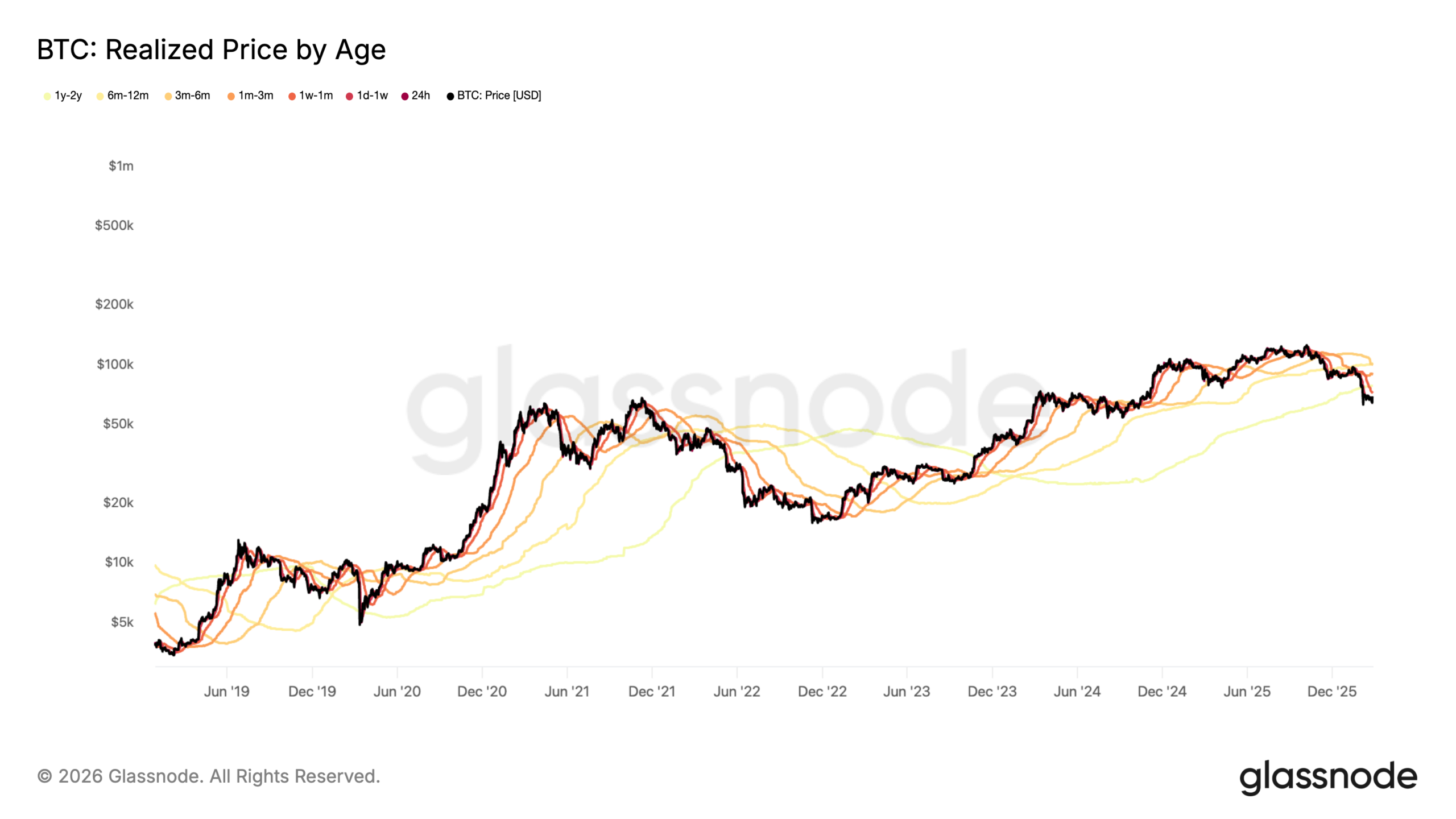
A comprehensive analysis conducted by Bitwise Europe, leveraging extensive historical data, indicates that investors holding Bitcoin (BTC) for a minimum of three years significantly mitigate their risk of financial loss. This seminal research, spearheaded by Bitwise Europe’s head of research, André Dragosch, underscores a compelling pattern of profitability associated with patient, long-term engagement in the cryptocurrency market. The findings offer a robust data-driven perspective for both seasoned and prospective Bitcoin investors navigating the asset’s inherent volatility.
The Power of Patience: Unpacking Bitwise’s Core Findings
The Bitwise analysis, meticulously examining Bitcoin’s price trajectory from July 17, 2010, to February 11, 2026, revealed a stark contrast in investment outcomes based on holding duration. For investors who maintained their Bitcoin positions for at least three years, the probability of incurring a loss plummeted to an remarkably low 0.70%. This statistic suggests that across nearly all conceivable three-year rolling entry points within Bitcoin’s history, investors ultimately emerged profitable. This figure stands as a testament to the asset’s long-term appreciation despite its often-turbulent short-to-medium term price swings.
The study further illuminated that extended holding periods beyond three years offered even greater certainty of positive returns. The risk of loss diminished to a mere 0.2% for those holding BTC for five years, and astonishingly, reached 0% for investments held over a decade. These percentages paint a clear picture: the longer an investor commits to Bitcoin, the more insulated their capital becomes from market downturns, ultimately converging towards an almost guaranteed profitable outcome.
Conversely, the data starkly highlighted the elevated risks faced by short-term traders. Intraday buyers, those attempting to profit from price movements within a single trading day, faced a daunting 47.1% chance of their investment being underwater. This risk remained substantial across shorter timeframes, with a 44.7% probability of loss over one week, 43.2% over one month, and a still significant 24.3% over a one-year holding period. These figures reinforce the widely held investment axiom that short-term trading in highly volatile assets like Bitcoin is fraught with considerable peril, often leading to unfavorable outcomes for a substantial portion of participants.

A Historical Perspective: Bitcoin’s Journey of Volatility and Resilience
To fully appreciate the significance of these findings, it is crucial to contextualize them within Bitcoin’s tumultuous yet ultimately upward-trending history. Since its inception in 2009, Bitcoin has undergone multiple dramatic market cycles, characterized by parabolic bull runs followed by severe corrections, often referred to as "crypto winters." Early investors witnessed incredible gains, transforming fractions of a cent into thousands of dollars, while later entrants have navigated periods of significant price depreciation, sometimes exceeding 80% from peak to trough.
For instance, after reaching its then-all-time high near $20,000 in December 2017, Bitcoin corrected sharply, falling below $3,500 by December 2018. Similarly, after achieving a new all-time high of over $69,000 in November 2021, it experienced a prolonged bear market, dipping below $16,000 in late 2022. Despite these profound drawdowns, the asset has consistently recovered and surpassed previous highs, driven by increasing adoption, technological advancements, and a growing understanding of its value proposition as a decentralized, scarce digital asset.
The Bitwise research essentially quantifies the "HODL" (Hold On for Dear Life) mantra that emerged from the cryptocurrency community, transforming anecdotal wisdom into statistical certainty. It demonstrates that the long-term trend has been overwhelmingly positive, making time in the market a far more effective strategy than attempting to time the market, especially for an asset known for its unpredictable short-term movements. This historical context solidifies the notion that Bitcoin, despite its volatility, has proven to be a resilient and appreciating asset over multi-year horizons.
On-Chain Metrics Corroborate Long-Term Conviction: The Realized Price Insight
Beyond simple price history, on-chain analytics provide deeper insights into investor behavior and profitability. The "realized price" metric, which calculates the average price at which all bitcoins currently in circulation last moved on-chain (representing the aggregate cost basis of the market), offers a powerful lens through which to view long-term holder profitability. This metric effectively segregates Bitcoin supply by the age of the coins, revealing the cost basis for different investor cohorts.

As of Saturday’s data, with Bitcoin trading around $65,000, roughly 50% down from its October 2025 high, the realized price for bitcoins held between three and five years stood at approximately $34,780. This significant differential indicates that investors who acquired and held their Bitcoin within this three-to-five-year window were still sitting on an impressive unrealized profit of approximately 90%. This statistic is particularly compelling because it demonstrates that even amidst a substantial market correction, the deep-seated profitability of long-term holders remains largely intact, cushioning them against current market fluctuations.
This resilience contrasts sharply with the predicament of more recent entrants. The data from Glassnode, an on-chain analytics firm, illustrates that a considerable portion of traders who purchased Bitcoin in the past two years were currently underwater. Specifically, the cohort holding BTC for six to twelve months had an estimated cost basis of around $101,250. With Bitcoin trading at $65,000, these investors faced an unrealized loss of approximately 35%. Similarly, the one-to-two-year holding cohort, with a lower cost basis of around $78,150, still contended with an unrealized loss of about 15%. This consistent pattern across various holding periods — where longer durations correlate with smaller drawdowns during corrections — provides further empirical evidence for the Bitwise research’s central thesis. It underscores how time in the market allows for capital appreciation that can absorb significant market shocks, protecting long-term investors from being forced into selling at a loss.
The Current Market Landscape: A Test of Investor Resolve
The current market environment, characterized by Bitcoin’s roughly 50% decline from its October 2025 peak, serves as a crucial test for investor conviction. While long-term holders remain comfortably profitable, the ongoing correction has sparked debate among analysts regarding its potential depth and duration. Some market observers suggest that the Bitcoin price correction could potentially extend further, possibly reaching the $30,000 level.
Such a decline, if realized, would significantly erode the current profit cushion of the three-to-five-year holding band, pushing their aggregate cost basis closer to a breakeven point. This scenario would undoubtedly test the resolve of these "stronger hands," forcing a critical decision: whether to capitulate and add to the existing sell pressure, or to steadfastly hold, perhaps even accumulating more, in anticipation of a future recovery. The actions of these seasoned investors during such a critical juncture would have substantial implications for the market’s overall trajectory and future sentiment. Their collective decision would either confirm the enduring strength of the HODL mentality or signal a temporary weakening of conviction in the face of sustained pressure.
Analyst Perspectives and Future Price Projections

Despite the current market uncertainties, leading financial institutions and crypto analysts maintain a generally optimistic long-term outlook for Bitcoin, albeit with differing short-term caveats.
Global brokerage firm Bernstein, for instance, has reaffirmed its ambitious $150,000 Bitcoin price target for 2026. Their conviction is rooted in what they describe as "relatively modest net outflows" of approximately 7% from spot Bitcoin Exchange-Traded Funds (ETFs), even as BTC’s price experienced a substantial 50% decline. Bernstein analysts, led by Gautam Chhugani, characterized the current Bitcoin price action as "a mere crisis of confidence," suggesting that the underlying fundamentals and institutional interest remain robust despite temporary market jitters. This perspective implies that the current downturn is more sentiment-driven than a reflection of fundamental weakness, positioning Bitcoin for a strong recovery once confidence returns.
In contrast, Standard Chartered offered a more cautious near-term assessment, warning of a potential "final capitulation" phase that could see Bitcoin’s price temporarily dip toward $50,000. This bearish outlook is predicated on weak ETF flows and a tougher broader macroeconomic backdrop, which could exert further downward pressure on the asset. However, even Standard Chartered’s long-term forecast remains positive, projecting a recovery towards $100,000 by the end of 2026, indicating that even within a more conservative framework, significant upside is anticipated once the current period of market stress subsides.
Looking further ahead into 2027, Timothy Peterson’s historical "average return" framework points to a target of $122,000 by early 2027. Peterson’s model, which analyzes Bitcoin’s historical performance, suggests a high probability that BTC will trade above this figure, underscoring the consistent long-term growth trajectory observed throughout its history. These varied but generally bullish long-term forecasts from prominent financial entities and independent analysts collectively reinforce the narrative of Bitcoin’s enduring potential for appreciation, even as they acknowledge the volatile path it often takes.
Broader Implications for Investors and Market Behavior
The Bitwise research and corroborating on-chain data carry significant implications for the broader cryptocurrency investment landscape. For individual investors, the findings serve as a powerful endorsement of a long-term, buy-and-hold strategy for Bitcoin. It demystifies the perceived "risk" of Bitcoin by demonstrating that with sufficient time horizon, that risk is not only manageable but significantly diminished, leading to a high probability of profit. This could encourage a shift away from speculative short-term trading towards more patient, strategic accumulation, potentially fostering greater market stability over time.

For institutional investors and financial advisors, this data provides a strong analytical basis for incorporating Bitcoin into diversified portfolios, particularly for clients with longer investment horizons. The quantifiable reduction in loss probability over three, five, and ten years positions Bitcoin not merely as a speculative gamble but as an asset with a statistically robust long-term return profile, capable of performing a unique role in a balanced investment strategy.
Furthermore, the research contributes to the ongoing maturation of the cryptocurrency market. As more sophisticated analyses emerge, drawing on extensive historical data and on-chain metrics, the narrative around Bitcoin shifts from an experimental digital token to a recognized asset class with predictable long-term characteristics. This evolving understanding is crucial for regulatory frameworks, mainstream adoption, and the integration of digital assets into the global financial system. The resilience of long-term holders during corrections, as evidenced by the realized price metric, also speaks to a growing conviction among a significant portion of the investor base, suggesting that Bitcoin’s fundamental value proposition is increasingly understood and trusted.
This article does not contain investment advice or recommendations. Every investment and trading move involves risk, and readers should conduct their own research when making a decision. While we strive to provide accurate and timely information, Cointelegraph does not guarantee the accuracy, completeness, or reliability of any information in this article. This article may contain forward-looking statements that are subject to risks and uncertainties. Cointelegraph will not be liable for any loss or damage arising from your reliance on this information.