 Nila Kartika Wati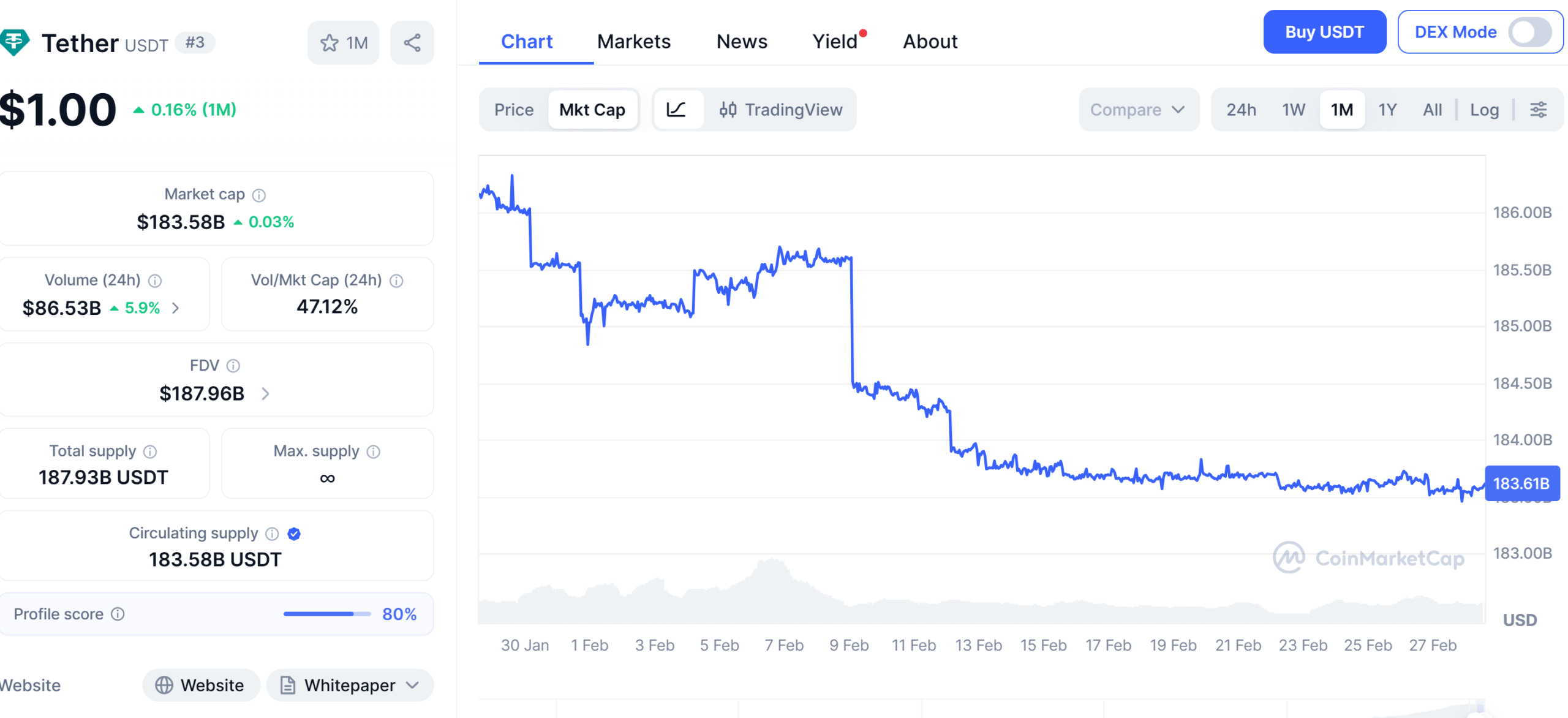
Stablecoin issuer Tether has disclosed that it has proactively frozen an estimated $4.2 billion worth of its USDt tokens, the world’s largest stablecoin, over the past three years. These funds are reportedly linked to a wide array of illicit activities, including scams, money laundering, and sanctions evasion. This significant intervention underscores a growing trend where law enforcement agencies and regulators are increasingly relying on stablecoin issuers to act as critical gatekeepers in the fight against financial crime within the rapidly expanding digital asset ecosystem. The majority of these blockages have occurred since 2023, reflecting a global intensification of scrutiny on crypto-related illicit finance.
The firm, based in El Salvador, communicated this substantial figure to Reuters, highlighting its deepening cooperation with international authorities. Tether’s ability to directly freeze funds on the blockchain by blacklisting specific wallet addresses has become a crucial tool in this ongoing battle. This mechanism allows for swift and decisive action, contrasting with the often more protracted processes involved in traditional financial asset freezes. The scale of these actions signals a maturation of the stablecoin industry, moving from a largely unregulated frontier to one grappling with sophisticated compliance demands.
The Escalating Scale of Intervention: $4.2 Billion and Beyond
Tether’s revelation of freezing $4.2 billion in USDt over three years represents a substantial commitment to combating financial crime. The acceleration of these efforts, with most funds restricted since 2023, directly correlates with a global push from regulatory bodies and law enforcement agencies to bring the cryptocurrency sector into greater alignment with traditional financial anti-money laundering (AML) and counter-terrorist financing (CFT) standards. As stablecoins like USDt have grown exponentially in market capitalization and adoption, their utility has also, unfortunately, been exploited by criminal enterprises seeking to launder illicit gains or circumvent sanctions.
USDt, pegged to the U.S. dollar, has surged to become the dominant stablecoin, with its circulating supply recently exceeding $100 billion and reaching over $180 billion, a sharp increase from approximately $70 billion just three years prior. This immense liquidity and widespread use across global crypto exchanges make it an attractive medium for transactions, both legitimate and illicit. The sheer volume of USDt in circulation necessitates robust mechanisms for identifying and isolating funds associated with nefarious activities, and Tether’s proactive freezing capabilities are central to this endeavor.
Recent High-Profile Seizures Underscore Proactive Stance
The announcement of the $4.2 billion figure comes on the heels of several high-profile collaborations between Tether and governmental authorities, demonstrating the practical application of its freezing capabilities. Earlier this week, Tether confirmed its assistance to the U.S. Department of Justice (DOJ) in seizing nearly $61 million in USDt. These funds were directly linked to "pig-butchering" scams, a particularly insidious form of cryptocurrency fraud where perpetrators cultivate relationships with victims over extended periods, often through social media or dating apps, before manipulating them into investing in fraudulent crypto schemes. The emotional and financial toll of these scams can be devastating, making law enforcement’s ability to recover funds critically important.
In a separate, equally significant operation earlier this month, Tether froze approximately $544 million in cryptocurrency at the request of Turkish authorities. This massive freeze targeted funds allegedly connected to an extensive illegal online betting and money-laundering operation. The collaboration with Turkish law enforcement highlights the global reach of Tether’s compliance efforts and the increasing international coordination required to combat transnational financial crime facilitated by digital assets. These specific instances not only showcase Tether’s technical capability to act but also its willingness to engage directly with diverse jurisdictions.
Tether’s Dominance and the Broader Stablecoin Landscape
Tether’s USDt holds a commanding position in the stablecoin market, with its market capitalization often dwarfing that of its closest competitors. This dominance stems from its early mover advantage, deep liquidity across exchanges, and widespread acceptance as a trading pair for thousands of cryptocurrencies. For legitimate users, USDt offers a stable store of value within the volatile crypto market and a quick, efficient means of moving capital globally. However, these very attributes — speed, global accessibility, and the pseudonymous nature of blockchain transactions — also make it appealing to criminals.
Data from blockchain analytics firms further illustrates the industry-wide effort to combat illicit finance. According to a report by Elliptic, by late 2025, leading stablecoin issuers Tether and Circle had collectively blacklisted around 5,700 wallet addresses, holding an estimated $2.5 billion. A significant proportion of these frozen addresses, roughly three-quarters, contained USDt at the time of their restriction. This data provides an independent corroboration of the scale of illicit funds flowing through stablecoins and the concerted efforts by issuers to identify and block them. It also suggests that while Tether is a major player, other stablecoin issuers like Circle (issuer of USDC) are also actively engaged in similar compliance measures.

The Evolving Regulatory Framework and Issuer Responsibility
The increasing reliance of authorities on stablecoin issuers marks a significant shift in the regulatory landscape for digital assets. Historically, the decentralized and pseudonymous nature of cryptocurrencies presented substantial challenges for law enforcement. However, as the ecosystem matures, stablecoin issuers are increasingly being viewed as central points of control and responsibility, akin to traditional financial institutions. This evolving perspective places a greater onus on these firms to implement robust AML/CFT policies, conduct due diligence on their users, and cooperate actively with government agencies.
Globally, regulatory bodies are pushing for clearer frameworks for stablecoins. The European Union’s Markets in Crypto-Assets (MiCA) regulation, for instance, establishes comprehensive rules for crypto-asset issuers and service providers, including stablecoin issuers, mandating strict operational and prudential requirements. In the United United States, discussions around stablecoin legislation continue, often emphasizing consumer protection and financial stability, alongside AML/CFT concerns. This regulatory pressure directly informs the proactive measures undertaken by companies like Tether, which are compelled to demonstrate their commitment to compliance to maintain their operational licenses and market standing. Tether’s public statements often emphasize its commitment to transparency and cooperation with law enforcement, positioning itself as a responsible actor within the financial system.
Market Dynamics: USDt Supply Contraction and Liquidity Concerns
Interestingly, the revelations of Tether’s extensive freezing activities coincide with a period of contraction in USDt’s circulating supply. Cointelegraph previously reported that USDt was on track for its largest monthly supply drop in three years, with a decline of approximately $1.5 billion in February, following a $1.2 billion reduction in January. This contraction echoes the market dynamics observed after the collapse of FTX in late 2022, a period characterized by heightened market uncertainty and tighter liquidity in the broader crypto markets.
While a reduction in circulating supply can sometimes signal weakening demand or a flight of capital, Tether has offered an alternative explanation. The company asserts that these figures reflect short-term distribution changes rather than a fundamental weakening of demand for its stablecoin. They also pointed out that other major stablecoins, such as USDC, experienced multibillion-dollar reductions during the same period, suggesting a broader market phenomenon rather than an issue specific to USDt. This could be due to various factors, including large institutional investors rebalancing portfolios, shifts in trading strategies, or even the impact of significant fund freezes reducing the available supply. The interplay between these market dynamics and the proactive anti-crime measures by issuers adds layers of complexity to understanding stablecoin health and liquidity.
Implications for Trust, Transparency, and the Future of Stablecoins
Tether’s actions carry significant implications for trust, transparency, and the future regulatory trajectory of stablecoins. For users, the ability of a centralized entity to freeze funds on the blockchain presents a double-edged sword. On one hand, it provides a crucial mechanism for protecting the ecosystem from illicit actors and potentially recovering stolen funds. On the other hand, it raises questions about the extent of centralized control over assets intended to embody the decentralized ethos of cryptocurrencies. Maintaining a delicate balance between security and user autonomy will be critical for stablecoin issuers.
The ongoing efforts to combat financial crime will likely lead to increased demands for transparency from stablecoin issuers regarding their freezing policies, the legal basis for such actions, and the reporting mechanisms used to communicate with authorities. This could manifest in more detailed public reports on frozen assets, clearer guidelines for wallet blacklisting, and enhanced communication protocols with users whose funds may be inadvertently caught in such operations.
Furthermore, the growing collaboration between stablecoin issuers and law enforcement suggests a path toward more formalized regulatory frameworks. It is increasingly probable that future regulations will explicitly define the responsibilities of stablecoin issuers in AML/CFT efforts, potentially mandating certain compliance infrastructure, reporting requirements, and proactive monitoring capabilities. This shift will solidify the role of stablecoin issuers as key intermediaries in the global financial system, with corresponding obligations to uphold financial integrity.
Ultimately, the $4.2 billion frozen by Tether is not merely a statistic; it represents a significant blow against criminal enterprises leveraging digital assets and a testament to the evolving capabilities of both technology and human cooperation in the fight against financial crime. As the digital asset space continues to grow, the proactive role played by stablecoin issuers will be paramount in fostering a safer, more compliant environment for all participants.